Location
Mount Vernon, WA 98274
Location
Mount Vernon, WA 98274


A wave of recent studies unveils how temperate forests are quietly regenerating-from canopy greening detected by satellites to subterranean fungal networks weaving a lifeline for trees. This exploration invites us to look beyond trunks and leaves, and sense the hidden connections sustaining the world's woodlands.
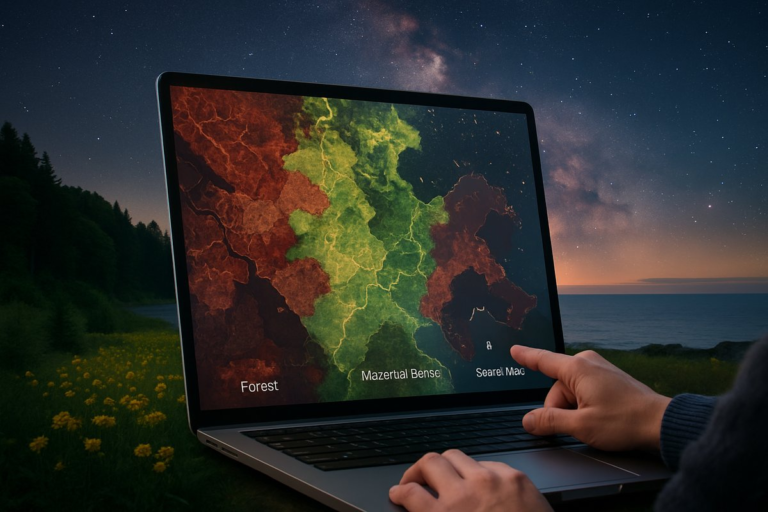
A collaborative team from universities across Europe and North America has spent the past five years training machine-learning algorithms on thousands of high-resolution images captured by Earth observation satellites. Their goal: to detect even subtle shifts in leaf area index-a measure of how densely leaves cover the ground beneath. In early spring, the satellites recorded an almost imperceptible deepening of green in regions once thought too stressed by drought and human activity to rebound. Ground crews confirmed young saplings filling gaps left by older trees, often sprouting in places once cleared for farming decades ago.
“This greening is not uniform,” notes one ecologist involved in the project. “It’s concentrated in areas where conservation programs provided sustained protection and where fallow land was allowed to return to woodland.” The data also suggests that secondary forests-those recovering after disturbance-may store carbon at rates comparable to mature stands, challenging assumptions that only ancient woodlands can serve as significant carbon sinks.
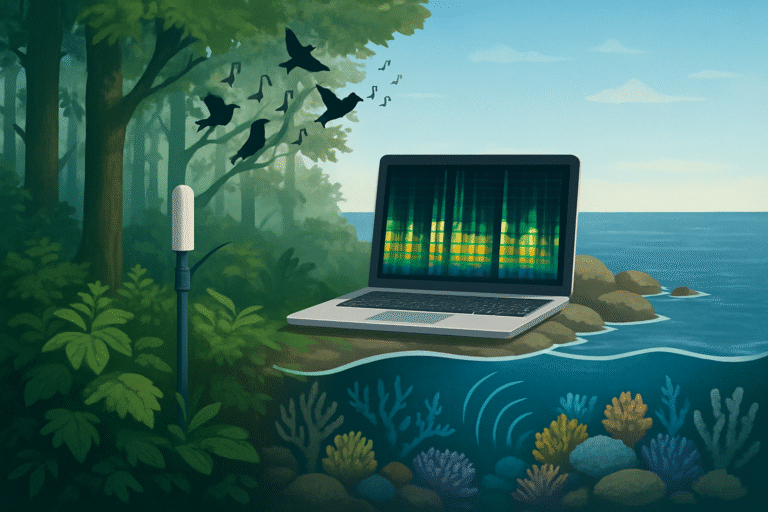
More surprising still, this canopy uptick has coincided with a rise in insect and bird biodiversity in several monitored sites. Acoustic sensors placed at dawn detect richer dawn chorus patterns, and moth traps reveal greater nightly variety under the regrown leaves. While long-term sustainability remains to be seen, these early signs hint at the forest’s capacity for self-renewal when given space and protection.
Below the surface, a different kind of rewilding has been under way. Mycologists have mapped fungal colonies stretching hundreds of meters, connecting individual trees through shared networks. In a series of soil cores taken across a protected reserve in western Canada, researchers discovered that mycelial density was highest at the interface of old-growth patches and regenerating clearings-precisely where young saplings benefit from the mature community’s nutrient reserves.
These mycelial networks function much like data cables. When a tree is stressed by drought or pests, it releases chemical signals through its roots. Fungi shuttle those distress messages to neighboring trees, which in turn can upregulate their own defense mechanisms. In return, healthy trees provide surplus carbon compounds to the fungal network, ensuring the entire community thrives. Such cooperation extends to different species: birches may share resources with pines, maples may support oaks, blurring the boundaries between individual trees.
One soil ecologist likens the phenomenon to a social safety net. “When we plow or develop land, we rip out that net,” she explains. “Rebuilding it takes more than planting rows of seedlings. It requires the return of fungal partners, the restoration of soil structure, and decades of careful stewardship.” Emerging restoration practices now emphasize inoculating soil with native fungal strains, spreading woodland leaf litter to bolster microbial communities, and avoiding heavy machinery that compacts the earth.
Not all discoveries are happening in deep forests. A grassroots project in several cities has enlisted volunteers to map street trees, record flowering times, and track canopy cover change with smartphone apps. Data from these urban networks is revealing microclimates created by dense green corridors-areas where temperature spikes during heat waves are reduced by as much as five degrees Celsius.
Local participants often speak of a renewed sense of belonging. “I started volunteering because I missed the canopy,” says one contributor from a waterside neighborhood. “Now I know each tree has a story. I use my phone to log when the buds burst in spring, and I watch as migrating warblers find rest stops on our streets.” City planners are taking notice, incorporating these community-generated insights into new zoning policies that protect mature trees and encourage green roofs in redevelopment projects.
As summer fades and autumn paints the leaves in amber and crimson, forests undergo their grandest transformation. Recent phenological studies-tracking leaf color change, seed drop, and animal migrations-point to a complex choreography influenced by shifting weather patterns. In some temperate zones, color change begins weeks earlier than it did a generation ago. While early autumn hues may delight photographers, they can also signal stress from unexpected temperature swings or drought.
Ecologists are now integrating phenology data with fungal network studies to gauge forest health holistically. If leaf senescence accelerates in a particular stand, does the fungal network compensate by redistributing nutrients to younger trees? Or does the system show signs of breakdown? Preliminary findings suggest that forests with richer fungal diversity experience more synchronized seasonal shifts, as if the community moves in concert.
When night falls, the canopy becomes a stage for starlight and bioluminescent fungi. In certain humid corners of the Pacific Northwest, glowing threads weave through leaf litter, casting an ethereal glow reminiscent of fireflies. While the luminous species have long been known to science, recent high-sensitivity cameras are capturing time-lapse footage that reveals their growth cycles-from the first spark in fall to dormancy in cooler months. Enthusiasts and researchers alike marvel at these nightly shows, serving as reminders that the forest’s magic extends beyond daylight.
On the political front, several national governments have announced ambitious reforestation targets, often pledging to restore millions of hectares by the end of the decade. Financial mechanisms such as carbon credits are being tailored to reward projects that demonstrate both canopy recovery and soil health improvements. Private landowners are signing agreements to protect riparian buffers, ensuring that streams benefit from the same fungal and microbial regeneration as the forest proper.
International conservation organizations emphasize that success hinges on local engagement. Training programs teach rural communities how to propagate native tree species, collect and spread beneficial fungi, and monitor regrowth using simple tools. These efforts are grounded in traditional ecological knowledge-long relegated to the sidelines-now recognized as essential for managing complex living systems.
In an era dominated by headlines of deforestation and extreme weather, these emerging stories offer a quieter form of hope. Forests, it seems, have memory and agency. They possess the capacity to knit themselves back together, provided we listen, learn, and step lightly.
For the curious explorer, whether deep in an ancient woodland or at a city street corner, the invitation is the same: notice the subtle green pulse at dawn, follow the faint glow beneath fallen logs at dusk, and remember that you, too, are part of this living network. In pausing to wonder, we reaffirm our place within the grand tapestry of life-an ecosystem that, like us, thrives on connection, curiosity, and care.