Location
Mount Vernon, WA 98274
Location
Mount Vernon, WA 98274

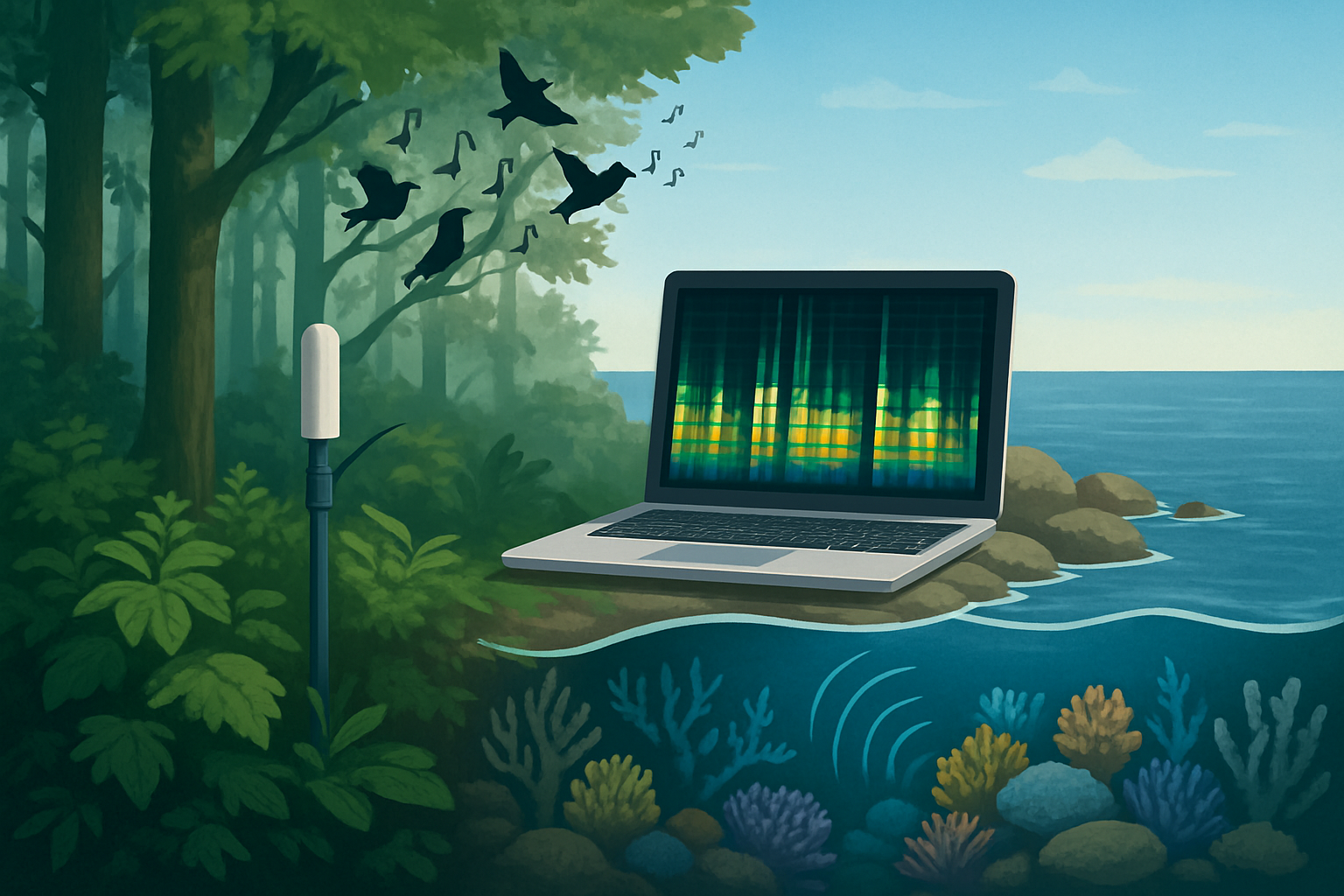
From the rustle of a dawn chorus in dense forest to the low-frequency hum of a coastal reef, ambient sounds carry a wealth of ecological data. Advances in ecoacoustic science and AI-driven analysis are turning these natural symphonies into powerful tools for conservation, revealing hidden patterns of biodiversity and guiding smarter stewardship of fragile habitats.
Every environment carries its own signature soundtrack. In the predawn hush of a tropical forest, insects, amphibians and birds trade calls in a finely balanced exchange. Along a rocky coastline, the crash of surf mingles with the clicks and whistles of marine mammals. Those natural recordings-once relegated to curious field notebooks-are now at the forefront of ecological research. By capturing, decoding and analyzing the ambient sounds that surround us, scientists and citizen volunteers are building a louder, clearer picture of environmental health.
Traditionally, ecosystem monitoring has relied on visual surveys, manual counts and remote sensing. But these methods can be laborious, invasive and limited by daylight or weather conditions. Soundscape ecology offers a complementary approach: it listens. A network of passive acoustic sensors-often little more than weatherproof microphones connected to data loggers-can record continuously through the night, filter out false positives and preserve context that might escape a fleeting human visit.
Ecologists first recognized the value of acoustic data decades ago, but the logistical challenges of hardware durability and data storage kept widespread adoption at bay. Early researchers lugged heavy tape recorders into rainforests, swapping spools before humidity and wildlife compromised the gear. It was a tedious process that yielded fragmented insights. Today’s compact digital recorders, solar-powered listening stations and cloud-based archives have transformed fieldwork into a scalable enterprise.
In the Amazon basin, an international team has deployed hundreds of solar-powered listening posts across a landscape threatened by deforestation and illegal mining. Each station logs up to 20 hours of audio daily, capturing passing flocks, clandestine chainsaw operations and the subtle creaks of old-growth trees. Machine-learning models trained on thousands of labeled samples can flag chainsaw noise within minutes, generating real-time alerts for park rangers. The result is a dynamic acoustic network that monitors more than 50,000 hectares without a single human footprint after installation.
Under the sea, researchers are tapping into a different frequency band. Coral reefs ripple with life sounds-from snapping shrimp and territorial fish to distant whale songs. Hydrophones tethered to buoys relay recordings to coastal labs, where analysts track the relative intensity of reef chatter. A sudden drop in acoustic complexity often signals bleaching events or declines in fish populations long before divers can spot physical damage. By monitoring soundscapes, marine managers gain early warning of ecosystem stress and can deploy response teams more effectively.
One of the greatest strengths of sound-based monitoring is its noninvasiveness. Unlike camera traps or physical surveys, acoustic sensors float or hang unobtrusively, leaving wildlife behavior undisturbed. They also scale easily: a handful of units can cover extensive areas, and their extended runtime means fewer site visits. Continuous recordings capture diel and seasonal patterns-nighttime frog choruses or the arrival of migratory birds in spring-revealing rhythms that a few daytime walks would miss.
Citizen science is fueling this emerging field as well. Smartphone apps have put passive acoustic monitoring in the hands of backyard naturalists and school groups. A simple app interface guides users to record ambient sound for a few minutes, then automatically extracts acoustic indices that correlate with biodiversity. Contributors in remote communities have mapped soundscapes across mountain valleys and coastal villages, creating the world’s first crowdsourced atlas of acoustic diversity.
Behind the scenes, artificial intelligence plays a critical role in turning raw audio into actionable insights. Deep-learning algorithms trained on vast libraries of labeled calls can now identify hundreds of species with impressive accuracy. Some platforms offer automated species alerts: a designated researcher receives an instant message when the distinctive trill of an endangered frog is detected at an upland conservation site. These AI-driven workflows slash manual review time and free ecologists to focus on interpreting trends rather than wading through endless waveforms.
Even so, setting up a robust acoustic network involves juggling power constraints, data connectivity and hardware ruggedness. In dense forests, solar panels might be shadowed by the canopy, requiring supplemental battery packs. Remote coastal sites face salt spray and extreme storms. Ensuring continuous operation demands careful site design and regular maintenance schedules. Data must be stored locally and then transferred-often via cellular or satellite links-to centralized servers, where it awaits processing in AI pipelines.
To maximize impact, many projects are coupling acoustic data with satellite imagery and on-the-ground observations. When a section of forest shows spectral signs of degradation, acoustic monitors can confirm whether poaching or illegal logging has commenced. Likewise, marine soundscapes can validate remote-sensing estimates of coral cover. This multi-modal approach provides greater confidence for policymakers and funders, who often require cross-verified evidence before sanctioning new conservation initiatives.
Governments and foundations are beginning to recognize ecoacoustics as a vital component of nature policy. Grant programs now include dedicated lines for passive acoustic monitoring, and international conservation agreements reference soundscape data when setting biodiversity targets. In some regions, acoustic evidence of environmental crime has even been admitted in court as proof of illegal operations-an example of how sound can carry both scientific and legal weight.
Despite the momentum, ecoacoustic science faces hurdles. Data standards vary among projects, making cross-comparison difficult. The sheer volume of recordings raises questions about storage costs and long-term archiving. Ambient noise from wind turbines, urban sprawl or even low-flying drones can mask biological signals. Overcoming these challenges will require community-driven protocols for data formatting, open-source toolkits for noise filtering and continued innovation in sensor technology.
Looking ahead, researchers envision bioacoustic drones that can reposition themselves in response to live data-hovering over a suspected poaching camp or following a passing whale pod. Real-time dashboards combining soundscape maps with climate forecasts could guide rapid conservation responses during extreme weather events. And as machine-learning models become more data-hungry, sky-high networks of passive sensors will feed them the raw material needed to decode ever more subtle facets of ecosystem health.
Beyond its scientific value, acoustic monitoring offers an emotional bridge between people and nature. Few things resonate more deeply than the call of a distant wood frog on a spring night or the brief whisper of wind in a pine grove. When communities learn to listen, they develop a sense of stewardship borne of intimacy with their environment. In a world clamoring for sustainable solutions, the echoes of the wild may prove the most persuasive voice of all.