Location
Mount Vernon, WA 98274
Location
Mount Vernon, WA 98274

Discover how a new generation of travelers is seeking meaningful connections with remote communities, immersive arts residencies, and regenerative ecosystems. From renewable‐energy powered retreats in the Arctic to off-grid homestays in hidden rural valleys, this article unveils the latest destinations and practical tips to plan a conscious adventure.
Travel narratives are shifting. No longer content with ticking off landmarks from a guidebook, modern explorers are looking for destinations that foster genuine cultural exchange, environmental stewardship, and personal growth. While bucket-list icons will always have their place, a growing segment of travelers is charting less-trodden paths, from repurposed fishing villages powered by microgrids to participatory art residencies on windswept coasts. This movement transcends simple ecotourism; it’s about regenerative travel that nurtures ecosystems, uplifts local voices, and leaves a footprint of positive impact.
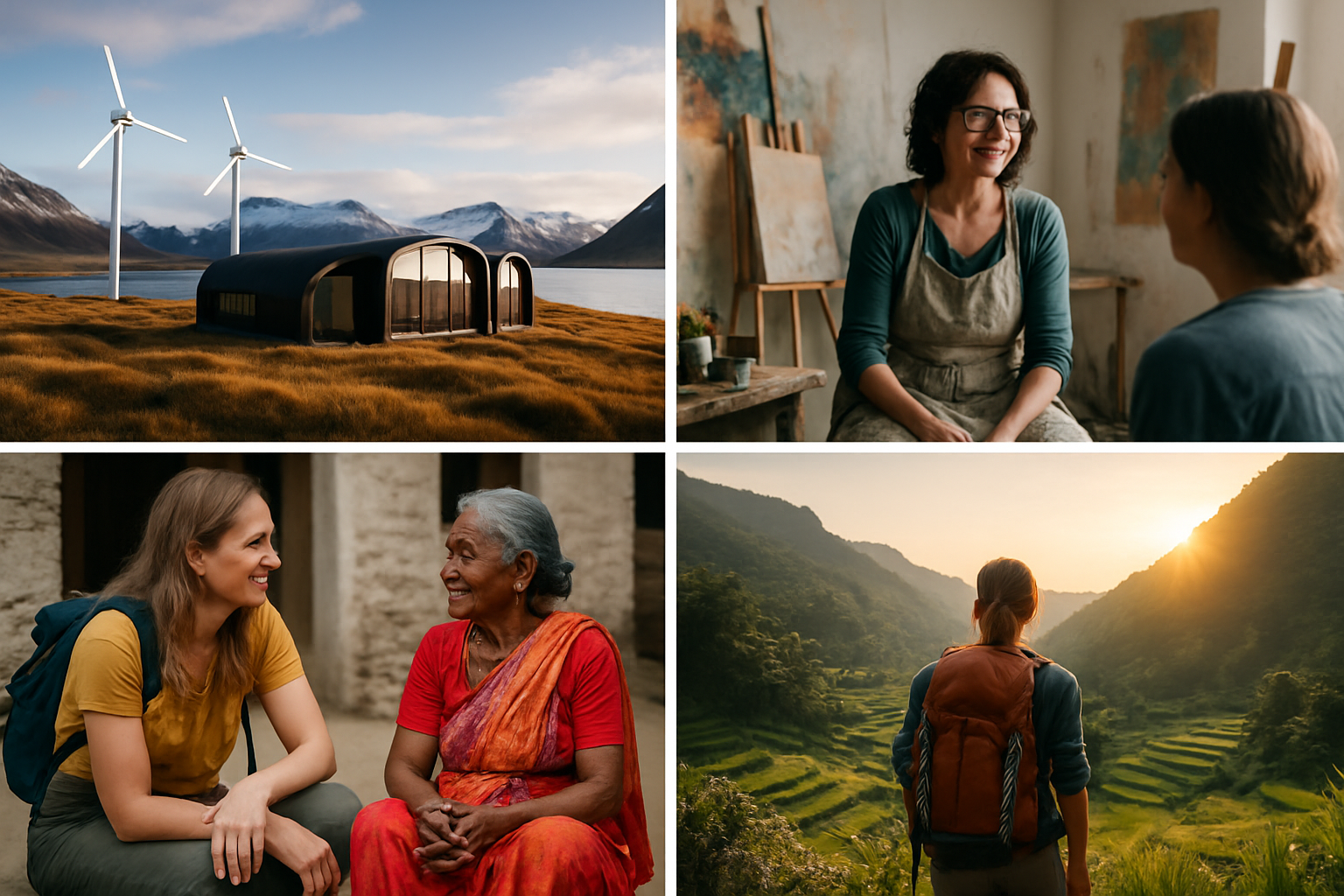
One of the most intriguing frontiers of this trend lies in the High Arctic archipelagos, where small Inuit communities are transforming century-old dwellings into eco-lodges. These micro-scale retreats run on solar-wind hybrid systems and offer guided tours led by local elders. Travelers can learn historic hunting techniques, witness seal-ice dynamics firsthand, and participate in storytelling circles that preserve ancestral language. The lodge operators reinvest a percentage of each booking into community-led conservation projects, from polar bear habitat monitoring to glacier mapping with unmanned drones. Visitors leave not only with photos beneath the northern lights but with a deeper awareness of climate-driven changes at Earth’s edge.
Thousands of miles south, in the heart of the Iberian interior, abandoned villages are experiencing a renaissance through community-hosted homestays. Farmers and artisans in sun-baked valleys welcome guests into centuries-old stone homes, offering hands-on workshops in olive harvests, cheese-making, and folklore dances. These initiatives emerged from local councils partnering with social enterprises to revive dwindling populations. Travelers can sign up for week-long stays that combine farm labor with options for Spanish language immersion or open-air yoga at dawn. Instead of high-rise resorts, they’ll dine on heirloom produce prepared by neighborhood cooks and gather around bonfires under star-drenched skies.
Along the Baltic coastline, a network of former fishing shacks has been reimagined as artist-run residencies. Each wood-clad cottage hosts one international creator at a time-painters, sculptors, or experimental musicians-who extend open invitations to short-term visitors. Tourists can join participatory studio sessions, contribute to communal murals, or help compose field recordings of gull calls and wind whistles. The residencies emphasize minimal waste and circular-economy practices: discarded driftwood becomes sculptural armatures; storm-fallen timber transforms into encaustic painting panels. By blending aesthetics with sustainability, these enclaves forge a new paradigm: travel as collaborative creation rather than passive observation.
Volcanic archipelagos in the Pacific Rim have also embraced regenerative travel. Eco-retreats situated on dormant lava flows integrate geothermal hot springs into spa circuits powered by ground-source heat pumps. Guided hikes trace ancient fissures and lava tubes, with local guides explaining both the island’s formation and ongoing reforestation efforts. Guests plant endemic trees in rare black sand fields, supporting partnerships between lodges and botanical research centers. Even the menus reflect volcanic terroir: seaweed-infused broths, fermented root vegetables cultivated in mineral-rich soils, and cold-pressed oils extracted from hard-shell fruits that only thrive near volcanic vents.
This wave of transformative travel has given rise to specialized planning tools and community platforms. Mobile apps now curate regenerative itineraries by matching traveler profiles with verified host initiatives. They rate experiences based on carbon offsets, local-ownership percentages, and community benefit metrics. Travelers can filter by preferred immersion type-cultural, environmental, or creative-and receive step-by-step guidance on routes that link remote hubs. Online forums connect first-time explorers with veteran participants who share packing lists for weather extremes or recommend regional phrases to learn before arrival.
Transportation remains a critical piece of the puzzle. While some destinations are accessible via electric ferries or hybrid rail lines, others rely on small-plane hops. To minimize emissions, many journey designers stitch together multi-modal legs: high-speed rail to regional junctions, battery-electric shuttles for last-mile transfers, and carbon-neutral charters for island or mountain arrivals. Travelers can calculate total journey emissions and purchase offsets through reputable registries dedicated to forestry conservation or renewable-energy development. Some tour operators even guarantee neutral-impact trips by investing offset revenues into local solar installations or sustainable fisheries.
Accessibility and inclusivity have become guiding principles as well. Lodges and homestays are increasingly designed with universal-access features: step-free entrances, adjustable bedding, and sensory-friendly communal spaces. Hosts collaborate with nonprofit accessibility auditors to adapt trails with tactile wayfinding or auditory description tours. Language access expands beyond major European tongues; translators facilitate cross-continental exchanges in Swahili, Quechua, or Inuktitut. Community-run tourism cooperatives prioritize hiring from underrepresented groups and offer sliding-scale rates for travelers from lower-income regions.
Safety protocols, too, have evolved to meet the demands of remote exploration. Many hosts provide pre-arrival digital orientations that cover first-aid basics, wildlife-awareness guidelines, and local emergency contacts. Some regions have introduced volunteer wilderness patrols-teams of trained medics and conservation guides who can reach dispersed sites via off-road e-vehicles. Satellite-based communication terminals offer two-way messaging even when cellular coverage disappears. These measures allow solo travelers and small groups to venture deeper off-grid with confidence.
Regenerative travel also extends to post-trip engagement. Hosts encourage guests to become citizen scientists by submitting wildlife sightings, glacier retreat photos, or water-quality readings. Community newsletters keep former visitors informed about ongoing conservation outcomes, upcoming cultural festivals, or new learning modules. Alumni networks enable repeat stays, thematic retreats, and collaborative publications. In essence, travelers transition from one-time tourists to long-term advocates and co-creators in the destination narrative.
Planning a regenerative journey may seem daunting at first, but a few practical steps can streamline the process. Start by identifying a destination that aligns with your personal interests-whether that’s traditional crafts, climate science, or collaborative art. Look for hosts certified or recognized by trustworthy third-party organizations focused on sustainability, community development, or cultural preservation. Engage with online communities to read firsthand accounts and seek advice on packing, visas, and seasonal considerations.
When packing, prioritize multifunctional gear: clothing made from recycled fabrics, portable solar devices, and compact water filtration systems. Choose travel insurance that covers environmental hazards and supports local emergency responders. Research local customs and dietary norms to ensure respectful engagement. Above all, arrive with an open mind and a willingness to learn from hosts whose lifestyles may differ drastically from mainstream resorts.
As regeneratively minded travel gains momentum, it’s reshaping both remote destinations and the global tourism industry. Small communities are recapturing agency over their natural and cultural assets, while travelers rediscover the joy of genuine human connection and environmental guardianship. By embracing off-grid homestays, community art projects, and geothermal retreats, adventurers can become part of a positive feedback loop-where every journey strengthens local economies, bolsters conservation efforts, and broadens cultural understanding. This is the new frontier of travel: one where discovery and responsibility walk hand in hand.
Ready to reimagine your next adventure? Pack light, think small, and plan boldly. Whether you’re mapping an eco-lodge in the Arctic, a stone cottage in a dry valley, or a creative studio by the sea, your journey can shape a sustainable future long after you return home.