Location
Mount Vernon, WA 98274
Location
Mount Vernon, WA 98274

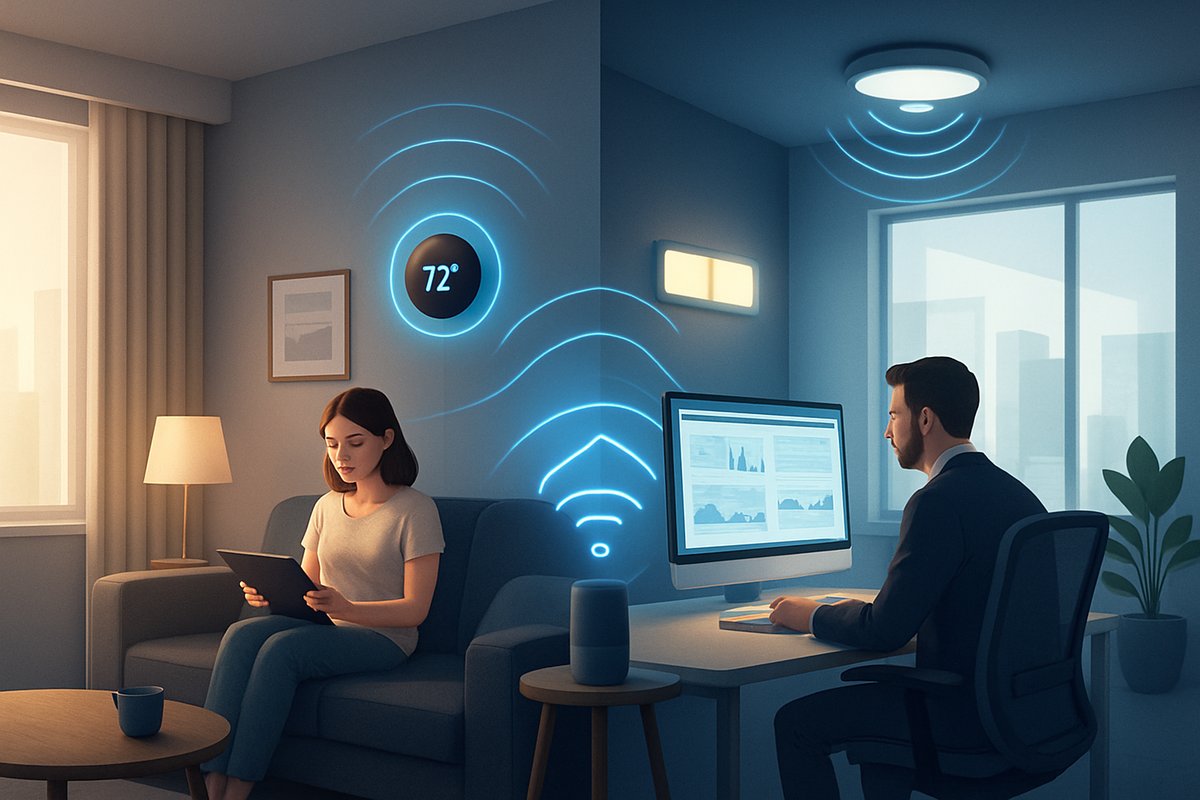
From homes that anticipate your comfort to offices that optimize productivity without a single tap, ambient intelligence is quietly reshaping how we interact with devices. By weaving sensors, adaptive algorithms, and connected ecosystems into our surroundings, this next wave of innovation promises seamless assistance-if we can balance convenience with privacy.
Imagine entering your living room and finding the lights gently adjusted to your preferred brightness, the thermostat nudged to the exact temperature you enjoy after a long day, and soft music fading in-all without touching a switch. This is the promise of ambient intelligence, an emerging frontier where everyday objects sense context, learn patterns, and act in service of human needs. It’s a step beyond smartphones and wearables: intelligence embedded in walls, furniture, and even the air you breathe.
At its core, ambient intelligence relies on networks of small, specialized sensors. Environmental sensors monitor temperature, humidity, air quality, and even sound levels. Motion detectors track occupancy in real time. Gesture-sensing modules use radar or infrared to recognize hand movements. When these data streams converge through edge computing units and cloud-based AI engines, the system can infer human intent and make proactive adjustments.
In modern offices, ambient systems are being piloted to streamline energy use and enhance focus. Desks equipped with presence and ergonomic sensors can remind users to stand or stretch. Lighting arrays adjust color temperature based on daylight cycles or employee schedules, reducing eye strain and boosting alertness. Meeting rooms automatically detect when participants arrive and launch video conferencing setups configured to each group’s preferences. Rather than manually managing controls, workers simply resume tasks uninterrupted.
Hotels are also exploring ambient suites that feel personalized from the moment a guest checks in. Motion zones embedded under carpeting signal arrival in different rooms, triggering a cascade of custom settings: blackout shades retract, the coffee machine begins warming water, and a fragrance diffuser releases a favorite scent profile. Digital voice assistants tuned to ambient audio levels capture requests even when guests speak softly, creating a truly hands-free environment.
On the consumer front, compact environmental monitor kits have surged in popularity. These plug-and-play devices measure particulate levels, volatile organic compounds, and CO₂ concentrations. By sharing data with a home hub, they allow air purifiers and ventilation systems to modulate fan speeds automatically. Families with allergy sensitivities or small children appreciate the real-time alerts when indoor air quality drops below healthy thresholds.
A key enabler for ambient intelligence is the maturation of low-power wireless protocols. Technologies such as Bluetooth Low Energy Mesh, Thread, and Zigbee 3.0 can link hundreds of nodes in a network without rapidly draining batteries. Small sensors tucked behind light switches or ceilings can operate for years on coin-cell batteries, reducing maintenance burdens and installation complexity.
Meanwhile, advances in on-device machine learning mean that pattern recognition can happen locally, rather than relying on round-trip communications to distant servers. Gesture recognition chips, trained on millions of anonymized movement samples, now fit in form factors smaller than a postage stamp. They can distinguish between a quick hand wave to dismiss music playback and a more deliberate motion to deactivate an alarm.
Yet the rise of pervasive sensing raises important questions about data security and personal privacy. When every room senses presence, stores audio snippets, or tracks environmental factors, who owns that data and how securely is it stored? Industry standards are beginning to address encryption, secure boot processes, and anonymization techniques, but consumers will need greater transparency on how information is collected, shared, and deleted.
Open ecosystems and interoperability frameworks are equally essential. In the early days of smart devices, manufacturers often locked users into proprietary platforms. Today, alliances around open standards ensure that a motion sensor from one company can speak the same “language” as a lighting hub built by another. This modularity not only fosters competition but also lets end users customize solutions without sacrificing ease of use.
One of the most compelling aspects of ambient intelligence lies in its ability to learn over time. As algorithms observe daily routines-when you wake, when you leave home, when you wind down-they adapt settings automatically. Morning coffee is ready within moments of waking. Exterior blinds adjust to minimize glare on screens during work hours. Sleep-friendly lighting cues gently dim as bedtime approaches. These gradual refinements accumulate into a fluid, invisible assistance layer.
Beyond homes and offices, ambient systems are appearing in public spaces too. Smart streetlights dim or brighten based on pedestrian traffic. Parks use sensor-based irrigation to optimize water usage, responding to soil moisture and weather forecasts. Retailers are experimenting with shelf-level weight sensors that detect product movement, triggering restocking alerts without manual inventory checks.
Nonetheless, deploying ambient intelligence at scale poses challenges. Sensor density must strike a balance between granular insight and cost. Data pipelines require robust bandwidth without causing network congestion. And real-time processing demands must be carefully architected to prevent latency that breaks the illusion of seamless assistance.
Researchers at several universities are exploring digital twin frameworks, where detailed virtual replicas of physical spaces run in parallel to real-world environments. These digital twins ingest live sensor feeds and simulate potential adjustments before committing changes. For example, a digital model of a smart office might test various climate-control strategies to find the most energy-efficient configuration without disrupting occupant comfort.
Another frontier is emotional intelligence built into ambient systems. By analyzing vocal tone, heart rate variability from wearable signals, or micro-expressions captured by smart cameras, future prototypes aim to tailor environments based on emotional states. A brief cognitive lull during work might prompt a change in music tempo or a short guided breathing exercise via an ambient speaker array.
Despite the allure of environments that learn and respond, some users prefer a fallback to manual control. Designers are incorporating simple physical overrides: a dedicated “quiet mode” button on the wall, voice prompts to disable adaptive features temporarily, or mobile-app toggles for vacation settings. Ensuring that users always feel in command is critical for widespread adoption.
Looking ahead, ambient intelligence will likely converge with other emerging trends: edge AI hardware becoming more capable, ultra-wideband localization chips enabling pinpoint indoor positioning, and 5G networks offering massive device capacities. As costs decline and privacy frameworks strengthen, more everyday objects will gain embedded awareness-chairs that adjust lumbar support, kitchen counters that track food freshness, and door handles that recognize authorized residents through gesture patterns.
Ultimately, the goal of ambient intelligence is to recede into the background. Technology should not demand constant attention but instead anticipate and fulfill needs with minimal friction. When your surroundings become an attentive ally rather than a set of tools, you reclaim time and mental bandwidth to focus on what truly matters-creativity, connection, and well-being.
For consumers intrigued by this vision, getting started can be as simple as adding a few environmental sensors or smart bulbs to your existing setup. Pair them with a capable home hub and explore automation recipes that match your daily rhythms. As you build out your ambient ecosystem, you’ll gain firsthand insight into how small, context-aware devices can transform ordinary spaces into responsive, intelligent environments.
As ambient intelligence marches forward, the line between architecture and electronics will blur. Walls will integrate computing modules, furniture will carry microcontrollers, and everyday items will share a common language of context. We stand at the cusp of living in truly intelligent surroundings-if we can navigate the challenges of data ethics and open innovation, the result promises to be nothing short of life changing.