Location
Mount Vernon, WA 98274
Location
Mount Vernon, WA 98274


Cars are no longer just metal frames on wheels; they've become data hubs, cultural relics, and personal storytellers. From the latest surge in electric vehicle adoption to smartphone-powered dashboards, we explore how today's vehicles drive us forward while preserving echoes of our collective past.
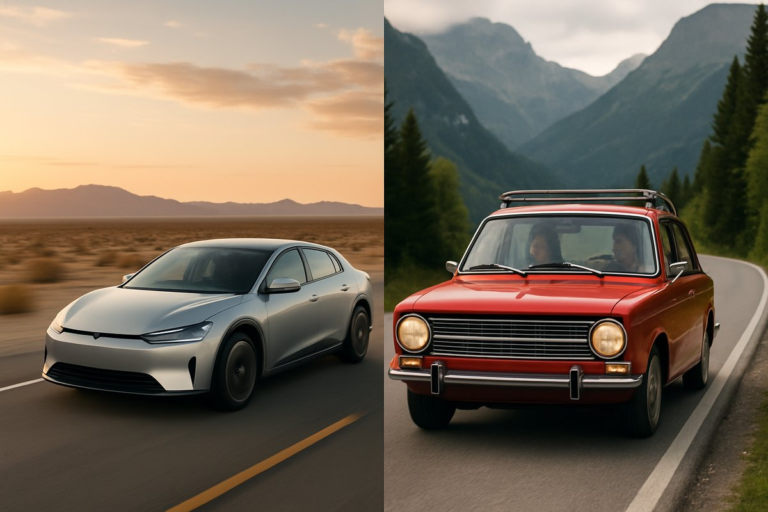
Pull into any urban intersection right now and you’ll find a tapestry of vehicles that speak to both our history and our future. Electric SUVs hum alongside hybrid hatchbacks. Vintage muscle cars rumble past autonomous test fleets bristling with sensors. Built on decades of engineering tradition yet reshaped by software updates and data analytics, modern cars occupy a unique junction of motion and memory.
In many markets around the world, electric vehicles (EVs) now account for more than one in five new car sales. That rapid rise is driven by a mix of tighter emissions rules, government incentives, and shifting buyer priorities. Recent data shows battery costs have fallen by nearly 90 percent over the past decade, meaning automakers can offer longer range at lower sticker prices. Meanwhile, charging networks have grown from a handful of stations in urban centers to thousands of charging points covering highways and rural routes alike. This infrastructure build-out not only eases “range anxiety” but also knits distant communities together under a common network of plugs and pay apps.
Yet for all the buzz around batteries, the true revolution lies in the invisible code running beneath every hood. Over-the-air software updates-once the domain of smartphones and tablets-now arrive via cellular networks directly into vehicle control modules. Drivers can unlock new safety features, improve energy efficiency, or recalibrate steering feel without ever stepping into a dealership. This shift from hardware-first upgrades to software-driven enhancements transforms cars into living platforms that evolve over time, much like our ever-updating mobile apps.
With connectivity comes data-lots of it. Modern cars collect real-time information on speed, acceleration, braking patterns, GPS coordinates, cabin temperature, and even heart-rate signals if a steering-wheel sensor detects changes in blood flow. Aggregated and anonymized, these streams of telemetry help manufacturers optimize traffic flow, predict component failures, and refine energy management algorithms. But at the same time, privacy advocates warn that poorly secured data channels could expose sensitive details about our daily routines. The balance between convenience and confidentiality has become an essential conversation as vehicles learn more about us with every mile we drive.
In the storied garages of collectors, gas-powered icons from decades past remain cherished for their tactile feedback and raw mechanical roar. A restored sports car from the 1960s or a mid-century station wagon carries the fingerprints of countless journeys: a scratched dashboard from a cross-country summer adventure, a seat cushion still molded by generations of passengers. These machines of nostalgia remind us that cars are more than tools for transport-they’re repositories of memory.
Car designers are tapping into that sentimental resonance by blending retro styling cues with contemporary hardware. Recent concept models unveiled at major auto shows feature sloping rooflines and rounded headlamps reminiscent of postwar classics, yet incorporate high-definition digital cockpits and fully electric drivetrains. By weaving past and present, these designs speak to the longing for simpler eras while acknowledging tomorrow’s demands for sustainability and efficiency.
This duel between analog and digital extends to the repair shop, too. Traditional mechanics still cherish the ritual of oil changes, belt adjustments, and spark-plug tuning. At the same time, new maintenance centers troubleshoot software faults with the same rigor once reserved for fuel-injection calibrations. Mobile apps now send alerts when brake pads wear thin or when tire pressure drifts below optimal thresholds. For gearheads and everyday drivers alike, that mix of old-school elbow grease and modern diagnostics builds deeper relationships with our vehicles.
No exploration of cars is complete without the romance of the open road. In recent years, road-trip bookings through peer-to-peer RV and car-sharing platforms have risen steadily as travelers seek adventure outside of crowded tourist hubs. Mapping apps have matured into real-time companions, re-routing around congestion, suggesting scenic byways, and highlighting roadside diners and artisanal coffee shops off the beaten path. With a single tap on a touchscreen, a traveler can pivot from high-speed interstate cruising to a mountaintop detour in minutes.
Yet this newfound freedom carries its own challenges. Not every rural route is equipped with fast chargers, cell towers can drop out in canyons, and unpaved roads test suspension and tire limits. Planning tools now integrate terrain data, weather forecasts, and charging station availability into a consolidated itinerary. This holistic view encourages drivers to pack emergency kits, portable power banks, and spare coolant for longer expeditions-just as generations before lugged roof-racks full of camping gear.
On the sustainability front, automakers are under pressure to close the loop on battery life cycles. Advancements in battery chemistry aim to reduce reliance on scarce minerals, while second-life applications see retired EV packs repurposed as home energy storage. Once those batteries exhaust cycling capacity, improved recycling methods recover up to 90 percent of valuable metals for reuse in the next generation of cells. By treating automotive batteries as circular economy assets rather than disposable components, the industry can shrink its environmental footprint.
Meanwhile, ride-hailing fleets and delivery services are gearing up to electrify entire vehicle lineups. In dense urban areas, zero-emission zones will soon restrict older gas and diesel models, pushing fleets toward electrified vans, sedans, and two-wheelers. The pull of lower operating costs-thanks to cheaper per-mile energy and reduced maintenance-makes electrification a compelling business case beyond environmental goodwill.
Meanwhile, autonomous driving remains the great promise and perennial challenge of the automotive world. Incremental features like automatic emergency braking, lane-keeping assistance, and traffic-jam pilot modes have become standard across many new models. Yet fully driverless taxis are still awaiting regulatory approvals and practical validation. In most real-world trials, complex urban environments with unpredictable pedestrians and cyclists continue to stump vehicle software. The path to autonomy may be slower than some promised, but each iterative safety improvement brings us nearer to a future where machines handle the mundane so drivers can reclaim attention for conversation or contemplation.
If cars are data centers on wheels, they also function as cultural canvases. Street art festivals have invited artists to paint electric vans charging at public squares. Musicians compose soundtracks meant to sync with driving rhythms. Film directors stage action sequences entirely in dashboard-mounted cameras. By embedding ourselves within the form and function of modern vehicles, we blur the lines between machine and human experience.
As we look down the road, it’s clear that cars will continue to shift shape and spirit. They’ll grow smarter, greener, and more connected while never fully shedding the echoes of their combustion-engine past. Whether you’re a commuter tapping a ride-hailing app, a DIY mechanic wrenching under a hood, or an artist cruising scenic byways in search of inspiration, modern cars invite us to explore new horizons without forgetting where we started.
The romance of the open road persists even as vehicles become rolling servers. We still stash vinyl records in gloveboxes, snap instant photos of sunsets from panoramic sunroofs, and swap stories at roadside diners where the neon flickers. Modern cars link us to our digital worlds and to each other, but at their core they’re still about movement-through landscapes, through time, and through shared narratives.
In embracing this dual identity, we discover that every journey is both an outward expedition and an inward exploration. Machines of motion, memory, and meaning, cars carry us toward greener horizons while imprinting every mile on our personal histories. And in that intersection lies the true journey: not just the drive from point A to B, but the evolving story of how we move, remember, and connect along the way.