Location
Mount Vernon, WA 98274
Location
Mount Vernon, WA 98274

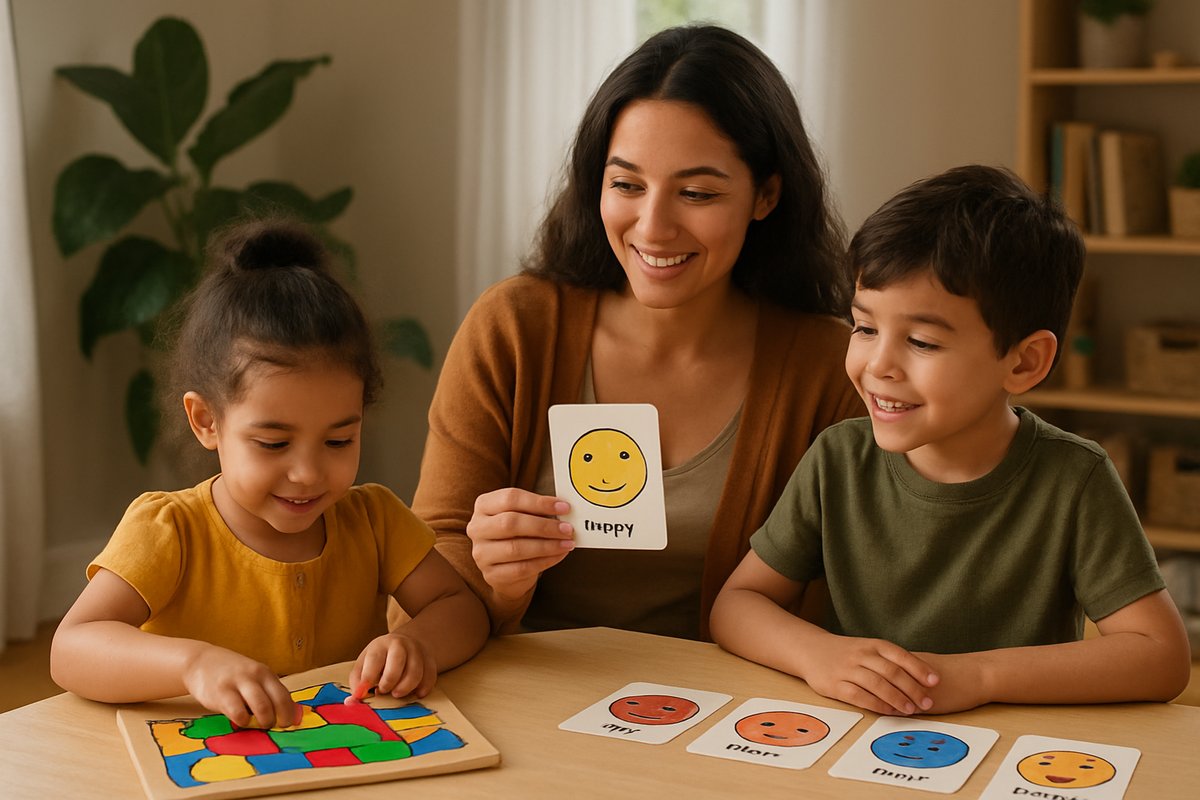
Across backyards, community centers, and digital platforms, families are reimagining early education through a heart-centered mix of hands-on play and emotional coaching. From wooden puzzles that spark creativity to emotion flashcards that build self-regulation, this movement is empowering young thinkers to explore, express, and grow.
On a bright Saturday morning in a community park, families gather around a low table strewn with wooden puzzles, sensory bins filled with colored rice, and illustrated emotion cards. Parents and toddlers alike hover over pieces of a handcrafted building set, experimenting with towers and tunnels. Nearby, a circle of preschoolers sits in a semicircle, each holding a flashcard that prompts them to mime joy, frustration, or curiosity. The air hums with laughter, gentle coaching from adults, and the satisfying click of blocks snapping together. What looks like an ordinary playgroup is emblematic of a growing shift: combining playful exploration with intentional emotional learning.
Today’s parenting landscape is marked by a renewed focus on fostering agency and emotional intelligence alongside cognitive skills. A recent survey by the Parent-Child Research Collaborative found that nearly 80 percent of caregivers consider self-regulation and empathy just as important as letter recognition or counting. In response, educators and toy designers are collaborating to create tools that merge skill building with heart-centered guidance. Rather than isolating academics from feelings, these innovators believe that curiosity thrives when children feel supported, seen, and free to experiment.
At the core of this approach are learning toys that emphasize open-ended play. Wooden building blocks, magnetic tiles, and natural-fiber weaving looms encourage spatial reasoning and fine motor skills, while inviting limitless possibilities. Parents report that rotating a small collection of versatile toys-rather than stocking a shelf full of single-use gadgets-keeps children engaged longer and deepens imaginative play. One family journaled that their preschooler’s problem-solving blossomed after discovering that a simple gear set could transform into everything from a makeshift car to a miniature windmill.
Emotional tools are the other pillar of this movement. Illustrated flashcards depicting facial expressions, color-coded “feeling thermometers,” and puppet theatre sets give youngsters tangible ways to identify, express, and manage emotions. During a recent pilot program at a suburban community center, facilitators guided parent-child pairs through role-play scenarios using emotion puppets. Caregivers learned to validate a child’s frustration-“I see you’re feeling mad because the tower fell down”-and then invited problem-solving: “What can we try next?” This simple ritual of naming feelings and brainstorming solutions builds both vocabulary and resilience.
Technology remains part of the mix, but parents are balancing screen time with intentional offline moments. Educational apps that adapt lessons in phonics or numeracy can offer personalized pacing, yet too much screen focus can crowd out interpersonal connection. In response, families are designating “tech-free zones” in playrooms and bedrooms. Tablets and interactive coding robots come out for 20- to 30-minute sessions, then get tucked away as children shift to sensory play or outdoor discovery. This rhythm of digital spark followed by hands-on exploration helps sustain attention and fosters a deeper sense of agency.
Take the Rivera family, for example. They live in a bustling city but have converted a spare corner of their living room into a “learning nook.” Here, their kindergartener toggles between building a marble run and logging into an AI-powered reading buddy. At the same table, a framed emotion thermometer hangs on the wall alongside a small whiteboard where the child draws how they feel each day. Over months of this practice, both child and parents report calmer mornings and greater confidence when new challenges arise at school.
A growing body of research underscores these anecdotal successes. A study published by the National Institute for Early Learning found that children who received combined play-based and emotion-focused interventions outperformed peers on executive-function tasks by 15 percent and showed 20 percent higher rates of cooperative behavior. Experts point out that executive function-skills like working memory and impulse control-relies on a foundation of emotional awareness. When youngsters can label and manage their feelings, they allocate more mental energy to problem solving and creativity.
Community networks are amplifying the impact of these practices. Parenting co-ops now include “emotion circles,” where caregivers swap strategies for guiding a toddler through a meltdown or coaching a preschooler to use words rather than hitting. Local libraries host “sensory Sundays,” featuring texture tables and paint-and-sip sessions for grown-ups to share insights. Even virtual parent lounges have sprung up, dedicating weekly slots to guest experts in child psychology and sustainable toy design.
Sustainability is increasingly woven into these conversations. Families are seeking eco-friendly alternatives: wooden puzzles finished with non-toxic paints, fabric storybooks crafted from organic cotton, and recycled-plastic building bricks. Many parents report that choosing durable, open-ended pieces not only reduces waste but also deepens the toy’s sentimental value. A puzzle passed down to a younger sibling becomes a family heirloom, carrying both memories and learning opportunities across generations.
For caregivers eager to embrace this heart-centered approach at home, experts recommend creating a learning environment that balances structure with freedom. Designate distinct zones-an art corner with washable paints and paper, a reading alcove cushioned with floor pillows, and a building station stocked with versatile blocks. Rotate materials every two weeks to maintain novelty, and involve children in choosing what comes out or goes back into storage. Such rituals honor their sense of agency and teach organizational skills.
Regular check-ins on emotional climate are equally vital. Consider a daily “feelings check” at breakfast or bedtime: a short prompt (“What color is your mood today?”) or a shared breathing exercise. Caregivers who lead by example-naming and modeling their own emotions-reinforce a culture of openness. Over time, these tiny rituals build a shared vocabulary for joy, frustration, curiosity, and calm.
Outdoor play remains a powerful complement. Whether it’s a neighborhood scavenger hunt or improvised nature journaling, fresh-air exploration taps into all five senses while fostering awe and independence. Community gardens, urban parks, and backyard stashes of pinecones and leaves can become dynamic classrooms. Parents report that a simple walk often yields spontaneous math lessons (“How many steps to the big oak tree?”) and science discoveries (“Why does moss grow on this side of the rock?”).
Ultimately, this evolving blend of play, emotion, and community is about raising thinkers who feel seen, supported, and equipped to navigate a complex world. By honoring both the head and the heart, families are forging new paths for joyful learning-paths that stretch far beyond letter blocks and flashcards. As caregivers and educators continue to innovate, the next generation of thinkers will grow in curiosity, empathy, and resilient confidence.
In living rooms and playgrounds across the globe, the message is the same: when children explore with agency and learn through feeling, they don’t just absorb facts-they become lifelong seekers of knowledge and kindness.