Location
Mount Vernon, WA 98274
Location
Mount Vernon, WA 98274

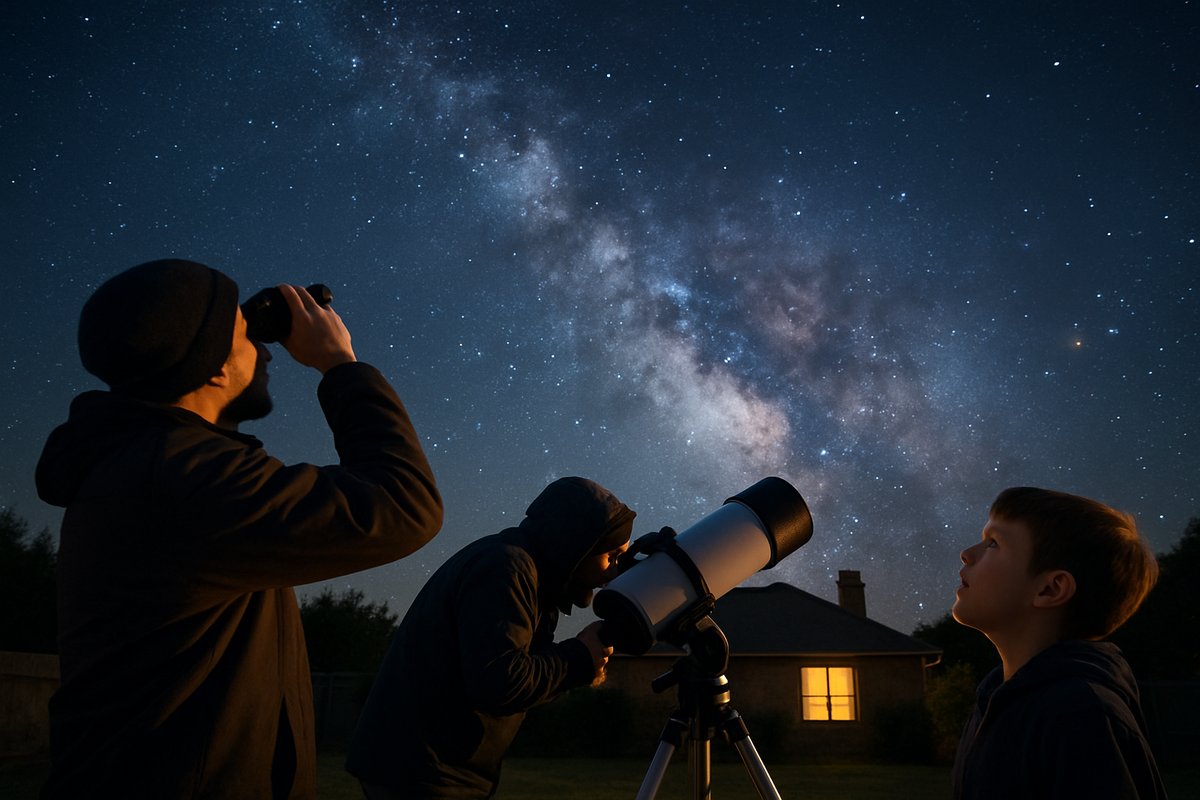
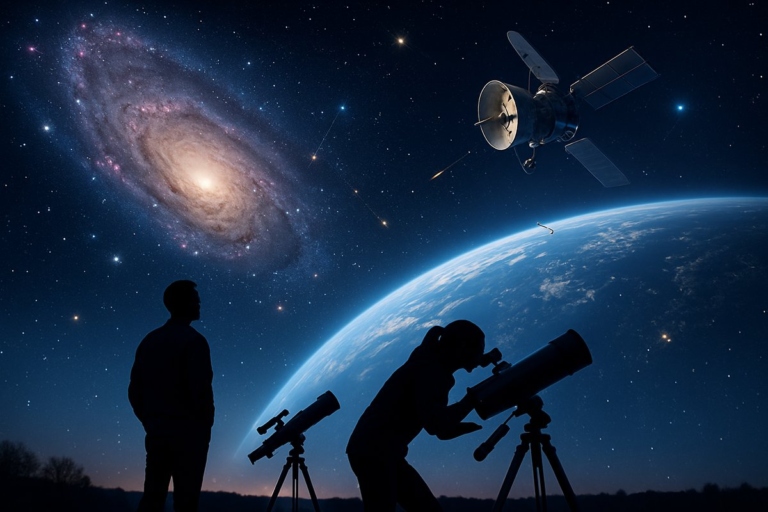
From backyard stargazing to probing the faint tremors of spacetime, cosmic curiosity invites us on a journey that blends playful discovery with profound insight. This exploration reveals how our fascination with the heavens shapes science, community, and even our sense of place on Earth.
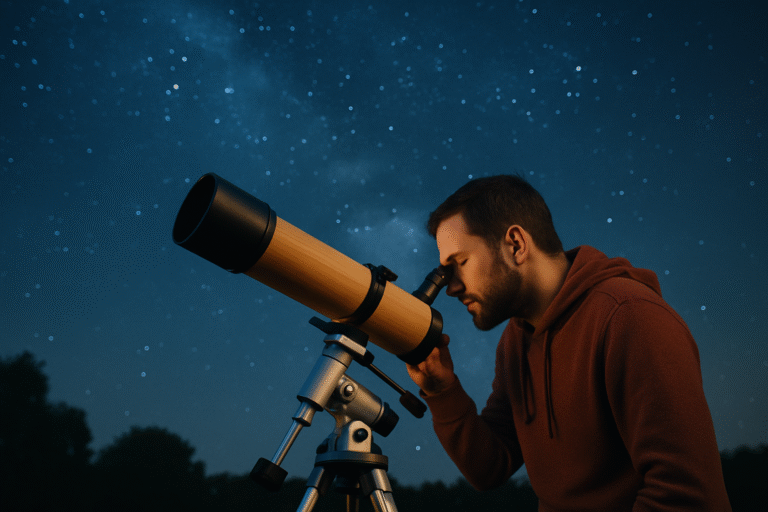
On a crisp evening, the veil of deep indigo above a quiet field comes alive with pinpricks of light. Leaning back on a weathered blanket, a sense of awe settles in as the Milky Way arches overhead. It feels at once ancient and immediate-a tree-ring of starlight, holding the memory of every orbit, pulsar, and dying star. This magical collision of immediacy and eternity lies at the heart of cosmic curiosity-the restless urge to explore space, time, and the subtle pulse of the physical world.
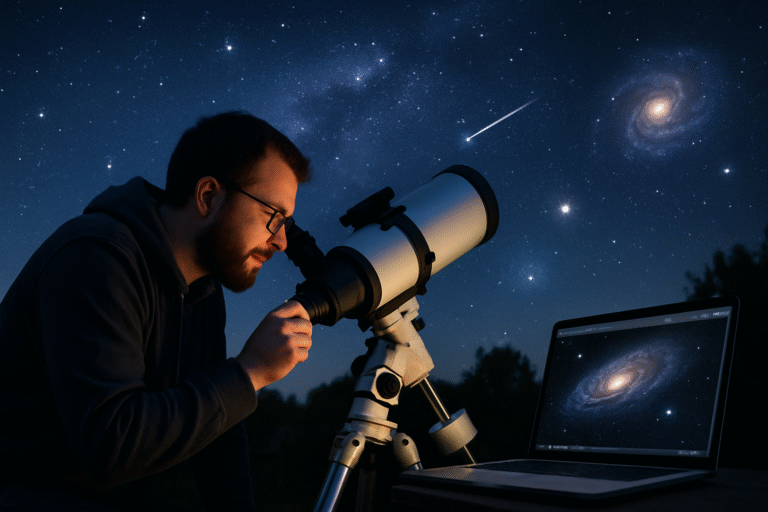
Cosmic curiosity often begins with simple questions we pose under a playground of stars. How far is that glimmer on the horizon? What if a flash of light trails across the sky? Amateur stargazers and seasoned enthusiasts alike find that even small tools unlock grand revelations. A pair of binoculars reveals Jupiter’s cloud bands. An entry-level telescope makes the lunar surface feel within reach. Custom star charts transform patterns of light into celestial narratives. Gathering under moonlight, strangers become collaborators in unravelling the universe’s riddles, driven by the same spark of wonder.
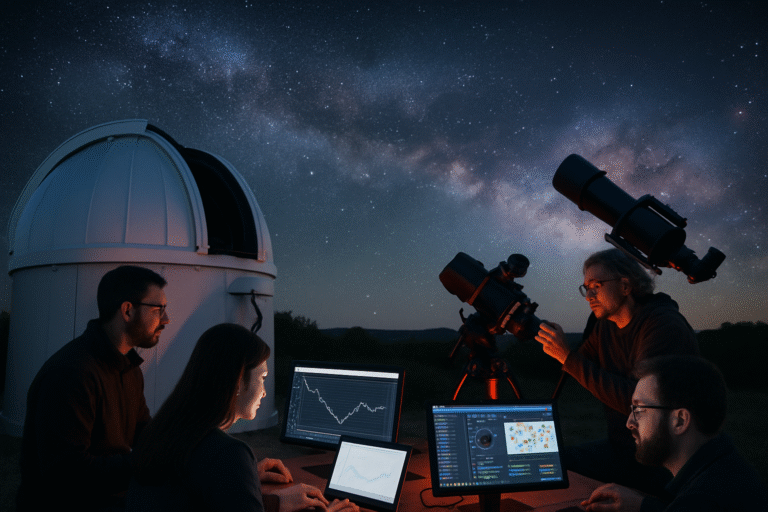
In recent years, citizen science platforms have demonstrated the power of collective curiosity. Data from powerful observatories is crowdsourced, inviting anyone with an internet connection to tag galaxies, map craters, or hunt for planetary transits. Volunteers have helped classify tens of thousands of galaxies, unearth new exoplanets, and even spot unexpected cosmic phenomena. Far from passive spectators, these curious trekkers across pixels and wavelengths contribute to real discoveries, proving that excitement and rigor can flourish hand in hand.
At the frontier of cosmic exploration, next-generation space telescopes peer deeper into time and space than ever before. Their infrared eyes unveil nascent galaxies, sparking theories about the dawn of starlight. Meanwhile, gravitational wave detectors listen to the universe’s hidden symphony-the faint tremors of merging black holes and neutron stars rippling through the fabric of spacetime. Each detection carries echoes from extreme environments, guiding physicists toward a unified understanding of gravity, quantum mechanics, and the origins of matter itself.
Yet the impact of cosmic curiosity extends far beyond cutting-edge labs. Seeing Earth as a pale blue dot, suspended in the vast darkness, reshapes our relationship with the planet. This cosmic perspective inspires sustainability efforts, reminding us that fragile biospheres demand thoughtful stewardship. It fuels environmental advocacy by illustrating the scale of cosmic isolation. From amplifying calls for clean energy to bolstering space-based climate monitoring, the impulse to gaze outward often circles back with solutions for pressing terrestrial challenges.
Time also takes on new resonance when viewed through a cosmic lens. Light emitted by distant stars began its journey long before humans first walked upright. In that sense, every telescope becomes a time machine, and every photon a messenger from ages past. Cosmologists reconstruct the universe’s timeline, tracing epochs of rapid expansion, galactic collisions, and chemical evolution. For the curious mind, this narrative of cosmic ancestry invites reflection on the fleeting nature of human lifetimes against a backdrop of billion-year cycles.
Art and philosophy find rich inspiration in this grand tapestry. Poets weave constellations into metaphors for memory. Sculptors craft installations that emulate the motion of celestial bodies. Virtual reality installations allow participants to navigate simulated wormholes, sparking playful experiments with perception. In every creative medium, cosmic patterns become a palette for exploring identity, consciousness, and the interplay between microcosm and macrocosm.
Meanwhile, emerging technologies bring the cosmos closer at home. Portable planetarium projectors transform living rooms into immersive star theaters, casting dancing constellations across walls and ceilings. Augmented reality apps overlay mythic narratives onto the night sky, guiding novices through stories of hunter, healer, and hero depicted among the stars. With each new interface, the universe becomes more accessible, inviting learners of all ages to participate in a cosmic dialogue.
Seasonal meteor showers, solar eclipses, and planetary alignments serve as communal milestones for cosmic enthusiasts. Local astronomy clubs host watch parties in parks and nature preserves, pairing telescopes with hot cocoa and stargazing apps. These gatherings underscore a shared truth-that curiosity is a thread connecting individuals across cultures and generations. Whether one seeks the whistling tails of comets or the subtle glow of distant nebulae, the act of observing together kindles friendship and sparks fresh questions about our place in the universe.
Educational initiatives amplify this momentum by embedding cosmic themes into classrooms. Students collaborate on rocket design challenges, analyze meteorite samples, and decode cosmic microwave background maps. Project-based learning fosters critical thinking and teamwork, while hands-on experiments demystify complex physics. By channeling youthful wonder into structured inquiry, educators cultivate a new generation of problem-solvers ready to tackle both interstellar mysteries and earthly dilemmas.
Even deep within research institutions, playful moments persist. Graduate students sprint to point out unexpected features in new telescope images, while theorists sketch doodles of warped spacetime on whiteboards. Lunchroom conversations drift from astrophysics to sci-fi dreamscapes, yet every speculation circles back to empirical questions: What observations would confirm that idea? How would we detect a signal? In this blend of rigor and imagination, cosmic curiosity finds its most vibrant expression.
As public interest in space science swells, interdisciplinary collaborations flourish. Biologists ponder the prospects of life in extreme environments, informed by discoveries of hardy microbes thriving in Earth’s harshest niches. Geologists examine meteor impacts to decode planetary histories. Engineers prototype miniaturized satellites, enabling cost-effective missions that democratize access to orbit. Across disciplines, the gravitational pull of cosmic questions fosters innovation and cross-pollination.
Ultimately, cosmic curiosity is more than a pastime. It is an engine of inspiration that propels scientific discovery, community building, and personal growth. Each time we look up, we engage in a dialogue with forces that shaped our atoms, sculpted our world, and continue to guide our destiny. In embracing this curiosity, we claim a role as active participants in the universe’s ongoing story-ready to decode its mysteries, share its wonders, and apply its lessons to the challenges we face here at home.
So next time you step into a clearing and find yourself bathed in starlight, remember that each point of illumination is an invitation. It beckons you to ask questions, challenge assumptions, and marvel at connections between the infinitesimal and the infinite. In that space of wonder, cosmic curiosity awakens not only our minds, but also a deeper sense of belonging to the vast, unfolding adventure of existence.