Location
Mount Vernon, WA 98274
Location
Mount Vernon, WA 98274

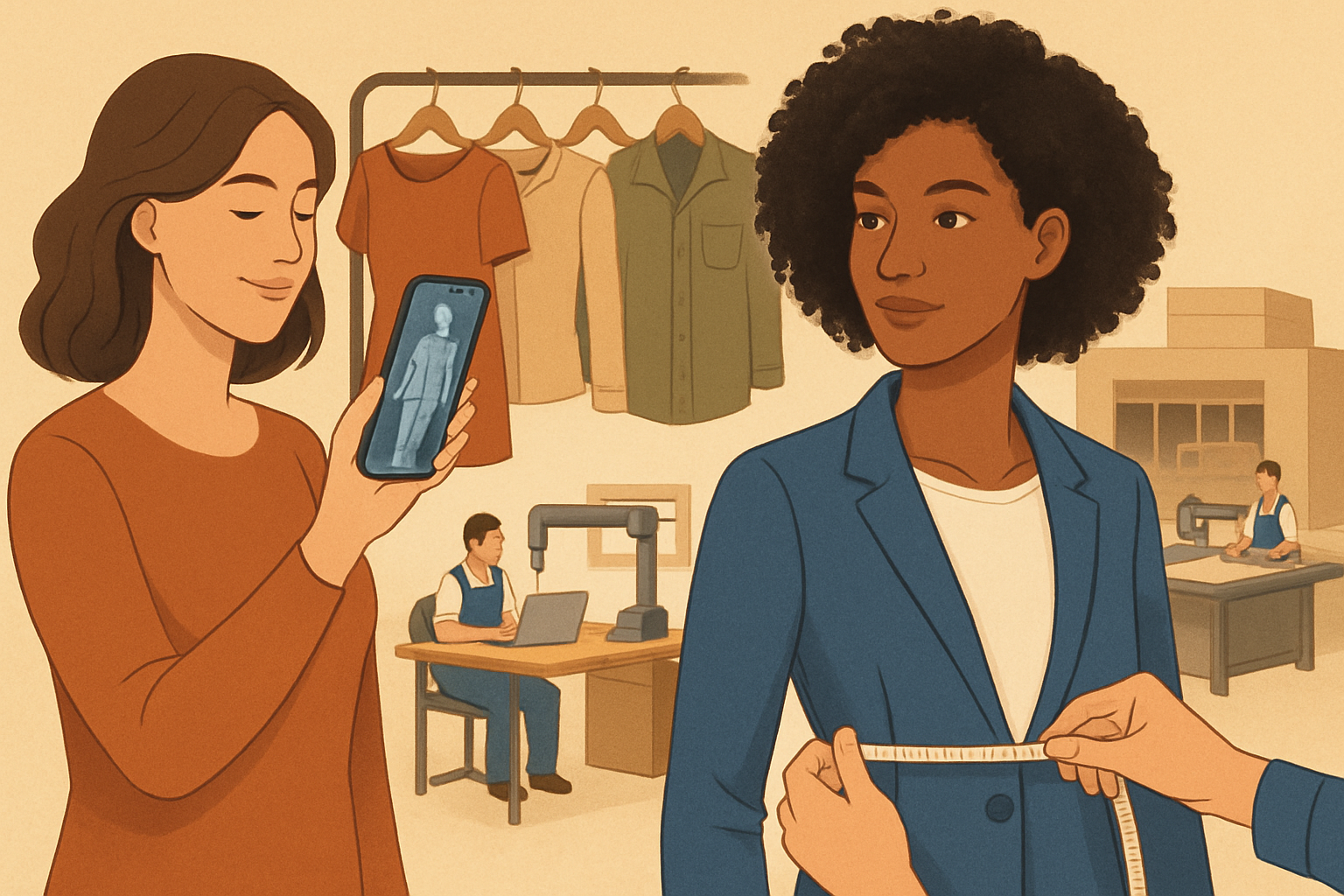
From smartphone scans to local micro-factories, on-demand tailoring is transforming how we shop, wear, and care for clothing. This shift toward made-to-measure garments not only reduces waste but also empowers consumers to express their unique style without compromise.
The fashion industry stands at a crossroads. Once defined by seasons, trend cycles, and sprawling overseas supply chains, it now faces rising consumer demand for authenticity, fit, and sustainability. A new model is emerging, one that moves beyond mass-produced staples toward on-demand tailoring. In this world, clothing is not simply bought off the rack and discarded when it no longer fits or feels fresh. Instead, it’s conceived, measured, and crafted around individual bodies and personal tastes.
At the heart of on-demand tailoring are technological innovations that make personalized fit accessible to everyday shoppers. With a smartphone in hand, consumers can use specialized scanning apps or clip-on sensors to capture precise body measurements. These data points feed into digital pattern-making software that adjusts every seam and curve to match the user’s form. Orders are routed to regional micro-factories or local ateliers, where garments are cut, sewn, and finished in small batches. The result is a perfectly fitting garment delivered in days rather than months – and without the environmental toll of large-scale overproduction.
This approach flips the traditional fashion calendar on its head. Instead of pre-ordering thousands of generic sizes months in advance, designers can launch limited runs of customer-driven styles. If a particular silhouette resonates, it may become a permanent offering; if not, prototypes are simply archived in a digital library. Retailers save money on storage and markdowns, while shoppers feel seen and valued. More importantly, fewer garments end up in landfills – the industry’s fastest-growing waste stream.
But technology alone doesn’t tell the full story. For many, the appeal of on-demand tailoring is deeply personal. One former fast-fashion enthusiast recalls the frustration of battling awkward fits and endless returns. After sampling a digital measurement service, she discovered that a custom-cut blazer elevated her confidence in surprising ways. Sitting down for meetings or presenting in front of a crowd felt different when every lapel and shoulder seam aligned precisely. That small boost in self-assurance rippled outward into her social life and even her approach to self-care.
Local makers are also reclaiming a seat at the table. In neighborhoods where garment factories once flourished, small teams of pattern cutters and seamstresses are rekindling generational craftsmanship. With digital orders arriving in the morning and finished pieces heading out by afternoon, they are forging a new, hyper-local supply chain. By blending centuries-old hand skills with modern file transfers, these artisans preserve heritage techniques while addressing contemporary demands.
Beyond fit and mindfulness, on-demand tailoring introduces fresh opportunities for material innovation. Fabric mills, freed from pressure to produce uniform rolls by the mile, can experiment with limited-edition weaves and blends. Think biodegradable denim infused with sea-weed extracts or moisture-wicking suiting made from post-consumer plastic bottles. When each yard of fabric is destined for a specific order, there’s room to trial specialty textiles without the risk of creating unsold surpluses.
Critics warn that the hands-on nature of custom sewing could drive up costs, placing personalized apparel out of reach for many. Yet early adopters argue that the true value equation shifts when garments last longer, require fewer alterations, and spare the buyer additional purchases to achieve the right look. Rather than buying five off-the-rack shirts that need constant hemming, a customer might invest in one perfectly tailored shirt that endures both in style and quality.
To bridge price gaps, several platforms now offer modular customization. Shoppers choose from a curated palette of silhouettes – say, three jacket bodies, four sleeve styles, and two collar options – then input measurements for each dimension. This semi-custom method cuts down on pattern-making time while offering enough variation to feel genuinely bespoke. Payment plans and trade-in initiatives further spread out expense and ensure that older pieces can be recycled or upcycled.
This reimagined clothing lifecycle also taps into community vibes. Some on-demand services host pop-up measurement studios in co-working spaces or local cafes, turning the mundane act of measuring into a social experience. Attendees swap styling tips, sample fabrics, and connect with tailors who treat each fitting like a one-on-one design consultation. Invitations to virtual workshops on pattern drafting or garment care deepen engagement, fostering a sense of belonging around shared values of quality and sustainability.
Meanwhile, major fashion houses are taking note. Luxury brands once reluctant to cede control over pattern cutting are rolling out pilot programs that invite customers to design personalized renditions of signature pieces. These initiatives acknowledge a broader truth: in an era when digital profiles track our every preference, one-size-fits-all no longer resonates.
Of course, challenges remain. Returns for made-to-measure mistakes can still clog courier networks if measurements are entered incorrectly or body shapes fall outside standard scanning parameters. Seamstresses struggle to scale when demand spikes suddenly. And for the moment, on-demand garment services tend to focus on staples – a well-cut blazer, a tailored blouse, or classic trousers – rather than complex couture gowns or heavily embellished eveningwear.
Yet the momentum feels palpable. As technology continues to refine scanning accuracy and pattern-making algorithms, the barrier to entry lowers for both entrepreneurs and consumers. The question no longer seems to be whether on-demand tailoring will flourish, but how swiftly it will redefine shopping habits. Will we look back on impulse sales rack-dives as quaint relics of a bygone era, replaced by mindful, made-to-measure wardrobes?
In a broader sense, this shift reflects changing consumer values. Shoppers today crave authenticity, transparency, and personal expression over unchecked accumulation. They want to know who made their clothes, what materials were used, and whether the process honored environmental limits. On-demand tailoring answers many of those demands by shrinking the gulf between creator and wearer.
Ultimately, the move toward personalized apparel is about more than just measurements. It’s a response to deeper aspirations: to be treated as an individual with unique proportions and style, to invest in pieces that endure both physically and emotionally, and to participate in a system that champions local artisans and responsible resource use. As the on-demand phenomenon gathers traction, it could mark the next chapter in a decades-long journey to align fashion with the planet’s needs and our human desire for authenticity.
Whether you’re a minimalist seeking the perfect T-shirt cut or someone who relishes the ritual of co-designing a capsule wardrobe, on-demand tailoring invites you to step off the conveyor belt. After all, real style begins when garments are measured, cut, and stitched just for you – stitch by stitch, and story by story.