Location
Mount Vernon, WA 98274
Location
Mount Vernon, WA 98274

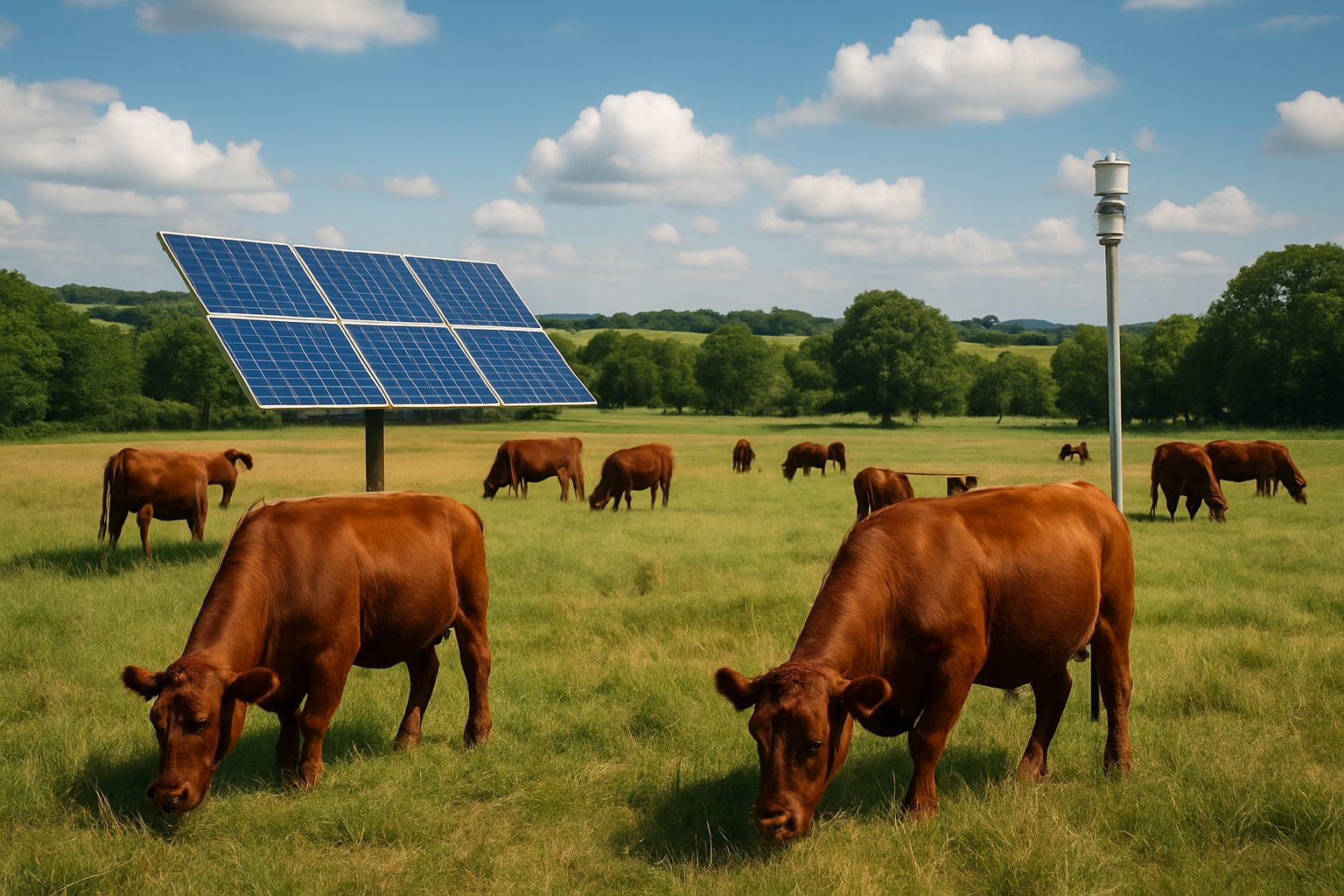
At a time when climate volatility and resource constraints challenge traditional livestock operations, a wave of farms is turning to data-driven grazing and renewable energy to boost resilience and sustainability. By marrying precision sensors, solar power, and community collaboration, these ranchers are rewriting the rules of pasture management and animal welfare.
Across rolling grasslands and arid rangelands alike, livestock producers are confronting a new set of pressures. Unpredictable weather patterns, rising feed costs, and growing demands for environmental stewardship have made conventional approaches harder to sustain. In response, a growing number of ranchers and mixed farms are deploying precision agriculture tools and renewable energy systems to optimize pasture health, conserve water, and enhance animal welfare. This shift reflects a broader trend in farming where data and solar power are becoming as essential as fences and feed troughs.
One of the most visible innovations is the use of solar-powered water pumps. Instead of relying on diesel generators or grid connections, solar arrays drive pumps that fill troughs in remote locations. These systems not only lower fuel expenses and greenhouse gas emissions but also ensure consistent water delivery during grid outages. Paired with battery backups, they operate autonomously, giving ranchers greater flexibility when planning grazing rotations.
Underpinning these upgrades is an array of IoT sensors scattered throughout pastures. Soil moisture sensors measure water content at various depths, transmitting data via low-power wide-area networks. Forage growth sensors track biomass in real time, helping managers decide when to move herds on or off a paddock. Combined with local weather information and on-site temperature loggers, this data feeds into simple dashboards that deliver clear alerts: “Soil nearing drought threshold,” or “Optimal rest period reached.”
Consider the example of Cedar Ridge Ranch, a family operation in a semi-arid region. Facing five straight years of drought, the owners installed soil probes at multiple points across their 800-acre spread. Solar panels power a central gateway that collects data and uploads it to a mobile app. Armed with up-to-the-minute readings, the ranch managers now rotate cattle every two weeks, allowing previously overgrazed areas to recover and reducing supplemental hay purchases by 30 percent.
Beyond water and forage management, smart fencing is finding a place on modern livestock farms. Electrified strands linked to mesh gateways can be turned on or off remotely, creating flexible paddocks within moments. This practice, known as adaptive grazing, allows farmers to respond instantly to sensor alerts. If soil sensors indicate a plot is nearing stress, animals can be shifted within minutes rather than days, preventing overuse and encouraging root development.
While the upfront cost of solar installations and sensor networks can be significant, small-scale pilots often pay for themselves within two to three seasons. Many regional agricultural extension offices now offer grants or cost-share programs to lower the barrier to entry. In some cases, local cooperatives pool resources to install shared weather stations and solar equipment, spreading both maintenance duties and benefits across multiple farms.
Despite the promise of precision tools, challenges remain. In areas with spotty cellular coverage, data transmission can falter. Some farmers find the initial setup and calibration of sensors daunting, especially when wireless networks require careful tuning. Maintenance of solar panels and batteries is also a new skill set for many livestock operations accustomed to mechanical repairs. To bridge these gaps, vocational schools and extension services are developing workshops on renewable energy upkeep and IoT basics.
On the pasture itself, older animals sometimes test the strength of adaptive fencing, and harsh weather events can knock panels out of alignment. Ranch hands must be prepared with basic troubleshooting kits-volt meters, spare wiring, and mounting hardware-to handle mid-season repairs. In response, a handful of rural tech startups have started offering on-demand field assistance services, dispatching teams that specialize in agricultural solar and sensor systems.
The benefits of mastering these technologies extend beyond operational efficiency. Improved pasture rest cycles lead to stronger root systems, greater carbon sequestration, and healthier soils. Livestock that drink cleaner water and forage on well-managed grasslands exhibit lower rates of digestive disorders and display livelier social behavior. Animal welfare advocates note that reducing stress from water scarcity and feed shortages can translate into better weight gain and even higher-quality fiber or meat.
Community-minded producers are also leveraging shared data platforms. In one regional network, 25 farms contribute anonymized pasture and weather metrics, creating a richer pool of information than any individual ranch could gather alone. This cooperative model boosts forecasting accuracy, reveals broader grazing patterns, and cultivates a spirit of mutual support. During periods of extreme drought, participants coordinate forage exchanges to ensure smaller operations can maintain herd health.
Nutrition management is another frontier blending precision and tradition. Automated feed dispensers, linked to weight scales and RFID ear tags, track individual animal intake and growth rates. When a young heifer falls below target weight, the system flags it for supplemental feeding. Over the course of a season, these dispensers can reduce feed waste by up to 15 percent, while improving uniformity across the herd. Complementing this, mobile crushing units convert field residues into chopped forage, turning what would have been waste into additional nutrition.
Looking ahead, drone-based pasture surveys promise to add another layer of insight. Equipped with multispectral cameras, drones will soon be capable of mapping plant health and detecting nutrient deficiencies before they become visible to the naked eye. Combined with blockchain-enabled supply chains, farms might one day certify carbon offsets generated through regenerative grazing, opening new revenue streams and strengthening consumer confidence in sustainable livestock products.
For livestock producers hoping to adopt these innovations, the key is starting small. Piloting a single water pump and a handful of soil sensors on a trial paddock provides practical experience without overwhelming resources. Partnering with nearby farms or local ag-tech mentors can ease the learning curve. Above all, maintaining curiosity and a willingness to iterate will turn initial experiments into long-term successes.
In an era defined by environmental uncertainty and shifting market demands, the fusion of data, solar energy, and agile management offers a pathway to resilience. By embracing precision pastures, livestock farmers can nurture healthier herds, regenerate soils, and safeguard livelihoods against the storms-both literal and economic-on the horizon.