Location
Mount Vernon, WA 98274
Location
Mount Vernon, WA 98274

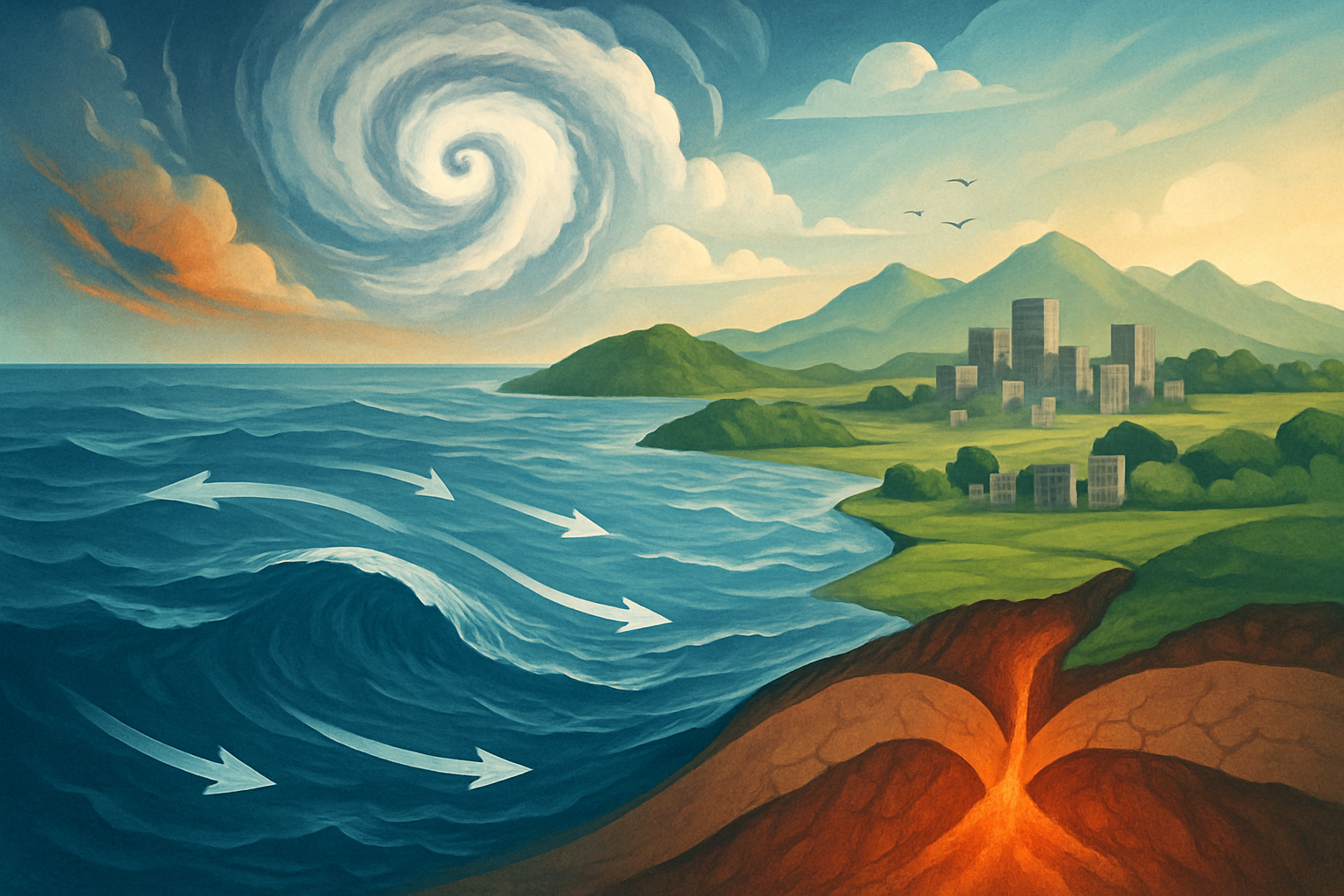
From the silent surge of ocean currents to the unseen pull of tectonic plates, Earth's natural forces orchestrate a complex ballet that influences climates, ecosystems, and human societies. Discover how subtle shifts beneath the waves and high above in the atmosphere ripple across continents, and how communities adapt to the planet's ever-changing rhythms.
Every day, we tread upon a stage set by immense natural forces, most of which remain invisible to our eyes yet integral to life on Earth. Beneath the placid surface of the ocean, vast currents carry heat, nutrients, and microscopic life across thousands of miles. High above, jet streams carve invisible highways in the atmosphere, steering storms and shaping regional climates. Deep below our feet, tectonic plates grind and buckle, sculpting mountain ranges and spawning earthquakes. These phenomena may seem remote, but their combined influence touches every corner of the globe, from the food we grow to the air we breathe.
The Ocean’s Conveyor: Heat, Life, and Climate Regulation
When sailors first crossed the Atlantic centuries ago, they learned to harness prevailing winds and currents to chart efficient routes. Today, we know these currents form a grand “conveyor belt” that redistributes heat from the tropics toward polar regions. The Gulf Stream, for instance, transports warm waters from the Caribbean northward, tempering winters in Western Europe. Meanwhile, cold currents drifting along the western coasts of continents upwell nutrient-rich waters that fuel vibrant marine ecosystems and support major fisheries.
Climate scientists have observed that subtle changes in this conveyor can have outsized impacts. A slight slowdown in the Atlantic Meridional Overturning Circulation-a key component of the global conveyor-has been linked to harsher winters in Europe, shifts in monsoon patterns over Africa and Asia, and rising sea levels along the U.S. eastern seaboard. As freshwater from melting ice sheets enters the North Atlantic, researchers monitor the circulation’s strength using an array of autonomous floats and satellite measurements. Early-warning signs of disruption prompt policymakers and coastal communities to reevaluate flood defenses, agricultural planting calendars, and energy demands.
Jet Streams: Invisible Rivers in the Sky
If ocean currents steer ships, jet streams steer aircraft and shape weather systems. These narrow bands of strong wind high in the atmosphere form where warm and cold air masses collide. A shift in the polar jet stream can stall weather fronts, leading to prolonged heatwaves or unrelenting rainfall.
In recent years, scientists have observed that warming in the Arctic-occurring at twice the global average rate-weakens the temperature gradient between the poles and mid-latitudes. A meandering jet stream becomes prone to “blocking” patterns, where high- and low-pressure systems linger. This can lead to record-breaking heat in one region and deep freezes in another, sometimes separated by just a few hundred miles. Farmers in the American Midwest, for example, brace for sudden downpours that delay planting, while urban dwellers in Europe prepare for unexpected cold snaps that strain energy grids.
By combining data from weather balloons, commercial aircraft, and ground-based radar, meteorologists refine predictive models that capture these jet stream shifts. Improved forecasts can give communities more time to adapt-whether it’s issuing heat-health advisories, managing water reservoirs, or safeguarding crops.
The Quiet Roar of Plate Tectonics
While many forces acting on Earth’s surface involve fluid motion-air and water-the slow collision and separation of solid lithospheric plates also shape the planet’s topography. The uplift of mountain ranges, like the Himalayas and the Andes, results from converging plates crumpling the crust. Subduction zones, where one plate plunges beneath another, generate some of the most powerful earthquakes and fuel volcanic arcs.
Modern seismology tracks microtremors and giant quakes alike through networks of seismometers. Emergent technologies allow scientists to detect precursor signals-minute shifts in stress along fault lines-offering a glimpse into possible seismic hazards days or weeks in advance. While accurate earthquake prediction remains elusive, hazard maps informed by geological history and GPS measurements of ground deformation guide building codes in vulnerable regions. In coastal cities perched near subduction zones, tsunami warning systems integrate ocean buoys, coastal tide gauges, and community alert networks to minimize loss of life when the earth suddenly rumbles.
When Cultures Meet the Forces of Nature
Human societies are not passive observers of these phenomena. Coastal villages in Southeast Asia have traditional knowledge of wind patterns and monsoon timing, passed down through generations. In the Andes, farmers practice “vertical archipelagos,” cultivating crops at different elevations to hedge against localized frost or drought. Inuit communities in Greenland monitor sea ice thickness and drift patterns to time fishing expeditions and avoid hazardous floes.
Yet the pace of change is testing even the most resilient traditions. In parts of sub-Saharan Africa, shifting rainfall patterns strain pastoralist herds as familiar grazing lands become arid. Pacific island communities confront rising sea levels that erode shorelines and contaminate freshwater lenses. City planners in rapidly urbanizing regions grapple with flash floods unleashed by intense convective storms. Each challenge requires a blend of indigenous wisdom and cutting-edge science.
Harnessing Natural Forces for Sustainable Solutions
Amid the risks, nature’s forces also present opportunities. Geothermal vents along mid-ocean ridges hint at clean energy sources extracted from deep reservoirs of heat beneath volcanic hotspots. On land, enhanced geothermal systems tap hot, permeable rock by circulating water through engineered well networks. Meanwhile, offshore wind farms harness the power of persistent sea breezes, generating renewable electricity with minimal land use.
Advances in material science promise infrastructures that flex rather than fracture under seismic strain. Shape-memory alloys and energy-dissipating dampers in high-rise buildings can absorb earthquake shocks. Floating solar arrays drift on reservoirs carved into former mining pits, co-locating renewable power with existing water infrastructure. Even small-scale innovations-like passive solar greenhouses that buffer temperature extremes-help communities adapt to local variations in climate.
Looking Ahead: A Dynamic Future
The interplay of ocean currents, atmospheric rivers, tectonic rhythms, and biosphere feedbacks ensures that Earth’s narrative remains dynamic. As researchers deploy swarms of miniaturized sensors-autonomous underwater gliders, solar-powered weather stations, and networked seismic nodes-they begin to capture a real-time image of the planet’s beating heart. Machine learning algorithms sift through terabytes of data to identify emerging patterns, from the gestation of tropical cyclones to the subtle tilt of a mountain flank.
Yet data alone cannot catalyze resilience. Bridging the gap between natural science and policy demands collaboration across disciplines and communities. Early-warning systems must be paired with risk education campaigns. Building codes should reflect the latest hazard assessments. Farmers and fishers need access to climate-smart advisories tailored to local conditions.
Ultimately, our survival hinges on listening to Earth’s whispered signals-whether in the recurring pulse of El Niño, the slow drift of a distant glacier, or the sudden flare of an earthquake. By weaving traditional knowledge with modern science, and by investing in adaptable infrastructure, we can honor the subtle yet profound forces that shape our world. In doing so, we not only safeguard lives and livelihoods but also deepen our understanding of the planet we call home.