Location
Mount Vernon, WA 98274
Location
Mount Vernon, WA 98274

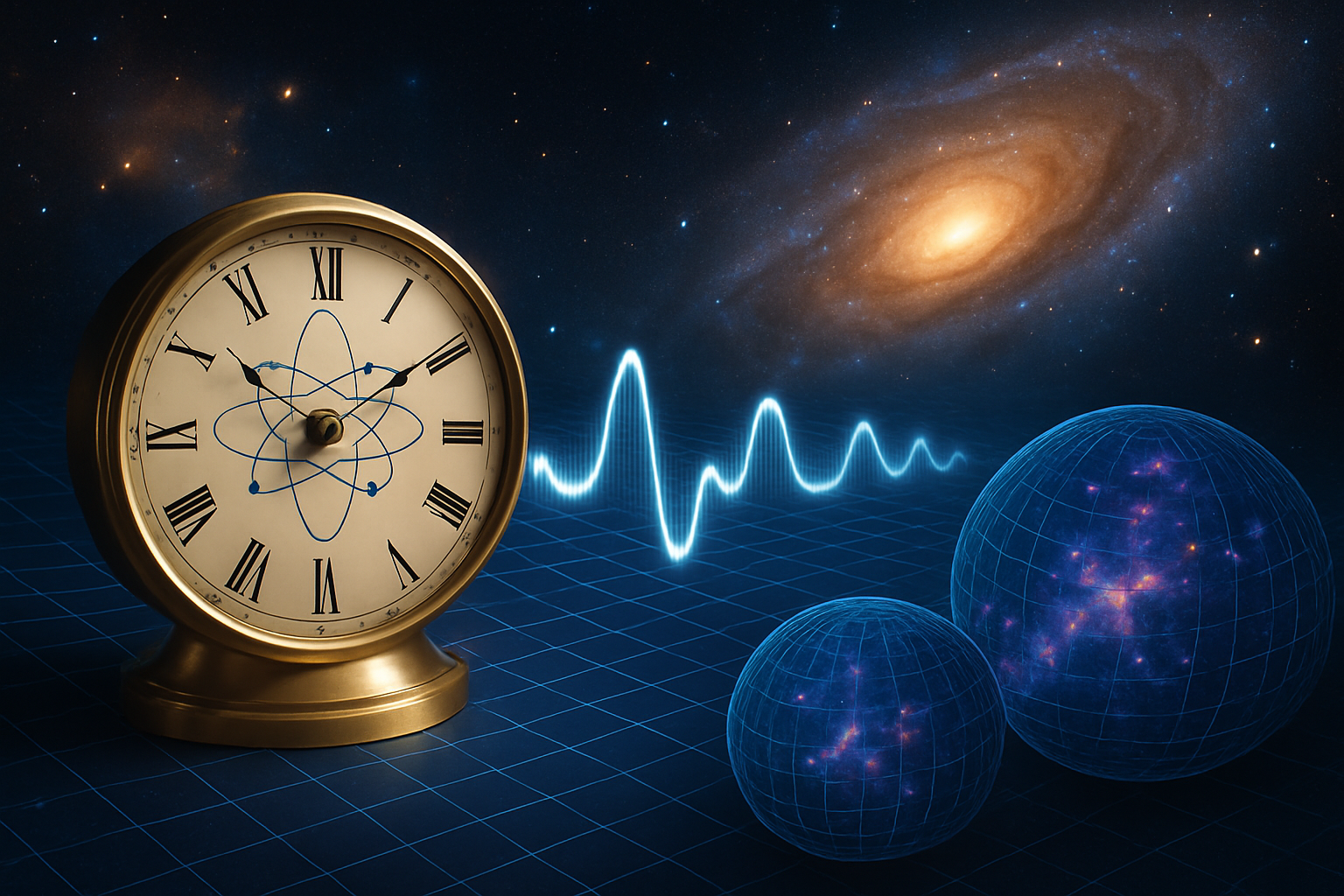
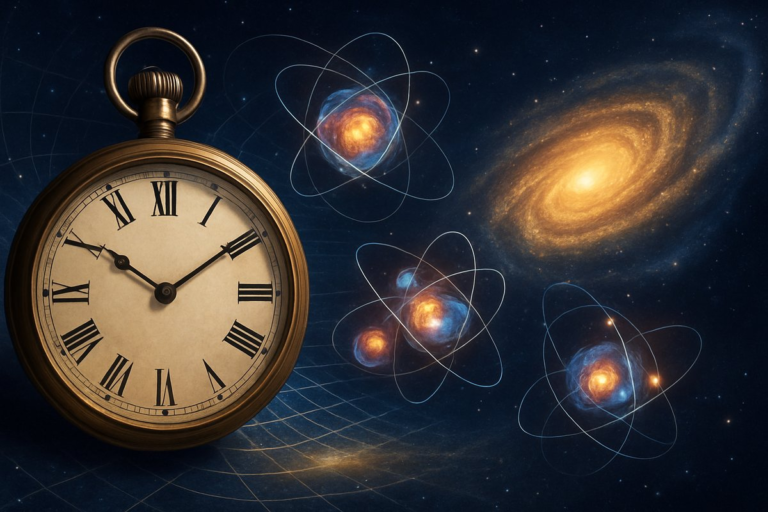
From ultra-precise atomic clocks to sprawling cosmic surveys, scientists are probing the deep interplay of time and matter. New data from gravitational wave observatories and dark matter mapping projects hint at a universe far stranger and more intricate than ever imagined.
A recent release from the Dark Energy Survey stunned astrophysicists by mapping invisible filaments of dark matter stretching across more than three billion light-years. These ethereal strands cradle galaxies like beads on a cosmic necklace, revealing how matter and the fabric of spacetime weave together on the grandest scales. At the same time, advances in quantum metrology are pushing the boundaries of timekeeping to new extremes-so precise that clocks may soon lose or gain less than a second over the entire age of the universe.
These twin frontiers-macroscopic maps of dark scaffolding and microscopic control of time’s ticking-offer fresh glimpses into the mysteries that have fascinated thinkers for centuries. How does matter shape the flow of time? Could time itself be quantized or emerge from deeper quantum processes? And what secrets lie hidden in the gaps between galaxies, or in the jitter of a single atom’s oscillation?
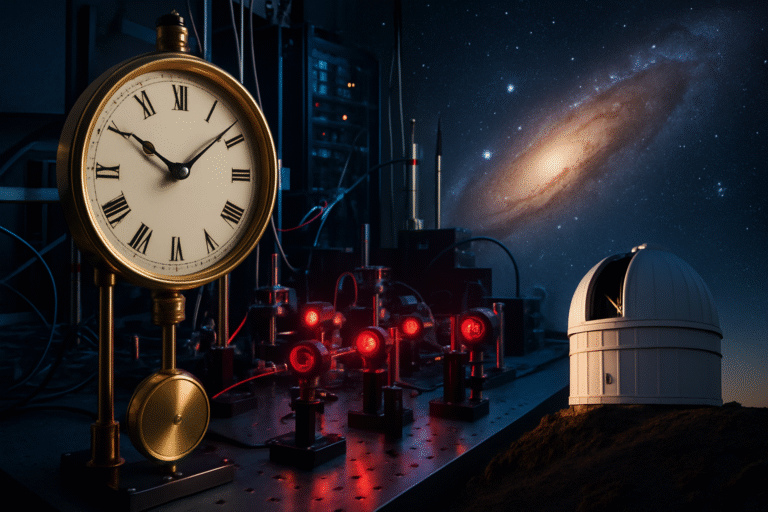
In laboratories around the world, researchers are conjuring phenomena that once belonged only to science fiction. At the National Institute of Standards and Technology, a team recently unveiled an optical lattice clock that bounds ahead of its predecessors by a factor of three in stability. Using strontium atoms suspended in laser light, this clock measures each “tick” with such exactitude that it would neither gain nor lose a second in 15 billion years. Such precision not only refines GPS navigation and telecommunications, it also opens new avenues for testing whether fundamental constants drift over cosmic time.
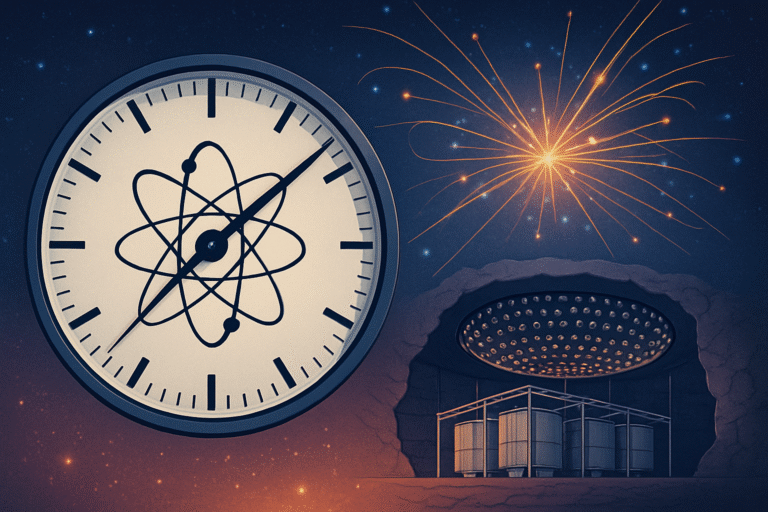
Meanwhile, deep beneath Antarctica’s ice, the IceCube Neutrino Observatory continues to catch ghostly particles born in the hearts of distant exploding stars. By measuring tiny differences in arrival times across its grid of detectors, IceCube scientists are exploring whether neutrinos reveal cracks in Einstein’s theory of relativity or hint at exotic new physics. A handful of unusual time-of-flight events recorded last year sparked lively debate: were they measurement flukes, or early signs that neutrinos might interact with hidden dimensions?
On a different front, teams wielding quantum bits have coaxed time crystals into existence-exotic phases of matter that oscillate in time without external energy input. These time crystals break temporal symmetry much as a magnet breaks spatial symmetry, offering a glimpse of how time itself can exhibit structure. Although still confined to ultracold labs, time crystals suggest that under the right conditions, time may not be the smooth river we perceive, but rather a landscape of repeating patterns.
Gravitational wave detectors have added another layer to this unfolding saga. LIGO and Virgo have logged dozens of cataclysmic mergers of black holes and neutron stars, each event sending ripples through spacetime that arrive at Earth’s detectors after journeys spanning hundreds of millions of years. These waves carry time-stamped signatures of matter crushed to unimaginable densities, allowing researchers to test how gravity behaves under the most extreme conditions.
In the sky above, next-generation telescopes are unearthing mysteries of their own. The James Webb Space Telescope’s infrared gaze has unveiled star nurseries shrouded in dust, while new surveys of the cosmic microwave background refine our understanding of the universe’s earliest epochs. Every new image, every photon captured, serves as a breadcrumb leading back to the primordial interplay of matter and time in the moments after the Big Bang.
Despite these breakthroughs, dark matter remains as elusive as ever. Experiments deep underground-shielded from cosmic rays and background noise-continue their search for weakly interacting massive particles, axions, or other candidates. Each null result refines theoretical models and sharpens the pursuit: if dark matter particles do interact, they must do so at energy levels or via mechanisms scientists have yet to predict. Until a clear signal emerges, the cosmos keeps its darkest content hidden, daring us to prod further.
The marriage of time and matter also resonates closer to home. Global navigation satellite systems rely on fleets of orbiting clocks whose steady beats must be synchronized to within fractions of a nanosecond. Relativistic corrections are applied every second so that your smartphone pinpoints your location. Without precise mastery of time’s flow, modern technology grinds to a halt.
Elsewhere, physicists are grappling with the possibility that time itself emerged from a thermodynamic arrow-a statistical trend in increasing disorder-rather than existing as a fundamental backdrop. Theorists propose that spacetime geometry could be an emergent phenomenon arising from entangled quantum bits, a breathtaking idea that might reconcile general relativity with quantum mechanics. Should such models gain empirical support, they would rewrite our most basic assumptions about reality.
Beyond academic circles, the profound questions of time and matter hold a deep emotional resonance. They speak to our sense of place in the universe, to the fragile instant we call now. Gazing at the night sky, we glimpse both the finite span of our own lives and the vast temporal symphony of cosmic evolution. We live on a planet hurtling through spacetime, our brief consciousness a flash against the dark canvas of eternity.
These explorations are more than a parade of high-tech achievements; they are a human story of curiosity, persistence, and wonder. Each new detector, each improved clock, each refined map brings us closer to unravelling the deepest patterns of existence. Yet every answer reveals new questions: if time can crystallize, what other hidden phases await? If dark matter threads the cosmos, what is the nature of the scaffolding on which reality hangs?
In the coming years, collaborations between astronomers, particle physicists, and quantum engineers will accelerate. Underground dark matter labs will merge with global gravitational-wave networks. Optical clock experiments may deploy aboard satellites, testing relativity in Earth’s gravitational field more precisely than ever before. Space telescopes will probe the first galaxies, while quantum time crystals dance in supercooled chambers.
The tapestry of time and matter is still being woven, its final patterns beyond our current ken. But as tools and theories advance, we edge closer to understanding how the universe orders itself. Whether time is a river, a crystal, an emergent fabric, or something stranger still, its interplay with matter defines our cosmos-and it invites us to keep asking the questions that drive science forward.