Location
Mount Vernon, WA 98274
Location
Mount Vernon, WA 98274

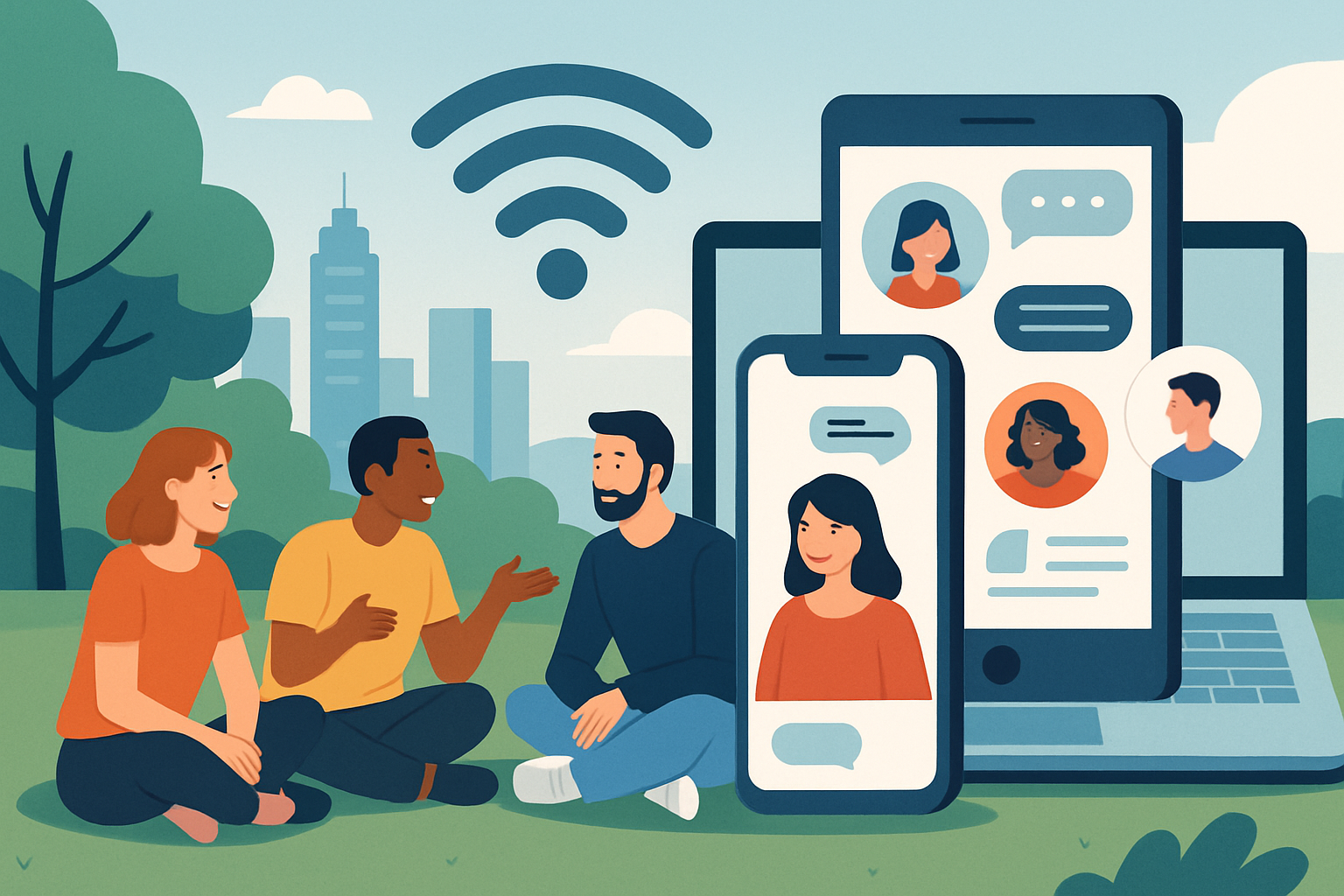
In an era defined by digital and physical convergence, small-scale encounters - from impromptu park gatherings to micro-chat threads - are forging new forms of community. These subtle shifts are transforming how we connect, collaborate, and cultivate belonging in neighborhoods and online spaces alike.
Over the past few years, a new kind of social gravity has been pulling people into fleeting, yet deeply resonant moments of connection. Whether it’s a text-based group that celebrates daily wins, a pop-up gathering at a local coffee cart, or a geo-fenced audio chat along a city block, these micro-phenomena are quietly redefining how we experience community. They’re the ripples beneath the surface of mass platforms, the personal interactions that shape moods, spur new initiatives, and build trust in ways large-scale networks often can’t.
In neighborhoods from São Paulo to suburban Chicago, geo-targeted mobile apps have become the digital watercoolers of choice. Instead of broadcasting to thousands, users share with dozens of nearby neighbors: a request for a recommendation on a handyman, a notice of a missing pet, or an invitation to a spontaneous street-corner book swap. The intimacy of proximity cultivates a different tone – one less curated and more immediate. Posts are structured as call-and-response threads, and replies often come within minutes, bridging the gap between online chatter and real-world action.
Meanwhile, interest-driven chat rooms hosted on emerging audio apps have drawn hobbyists into ephemeral “listening lounges.” Here, a vinyl-record collector in Berlin can discuss the crackle of a 1960s pressing with someone tuning in from Tokyo. These sessions last only an hour or two, but participants describe them as immersive micro-experiences that leave a lasting sense of camaraderie. The voice-only format strips away visual noise and status cues, centering focus on shared passion. As a result, many are forming peer-to-peer projects – from home recording labels to international book clubs – all born out of brief conversations.
Across city parks, urban designers and community organizers have begun installing modular seating clusters called “conversation pods.” These curved benches and back-to-back stools invite strangers to sit face-to-face without the formality of a table. In at least five major cities worldwide, local councils have reported that attendance at these pods during lunchtime hours outpaces nearby public squares by nearly 40 percent. People drop by with a snack or their laptops, often striking up short dialogues about the day’s headlines, sharing a meal, or swapping recommendations for local events. These pods have become incubators for volunteer initiatives, block-party planning, and even neighborhood advocacy campaigns around things like traffic calming and public art.
The pandemic era accelerated this shift toward micro-community building. When large gatherings were off-limits, people naturally gravitated toward their circles of five to ten contacts, whether through daily walking loops with a small group or 20-minute video coffee breaks with remote colleagues. Now, as larger events return, many report finding more value in these tight-knit clusters. Surveys conducted by independent research firms show that 65 percent of respondents prefer interactions with sub-groups within their networks over attending broad virtual conferences or mega music festivals.
Yet the phenomenon isn’t limited to the physical world. Many digital platforms have begun optimizing for “micro-threads” rather than sprawling feeds. Instead of an endless scroll, users see bite-sized group discussions around a single topic, with participation capped at a few dozen people. This model emerged from experiments on smaller community sites and has since influenced design choices for larger social apps. The rationale is simple: smaller groups often foster more meaningful exchanges, encourage contribution from quieter members, and reduce the pressure to perform – all factors that increase a sense of belonging.
There are practical implications as well. Businesses are noticing that hyper-localized word-of-mouth spreads fastest when seeded through these micro-communities. A specialty bakery that shares daily behind-the-scenes baking videos to a neighborhood messaging group can sell out of artisanal loaves within hours, whereas a mass-market social ad might take weeks to build awareness. Similarly, local fitness instructors offering brief live-streamed classes to just 15 participants report higher retention rates than those aiming for large online audiences.
This granular approach also helps address digital fatigue. When users limit their social intake to a handful of focused feeds, they reclaim time and mental space. Decision fatigue drops, and the emotional toll of sifting through broad-spectrum content decreases. Many cite improved well-being from this model: fewer doomscrolling sessions, more genuine check-ins, and a deeper sense of accountability to fellow community members.
The rise of micro-interactions has sparked innovation in tools designed to support these ecosystems. Simple polling widgets embedded in group chats let members vote on meet-up times or shared playlists. Shared photo-album features help document local initiatives in real time, and integration with mapping services allows attendees to pin and navigate to transient gathering spots like lunch meetups or pop-up book swaps. Even payment tools have been streamlined: mobile wallets now facilitate instant, low-fee transfers for shared pizza orders among five friends, or for crowdfunded community gardens tended by neighborhood volunteers.
Critics caution against an overreliance on these tiny clusters, warning of potential echo chambers and fragmentation. If everyone retreats to micro-bubbles, there’s a risk of stunted perspectives. But advocates counter that these small forums often serve as bridges rather than barriers. When a neighbor from the running group also shows up at a local art fair discussion thread, unexpected cross-pollination occurs. And when a teenager in a coding micro-community uses newfound skills to launch a neighborhood website for local services, the impact radiates beyond the original group.
At the heart of this trend is a yearning for authenticity. Large-scale social networks, for all their reach, can feel performative. In contrast, micro-communities operate on mutual interest and proximity – shared context that forms the basis of trust. They’re less about broadcasting an identity and more about co-creating experiences. Whether it’s a monthly micro-concert in an alleyway or a digital swap-meet restricted to 30 people, participants know they’re part of something ephemeral but meaningful.
Urban planners, sociologists, and platform designers alike are now asking: can these micro-phenomena scale responsibly? Some proposals involve federated systems where small groups remain autonomous but connect through standardized protocols. Imagine a scenario where local hobby groups worldwide can exchange resources and best practices, yet maintain their own norms and customs. Or where neighborhood pods can share emergency alerts region-to-region without compromising privacy.
Several pilot programs are already experimenting with these ideas. In one European city, a municipal platform allows micro-groups focused on public art, gardening, and micro-theater to share modular funding pools. Each group maintains decision-making authority, but a shared ledger tracks contributions and outcomes, ensuring transparency. Early reports show increased volunteer engagement and more creative public installations that reflect diverse community voices.
For individuals wondering how to tap into this rising wave, the entry barrier is surprisingly low. Start by exploring local interest channels on your favorite neighborhood app. Look for small gatherings – not all of which advertise widely. Offer to share something you’re passionate about, whether it’s a homemade snack or a brief tutorial on plant care. And consider starting a thread on a focused topic you care about, limiting membership to encourage intimacy. Within weeks, you’ll likely find a few regulars who transform a simple chat into an incubator for offline collaborations and new friendships.
What happens next will depend on how we nurture these emerging ecosystems. Will they remain charming local curiosities, or will they become the foundational units of a more connected, resilient society? Already, nonprofits are leveraging micro-communities to mobilize support for local causes. Educational initiatives are using small-group models to boost literacy and vocational training. Health-care providers are piloting neighborhood peer-support circles for mental well-being. Each case shows that when interactions are scaled down, the human element scales up.
The ripple effect of these fleeting connections is subtle but profound. In the echoes of a four-person chat about sustainable gardening, a new urban farm can sprout. From a lunchtime conversation among commuters, a rideshare co-op can emerge. And from a handful of neighbors coordinating a street cleanup, a lasting civic alliance can take root. In a world saturated with mass communication, these micro-moments remind us that sometimes the smallest gestures carry the greatest weight.