Location
Mount Vernon, WA 98274
Location
Mount Vernon, WA 98274

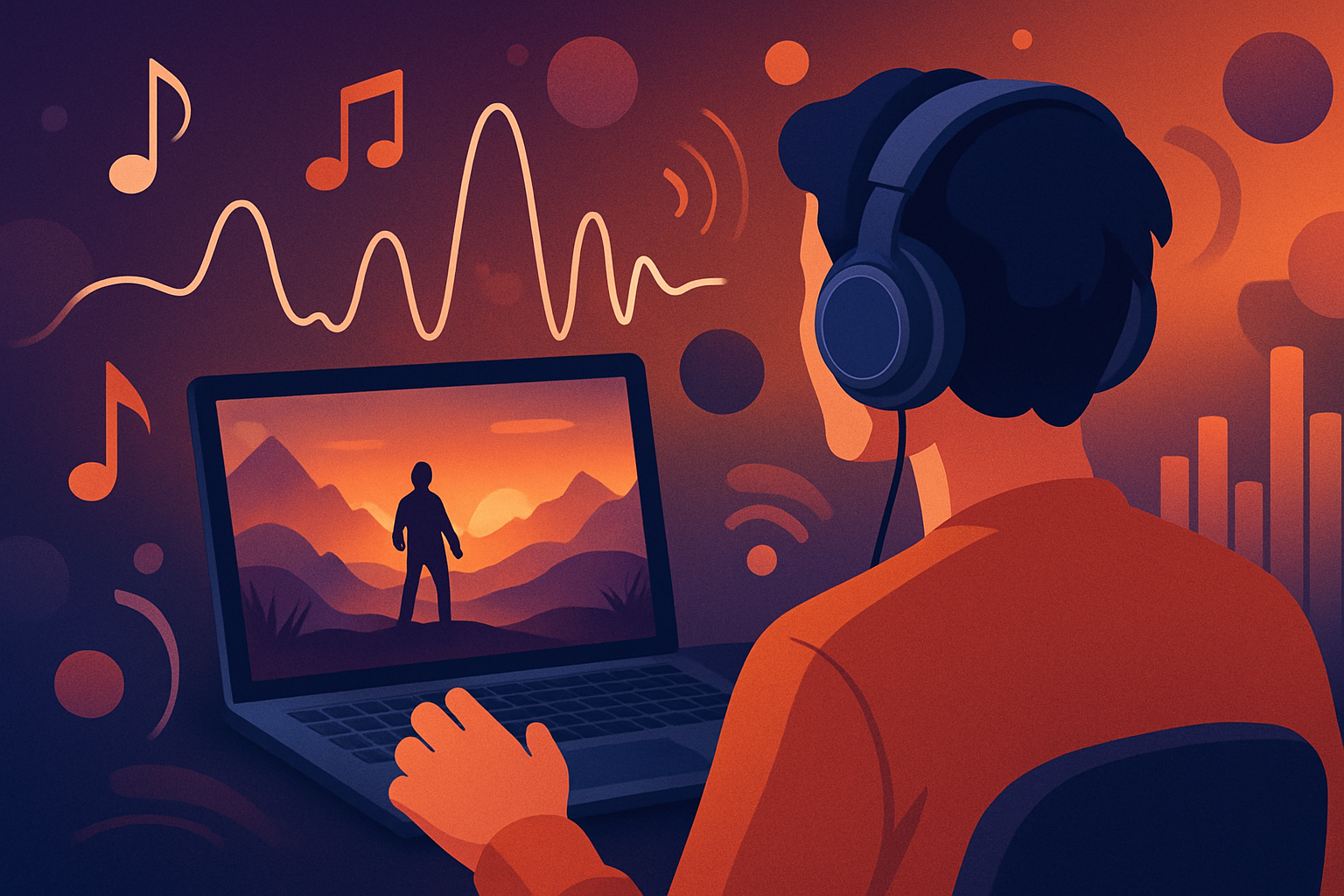
Game audio is undergoing a quiet revolution as developers embrace procedural composition and adaptive mixing to craft immersive, personalized soundtracks. From meditation apps tapping generative engines to VR experiences that respond to biometric feedback, dynamic audio is reshaping entertainment, wellness and public art in sustainable, privacy-first ways.
The world of interactive entertainment has long been celebrated for its stunning visuals and heart-pounding narratives. Yet against this tapestry of polygons and plots, an invisible thread weaves emotional resonance and spatial presence: sound. From the haunting echoes in a dimly lit dungeon to the swelling orchestral triumph that accompanies a story’s climax, audio has the power to shape our perception of virtual worlds. Today, a quiet revolution is under way in the way games craft their soundscapes: dynamic, procedural composition that blurs the line between score and environment and opens new avenues for creativity, immersion and wellness.
In the early days of home consoles and arcade classics, composers worked with severely limited hardware. Audio chips managed a handful of channels, samples were tiny and looping was the only option. Many beloved soundtracks were born of MIDI-style synthesis and clever tricks to conserve memory. While these catchy tunes remain iconic, they offered no branching, no variation beyond a simple fade when a level ended. Fast-forward to modern PCs and consoles, and storage is plentiful-but the instincts of early constraints still influence design. Fixed loops persist in many budgets, even as middleware engines demonstrate richer possibilities.
Enter tools like FMOD and Audiokinetic’s Wwise, which shattered the loop-and-play model by allowing sound designers to break tracks into stems-individual instrument layers that can be mixed in real time. A serene melody recorded as piano, strings and choir stems can be gradually enriched or pared back according to on-screen action. These building blocks unlocked more responsive audio, yet they remained predefined compositions at heart: variations on a theme rather than entirely new creations.
A more radical shift is happening as procedural audio and AI-driven composition merge with traditional scoring. Indie studios and large developers alike now feed algorithms with raw musical fragments-rhythmic loops, chord progressions, ambient textures-and set rules for how they may combine, mutate and respond to gameplay data. The resulting output is a living score, unique each session yet always recognizable in its musical DNA. Users exploring a sprawling open world may hear subtly different guitar licks on each visit to a landmark; boss encounters score themselves anew based on player load-out and elapsed time.
At a recent session at a major game development conference, a prototype demo demonstrated a generative soundscape driven by biometric feedback. A wristband measuring heart rate and skin conductivity fed data to the audio engine. When testers’ stress markers rose, percussion layers intensified and dissonant chords crept in. As relaxation routines took effect, the system introduced gentle water-flow ambiences and evolving choral pads. Attendees reported the experience felt deeply personal, as though the world itself were reacting to their inner state.
Licensing and rights management pose fresh challenges in this emergent ecosystem. Traditional music contracts cover fixed tracks, but procedurally generated compositions may never manifest in a linear form. Legal teams are exploring new frameworks where artists license stems and algorithmic rules rather than full recordings. This stems-plus-rules model protects creators while enabling unprecedented variation-and revenues tied to dynamic playback metrics instead of static song streams.
Beyond traditional gaming, dynamic soundscapes are finding traction in fitness and wellness. Meditation apps that once relied on static loops now integrate generative game engines to deliver bespoke audio journeys. A session featuring guided breathing may open on sparse ambient drones that evolve into lush harmonic swells, always unique to the participant’s choices. Boutique fitness studios are piloting VR cycling classes where soundtrack tempo syncs to pedal cadence, generating interval-style mixes that amplify both performance and enjoyment.
Therapy practices, too, are experimenting with these tools. Neurofeedback sessions often depend on visual cues, but adaptive audio offers an auditory channel for emotional regulation. When a patient’s brain waves indicate calm focus, a serene harp motif surfaces; heightened tension triggers rhythmic grounding tones. Clinicians report higher engagement and quicker progress as patients respond to immediate, multi-sensory feedback. These innovations illustrate how game-grade audio technology can serve clinical and educational goals.
Open-source communities and hackathons have become hotbeds for procedural audio experimentation. Enthusiasts share modular code libraries, stem collections and custom engines that run in web browsers. Collaborative projects have produced browser-based generative orchestras and interactive installations in public spaces. At one urban hackathon, participants deployed motion-tracking cameras to feed visitor movements into an audio network, turning a subway station into an evolving sonic tapestry reflecting commuter flow.
On the technical front, streaming novel audio in real time demands careful resource management. Local hardware must balance CPU load and memory capacity, while cloud-based audio rendering introduces latency and network reliability considerations. Hybrid approaches route complex mixing tasks to remote servers and stream pre-mixed stems to the client. Fallback strategies ensure continuity: if the network dips, the system reverts to cached loops rather than silence or garbled output.
Privacy-first design has emerged as a guiding value in these workflows. Biometric data-heart rate, skin conductance, even facial expression metrics-should be processed on-device whenever possible. Only aggregated or anonymized metadata is transmitted to cloud services for analytics. Clear user consent flows and transparent settings empower players to choose how their physiological signals inform dynamic experiences.
As dynamic soundscapes find audiences, a secondary market for high-fidelity playback accessories grows. Enthusiasts invest in spatial audio-capable speakers, over-ear headphones with wide frequency response and external digital audio interfaces that reproduce subtle procedural layers faithfully. Proper immersion often requires equipment that surpasses standard device speakers, delivering the full impact of 3D binaural effects and finely graded stem transitions.
The entertainment industry beyond gaming is also taking note. Immersive theater troupes now weave game-style procedural audio into performances, reacting to actor movements and audience choices. Museums commission interactive exhibits where visitor proximity triggers generative narrations and sonic textures tied to art pieces. Urban planners experiment with smart audio fixtures that modulate park soundscapes based on foot traffic and weather data, creating public environments that feel alive in every sense.
Sustainability has become a compelling benefit of procedural audio. Shipping dozens of prerecorded tracks demands significant storage and bandwidth. By comparison, distributing a compact set of stems and generative rules slashes the data footprint, speeds downloads and lowers the carbon cost of content delivery networks. As media publishers strive for greener operations, lean audio ecosystems offer an immediate way to reduce environmental impact.
Looking forward, the fusion of procedural audio and spatial computing promises wondrous possibilities. Augmented-reality glasses with integrated positional sound could overlay dynamic scores onto real-world locales, transforming a morning commute into an interactive soundwalk. Local weather APIs might feed into generative engines, shaping melodies around rain intensity or sunlight levels. City streets would hum with layer-shifted compositions unique to each passerby and moment.
For developers, composers and curious producers, the call is clear: embrace open, modular audio frameworks that foster cross-disciplinary collaboration. Game audio no longer exists in isolation; it thrives at the intersection of entertainment, wellness, fitness and public engagement. Prioritize privacy, plan for extensibility, optimize for sustainability and champion the emotional power of emergent music.
Players stand to experience richer, more personalized journeys as soundtracks adapt to choices, moods and environments. When the next crescendo swells just as you feel resolved-or a gentle motif coaxes calm after a frantic encounter-you’ll sense the difference between static accompaniment and a living, listening companion. Dynamic soundscapes invite us not only to play, but to feel heard.
In this unsung revolution, sound becomes co-author rather than mere backdrop. As generative engines grow more sophisticated and find footholds beyond traditional games, the boundary between listener and creator dissolves. We enter an era where every heartbeat, footstep and breath can compose a brand-new melody-and every app, installation and title transforms into a singular sonic journey, waiting to be discovered.