Location
Mount Vernon, WA 98274
Location
Mount Vernon, WA 98274

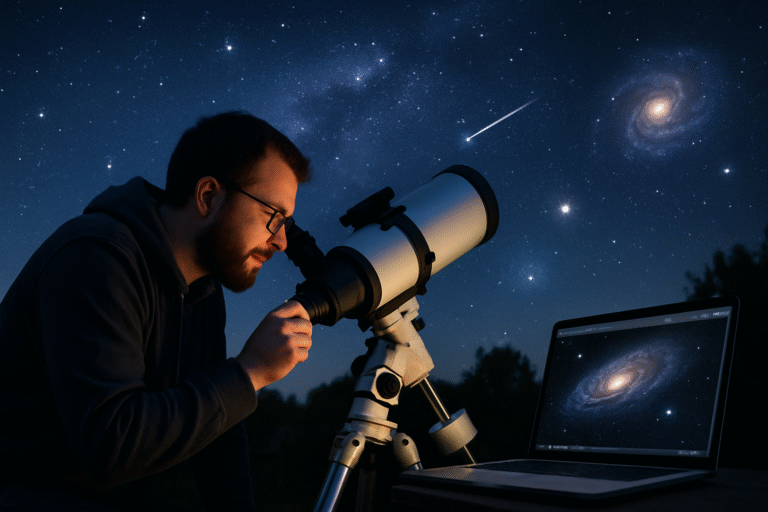
An explosion of grassroots astronomy projects, open data initiatives and AI-driven analysis tools is turning everyday stargazers into genuine space explorers. Against a backdrop of rising light pollution and environmental concerns, a new community of curious minds is forging sustainable, privacy-respecting paths to unlock the universe's secrets.
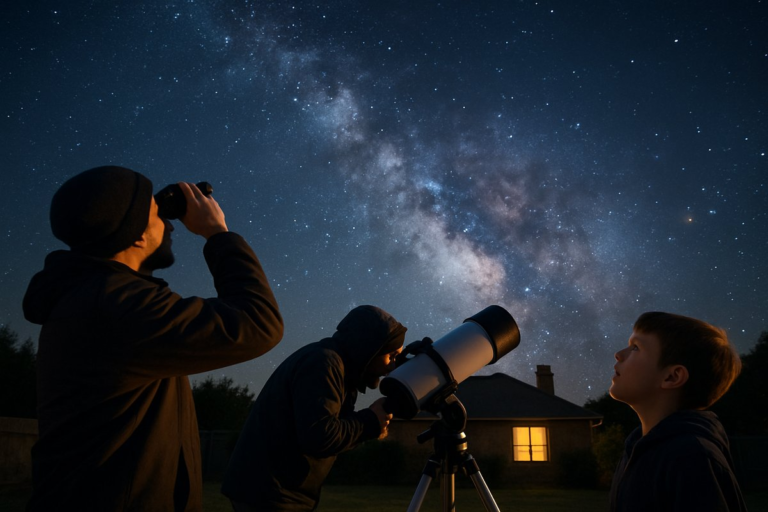
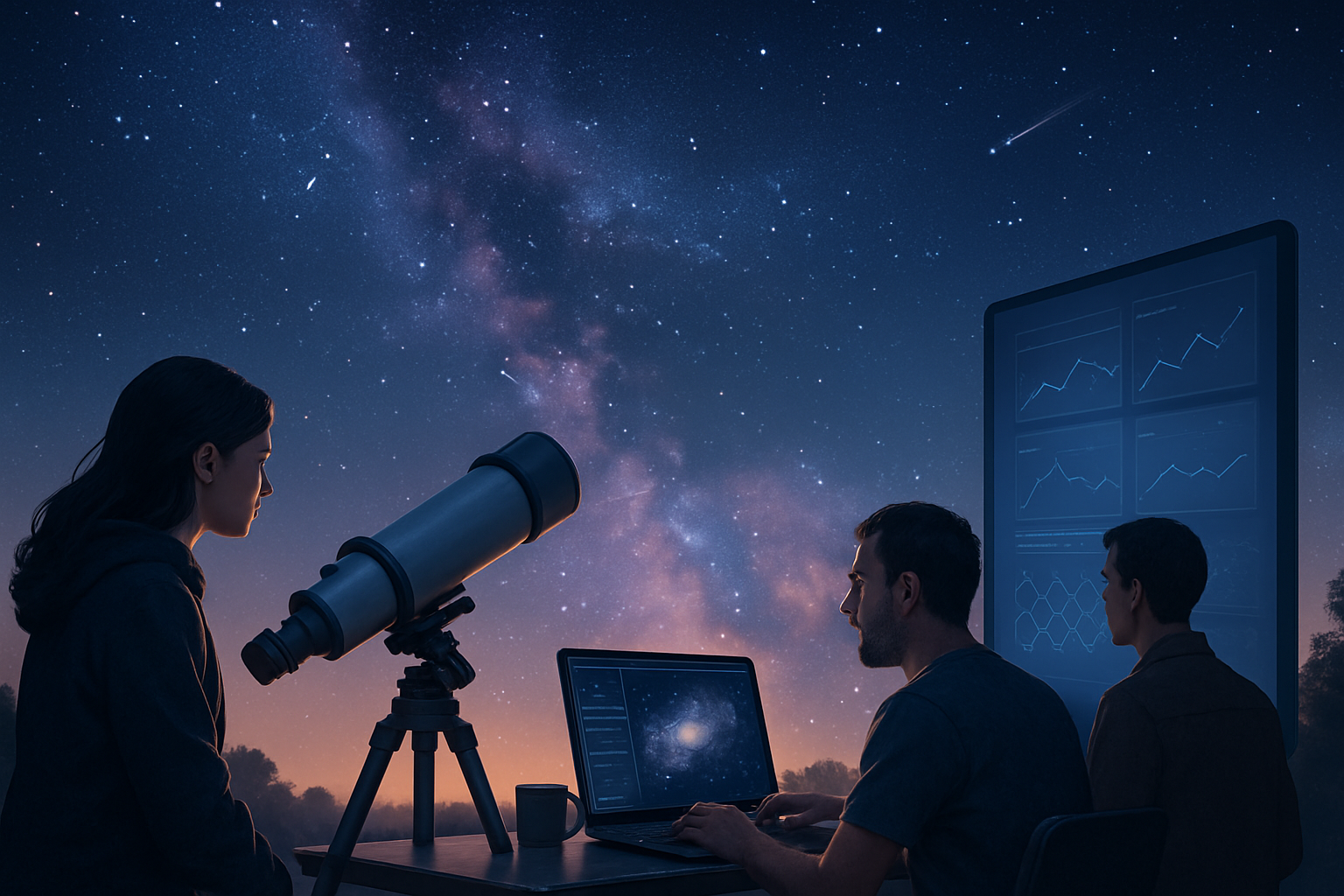
In communities from remote deserts to urban rooftops, a quiet revolution in space exploration is unfolding. Fueled by affordable optics, open data from orbiting observatories and breakthroughs in machine learning, citizen scientists are making real contributions to astronomy. While government agencies continue to probe distant galaxies, volunteer networks are mapping meteor showers, identifying exoplanets and monitoring near-Earth objects-all from their backyards.
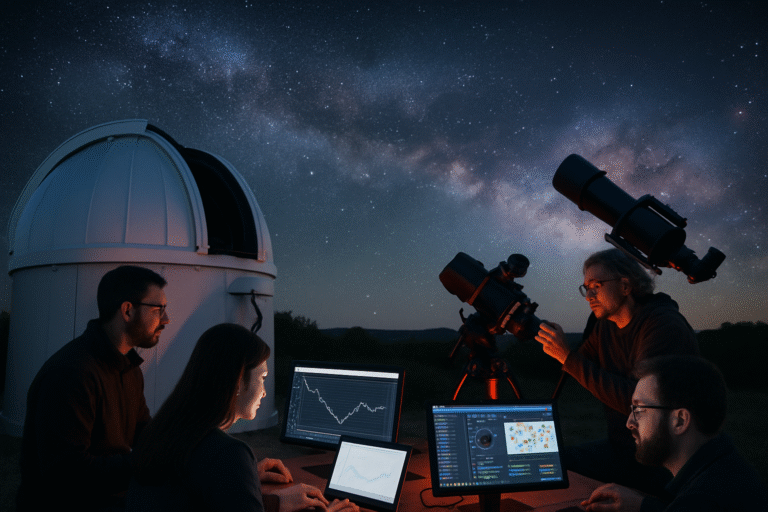
One of the most striking developments is the democratization of data. Public archives from space telescopes now provide petabytes of high-resolution images that anyone can download and analyze. Platforms built on open-source code enable enthusiasts to sift through time-series photometry and flag unexpected dips or flares. In a recent campaign, volunteers combed through up to 100,000 light curves produced by an all-sky monitoring satellite, uncovering several brown dwarf candidates that had previously escaped professional surveys.
Advances in machine learning have further empowered these volunteers. Lightweight neural-network libraries can run on a standard laptop, automating tasks like galaxy morphology classification or transient event detection. By combining human intuition with algorithmic speed, hybrid teams can scan vast cosmic archives in weeks rather than decades. This collaborative approach is opening doors for people who lack formal training in astrophysics but possess patience, curiosity and a keen eye for anomalies.
Meanwhile, grassroots telescope networks are growing in both scale and sophistication. Many amateur astronomers now pool resources to create low-light observatories in remote regions, cutting through light pollution that plagues city sky watchers. These community-run sites prioritize sustainable operations: solar panels power the equipment, rainwater feeds cooling systems and native vegetation reclaims disturbed land. In this way, stargazing becomes a driver for local environmental stewardship rather than a source of ecological strain.
The rise of radio and optical balloon missions is another testament to public ingenuity. Hobbyists and university groups alike have launched high-altitude platforms carrying miniature spectrographs, magnetometers and cosmic-ray detectors. At altitudes above 30 kilometers, these instruments escape most of Earth’s atmosphere, delivering clearer insights into ultraviolet emissions, auroral patterns and solar wind interactions. Live telemetry streams allow remote participants to collaborate in real time, debating calibration tweaks and pointing adjustments.
Efforts to measure the impact of human activity on the night sky have also galvanized citizen action. Apps that track artificial skyglow guide volunteers in documenting light pollution trends year after year. By compiling geotagged images and luminescence readings, community scientists are building a global map that informs policy makers and urban planners. Their findings have already influenced lighting ordinances in several municipalities, reducing glare and preserving dark-sky reserves for future generations.
Educational outreach has embraced this momentum, too. Workshops on telescope assembly, astrophotography clinics and star-party caravans are not just social events-they’re incubators for future discoveries. At one mobile observatory tour, participants as young as twelve learned to operate a motorized mount, align with reference stars and capture long-exposure images of nebulae. A handful of those trainees later joined online forums to submit supernova candidates discovered during routine survey runs.
Emotional intelligence plays a surprising role in sustaining these communities. Online platforms emphasize respectful critique, diversity of viewpoints and shared responsibility for data quality. When disagreements arise-over image processing techniques or anomaly classifications-moderators steer the conversation toward empathy and learning. Volunteer retention rates have seen significant improvement, confirming that a supportive culture can be as crucial as cutting-edge instrumentation.
Privacy considerations are woven into many project designs. Some citizen observatories restrict geotagged metadata or anonymize contributor details to shield participants in regions with restrictive regulations. Encryption protocols protect real-time data streams from interception, ensuring that collaborative experiments remain secure. By foregrounding digital ethics, organizers aim to make cosmic exploration inclusive and risk-aware.
The media landscape is adapting, too. Independent podcasts devoted to amateur discoveries have sprung up, combining interviews with hands-on tutorials on everything from sensor calibration to spectroscopic analysis. These programs thrive on listener contributions: field recordings of radio meteors, high-speed footage of satellite reentries and time-lapse panoramas of the Milky Way. In doing so, they create narratives that resonate emotionally while nurturing a collective sense of wonder.
Professional institutions are also taking notice. Several observatories now allocate a fraction of their observation time to community-submitted proposals. One open-telescope initiative recently approved a request from a high-school team to monitor a variable star suspected of harboring a substellar companion. The preliminary data, shared in an open-access repository, will inform follow-up observations by larger facilities.
Collaborations between citizen networks and university researchers have begun to produce peer-reviewed publications. In one study, volunteers helped chart the evolution of a massive star’s circumstellar disk by coordinating observations across four continents. Their combined data spanned multiple wavelengths, painting a dynamic portrait of dust formation and stellar wind interactions. This kind of global response would have been impossible without a distributed volunteer force.
Challenges remain. Training newcomers to distinguish genuine cosmic signals from terrestrial interference can be time-intensive. Light-curve artifacts, radio frequency noise and sensor glitches often masquerade as astrophysical phenomena. To mitigate this, many projects offer tiered mentorship programs: rookies start with simpler tasks, like measuring meteor streaks, before advancing to complex analyses under the guidance of seasoned volunteers.
Despite these hurdles, the momentum is undeniable. Across social media, hashtags dedicated to amateur discoveries trend regularly, inspiring others to join. Educational institutions are integrating citizen science modules into curricula, giving students hands-on experience with real data. And as more discoveries emerge from non-professional networks, the line between “official” and “amateur” astronomy continues to blur.
Ultimately, this movement reflects a deeper human yearning: to feel connected to the cosmos and to each other. Whether it’s the thrill of spotting a rare supernova candidate or the quiet satisfaction of mapping a local light-pollution hotspot, participants find meaning in collective inquiry. In turning our curiosity skyward, we not only expand our scientific horizons but also reaffirm our place in a universe that remains as mysterious as it is magnificent.
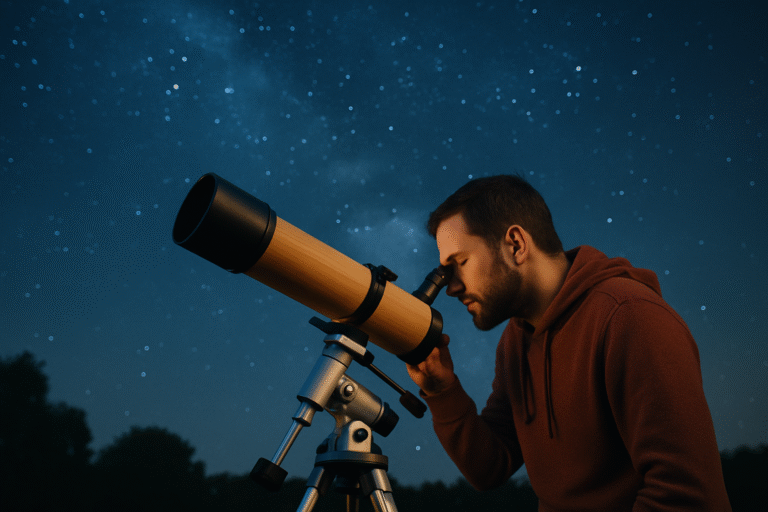
Every evening spent under a canopy of stars is an invitation to participate. And as technology, ethics and community values evolve in harmony, the next cosmic breakthrough may well come not from a distant space agency, but from a small telescope on someone’s doorstep.
For readers eager to transform wonder into discovery, the sky’s the limit. All it takes is a clear night, an open mind and the tools to explore.