Location
Mount Vernon, WA 98274
Location
Mount Vernon, WA 98274


An unprecedented wave of cosmic curiosity is uniting professionals and amateurs in a global quest to chart the heavens. From backyard observatories to online research platforms, everyday stargazers are reshaping the future of space discovery.
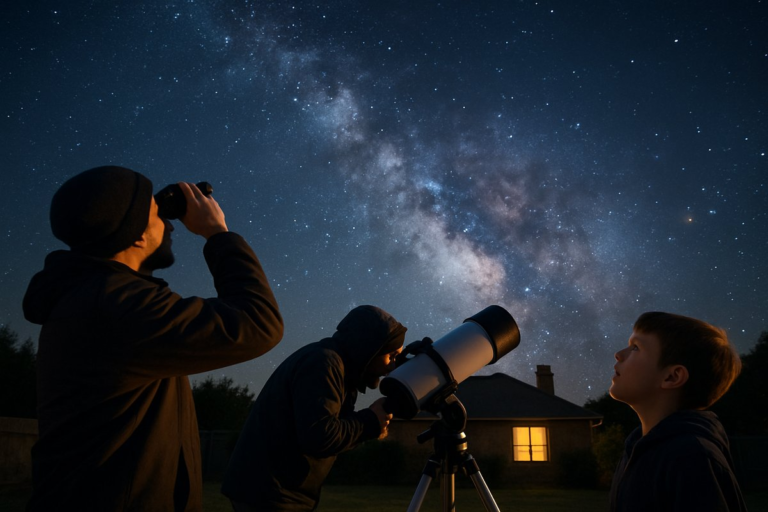
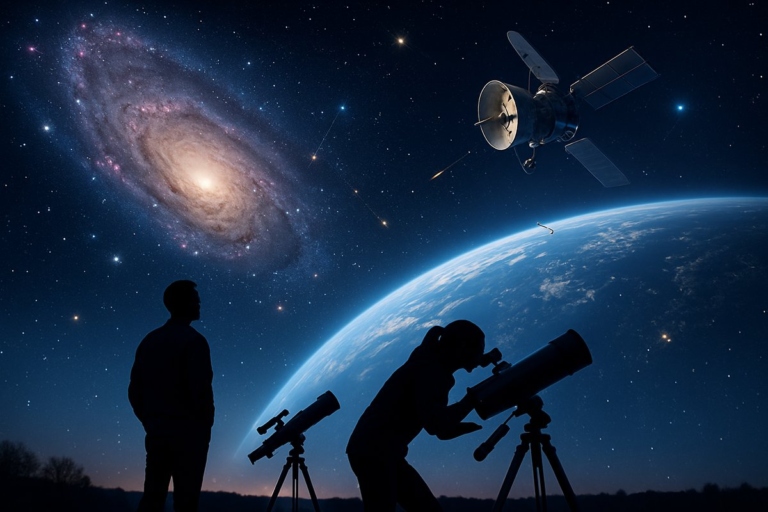
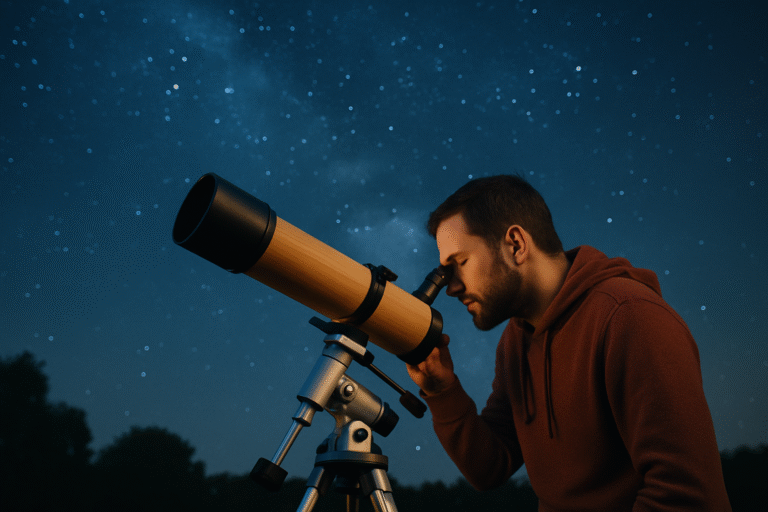
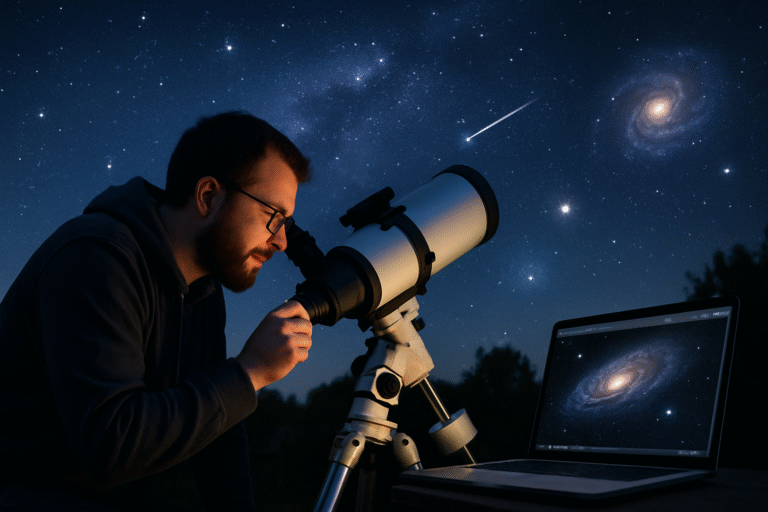
For centuries, the night sky has beckoned explorers with its tapestry of stars, planets, and distant galaxies. Today, a new renaissance of cosmic curiosity is underway-one that transcends traditional boundaries between professional astronomers and amateur enthusiasts. Equipped with affordable telescopes, powerful software and an insatiable hunger for discovery, citizen scientists around the globe are making genuine contributions to our understanding of the universe.
In the early days of astronomy, the line between amateur and professional was blurred. Famous discoveries-comets, variable stars and nebulae-often sprang from the efforts of well-equipped hobbyists observing from backyards and hilltops. Over time, as observatories grew in size and complexity, entry barriers rose. Yet in recent years, democratizing advances in optics, sensors and cloud-based collaboration tools have reopened that gateway, inviting anyone with curiosity and an internet connection to join the search.
Major organizations have embraced this shift. Online platforms invite volunteers to classify galaxies by shape, search for meteors in video footage and log observations of lunar and planetary features. Participants learn basic spectral analysis, photometry and data reduction techniques once reserved for university labs. Their efforts help refine catalogs of distant objects, calibrate large telescopes and even flag anomalies that warrant professional follow-up.
One of the most striking success stories comes from the hunt for exoplanets-worlds orbiting stars beyond our solar system. Space missions equipped with sensitive photometers scan thousands of stars, tracking minute dips in brightness to identify potential planets. While these surveys produce massive data streams, algorithms alone can miss subtle signals. Here, crowdsourced projects allow volunteers to inspect light curves, bringing a human capacity for pattern recognition into play. In multiple cases, prestellar signals overlooked by automated pipelines have led to the confirmation of new exoplanets.
Beyond exoplanets, the advent of gravitational wave astronomy has opened another frontier for collective engagement. Groundbreaking detections of ripples in spacetime have triggered urgent calls for optical, radio and X-ray follow-up observations. Amateur observatories, often strategically scattered across different time zones, have joined coordinated networks to scan target areas for electromagnetic counterparts. Their rapid response and broad geographic coverage help build a more complete picture of these cosmic collisions.
Comets and meteors remain classic targets for backyard skywatchers. Apps that deliver real-time maps of meteor shower trajectories or predicted paths of newly discovered comets have galvanized thousands to record their sightings. Even simple setups-a DSLR camera mounted to a wide-angle lens-are yielding high-resolution tracks of fireballs blazing through Earth’s atmosphere. These observations feed into central databases, improving orbit models and helping scientists forecast meteor storm events.
Supernova hunting, once the exclusive realm of large telescopes, has also become accessible. Amateur astronomers equipped with mid-sized telescopes and CCD cameras regularly scan nearby galaxies, looking for sudden eruptions that signal the death throes of massive stars. When a new supernova candidate is spotted, swift collaboration with professional facilities ensures spectroscopic confirmation and follow-up photometry, contributing critical data on stellar evolution and cosmic distances.
The synergy between professionals and citizen scientists has never been stronger. Observatories now routinely invite amateurs to submit promising targets, and space agencies encourage the public to validate candidate objects flagged by automated surveys. This two-way street leverages the reach and enthusiasm of volunteers while ensuring rigorous standards for data quality and interpretation. Many participants report a profound sense of purpose, knowing their observations help answer fundamental questions about the cosmos.
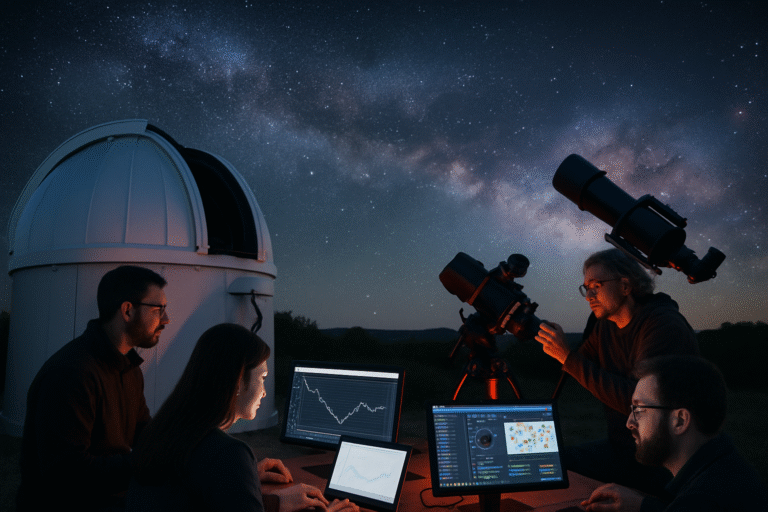
Technology plays a central role in this transformation. Cloud-based data repositories make terabytes of raw telescope images and spectrographic readings accessible with a few clicks. Interactive tutorials teach newcomers how to calibrate images, subtract background noise and derive scientific measurements. Open-source software frameworks for telescope control, data analysis and visualization are under constant development, driven by communities that share code, troubleshooting tips and observing logs.
Virtual observatories-facilities that allow users to book time on remote telescopes located in pristine dark-sky sites-have expanded opportunities for urban dwellers. Through a web interface, anyone can capture images from a mountaintop dome thousands of miles away. Such services often bundle basic processing tools, guiding users through color correction, stacking multiple exposures and annotating features. This model bridges the gap between aspiration and access, empowering people in light-polluted cities to explore the heavens with professional-grade equipment.
Community events fuel excitement and skill development. Star-parties, local astronomy clubs and online workshops offer hands-on training in telescope alignment, spectroscope use and astrophotography. Participants share stories of long nights tracking satellites, chasing auroras and collaborating across cultures. Online forums and social media groups buzz with new ideas-crowd-sourced campaigns to observe transient events, develop machine-learning classifiers for galaxy morphology and design low-cost instrumentation for remote monitoring.
Despite this surge of involvement, challenges remain. Light pollution continues to encroach on dark skies, degrading the visibility of faint objects and robbing remote communities of their cosmic heritage. Equipment costs, though falling, still pose barriers in less-affluent regions. Ensuring the reliability and scientific validity of user-generated data requires ongoing training and quality control. Yet these obstacles are spurring innovative solutions: DIY filters to block urban glow, open designs for low-cost spectrographs and mentorship programs that connect seasoned observers with novices.
Looking ahead, the horizon of collective exploration extends into virtual and augmented reality. Early prototypes enable users to ‘fly’ through reconstructed data sets of nebulae and galaxy clusters, inspecting structures from any angle. Machine-learning assistants guide observers to promising sectors of the sky, suggesting optimal nights for different types of targets. Even citizen-led deep-learning projects are emerging, training neural networks to detect faint signatures of gravitational lensing or distant quasars.
The epoch of cosmic curiosity is by no means the domain of isolated geniuses peering through grand observatory domes. It is a community-driven movement harnessing shared passion, diverse skills and a spirit of open inquiry. Every amateur discovery, every classified galaxy and every recorded meteor contributes a pixel to a grand portrait of the universe. As technology continues to shrink barriers and amplify collaboration, our collective quest under the stars promises to unlock new mysteries, reminding us that the most profound discoveries often originate from a simple question: What lies beyond the next horizon?