Location
Mount Vernon, WA 98274
Location
Mount Vernon, WA 98274

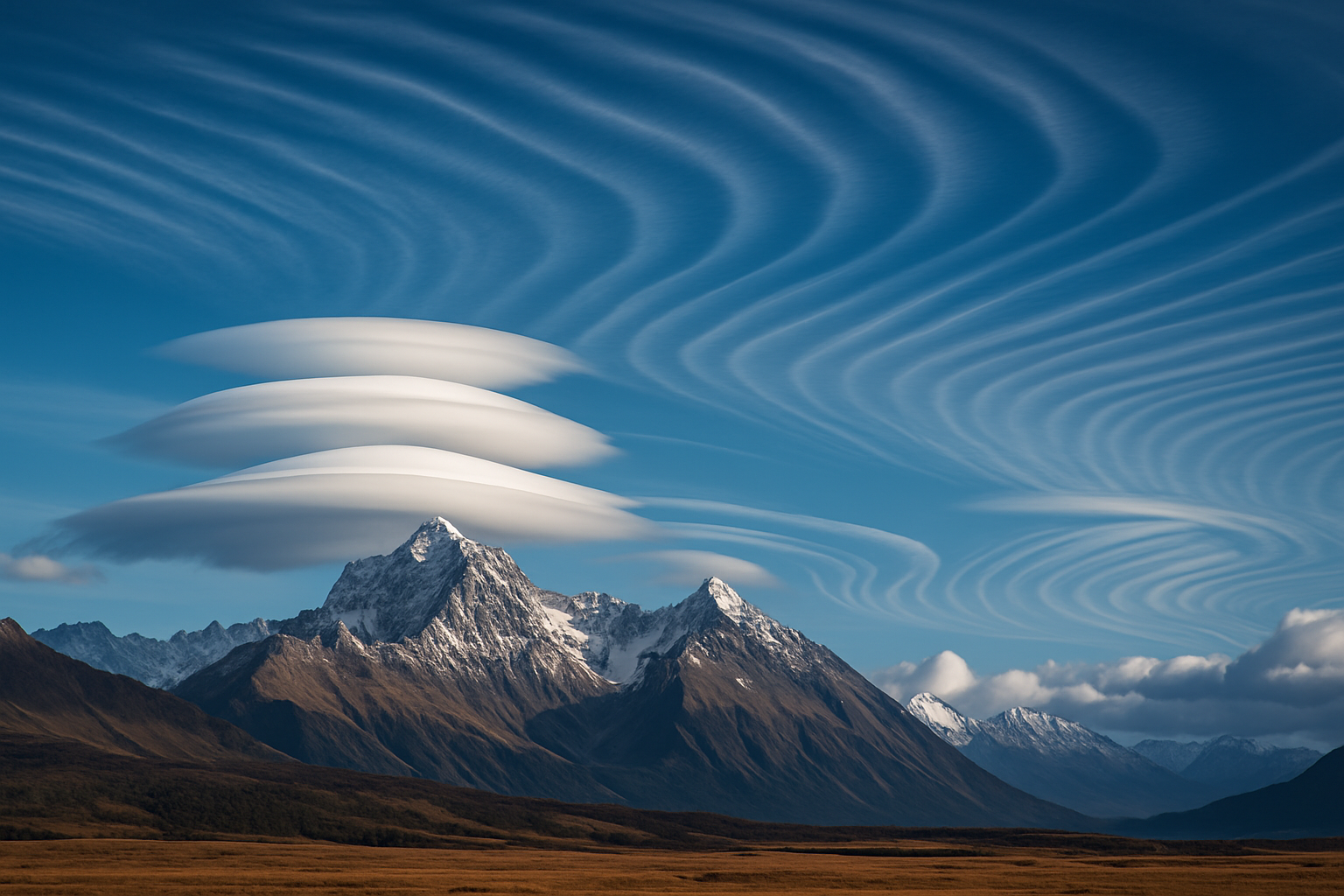
Scientists have identified a subtle yet powerful link between mountain-induced atmospheric gravity waves and shifting weather patterns across mid-latitude regions. This emerging research reveals how silent ripples from high peaks can trigger unexpected storms, record snowfall, and challenges for forecasting and adaptation.
High-altitude ridges and soaring peaks have long stood as silent sentinels above our ever-changing skies. Now, a growing body of research shows that mountains do more than reshape local wind flows-they unleash atmospheric gravity waves that can cascade thousands of miles and influence weather extremes on distant shores. This new perspective is reframing the role of topography in climate dynamics and prompting forecasters to tune into signals once considered too faint to matter.
Atmospheric gravity waves are oscillations that form when air encounters a barrier-such as a mountain range-and is forced upward, then descends back under the pull of gravity. Though invisible to the naked eye, these waves transfer energy vertically and horizontally through strata of the atmosphere, interacting with jet streams and large-scale circulation. Advances in satellite remote sensing and high-resolution models have now captured the imprint of these waves at altitudes above 30 kilometers, revealing patterns that correlate with sudden temperature shifts and intensified storm tracks.
A team of meteorologists at a leading research institute recently analyzed data spanning five winters over the North Atlantic. By combining satellite imagery with lidar and radiosonde measurements, they pinpointed gravity wave trains originating near mountainous regions in western Europe. These trains, once thought to dissipate quickly, were observed propagating into the stratosphere and then depositing momentum that altered the position of the polar jet stream. The result: unanticipated plunges in mid-latitude temperatures and waves of heavy snowfall in Scandinavia and central Europe.
One striking case emerged in late December during a harsh cold spell across northern Europe. Long after the initial wave signals had left the mountain slopes, storm systems intensified unexpectedly over the North Sea, dumping record snowfalls in ports and coastal towns. Conventional models, calibrated to sea surface temperatures and broad pressure patterns, failed to capture the severity. Only after retrospective analysis did researchers trace the event to a cluster of gravity waves generated over the Alps and the Massif Central days earlier.
Other regions are now under watch. Over the Himalayas, similar mechanisms appear to influence wintertime weather in East Asia, exacerbating cold surges in China and Korea. Satellite-borne spectrometers have identified gravity wave hotspots over central Asia’s high plateaus, suggesting a global network of mountain-atmosphere coupling. These findings challenge forecasters to integrate topography-driven wave effects into seasonal outlooks and extreme-event warnings.
Forecast centers are responding by upgrading numerical weather prediction systems with modules specifically designed to resolve gravity wave generation and propagation. These modules rely on finely gridded wind and temperature fields near surface elevations, along with algorithms that simulate wave dissipation in the stratosphere. Early tests show that ensemble forecasts incorporating wave-aware physics outperform traditional models by up to 15 percent in predicting the onset of sudden stratospheric warming events-although operational rollout remains months away.
Beyond model improvements, the research emphasizes the value of local observations. Citizen scientists in mountainous communities are equipping weather stations with barometers, anemometers, and lidar kits to record near-surface wind and pressure fluctuations. These ground-based readings, when shared openly through data repositories, enrich the global dataset and help validate wave forecasts. The collaboration also builds resilience and scientific literacy among residents who face heightened risks of avalanches, cold snaps, and flash floods.
Agricultural planners and water managers are taking note as well. Gravity-wave-induced temperature swings can stress irrigation systems and winter crop storage in valleys far downstream of the peaks. In northern Europe, fruit growers are adjusting greenhouse heating schedules in response to revised forecasts that now account for wave-driven cold spells. Hydroelectric operators are refining reservoir release plans to balance flood control with energy production during sudden thaws that may follow an abrupt jet stream shift.
Environmental advocates highlight the broader implications for sustainability. Mountains have often been viewed solely as freshwater towers and biodiversity refuges, but their influence extends into the atmosphere in ways that affect millions of people. Recognizing this role underscores the interconnectedness of landform preservation, climate research, and community adaptation. Initiatives to protect mountain ecosystems-from reforestation to erosion control-carry ripple effects into the skies by stabilizing surface conditions that modulate wave formation.
Meanwhile, interdisciplinary teams of geologists, meteorologists, and data scientists are exploring next-generation sensors to track gravity waves in real time. High-altitude balloons, unmanned aerial systems, and miniaturized satellite payloads could deliver unprecedented spatial coverage. Coupled with machine-learning algorithms trained to detect wave signatures, these tools promise to bring clarity to a phenomenon that was once shrouded in uncertainty.
The emerging narrative of mountain-atmosphere interplay invites us to reconsider our relationship with the natural world. Peaks that once stood as landmarks of national pride now reveal themselves as sources of atmospheric teleconnections-links that carry energy across continents and contribute to the tapestry of extreme weather. By deepening our understanding of these silent reverberations, forecasters can provide earlier warnings, communities can strengthen preparedness, and policymakers can invest in nature-based solutions that honor the full spectrum of mountain value.
As researchers continue to map the invisible corridors of gravity waves, one thing is clear: the contours of Earth’s surface and the currents of its atmosphere are inextricable. In a time of increasing climate volatility, listening to these subtle signals offers a powerful tool for navigating uncertainty. Mountains will always stand still, but the forces they unleash are anything but static. Acknowledging those forces-and working with them rather than against them-may be one of our best defenses against the surprises that lie ahead.