Location
Mount Vernon, WA 98274
Location
Mount Vernon, WA 98274

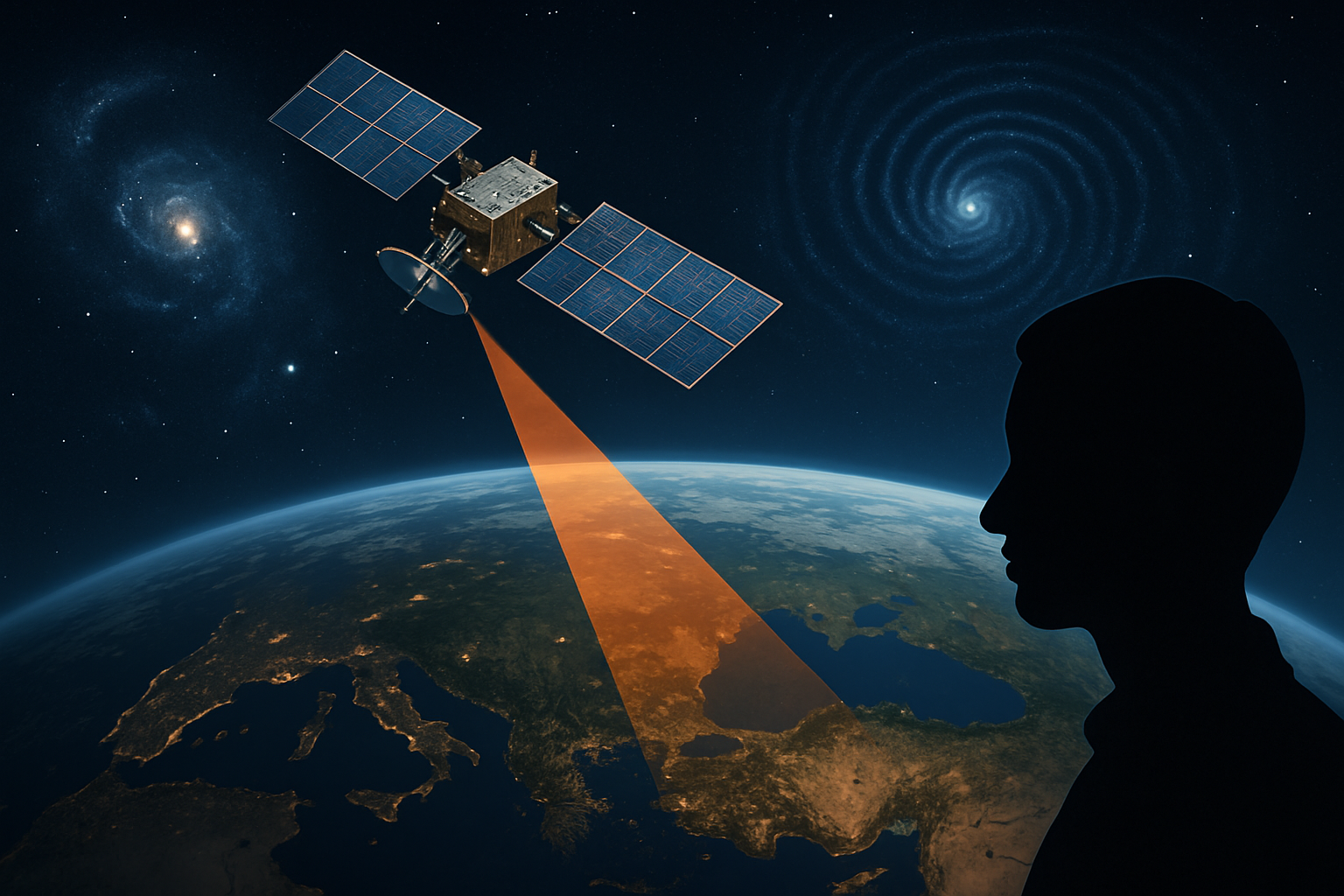
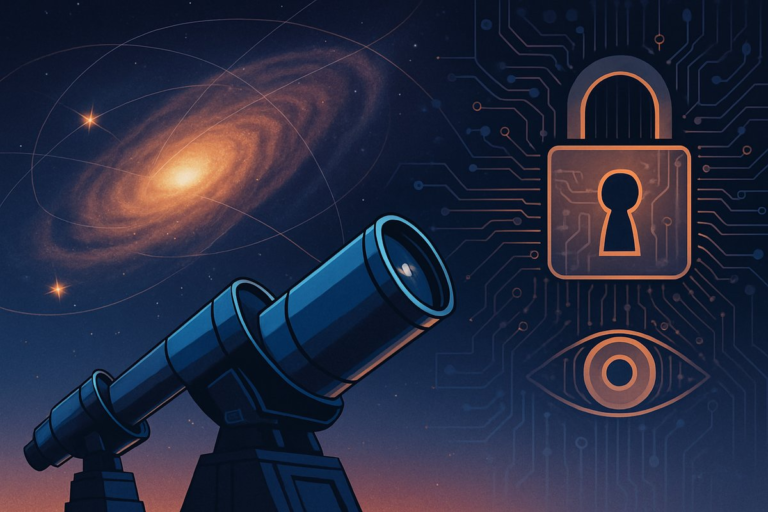
As new orbital sensor networks peer deeper into both the cosmos and Earth's surface, researchers and policymakers confront an unexpected tension. How can scientific exploration of dark matter and gravitational waves coexist with the privacy rights of communities beneath the satellites' watchful eyes?
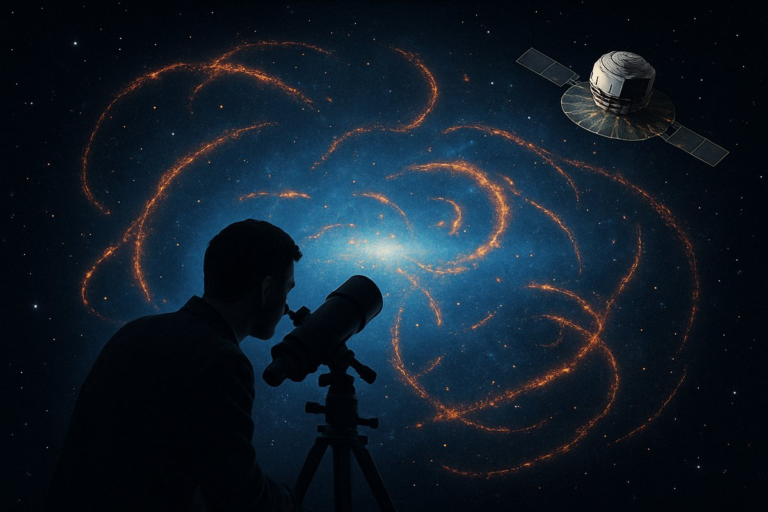
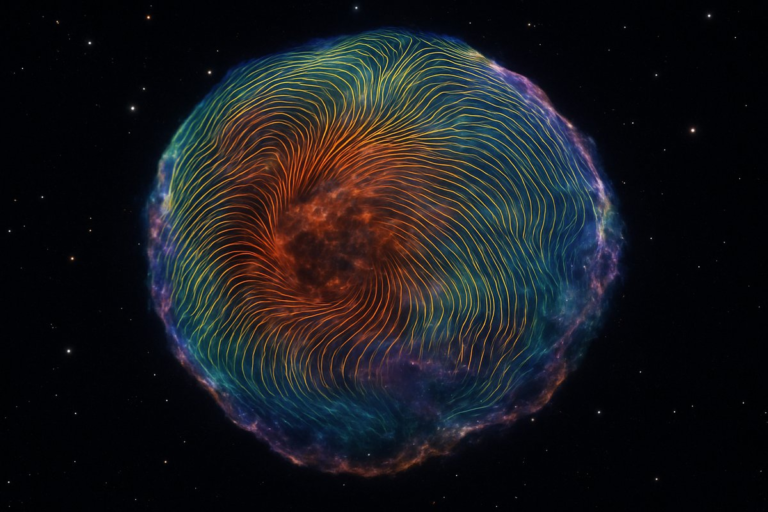
A next-generation orbital observatory recently deployed into low Earth orbit promises to revolutionize our understanding of cosmic phenomena. Equipped with hyperspectral imagers designed to map dark matter distortions and quantum gravimeters tuned to detect subtle ripples in spacetime, the platform also records high-resolution data of Earth’s surface. Early test flights sent back imagery so detailed that urban heat islands, shipping routes, and even patterns of nighttime electricity usage emerged in the same datasets that trace the curvature of galaxies.
While astrophysicists celebrate the ability to overlay gravitational wave maps with Earth-bound environmental metrics, privacy advocates warn of unintended consequences. Data sets meant to reveal the distribution of unseen mass in galaxy clusters may just as easily expose private gatherings in remote regions or monitor the nighttime movements of vulnerable populations. When a researcher zooms in on thermal readings to calibrate quantum sensors, they may inadvertently record the location of protected wildlife sanctuaries or informal refugee camps.
Surveillance concerns go beyond resolution alone. Ground stations that communicate with orbiting platforms are susceptible to cyber threats. In past incidents, hackers have inserted spyware into telemetry channels, redirecting satellite commands or manipulating sensor outputs. A breach at a meteorological satellite operator once led to false weather data broadcasts, disrupting civilian air traffic and prompting new security guidelines for ground-uplink protocols.
To guard against hostile actors embedding malicious code in critical systems, engineers are integrating real-time anomaly detection tools. AI-driven heuristics monitor hundreds of telemetry variables, flagging any sudden deviation from established command patterns. Firmware attestation and secure boot mechanisms ensure that only cryptographically signed software can be uploaded to an orbital asset. When a routine health check identifies an unauthorized binary in a satellite’s operating system, an automated quarantine process severs remote access until the code can be safely analyzed.
Yet even robust cybersecurity can’t erase the fact that high-altitude sensors naturally collect data on Earth’s inhabitants. Legal frameworks like the Outer Space Treaty establish that no one nation may claim sovereignty over outer space, but they say little about ownership of derived data. On Earth, regulations such as the GDPR and proposed Data Act aim to govern personal information crossing international borders. Space-centric programs must navigate a patchwork of rules: a European-built satellite may abide by EU privacy law, while its data is downlinked to a ground station in a jurisdiction with more permissive rules on surveillance.
This legal ambiguity has spurred calls for clear digital rights protections tailored to space-derived data. Experts propose a charter outlining principles of consent, transparency, and data minimization for orbital missions. Communities targeted for ecological or agricultural studies would have the right to review how imagery is used, demand anonymization where needed, and even opt out of non-critical monitoring. Such measures echo emerging norms in terrestrial remote sensing, where farmers and indigenous groups negotiate data-sharing agreements with commercial drone operators.
Designing privacy into space science requires ethical technology frameworks from the outset. Differential privacy algorithms can inject carefully calibrated noise into sensor outputs, preserving scientific utility while obscuring individual movements or commercial locations. Homomorphic encryption allows ground stations to perform certain calculations on encrypted imagery, producing aggregate results without ever exposing raw pixel data. When researchers query an orbital gravimeter for mass-distribution models, they receive statistically valid summaries rather than raw waveforms that could betray terrestrial secrets.
Open-science collaborations are taking notice. A global consortium of universities and space agencies is piloting an end-to-end privacy-preserving pipeline for hyperspectral data. Before any imagery reaches analysts’ desktops, layers of obfuscation, encryption, and policy-based filtering remove or mask anything outside predefined scientific targets. Audit logs document every access request, ensuring accountability every time a dataset touches human eyes.
Still, the drive for transparency in science can clash with the need for protection. Journalists, NGOs, and public watchdogs demand open access to the same data sets, citing the public interest in environmental change, humanitarian crises, and infrastructure development. Striking the right balance means establishing oversight bodies with diverse representation-from astrophysicists and ethicists to privacy lawyers and community stakeholders. These councils work with satellite operators to define acceptable risk thresholds, technical standards, and enforcement mechanisms.
Looking ahead, the next decade will see sensor networks expand beyond individual satellites to integrated constellations. Coupling cosmic-scale telescopes with interlinked Earth observation platforms could offer unprecedented insights into planetary health and the hidden structures of the universe. Yet with greater capability comes greater responsibility. Policymakers, engineers, and citizens alike must engage in continuous dialogue to establish norms that protect individual freedoms without stifling scientific progress.
In orbit and on the ground, the frontier of exploration is as much about ethics and rights as it is about dark matter and gravitational waves. By adopting privacy-preserving technologies, reinforcing cybersecurity, and enshrining digital rights in new treaties, the scientific community can ensure that the stars and the people beneath them both remain free to thrive.