Location
Mount Vernon, WA 98274
Location
Mount Vernon, WA 98274


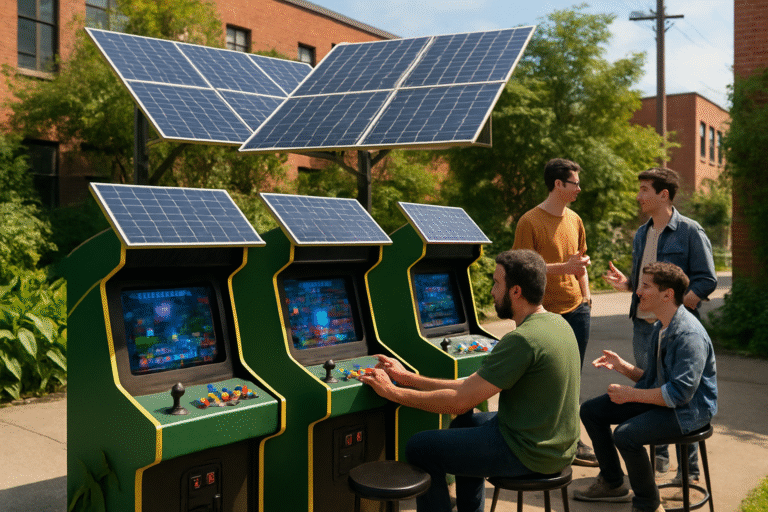
From energy-efficient hardware to eco-conscious gameplay, the gaming industry is charting a new path toward environmental responsibility. Developers, manufacturers, and communities are collaborating to reduce carbon footprints, promote circular design, and turn pixels into positive impact.
Under the glow of high-resolution screens and the hum of purpose-built gaming rigs, a new movement is taking shape. It’s not defined by faster frame rates or ever-more-realistic graphics, but by reducing the ecological footprint of the digital worlds we love. In convention halls and online forums alike, industry professionals and players are asking a simple question: how can gaming be sustainable?
At a recent showcase dedicated entirely to eco-friendly game development, prototype consoles ran on energy-efficient chips, PC builds emphasized low-wattage power supplies, and developers demoed titles that taught players about conservation through interactive challenges. This gathering didn’t focus on next-level performance-it focused on next-level responsibility.
To understand how gaming is going green, it helps to look at the supply chain. Traditional gaming hardware can draw significant electricity during play and standby modes, and some power supplies waste energy through poor efficiency ratings. Today, though, many custom rigs and commercial consoles now target high efficiency certifications, ensuring that a larger share of electricity powers gameplay rather than dissipating as heat. Low-power processors and solid-state storage also contribute by slashing energy needs for loading assets and streaming content. The result is a machine that can deliver immersive experiences without driving utility bills through the roof.
Over in the PC ecosystem, power supply units labeled for efficiency tiers are an increasingly common sight. These units meet stringent standards for converting wall current into usable power for the motherboard and components, reducing waste. Cooling has followed suit: innovative case fans and liquid-cooling loops driven by variable-speed pumps adapt to workload, spinning more slowly when the system is idle and only ramping up during intense sessions. This dynamic approach cuts out needless noise and energy drain, helping build rigs that respect both the planet and the player experience.
But hardware is only part of the story. Digital distribution platforms have slashed packaging waste by delivering games as downloads instead of physical discs and boxes. Limited-run collector editions still offer tangible artbooks and figurines, but many publishers now let players customize bundles so they only buy the artifacts they truly value. Fewer unsold retail copies mean less landfill-bound plastic and cardboard-an incremental shift that scales across the millions of gamers worldwide.
Even the materials inside controllers, headsets, and accessories are under scrutiny. Some peripheral manufacturers are exploring bioplastic coatings, recycled aluminum exteriors, and modular designs that let users repair or upgrade individual parts instead of tossing an entire device when one component wears out. By adopting a circular approach, companies extend product lifespans and cut down on electronic waste.
Game design itself has joined the sustainability quest. Simulation titles let players build carbon-neutral civilizations or restore virtual ecosystems. In one popular community-driven project, participants manage a thriving digital forest by balancing harvesting and planting, learning firsthand how policy and behavior affect long-term health. Another narrative adventure sends players on a deep-sea expedition to catalog coral bleaching and learn why temperature regulation matters for fragile marine habitats. These immersive lessons transcend what a textbook can offer, engaging emotions and sparking real-world action.
Nonfiction-minded studios have also partnered with environmental organizations to integrate factual data into gameplay. By importing real satellite imagery and climate models, virtual landscapes shift over time to reflect true ecological trends. This layering of data science over entertainment helps players appreciate the complexity of global warming, biodiversity loss, and resource management without losing sight of fun exploration.
Manufacturers and developers aren’t the only collaborators in this push. Communities are stepping up with grassroots initiatives to repurpose aging consoles and parts. Local tech hubs host swap meets where gamers donate unused controllers and graphic cards for refurbishment. With basic soldering workshops and software-flashing stations, volunteers turn outdated hardware into working machines for schools, libraries, and underserved neighborhoods. What might otherwise have ended up in a dumpster finds new life offering creativity and connection to a fresh audience.
Charity streams and benefit tournaments have also evolved with a green ethos. Hosted by influencers and organized by event teams, these gatherings fund eco-conscious nonprofits. Viewers can pledge to plant trees for every in-game milestone achieved, and tournament sponsors match donations in real time. The live chat buzzes not only with celebratory emotes but with messages about reforestation, wildlife corridors, and sustainable agriculture. By fusing play with philanthropy, these events transform entertainment into direct environmental impact.
Some high-profile fundraising marathons have even integrated on-screen dashboards showing real-time carbon-offset goals. As prize pools grow, so does the tally of planted saplings or solar installations funded. This transparency reinforces the idea that every joystick movement can trigger positive change beyond the screen’s bezel.
Looking to the horizon, an emerging trend involves carbon labeling for game downloads. Much like nutritional information on food packaging, digital storefronts could display an estimated carbon cost per gigabyte transferred and a secondary figure for electricity consumed during average playtime. Armed with that data, players can make more informed choices-opt for a title with a lighter environmental footprint, adjust graphics settings to conserve power, or simply play a bit less at peak grid-demand hours.
Beyond individual titles and devices, major platform providers have announced broad sustainability goals. Some aim for carbon neutrality in data centers powering online services, while others invest in renewable energy credits to offset operational emissions. Partnerships with research institutions help test next-generation server cooling systems that use ambient or recycled water. Such initiatives acknowledge that true green gaming must extend from the living room to the backend infrastructure powering digital worlds.
As the gaming industry continues to grow, its environmental footprint will only become more significant-unless sustainability remains front and center. Fortunately, developers, manufacturers, and communities are proving that green gaming isn’t a niche movement; it’s the future of interactive entertainment. By choosing efficient hardware, embracing circular design, and infusing gameplay with ecological education, the industry is ensuring that our favorite digital universes don’t come at the planet’s expense.
From a forest simulation where every action matters to a tournament that funds reforestation in real time, today’s games are more than just pastimes-they’re platforms for positive change. As players log in, they’ll find that the greatest victory is one shared by both human and habitat, powered by technology that respects the world beyond the screen.