Location
Mount Vernon, WA 98274
Location
Mount Vernon, WA 98274


A confluence of supply shocks, policy tightening and green transition goals is reshaping financial markets around the world. From emerging digital assets to evolving risk models, businesses and investors are navigating a landscape defined by uncertainty and opportunity.
Central banks and governments are confronting a difficult balancing act as inflationary pressures collide with weakened growth prospects. Consumer prices have surged in many economies, driven by lingering supply bottlenecks, energy market disruptions and the aftermath of major stimulus measures. At the same time, underlying demand has softened as households and businesses adjust to higher borrowing costs.
Recent OPEC+ production cuts and geopolitical flashpoints in key energy corridors have amplified volatility in oil and gas markets. These developments have ricocheted through commodity prices and transportation costs, placing additional strain on supply chains that were already coping with labor shortages and logistical backlogs. For import-dependent industries, the result has been a squeeze on margins and an urgent need to recalibrate inventory strategies and supplier networks.
Alongside these challenges, the push to decarbonize has added new layers of complexity to corporate finance. Transitioning operations to cleaner energy sources, retrofitting facilities for efficiency and complying with emerging carbon regulations require substantial capital investment. Yet green bonds and sustainability-linked loans are unlocking fresh pools of funding, prompting more companies to embed environmental targets into their debt structures. Financial institutions, in turn, are refining their credit models to account for climate risk and to channel resources toward low-carbon projects.
Faced with still-elevated inflation, many central banks have embarked on interest rate hikes to temper demand. The tightening cycle has lifted benchmark yields across government bond markets, boosting returns for savers but increasing debt-servicing costs for governments, corporations and households. Sovereign curves have steepened in several regions, reflecting investor concerns about the fiscal outlook under higher borrowing costs. Treasury managers are reassessing their funding strategies, exploring longer-dated issuance and alternative instruments to lock in favorable yields while preserving liquidity.
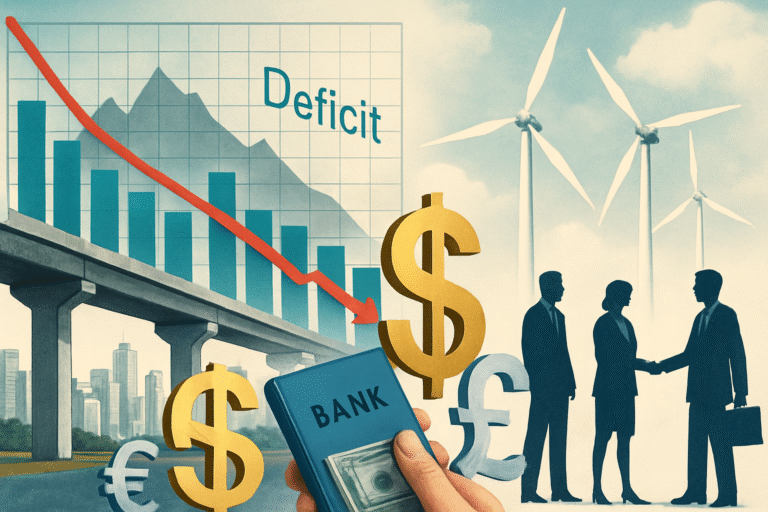
Fiscal authorities, meanwhile, are weighing the trade-offs between stimulus and consolidation. In economies contending with high public debt ratios, pressure is mounting to tame deficits even as calls grow for new spending on infrastructure, social programs and resilience measures. A delicate negotiation is unfolding in legislatures across multiple jurisdictions, where policymakers must align divergent priorities under tight budget constraints. The outcome will shape the investment climate for years to come.
The rise of tokenized finance and central bank digital currency experiments is another key frontier. Pilot programs in several regions are assessing how programmable money could enhance payment efficiency, financial inclusion and cross-border settlement. At the same time, regulators are wrestling with implications for bank runs, privacy and monetary sovereignty. Private finance platforms are expanding decentralized lending and stablecoin offerings, raising questions about governance and systemic risk. Industry stakeholders are urging a coordinated framework to prevent fragmentation and to harness new technology safely.
Investors are also scrutinizing environmental, social and governance metrics with greater intensity. Stewardship codes and disclosure standards have become more stringent, prompting asset managers to integrate ESG data into portfolio construction and risk analysis. Corporate bond investors are engaging issuers on climate transition plans, while equity holders are voting on proposals related to diversity, board renewal and ethical practices. This trend is fueling innovation in analytics services and sustainability benchmarks, creating fresh opportunities for data providers and advisors.
Private capital is stepping in where public funding falls short. Infrastructure funds and direct lending platforms are deploying large allocations into transport, energy transition and digital networks. These vehicles offer sponsors the chance to earn higher returns in a low-yield world, but they also face greater operational risk and liquidity constraints. Pension funds and endowments are diversifying into private markets to lock in stable cash flows, changing the balance of power between institutional investors and traditional banks.
Within corporations, treasury teams are redefining risk management with more dynamic stress testing and scenario analysis. Stagflation scenarios, cyber-incident simulations and geopolitical disruption models are increasingly standard in board-level discussions. Real-time data feeds and artificial intelligence are being used to monitor exposures and to trigger hedging actions automatically. This evolution reflects a broader shift toward technology-driven resilience, as firms seek to stay ahead of rapid market shifts.
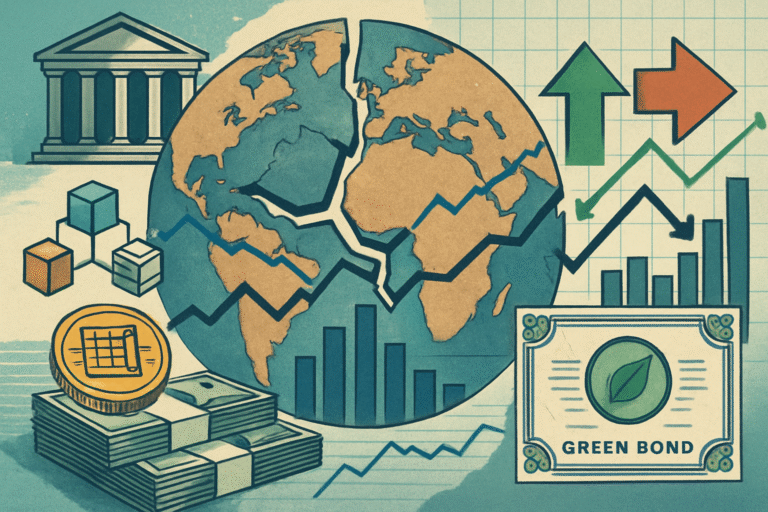
The global landscape has grown more fragmented as trade blocs, regulatory regimes and technology standards diverge. Supply chain realignment and onshoring initiatives are underway in multiple regions, driven by national security concerns and a desire to reduce foreign dependencies. Companies are building dual-sourcing capabilities and investing in local production, even at the expense of near-term efficiencies. Financial services providers are adapting by offering cross-border transaction platforms that comply with differing rules while supporting multijurisdictional cash management.
Looking ahead, the interplay between policy choices, technological innovation and investor behavior will determine whether economies achieve a smooth path to sustainable growth. A successful transition will require cooperation on minimum tax agreements, carbon border mechanisms and shared digital currency protocols. It will also depend on the ability of financial institutions to recalibrate risk frameworks and to collaborate with governments on resilient infrastructure. Ultimately, adaptability and foresight will be the hallmarks of leaders in this new era.
For businesses and savers, the message is clear: flexibility and vigilance are essential. Keeping a close eye on interest rate trajectories, currency movements and regulatory developments can help uncover opportunities and mitigate exposures. Embracing new financing tools-green instruments, digital platforms and private markets-can unlock capital for growth and transformation. Equally important is the human dimension: building relationships, sharpening communication across functions and nurturing a culture that welcomes change.
In a world where shocks can arrive without warning, the capacity to learn, pivot and innovate will define success. The current phase of uncertainty is also a time of potential: emerging markets ready to leapfrog, companies poised to lead on zero-carbon solutions, and new financial architectures that blend stability with inclusivity. By combining robust risk management with a spirit of exploration, the global finance community can chart a course toward a more resilient and equitable future.