Location
Mount Vernon, WA 98274
Location
Mount Vernon, WA 98274

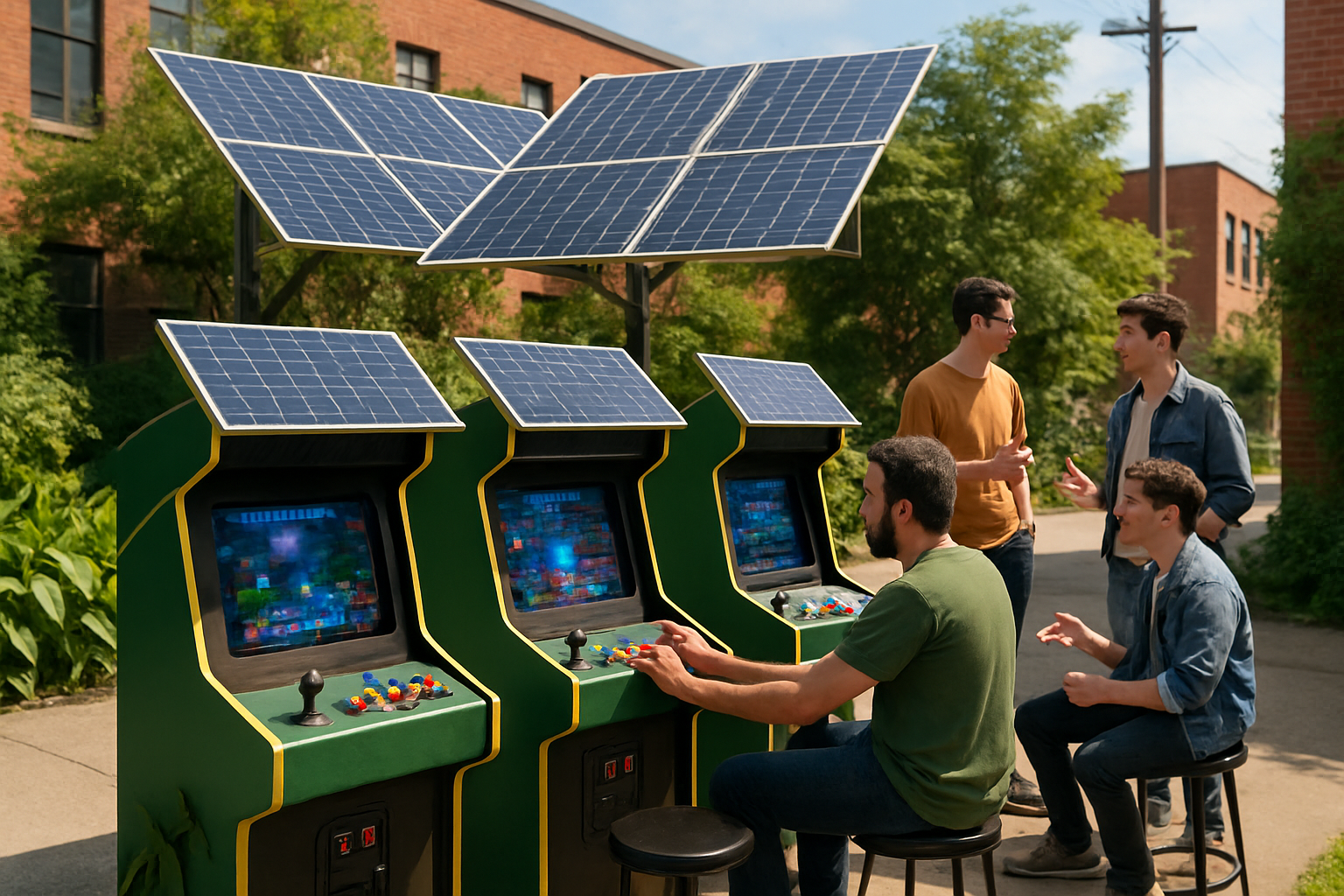
Across urban neighborhoods, a new wave of eco-conscious gaming venues is redefining player experiences through solar-powered cabinets, upcycled hardware, and community-driven tournaments built on green principles. As developers and venue owners alike emphasize sustainable practices, the gaming world is exploring how environmental responsibility can fuel creativity and connection.
On a converted warehouse block in a city’s arts district, an arcade stands out not just for its retro cabinets but for the rooftop solar array that powers every screen. Inside, visitors drop coins into pinball machines whose flippers and bumpers were rebuilt from vintage metal parts, and they compete under LED lighting that sips electricity rather than guzzles it. The hum of arcade fans, a constant in entertainment venues, now carries an added sense of purpose: even the ambient soundtrack is piped through refurbished speakers rescued from decommissioned concert rigs. This is more than nostalgia-it’s a blueprint for a gaming future where environmental impact and social connection go hand in hand.
The gaming industry has long wrestled with its ecological footprint. Data centers strain local power grids, manufacturing new consoles consumes raw materials, and tournaments churn out single-use plastics and air-freighted merchandise that leave carbon trails. Yet gamers, once stereotyped as couch-bound and indifferent, are increasingly vocal about sustainability. Online communities share tips on extending hardware lifespans, reducing packaging waste, and choosing digital downloads over boxed editions. Driven by a generation attuned to climate concerns, studios and venues are beginning to view green credentials not as a marketing gimmick but as a core value that resonates with players and preserves the planet they explore onscreen.
In this context, eco-arcades have emerged as experimental labs for blending entertainment with sustainable design. Architects and event planners collaborate to integrate energy-harvesting floors that convert foot traffic into small but steady power surges, keeping handheld charge stations ready for players in need of a quick boost. Motion-sensing machines capture kinetic energy from dance pad sessions or gesture-based VR demos, reducing reliance on external electricity supplies. Even ambient heating in winter months comes from a central biomass unit fueled by responsibly sourced wood chips. These venues foster a sense of collective stewardship: every game played contributes to a building’s net-zero goal.
Independent developers are translating ecological themes into game narratives and mechanics as well. Some titles invite players to cultivate virtual forests, reclaim polluted waterways, or design self-sustaining cities where carbon emissions are as much a tactical element as resource management. Others introduce in-game consequences for exploitative resource harvesting, encouraging mindful play through branching storylines and achievements tied to green choices. By weaving environmental education into compelling storytelling, these studios spark curiosity and empathy without sacrificing the fun factor. As a result, players report feeling more invested in real-world issues after navigating simulated ecosystems under their care.
Hardware makers are responding in parallel with modular controllers and consoles designed for longevity and repairability. Screw-mounted casings replace proprietary latches, and ports for easy component swaps let gamers upgrade memory or graphics modules without replacing an entire unit. Circuit boards employ halogen-free solder, and packaging materials come from recycled paper pulp, printed with vegetable-based inks. Partnerships with local repair cafes provide drop-off points for malfunctioning peripherals, ensuring electronics don’t end up in landfills prematurely. This shift not only reduces electronic waste but also fosters a secondary economy of tinkerers, makerspaces, and hobbyists eager to customize their rigs.
Community-driven events further reinforce the eco ethos. Grassroots eSports tournaments now offset venue emissions by planting trees or funding renewable energy projects. Cosplayers and merch booths adopt compostable badges and encourage BYO-cups with on-site refill stations. Tournament organizers install digital sign-in portals to minimize printed schedules, and photographers use rechargeable lighting equipment instead of disposable flash batteries. At one recent regional showdown, attendees were more excited to share tips on low-impact travel to the venue than leaderboard results, underscoring how values-driven competition can reshape what victory feels like.
For players eager to reduce their own footprint at home, there are practical steps that align with this green movement. Dusting off retro consoles not only scratches that nostalgia itch but also keeps older hardware in circulation rather than driving production of new units. On PCs, adjusting power-saving settings or capping frame rates during less demanding games can translate to significant energy savings over time. Digital game libraries and cloud streaming cut down on packaging and shipping, although they require reliable broadband-a trade-off many consider worthwhile. Even simple habits like powering down chargers when not in use and opting for e-receipts at online storefronts add up.
Looking ahead, the interplay between technological innovation and environmental stewardship promises to expand beyond standalone venues. Urban planners are exploring pop-up gaming pods powered by kinetic tiles in parks, while museums experiment with interactive exhibits that double as energy generators. Cooperative art installations invite players to influence lighting and soundscapes by donating stored battery power back to the grid. On an even broader scale, cross-industry collaborations aim to standardize eco-certifications for gaming products, giving consumers clear benchmarks for sustainability. As these initiatives gain momentum, the very notion of what makes play immersive or engaging will shift to include ecological harmony alongside graphics fidelity and narrative depth.
In weaving together solar arrays, upcycled materials, green game mechanics, and community activism, eco-arcades illustrate a larger truth: entertainment need not come at the planet’s expense. Instead, it can become a vehicle for raising awareness, forging connections, and celebrating the creativity that arises when players, developers, and venue owners share a common goal. The glow of a screen powered by sunlight or footsteps is more than a novelty-it’s a symbol of how a pastime can evolve into a force for positive change. And for those who care as much about tomorrow’s environment as today’s leaderboard, that may be the most exhilarating high score of all.