Location
Mount Vernon, WA 98274
Location
Mount Vernon, WA 98274

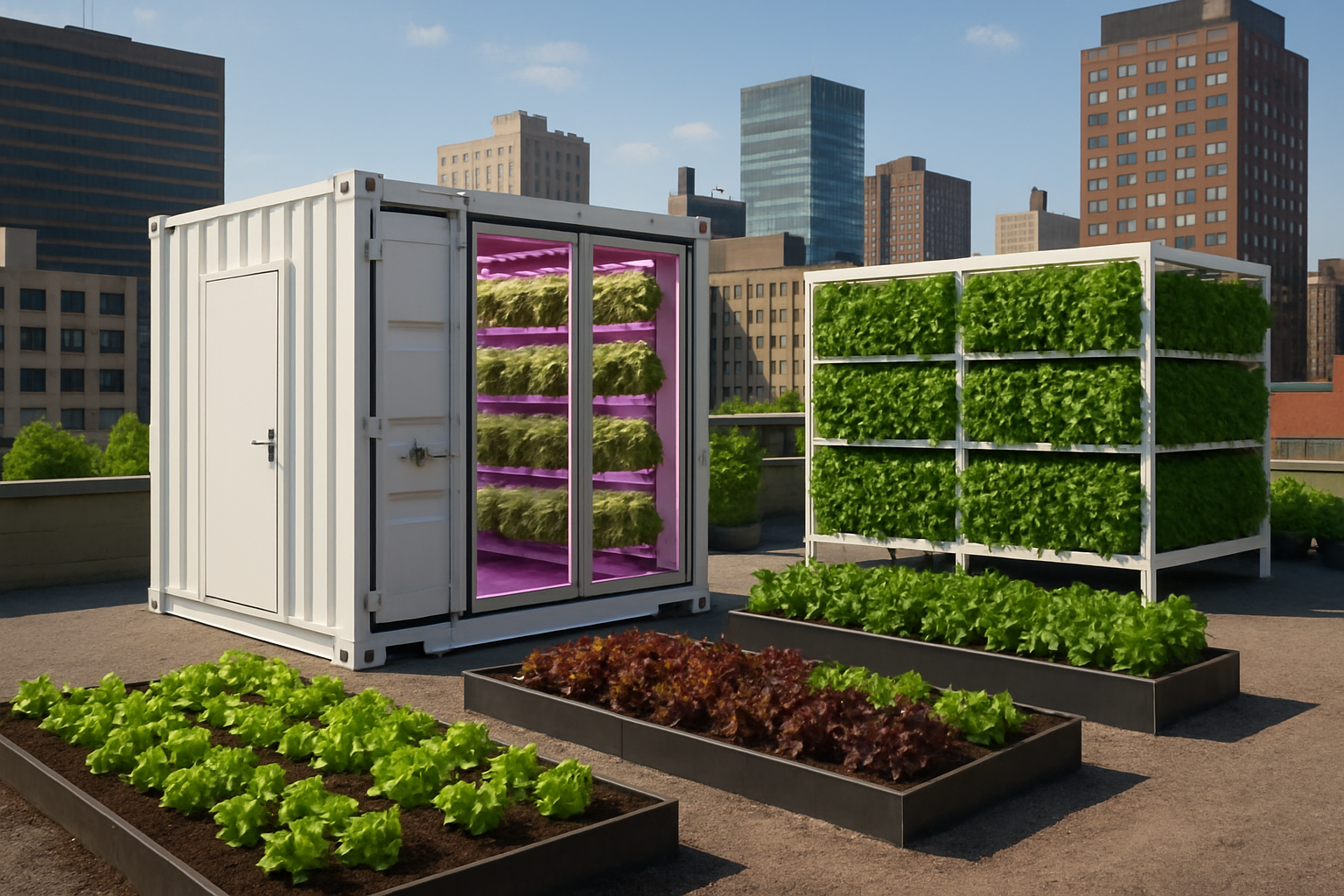
A wave of new investments is driving modular vertical farming installations onto urban rooftops and empty lots. City planners and entrepreneurs say these systems promise fresher produce, lower transport emissions, and new green jobs-but critics warn about energy demands and high upfront costs.
City skylines are beginning to sprout green towers of lettuce, herbs, and microgreens as modular vertical farming ventures secure fresh rounds of funding. Over the last six months, more than a dozen pilot projects have launched in major metropolitan areas around the world, tapping into venture capital and municipal grants to retrofit vacant roofs and underused warehouse spaces. Advocates highlight the potential to reduce food miles, create local jobs, and bring year-round harvests to dense neighborhoods. Skeptics, however, question the energy footprint and wonder how scalable these high-tech pods can be without driving up consumer prices.
A new wave of investors has poured capital into companies offering pre-manufactured vertical farming modules that can be stacked indoors or outdoors. One notable example recently kicked off in a South American capital, where 50 identical units were installed atop a decommissioned factory. Each module uses hydroponic trays, LED lighting tuned to plant growth cycles, and smart sensors to optimize water and nutrient delivery. According to city officials, the pilot is expected to produce enough greens to supply local restaurants within six months. Similar installations are now under review in European industrial parks and North American rooftop gardens.
Proponents emphasize that local vertical farming can help smooth seasonal fluctuations and protect supply chains from disruptions. During extreme weather events or transportation strikes, cities reliant on distant farms can face empty supermarket shelves. By contrast, on-site microfarms offer a buffer against volatility and reduce the need for long-haul trucking. Urban consumers report a preference for produce harvested the same day, with farmers’ market-fresh flavor-and local vertical farms aim to meet that demand without expanding farmland into remote regions.
Energy consumption remains a sticking point. Traditional greenhouses leverage sunlight, but vertical farms rely on electric LED panels to replicate natural wavelengths. Cutting-edge designs now integrate solar arrays on adjacent rooftops, directing surplus power to the grow lights. In one pilot in Southeast Asia, a façade-mounted photovoltaic system generates close to half the facility’s energy needs. When paired with battery storage, the setup can run overnight cycles at reduced grid dependence. Yet operating costs for electricity and climate control still exceed those of open-air cultivation, raising questions about economic sustainability unless green energy prices fall further.
Water efficiency is another selling point. Conventional agriculture can lose up to 70 percent of water through evaporation and runoff. In contrast, vertical hydroponic systems recirculate nutrient solutions, cutting water use by up to 90 percent. Sensors monitor pH levels and nutrient concentrations in real time, feeding data to cloud-based platforms that adjust flow rates. Municipal water managers are intrigued by prospects for stormwater reclamation, where harvested rainwater supplements irrigation. Several North American projects now partner with urban water agencies to pilot closed-loop systems that divert rooftop runoff into farm reservoirs.
Community engagement has proven critical for public acceptance. In one Scandinavian city, planners invited local residents to volunteer in the farm pods and learn about plant science. Workshops cover topics such as germination cycles, pest prevention, and vertical farm operations. School visits turn these installations into living classrooms, sparking interest in sustainable food production among young people. As one participant noted, “It’s inspiring to harvest your own salad at 30 floors up and see how technology and nature come together.”
On the policy front, some municipalities are streamlining zoning rules and building codes to accommodate vertical farming. Developers can now apply for fast-track permits to convert vacant warehouses into agri-tech hubs. Tax incentives for green roof installations extend to modular farm units, and certain districts offer reduced water rates for certified closed-loop operations. Lawmakers argue that encouraging local food hubs can strengthen community resilience in the face of climate challenges and supply chain shocks.
Despite policy momentum, questions linger around cost structures and consumer pricing. Vertical-farm proponents target niche markets-gourmet restaurants, high-end grocery chains, and tech-savvy households willing to pay a premium for pesticide-free, locally grown produce. At current price points, a small head of lettuce can cost two to three times more than imported field-grown varieties. Scaling production and driving down overhead will be essential for mainstream adoption. Some companies are experimenting with automation robots to handle seeding, transplanting, and harvesting, aiming to reduce labor expenses and boost yield per square meter.
Investors remain cautiously optimistic. A midsize agri-tech fund recently closed a $50 million round to back several vertical farming startups. Fund managers cite a convergence of factors-from climate uncertainty to changing consumer preferences-that favor urban agriculture innovations. They view the high-tech farms as part of a broader shift toward distributed manufacturing of essential goods, similar to localized energy microgrids and distributed water treatment.
Environmental groups have welcomed water and land-use efficiencies but urge transparency around energy sourcing. They recommend third-party audits to verify carbon footprints and the share of renewables in power mixes. Critics argue that if vertical farms plug into carbon-intensive grids, the net sustainability gains shrink dramatically. Several upcoming industry consortiums plan to issue guidelines for measuring and reporting lifecycle emissions of indoor farms.
Looking ahead, experts predict hybrid models combining natural light with supplemental LEDs. Innovations in transparent solar film could turn greenhouse panels into power generators while admitting sunlight. Emerging plant varieties optimized for vertical systems-shorter stems, higher leaf density, and faster growth cycles-are under development by university research labs. Combining genetics, lighting science, and AI-driven farm management may unlock new efficiencies that make vertical farming more accessible to small businesses and community cooperatives.
As cities face mounting pressure to bolster food security and reduce environmental impact, modular vertical farms represent a strategic experiment. Early adopters highlight the social and ecological benefits: reduced spoilage, lowered transport emissions, water savings, educational outreach, and local job creation. Challenges remain around energy costs, regulatory frameworks, and consumer pricing. Yet the rapid rollout of pilot projects across diverse climates suggests growing confidence in the model.
Urban planners and entrepreneurs continue to refine their approaches-integrating solar power, automating labor, and forging partnerships with municipal utilities. If economies of scale and renewable energy prices align, vertical farming could shift from niche novelty to mainstream staple. In the meantime, consumers curious about farm-to-table freshness can keep an eye on their city skyline-where leafy green towers are taking root and promising to reshape how we grow and consume food in dense urban settings.
In a world where food supply chains stretch across continents, the vertical farm offers a more local, resilient alternative. Whether adorning rooftops, filling unused warehouses, or popping up inside repurposed shipping containers, these modular systems showcase an exhilarating blend of technology and sustainability. With continued innovation and supportive policies, cities may soon harvest the future of agriculture without ever leaving the urban core.