Location
Mount Vernon, WA 98274
Location
Mount Vernon, WA 98274

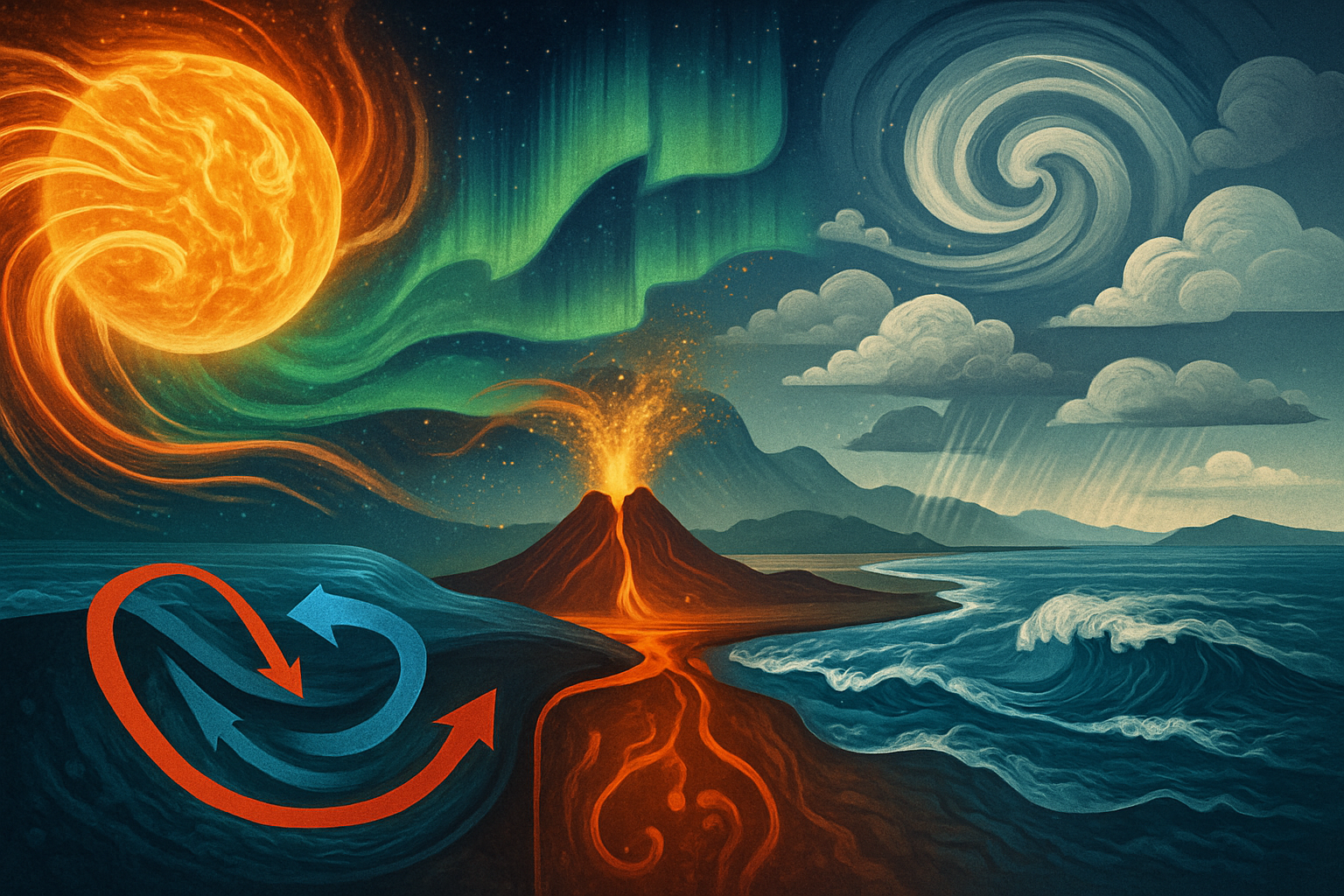
Beneath the surface of our daily lives, a complex choreography unfolds-where solar winds, mantle convection, ocean currents and atmospheric tides collide to shape weather extremes, ecological transformations and technological vulnerabilities. By tracing recent solar storms, deep-sea conveyor shifts and rare gravity waves, we uncover how these invisible actors script the next chapter of life on Earth.
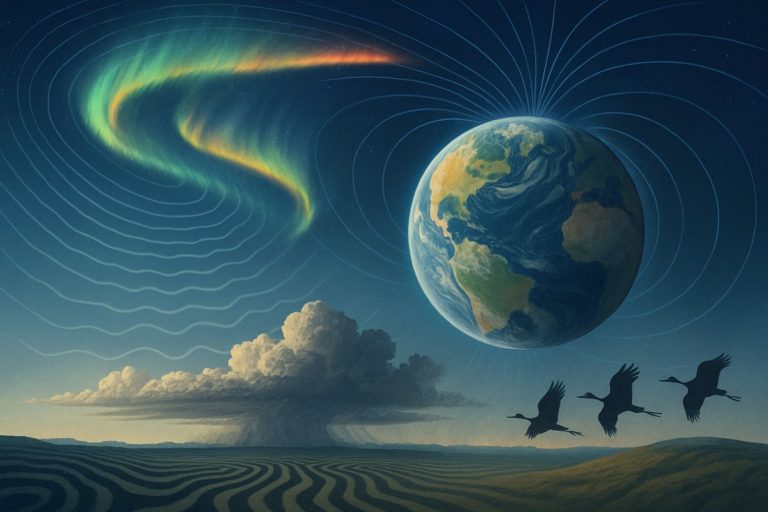
In the quiet hours before dawn, a faint glow dances across northern skies far below the Arctic Circle. This auroral shimmer is not simply a visual wonder; it is the visible echo of powerful solar winds slamming into Earth’s magnetosphere. In recent months, a pair of intense solar eruptions sent charged particles racing toward our planet, igniting shimmering curtains of light but also rattling power grids and satellite networks half a world away.
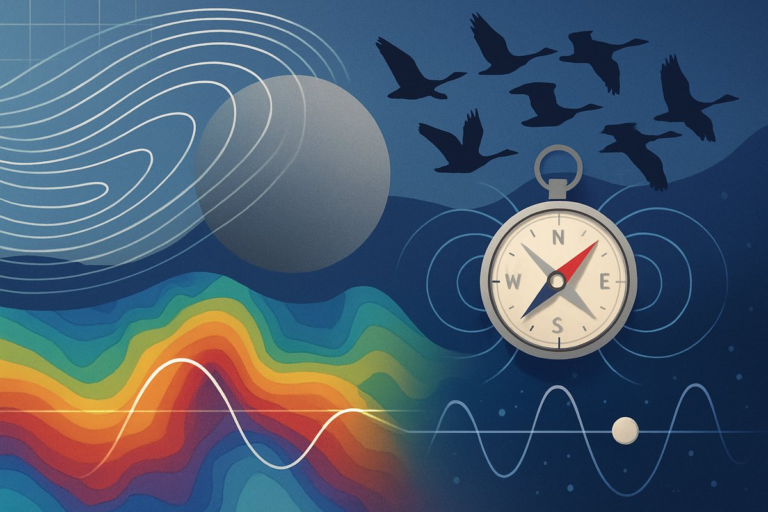
While auroras remain the most poetic signature of solar storms, they are just one verse in a sprawling epic of natural forces at play. From the seething core to the heights of the thermosphere, Earth’s systems resonate in complex, often surprising ways. Geomagnetic storms, deep-ocean conveyor shifts and even fleeting atmospheric gravity waves can ripple across continents, influencing everything from extreme weather outbreaks to migratory patterns of wildlife.
So what happens when these hidden rhythms collide? How do solar outbursts, internal Earth tides and shifting ocean currents conspire to steer storms, seed droughts or trigger mass coral bleaching? By weaving together data from satellite observations, oceanographic expeditions and ground-based sensors, scientists are assembling a holistic portrait of our planet’s dynamic interior and exterior interplay.
A Storm from the Sun Collides with Earth’s Shield
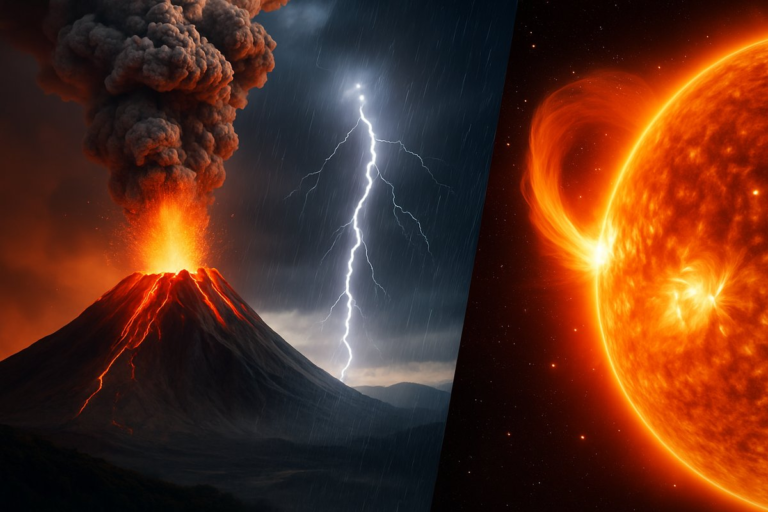
In early summer, solar observatories noted a sudden flare from a sunspot group much stronger than any in the prior decade. Within 48 hours, Earth’s magnetic field was buffeted by a coronal mass ejection (CME) that had erupted at over a million miles per hour. Space weather centers issued geomagnetic storm alerts, urging operators to reroute polar flights and place sensitive electronics into protective mode.
At high latitudes, the beauty of rippling auroras masked the underlying impacts. Ground-induced currents generated by the storm surged through transmission lines, causing transformer overheating in regions unprepared for such magnetic disturbances. Meanwhile, low-orbit satellites experienced drag spikes as the charged particles heated the upper atmosphere, slowing spacecraft and shortening orbital lifespans.
Researchers now believe that large CMEs may also subtly influence cloud microphysics. Preliminary studies from the European Space Agency hint that changes in the ionization of atmospheric molecules can seed condensation nuclei, nudging cloud formation in storm-prone areas. Though early, such findings suggest that solar outbursts might modulate terrestrial weather far beyond the polar zones.
Deep-Sea Conveyors: The Ocean’s Great Engine
Far below the turbulence of surface waters, a massive conveyor belt carries heat and salt around the globe. Known as the Atlantic Meridional Overturning Circulation (AMOC), this deep-sea highway transports warm surface waters northward, sinking them in polar regions before looping back through the abyss.
Recent measurements off Greenland’s coast show a worrying slowdown of up to 15 percent compared to late-twentieth-century levels. Scientists attribute the change to an influx of freshwater from accelerating ice melt, which dilutes surface waters and hampers their ability to sink. A weakened AMOC could chill parts of northern Europe, disrupt monsoon patterns in South Asia and even intensify hurricane seasons in the Atlantic.
Meanwhile, in the Indian Ocean, an unexpected deep-ocean warming trend has been linked to more frequent marine heatwaves. These anomalies stress coral reefs and displace fish populations, threatening livelihoods in coastal communities. Oceanographers caution that tipping points may be nearer than once thought, making it critical to monitor the conveyor’s flow and to develop early warning systems for sudden shifts.
Earth Tides and the Subtle Pull of the Moon
When most of us think of tides, rhythmic ocean bulges come to mind. Yet the same gravitational tug that raises coastal seas also flexes the solid Earth by a few centimeters each day. These Earth tides, imperceptible to human senses, can modulate stress along faults and even influence the timing of small earthquakes.
A study published in Nature Geoscience reported that shallow seismic events were up to 20 percent more likely during peak tidal stress. While moon-triggered quakes rarely exceed magnitude 4, the research underscores how tiny gravitational variations can tip the balance on critically stressed faults. In volcanic regions, similar tidal influences may hasten eruptions by opening deep conduits when the rock is already under duress.
Atmospheric Gravity Waves: Echoes of Storms at High Altitude
High above storm clouds and jet streams, the atmosphere is pierced by gravity waves-ripples generated when fast-moving air upwells across mountain ranges or convective storms. These waves ferry momentum and energy thousands of miles horizontally, ultimately dissipating in the mesosphere where they shape wind patterns and heat distributions.
Last winter, a series of intense cyclones in the North Atlantic triggered powerful gravity waves that were tracked by weather balloons all the way to Antarctica. Researchers noted subtle fluctuations in the polar vortex that they attribute to this long-range wave transmission. Though such effects are still being quantified, they hint at an underappreciated pathway by which mid-latitude weather can influence polar climates weeks later.
When the Unseen Becomes the Unmanageable
Taken individually, solar storms, ocean currents, Earth tides and gravity waves challenge any single discipline. But in the past year, an interdisciplinary consortium has begun linking these threads to understand compound events-where multiple natural forces synchronize to amplify impacts.
Last autumn, a rare confluence occurred: a moderate geomagnetic storm coincided with a slight slowdown in the AMOC, while a series of typhoons in the western Pacific produced gravity waves of record amplitude. The net result was a spike in extreme cold snaps over northern Europe, an unexpected surge in North American heat waves and a bout of erratic monsoon shifts in South Asia.
Such compound events strain forecasting models built around more isolated phenomena. Emergency response agencies face growing challenges when disparate risks overlap. A coastal flood, for instance, becomes far more devastating if timed with a geomagnetic storm that disrupts communication or an ocean-current anomaly that raises sea levels by several centimeters.
Toward a Planetary Risk Dashboard
Recognizing these intertwined threats, scientists and policymakers are calling for an integrated Earth systems monitoring platform. This so-called Planetary Risk Dashboard would fuse data streams from space weather satellites, deep-sea buoys, seismic networks and atmospheric sounding devices.
By coupling machine learning algorithms with expert analysis, the dashboard could flag high-risk windows-periods when multiple stressors align to boost the odds of extreme weather, grid failures or transportation disruptions. Early trials at a European research center have already demonstrated the concept’s potential, predicting a rare “earth-sun-ocean” coupling event with enough lead time to alert critical infrastructure operators.
Nurturing Curiosity and Resilience
Beyond risk management, a deeper public understanding of these hidden forces can foster sustainable choices and emotional resilience. From citizen science apps that track local geomagnetic fluctuations to community-scale tide gauges, individuals can contribute real-time data while enriching their sense of belonging to a dynamic planet.
Educational initiatives in schools are also integrating modules on Earth’s invisible rhythms-encouraging students to set up solar radiation monitors, ocean salinity experiments and DIY seismographs. By engaging with the subtle pulse of natural forces, learners develop scientific literacy and an appreciation for the interconnectedness of climate, geology and space.
Our world is neither static nor isolated. Every solar storm, every ocean swell and every lunar pull adds a note to a global symphony still largely unexplored. As we refine our tools and broaden our perspectives, we gain not only a buffer against surprises, but also a profound respect for the delicate, wondrous machinery of Earth itself.