Location
Mount Vernon, WA 98274
Location
Mount Vernon, WA 98274

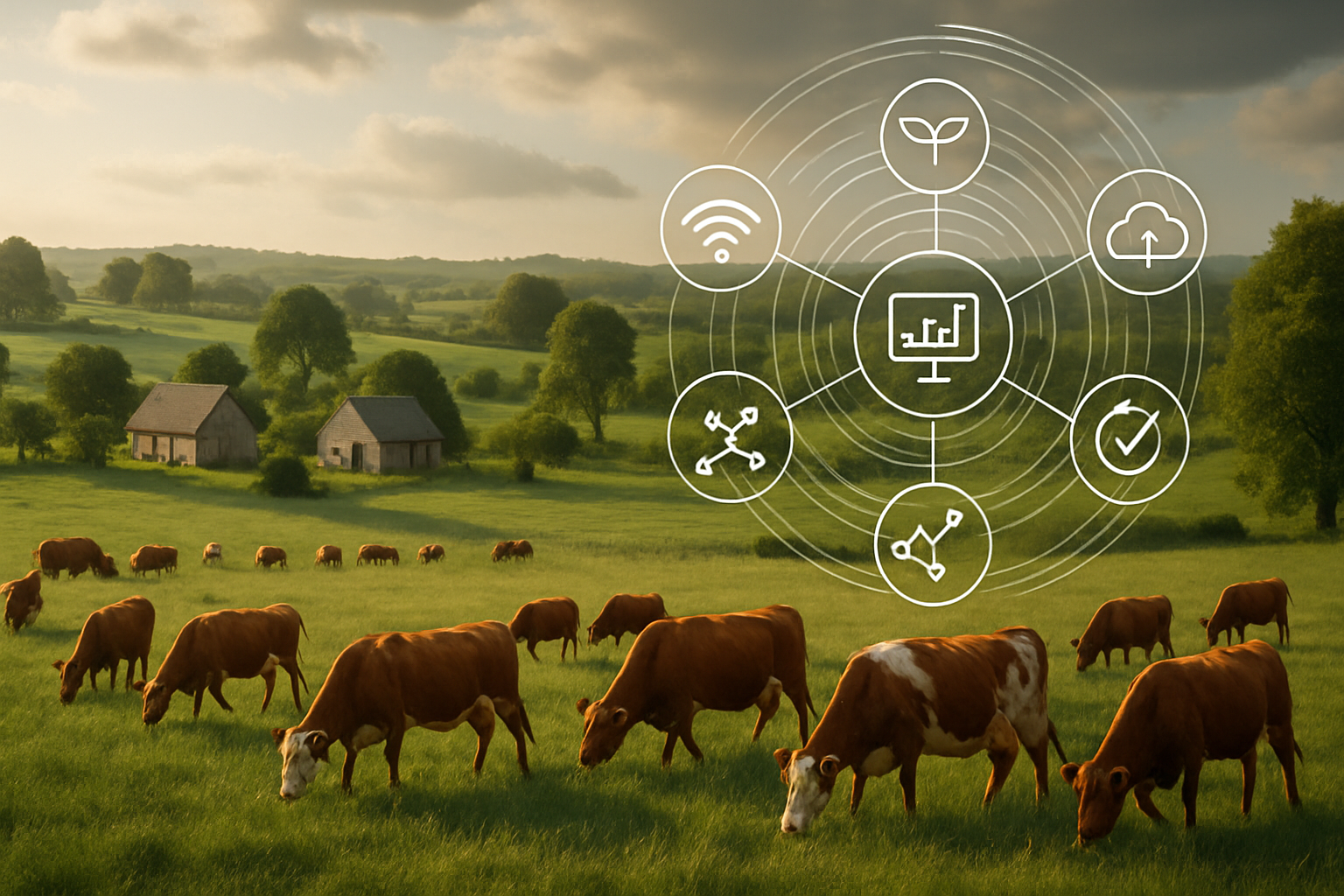
Across rolling pastures and small homesteads, a new model of livestock farming is emerging-one that balances community wisdom with open-source technology. By uniting heritage grazing practices with collaborative data networks, farmers are regenerating soils, boosting biodiversity, and forging resilient local food systems.
On a crisp morning in Pine Creek Valley, a circle of farmers gathers around a wooden mapping table under an oak grove. Their discussion blends centuries-old rotational grazing charts with projections from a shared cloud database. This assembly represents a growing movement: community-driven regenerative livestock farming, where tradition meets low-cost tech to restore landscapes and livelihoods.
The core principle of regenerative livestock farming lies in mimicking nature’s rhythms-moving herds in patterns that stimulate plant growth, sequester carbon, and promote wildlife habitat. While large-scale ranches have piloted precision grazing for years, smallholders and cooperatives are now taking the reins. They share resources through local cooperatives, open-source sensor networks, and mobile apps designed for minimal data plans.
Last spring, the Sunrise Pasture Cooperative launched PastureShare, a free platform where members upload grazing plans, soil moisture readings, and livestock weight trends. Built on community contributions, the platform offers real-time heatmaps of pasture health and customizable rotational schedules. Farmers report higher forage yields, stress-free animals, and reduced feed costs as plots rejuvenate after each managed rotation.
The economic impact is measurable: a survey of 45 co-op members showed a 20-percent reduction in supplemental feed expenses within one year. Soil organic matter increased by an average of 0.4 percent-enough to capture nearly 200 pounds of CO2 per acre annually. These figures parallel larger regenerative initiatives but underscore a key advantage: democratized access. Instead of proprietary software, participants co-authored the code and mapped grazing patterns that reflect local climate variability.
Indigenous shepherding methods have also found new relevance. Elders from the River Bend Tribe consulted on multi-species grazing designs, interspersing sheep, cattle, and goats to balance manure distribution and control invasive brush. This polyculture approach not only diversifies income streams-wool, dairy, meat-but also disrupts pest cycles and bolsters resilience against drought.
“Our ancestors moved herds seasonally to follow water and fresh grass,” explains co-op member Lena Crow. “By blending that practice with low-cost moisture sensors and shared satellites, we honor tradition while making smarter decisions each day.” The sensors, powered by small solar panels, send hourly updates via a mesh network. When soil drops below a set threshold, the system notifies graziers to adjust their herd’s paddock.
The cooperative model extends to equipment. A community barn houses portable solar-powered fencing, mobile watering systems, and a 3D-printed head gate that fits multiple breeds. Members reserve gear through the platform, reducing individual capital outlay by up to 60 percent. Many describe it as a mutual aid society for modern agriculture.
While community tech lowers barriers, education remains vital. Monthly workshops rotate between member farms, covering topics like agroforestry integration, parasite management, and carbon accounting. Virtual sessions tap into experts from universities and extension services who answer questions live. All recordings are archived in an online library, ensuring that no newcomer is left behind.
Beyond environmental gains, this model fosters social cohesion. Seasonal block parties celebrate rotational milestones-when cattle move to a rested paddock, neighbors gather for potlucks, sheepdog demos, and seed exchanges. These events reinforce collective stewardship and create local demand for ethically raised meat and dairy products.
Retailers are taking notice. A regional food hub now markets “Pine Creek Regenerative Beef,” complete with QR codes linking to digital pasture diaries. Consumers can trace their steak back to specific grazing dates and paddock maps, learning about forage species and wildlife sightings. Early sales reports hint at a 15-percent price premium, demonstrating that transparency and community values resonate in the marketplace.
Challenges remain: balancing participation among farms of different sizes, ensuring data privacy, and preventing tech fatigue. Some members worry that rapid feature additions could alienate less tech-savvy participants. To address this, the co-op instituted a “tech concierge” role-volunteers who assist with onboarding, troubleshoot hardware, and translate data into actionable insights.
Looking ahead, members plan to integrate drone imagery for more precise pasture assessments and explore blockchain-based certification to streamline trust across supply chains. Yet the heart of the movement is simple: people working together, adapting proven heritage practices with accessible tools, and nurturing ecosystems for future generations.
As dawn settles over the valley, tractors and ATVs scatter across sunlit fields while cowbells jingle in distant meadows. The mapping table stands empty until afternoon, but its digital counterpart hums with live updates. Under the canopy of oaks, agreements are made in code and conversation-proof that the future of farming is both communal and cutting edge.
Through this fusion of community, curiosity, and sustainable innovation, regenerative livestock farming becomes more than a management technique. It emerges as a shared journey, weaving technology into the fabric of tradition and leaving the land richer for every generation to come.