Location
Mount Vernon, WA 98274
Location
Mount Vernon, WA 98274


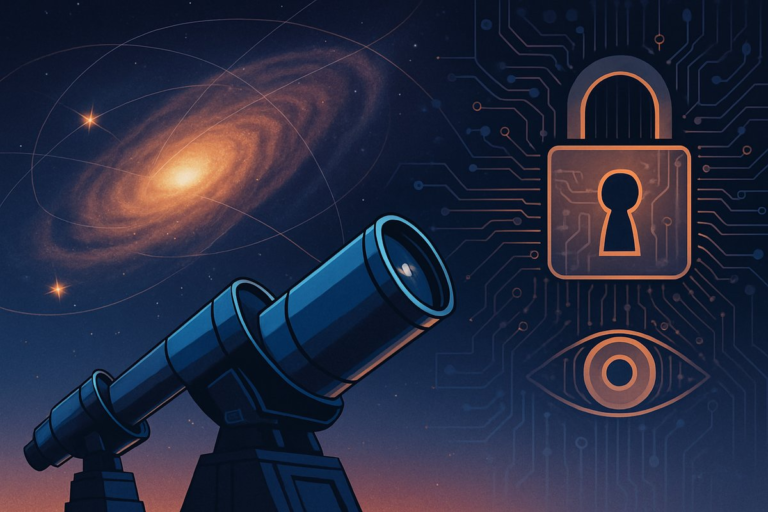
As humanity ventures deeper into space-time research, the flood of data collected from satellites and quantum sensors has sparked unprecedented privacy and surveillance challenges. Scientists, policymakers, and technologists are building frameworks and tools to ensure that exploration of the final frontier respects both cosmic mysteries and individual rights.
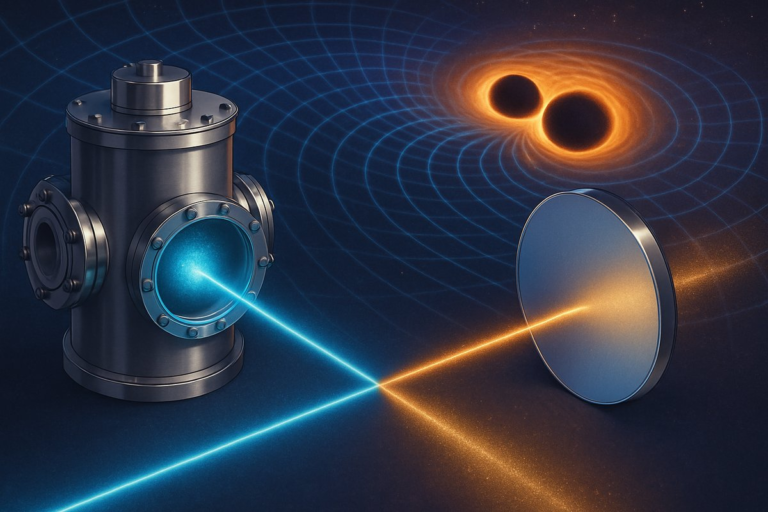
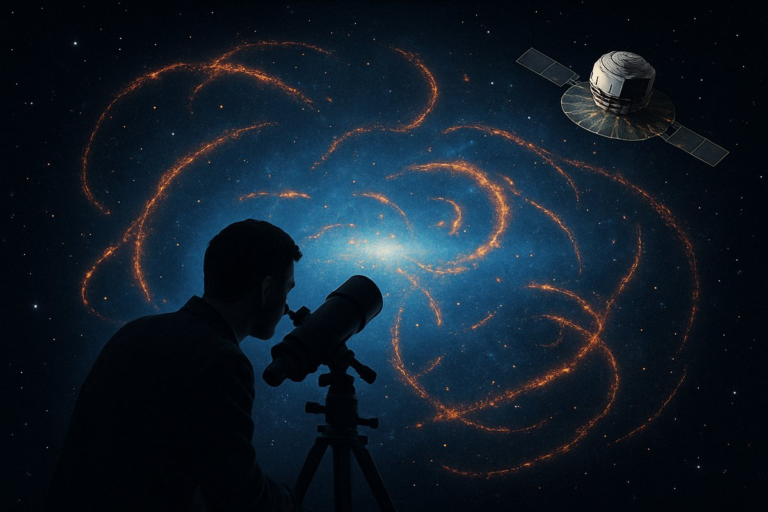
Imagine a network of satellites and deep space sensors tuned to detect the faint ripples in the fabric of space-time. Each ping, timestamp, and directional measurement streams back to Earth, feeding advanced models that probe the origins of the universe. But along with gravitational wave signals and quantum communication trials comes a torrent of raw data that carries hidden patterns about who recorded what and when. Just as smartphone users guard call logs and location trails, scientists must reckon with the metadata footprints pulsing through interplanetary relays. The collision of cosmic inquiry and digital scrutiny has given rise to a new frontier where privacy and surveillance intersect under the vast canopy of stars.
Most research satellites orbiting at low Earth altitudes or charting elliptical paths collect not only scientific readings but logs of ground station connections, signal strengths, and rerouting protocols. Over time these logs accumulate into an archive that reveals the behaviors of research teams, their operational schedules, and even their choice of algorithmic filters. In the rush to deploy more sensors and optimize data throughput, security has often played second fiddle to raw capacity. Now that academic and commercial players are sharing orbital highways, pressure is mounting to treat metadata as first-class currency in research ethics. Protecting these invisible diaries means rethinking how we design instruments and where we draw lines between open data and private archives.
Satellites are dual use by nature. While they enable breathtaking imagery, climate monitoring, and high resolution astrophysics, they also serve a surveillance role. Earth observation platforms can track land use, resource exploitation, and the invisible movements of communications nodes. In some regions these observations help enforce environmental protections, but in others they fuel geopolitical tensions. The same sensors that detect a supernova flash can be repurposed to pinpoint a ship’s location or map road traffic patterns. As reliance on spaceborne assets grows, so do the stakes for comprehensive oversight that prevents unauthorized monitoring and establishes clear limits on data retention.
The risk of spyware infiltration looms large across the orbital ecosystem. Malicious code can piggyback on firmware upgrades for attitude control systems or embed itself in the communication stack of a nanosatellite. Such malware may lie dormant for weeks, sampling broadcasts or relaying encrypted beacons to unknown endpoints. Once embedded, extraction is a daunting task that often entails bringing hardware back to specialized ground facilities. Spyware detection in this context demands innovative approaches that blend hardware integrity checks with anomaly detection in telemetry streams. The complexity of space hardware makes every bit of code a potential vector.
In the terrestrial cybersecurity realm, teams rely on signature databases and heuristic scanners to spot threats. But space hardware operates under extreme constraints with limited processing power and bandwidth. Pushing a full antivirus suite to a cubesat is impractical. Instead, researchers are prototyping lightweight detectors that use statistical models to flag deviations in packet timing or power usage. These sentinel agents analyze spark bursts in a radio module or irregularities in boot sequences before alerting ground control. Combined with secure boot chains and encrypted telemetry channels, they form a multilayered defense against firmware tampering and covert eavesdropping.
Beyond the technical safeguards lies a tangle of digital rights questions. Who owns the data produced by a constellation managed by multiple institutions? How long can metadata about mission planning persist in public repositories? Current space treaties predate the age of digital surveillance, leaving gaps that legal scholars are racing to fill. Proposals include binding rules on data minimization, mandatory transparency around sensor capabilities, and time limits on metadata archiving. Some nations are already drafting national laws that echo general data protection principles but tailor them to outer space. The goal is a balanced framework that neither stifles scientific collaboration nor neglects individual and organizational privacy.
Ethical-tech pioneers are advocating for designs that bake privacy into the instruments rather than retrofitting it later. Techniques like differential privacy allow researchers to extract aggregate insights-say, the frequency of cosmic ray impacts-without exposing the precise timestamps that could reveal operational details. Federated learning frameworks enable deep space probes to run local models on board, only sharing model updates instead of raw data. Such approaches reduce the volume of sensitive information transmitted downlinks and make it harder for adversaries to reconstruct activity profiles. Open source toolkits now exist for implementing these patterns in data pipelines, extending well beyond terrestrial applications.
A recent incident at a leading space research center underscores the urgency. During a routine firmware update for an experimental quantum communication satellite, engineers discovered a backdoor buried in a third party module. The code had been masked within diagnostic routines and only triggered under a rare combination of command flags. Fortunately, the anomaly detection layer caught an unexpected handshake attempt and quarantined the module. But the episode revealed that even cutting edge missions are vulnerable to supply chain compromises. It served as a wake up call that every byte onboard must be scrutinized with the same rigor applied to particle detector calibrations.
On the analysis side, data scientists are now organizing workshops on privacy preserving analytics for cosmic datasets. Participants learn how to partition information that must remain public-like telescope calibrations and broad signal envelopes-from restricted metadata, such as precise observation schedules. By employing homomorphic encryption protocols, they can perform computations on encrypted inputs, yielding valid outputs without decrypting sensitive material. While these techniques are computationally heavy, ongoing research into hardware acceleration promises to make them viable for space use. The fusion of deep space exploration and privacy research is spawning a new subfield where physicists and cryptographers work side by side.
The landscape demands cross disciplinary dialogue. Astrophysicists bring knowledge of sensor physics and measurement uncertainties. Cybersecurity experts contribute threat modelling and detection strategies. Legal scholars clarify regulatory gaps while ethicists urge caution against unintended consequences. Industry partners offer practical insights on manufacturing and telemetry constraints. Governments provide funding and diplomatic channels for treaty negotiations. Together, these stakeholders form what some are calling the Space-Time Privacy Alliance, a collective dedicated to crafting best practices and open standards for upcoming missions. By sharing lessons learned and publishing threat intelligence bulletins, they aim to stay a step ahead of adversaries.
Looking ahead, standardization efforts are gaining traction. International bodies are discussing a universal metadata taxonomy that labels data by sensitivity level, origin, and permitted use. Satellite operators would tag each packet with a privacy header that downstream users must honor. Failure to comply would jeopardize future data access. Complementing this technical protocol, there is momentum around an ethical code of conduct for space-time research, modeled on medical and academic ethics boards. Proposals include community review panels that assess new mission plans for privacy risks before launch and periodic audits of data handling pipelines.
As humanity ventures toward more ambitious space-time experiments-whether mapping dark matter distributions or establishing a network of quantum repeater stations-the interplay between cosmic knowledge and privacy safeguards will define the ethos of exploration. The final frontier need not become an unlimited domain for surveillance. Instead, it can serve as a proving ground for privacy-respecting technologies that may one day benefit life on Earth as well. Through technical innovation, legal innovation, and sustained collaboration, researchers can chart a course where both the mysteries of the universe and the rights of those who study them remain protected.
Ultimately, protecting privacy in space-time science is not an afterthought but a necessary pillar of responsible exploration. It echoes a broader movement toward ethical technology that respects individual rights at every turn. Whether probing the curvature of spacetime or unlocking the secrets of black holes, researchers carry a dual responsibility: to push the boundaries of knowledge and to safeguard the trust of their colleagues and the public. In that tension between curiosity and caution lies the promise of a more enlightened era, one in which the next big discovery glimmers not only with scientific brilliance but with the integrity of a commitment to privacy.