Location
Mount Vernon, WA 98274
Location
Mount Vernon, WA 98274

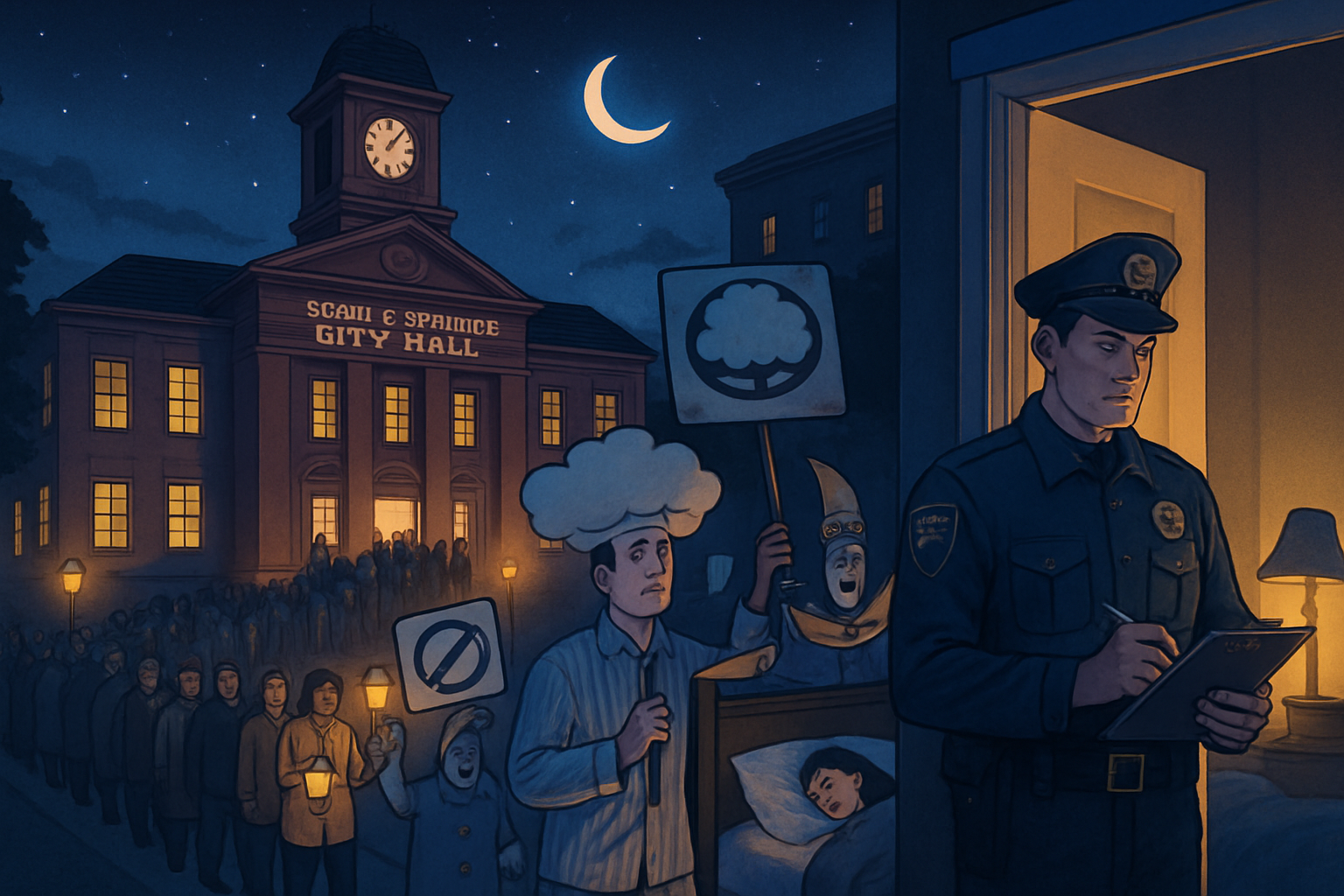
In a surreal twist of municipal overreach, Somnia Springs has enacted the Dream Licensing Act, forcing every citizen to register their nocturnal visions with the Bureau of Oneiric Oversight. As lines form outside City Hall at midnight and dream marshals patrol slumbering bedrooms, locals are torn between compliance, comedic protest parades, and underground lucid dreaming rings that vow to keep oneiric freedom alive.
In a move that sent ripples through the local sand-tray and ruffled the feathers of every municipal rooster, the sleepy town of Somnia Springs jolted awake Wednesday morning to discover it had become the first municipality in the region to demand licensure for nightly dreams. The newly passed ordinance, officially christened the Dream Licensing Act, compels citizens to register any sequence of images, dialogues, or flying porcupines experienced between the witching hour and dawn. A giant inflatable brain advertising the Bureau of Oneiric Oversight’s hotline now looms over the town square, bobbing gently above the startled pigeons.
Late Monday, Mayor Clementine Trundle delivered a ceremonious proclamation from beneath a velvet canopy in front of City Hall. Clad in pajamas emblazoned with official seal stamps, she lauded the ordinance as “a proactive step toward municipal wellness and cosmic accountability.” Promising to “ensure that every nightmare, fantasy, and stray bit of subconscious gumption has the proper paperwork,” the mayor unveiled a color-coded permit system that assigns green badges to benign dreams, amber to puzzling ones, and crimson to nightmares with potential public safety implications-such as visions of rampaging furniture or rogue harmonicas.
By nightfall, weary townsfolk lined up beneath flickering streetlamps, clutching smartphones to submit 27-point dream reports and pay fees via the new Oneiric Oversight app. The app’s interface asked citizens to classify recurring dream characters, describe the precise shade of sky witnessed while falling, and estimate the approximate decibel level of any dream choir. Frustrated dreamers reported crashes whenever they tried to upload footage of their lucid flying routines. One resident lamented that the app’s loading spinner seemed to induce mild narcolepsy, prompting him to awaken with the shocking realization that he’d missed his own bedtime.
Meanwhile, Dream Marshals-uniformed officials who patrol households in matching sleeper suits-have started issuing citations for unregistered slumber visions. One marshal, identified only as Officer Duvet, demonstrated typical zeal when he knocked on the doors of a family discovered recounting a dream about tea parties featuring tap-dancing squirrels. Unimpressed by their excuses of imaginative whimsy, he seized their dream journal and demanded an emergency permit application. The family now endures nightly visits from Duvet’s team, who clip-shaped tracking devices onto ceiling beams to verify that future REM cycles remain properly documented.
Not everyone greeted the new law with trepidation. Local entrepreneur Bea Gutenberg seized the moment to open the town’s first Dream Permit Broker. Stationed in a repurposed ice cream truck painted in swirling pastel hues, her “Permit-a-Dream” service offers express licensing, dream sanitization workshops, and optional dream insurance to cover the emotional fallout of revoked approvals. “Why face a formal hearing when you can upgrade to our Platinum Snooze Plan?” she quipped, handing nervous applicants a fleece blanket printed with tiny form fields.
As dreams became official town business, an underground resistance emerged. Calling themselves Insomniacs for Oneiric Freedom, the group holds clandestine meetings in basements illuminated by projection screens looping footage of soaring seahorses long banned from registered fantasies. Their manifesto champions the right to unregulated subconscious wanderings and decries the city’s attempt to quantify the human imagination. Protesters organized a “Blanket Rebellion,” draping whole blocks in mismatched comforters and chanting demands for an end to dreamed dream licensing.
Saturday witnessed the resistance’s pièce de résistance: the No Permit Dream Parade. Floats shaped like gargantuan pillows rolled slowly down Main Street, accompanied by a marching band playing off-key lullabies. Citizens clad in bedtime attire tossed pillow shreds into the air, transforming the thoroughfare into a soft-fall spectacle. Even the mayor, perched atop a rhinestone-studded chaise lounge float, attempted to cut through the revelry by waving permit folders-but the blankets proved more captivating than bureaucracy.
At the heart of the controversy lies a peculiar loophole. The ordinance exempts dreams that involve bureaucratic paperwork as long as they culminate in a nap. Entire sequences depicting city clerks stamping forms and citizens dozing at desks now fly under the radar. This loophole inadvertently fueled a wave of corporate-sponsored dream seminars that teach participants how to construct dreamscapes featuring endless lines, printer jams, and coffee-fueled typing sprees-techniques designed to slip beneath the licensing radar by guaranteeing a mild workplace snooze instead of true oneiric freedom.
By Wednesday night, the Bureau’s toll-free hotline burned out under the weight of 12,347 inquiries. Sapping the patience of night-shift operators, the hotline began routing dreamers to a series of increasingly surreal hold messages. One caller reported drifting off mid-call and dreaming that they were still on hold. Another awoke convinced that the entire registry existed only to keep everyone trapped in a bureaucratic dream loop.
Parents of young children have faced a new frontier of bedtime negotiations. Instead of bargaining over extra stories or nightlights, only dreams bearing valid permits earn those privileges. One mother lamented that her son’s repeated requests for a unicorn-themed dream permit turned bedtime into a two-hour debate over question three of the application-“What shade of pastel best represents your emotional state?” Without the permit, he refused to close his eyes, insisting that an unlicensed dream would get him grounded until the next lunar cycle.
A local sleep researcher, Dr. Milo Fenwick, warned that the ordinance could stifle creativity and exacerbate insomnia. He pointed to emerging data suggesting that enforced dream compliance elevates anxiety and fuels nightmares about paperwork. In response, the city council floated a proposal to establish licensed nap zones in public parks where people can request on-the-spot dream permits by filling out a discreet waiver. But as usual, the paperwork backlog has left the nap zone closed indefinitely.
Not all hope resides in official channels. A ragtag collective of freelance lucid dreamers has begun hosting underground Dream Hackfests, where participants share techniques for bypassing permit requirements. Attendees swap secret codes to whisper into the ears of dream custodians disguised as telepathic hamsters. Workshops teach how to rewire REM sequences so that when marshals appear, the dreamer simply dreams they have already obtained their license or that marshals are rubber ducks wearing official seals.
Amid the chaos, one family is leading the charge for streamlined sanity. The Delgado clan, known for their imaginative bedtime rituals that once involved pillow forts and interpretive dance, now advocates for a universal permit exemption. They propose issuing a single town-wide Dream Amnesty Card that would render individual licensing redundant. Their petition, adorned with sheep logos and touchdown confetti, has gathered over 3,000 signatures-enough to force a referendum that could redefine how Somnia Springs regulates the border between consciousness and REM.
As the town haggles over forms stamped in triplicate, an unintended consequence has emerged: community bonding. Neighbors once strangers now share dream confessions at coffee shops, swapping absurd tale after absurd tale. One woman admitted to dreaming she was an award-winning cantaloupe sculptor. Another confessed a recurring vision of existential squirrels debating the meaning of cheese. Public reading nights of unregistered dream diaries are gaining popularity, and cafes have begun hosting “Nightmare Open Mics” where brave souls recount their wildest subconscious escapades.
In a final twist befitting Somnia Springs’s new era, the only fully compliant registrant so far isn’t a human. The town council proudly announced that Mayor Trundle’s pet parrot, Captain Poe, has a valid Dream License, complete with a laminated badge and reflective lanyard. Additionally, an unexpected applicant-a world-renowned badminton champion on winter training tour-secured a license for a dream involving shuttlecocks that looped the earth. Meanwhile, a staggering backlog of 12,345 unregistered dreamers still awaits approval, their nocturnal lives suspended in bureaucratic purgatory.
Whether the Dream Licensing Act proves a shining example of civic innovation or a cautionary tale in overbearing governance remains to be seen. For now, residents of Somnia Springs cling to their pillows and their protest banners, determined to reclaim the right to wander free through the landscapes of their minds-licensed or otherwise.