Location
Mount Vernon, WA 98274
Location
Mount Vernon, WA 98274

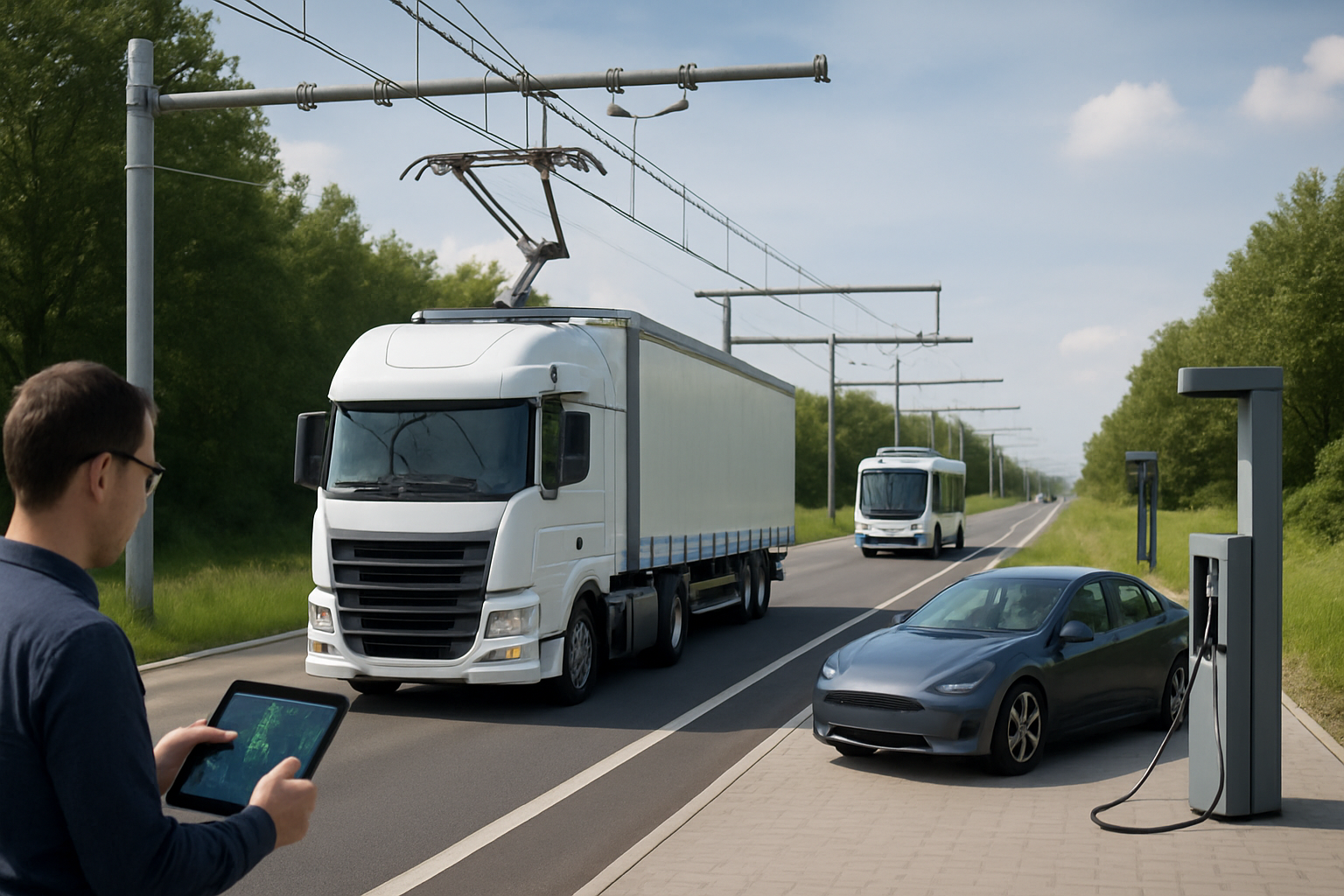
Advances in dynamic charging networks, AI-driven fleet management, and eco-friendly composites are converging to redefine how people and goods move. From pilot corridors that power electric trucks on the fly to urban micro-shuttles tailored by real-time demand, transportation is entering a new era of efficiency and resilience.
An emerging generation of highways and city streets is transforming rough asphalt into intelligent, adaptive surfaces that not only bear the weight of vehicles but also power, monitor, and manage them. The integration of dynamic charging lanes with AI orchestration, paired with innovations in lightweight, bio-based composites, is forging a transportation ecosystem that feels more like a coordinated symphony than a patchwork of pavement and engines.
Along major trade routes in Europe and Asia, pilot programs have installed sections of roadway embedded with inductive charging coils. As electric trucks pass overhead, these coils transfer energy directly to underbody receivers at speeds up to 200 kilowatts. Vehicles no longer need to divert to depots for recharging; they glide from one powered stretch to another, slashing idle time and reducing the need for oversized batteries. Early data from the largest corridor, which spans over 100 kilometers of motorway in the heart of Central Europe, show a 40 percent drop in total charging stops and a 15 percent improvement in fleet utilization compared to stationary charging alone.
The success of these corridors hinges on interoperability. Vehicle makers, infrastructure contractors, and standards bodies have collaborated through a Modular Smart Charging Infrastructure Consortium to define a universal connector design and an open data protocol. That protocol allows roadside units to authenticate each vehicle, negotiate charging power, and even schedule maintenance slots at partner service centers downstream. A connected dashboard displays real-time energy flow, estimated charge completion points, and the next available induction segment-all without leaving cruise control mode.
Back in city centers, an equally dramatic shift is taking place. On-demand micro-shuttles navigate routes that adjust every few minutes based on passenger requests, traffic congestion, and air quality readings. These autonomous vans communicate with roadside sensors that detect local pollution hotspots, rerouting to avoid areas during peak smog hours and steering through tree-lined boulevards when possible. Passengers see their vehicle’s route adapt on a heads-up display, complete with green tint overlay in zones where particulate counts are low, and amber warnings where emissions might be higher.
Behind the scenes, an AI-powered fleet manager sorts vehicles by battery state, occupancy forecasts, and real-time map data. If a shuttle needs to top up, it detours through micro-hubs-compact charging islands no larger than a standard parking bay-equipped with supercapacitor banks that can deliver a ten-minute boost. In practice, these top-ups recover enough range to complete multiple short hops before the next service window. The result is a fluid network in which vehicles appear to glide endlessly, like a school of fish flowing downstream, maintaining momentum with barely noticeable pauses.
Safety and environmental sensing play a starring role as well. Vehicles and roadways exchange data on temperature, rain intensity, and pavement friction via short-range wireless links. When a sudden shower begins, smart pavement activates slimline drains that channel water beneath the surface, while connected vehicles slow themselves and illuminate adaptive matrix headlights to reduce glare for oncoming traffic. Drone-like inspection robots periodically scan the roadway for cracks or subsidence, sending maintenance crews only when anomalies exceed predefined thresholds, rather than relying on fixed schedules.
In parallel, automakers are racing to lighten vehicle bodies without compromising strength. New composite panels blend plant-based resins and recycled carbon fiber, producing door skins that are 30 percent lighter than conventional steel blends and can be remolded into interior trim at end of life. These materials meet rigorous crash-test standards and boast lower embodied carbon footprints-a shift that reverberates through supply chains as fewer raw metals and less energy-intensive production are needed.
In a forward-looking assembly plant in Northern Europe, body panels arrive on demand via automated guided vehicles. A robotic painting line uses waterborne coatings derived from seaweed extract, slashing volatile organic compounds by more than half. Waste material from the plant is ground down and reincorporated, closing loops and reducing landfill. The integration of sensors into composite mold tooling enables continuous monitoring of temperature and pressure, ensuring that each panel cures perfectly, avoiding rework and scrap.
For drivers and passengers, the cabin of tomorrow’s vehicle is increasingly customizable. Adaptive seats morph to a user’s posture preferences detected via lightweight pressure sensors woven into the upholstery. A modular infotainment pod can be swapped out for different travel modes: in autonomous ride-share situations, it transforms into a digital work desk with privacy screens; in private use, it provides augmented reality travel guides that overlay points of interest on the windshield.
Connectivity remains vital. Vehicle-to-everything (V2X) communication ensures coordinated movement between cars, trucks, and infrastructure. In one notable demonstration in a midsize American city, a corridor outfitted with dedicated V2X units reduced intersection wait times by 25 percent and delivered a 10 percent improvement in average travel speeds during morning peak. Priority signaling for emergency vehicles and public transit further optimizes flow and cuts downtown emissions.
But new networks bring new security challenges. Hackers probing traffic management systems or roadside chargers could introduce delays or even safety risks. To counter this, the industry is adopting blockchain-inspired ledgers for charging transactions and firmware updates. Each roadside unit and vehicle module holds a cryptographic key, allowing only authenticated, signed instructions to pass. Real-time anomaly detection algorithms flag irregular patterns-such as an unexpected power surge or an out-of-sequence comms handshake-triggering automated lockdowns until technicians arrive.
Policy makers and planners are grappling with how to extend these benefits to rural regions, where lower traffic volumes and vast distances complicate the business case. One initiative under discussion would subsidize “solar road pods”-modular charging stations powered by photovoltaic canopies-deployed at strategic intervals along remote routes. These pods could also serve as community hubs, offering Wi-Fi, rest areas, and emergency services to travelers in sparsely populated areas.
Equity considerations are woven into many pilots. Income-based fare structures for shared autonomous micro-shuttles ensure that low-wage neighborhoods receive at least the same service levels as high-density downtown districts. Local workforce development programs retrain former assembly-line workers in composite fabrication or smart infrastructure maintenance, keeping communities connected to the economic lift of transportation innovation.
The true promise of this integrated approach is a transportation network that balances efficiency with sustainability and human well-being. Roads cease to be mere pathways and become living systems that sense, respond, and regenerate. Vehicles evolve from static machines into dynamic nodes within a larger organism, each playing a part in reducing waste and maximizing convenience.
For travelers, these advancements offer more than faster commutes. They signal a mindset shift, where mobility is not measured solely by horsepower or miles per hour but by how seamlessly journeys integrate with daily life and the planet. As smart corridors and bio-composite vehicles proliferate, the next road trip may feel less like a challenge and more like a carefully choreographed dance between human intention and machine intelligence. In that future, arriving always matters, but the journey may matter even more.