Location
Mount Vernon, WA 98274
Location
Mount Vernon, WA 98274

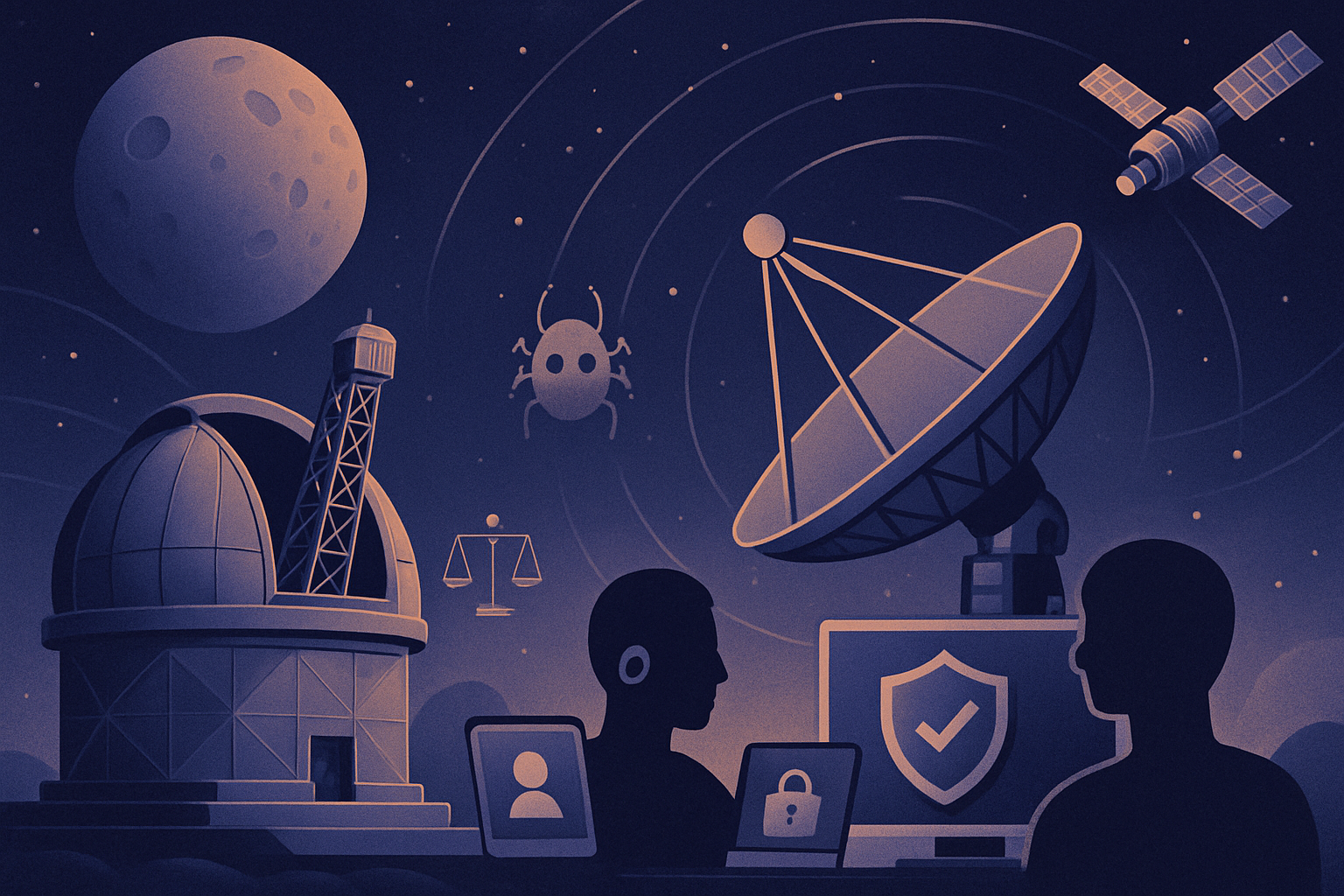
As quantum observatories and interplanetary communication networks emerge, the race to harness space-time data brings unprecedented privacy challenges. From preventing spyware infiltration in deep-space relays to drafting digital-rights frameworks for extraterrestrial information, scientists and policymakers are forging ethical-tech safeguards to secure our cosmic frontier.
Humanity’s curiosity has always stretched toward the stars, but the latest era of space research is powered not just by optics and rocketry but by quantum communication, AI-driven telescopes, and global data networks. These advances promise clearer insights into the universe’s infancy and real-time collaboration among observatories, yet they also open new avenues for surveillance, spyware attack, and digital rights disputes far beyond Earth’s atmosphere.
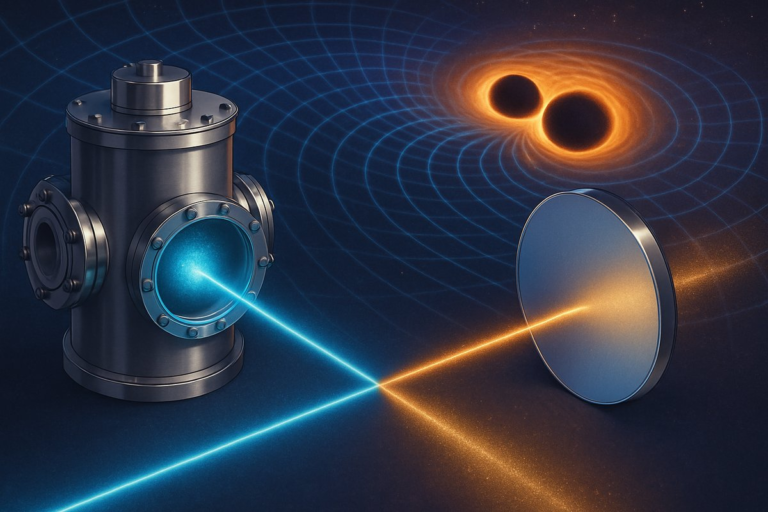
The birth of quantum entanglement communication promises near-instantaneous data transfer across vast distances, a leap beyond radio frequencies that can take minutes or hours to cross interplanetary gaps. Quantum observatories under development aim to transmit terabytes of encrypted data about gravitational waves and cosmic microwave background irregularities back to Earth in real time. But with encryption comes the temptation for state and non-state actors to intercept or corrupt these streams, potentially injecting false readings into cosmological datasets or eavesdropping on research teams conducting private experiments.
Space-borne spyware is no longer science fiction. Researchers have already demonstrated proof-of-concept attacks on satellites in low Earth orbit, where hijacked nodules could reroute sensor data or alter onboard commands. As nations plan moon bases and Mars missions, the surface of those worlds and the networks connecting them become potential targets. Protecting digital assets in these remote environments will require next-generation detection tools that can operate with minimal power and without constant ground support.
Conventional antivirus signatures and centralized threat intelligence are ill-suited to spacecraft. Instead, scientists are exploring decentralized anomaly detection algorithms that learn normal behavior profiles for each instrument, from star trackers to thermal sensors. These AI-driven watchdogs run onboard, flagging suspicious packets, unusual command patterns, or memory tampering in real time. By correlating observations across a mesh of satellites or rovers, the network can isolate infected nodes, quarantine corrupted data buffers, and maintain the integrity of space-derived insights.
Parallel to technical defenses, digital-rights experts are drafting new treaties and policy frameworks to govern data ownership, access, and privacy beyond Earth. The Outer Space Treaty laid the groundwork for demilitarizing celestial bodies, but it predates the internet, let alone quantum encryption and spyware-detection software. In private consultations, representatives from academic institutions, space agencies, and human-rights groups are advocating for a “Cosmic Data Charter” that enshrines individual and collective rights to cosmic discoveries.
Key provisions include prohibitions on unauthorized interception of scientific transmissions, requirements for transparent reporting when third parties request access to unpublished research, and guidelines for data retention that respect both collaborative exploration goals and privacy concerns. Negotiators face the challenge of balancing open science-where raw data is shared to accelerate discovery-with safeguards against corporate or governmental monopolization of high-value observations.
Ethical-tech developers are also prioritizing privacy-by-design in next-generation space instruments. Quantum resistant encryption modules, often powered by lightweight post-quantum cryptographic algorithms, are now being integrated directly into sensor chips. Researchers in Europe and Asia are building modular hardware inserts, known as “trusted execution environments,” that isolate critical computation from potentially compromised operating systems. This ensures that even if a satellite’s main firmware is hijacked, the core encryption functions and scientific pipelines remain shielded.
In parallel, the ethics of automated anomaly-response systems raises profound questions. If an onboard AI concludes it is under attack, should it refuse all external commands, potentially stranding astronauts or disabling life-support telemetry? Or should it defer to ground control, risking further compromise of the machine’s integrity? Engineers are designing tiered intervention protocols, where human operators must verify high-impact countermeasures, while low-level responses remain autonomous to contain threats swiftly.
At mission control centers on Earth, new surveillance detection efforts focus on supply chains and update channels. Firmware tampering during production or malware inserted in remote updates can create backdoors that lie dormant until activated. To counter this, agencies are adopting “space-grade” software provenance tools that cryptographically tag every code commit. Automated pipelines verify signatures at every stage, from developer workstation to launch vehicle, providing traceable audits that investigators can inspect in the event of an incident.
Space-related privacy issues extend beyond espionage. Astronauts on long-duration missions often rely on private video calls and encrypted messaging to maintain mental health. Ensuring these channels remain confidential-even when transmitted via relay satellites and deep-space networks-demands end-to-end encryption and rigorous key-management protocols. Test missions have experimented with biometric key derivation, where crew members’ physical or neural signals serve as cryptographic seeds, rendering stale keys useless if a device is lost or captured.
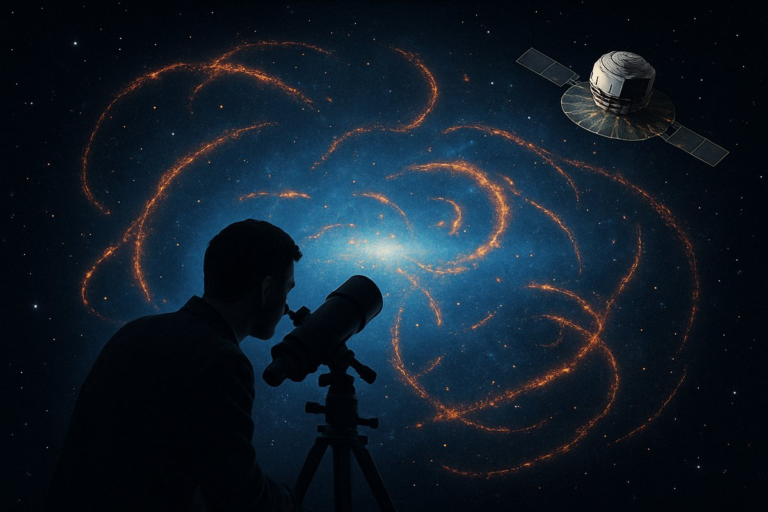
Meanwhile, cosmic observatories themselves collect vast amounts of data on Earth’s environment. Radio telescopes and radar arrays originally designed to scan distant galaxies can be repurposed to monitor climate variables, track migratory patterns, or detect unauthorized drone flights. This dual-use capability raises privacy flags on Terra. Advocacy groups are urging clearer rules on how observational datasets crossing the boundary between astronomical research and terrestrial surveillance can be accessed and deployed.
Academic partnerships are exploring federated learning techniques that allow disparate space agencies to jointly train anomaly-detection models on encrypted datasets. Sensitive information, such as proprietary satellite images or proprietary sensor designs, never leaves the local node. Instead, model updates are aggregated centrally in an encrypted form, preserving both intellectual property rights and the ability to scale defenses against evolving spyware threats.
Public outreach campaigns emphasize the value of cosmic privacy for all. By demonstrating how space-borne spyware could be repurposed for dark-web transactions or identity theft, educators highlight the link between deep-space research and everyday data security. Citizen science platforms are incorporating privacy-preserving participation tools that let volunteers classify galaxy images without revealing personal browsing habits or demographic profiles.
The involvement of civil society in drafting space-age digital-rights policies is critical. Experts for the first time convened a global Privacy in Orbit symposium, where participants debated guidelines for responsible AI in space. Draft principles include transparency requirements, redress mechanisms for those affected by erroneous anomaly-alerts, and channels for whistleblowers to report suspected spyware insertions in mission code.
Industry players are also stepping up. Startup incubators support early-stage ventures building on-satellite intrusion prevention systems, while venture capital flows into companies developing quantum key distribution constellations. Corporate responsibility reports now feature sections on space-time data ethics, reflecting a shift in how businesses view the final frontier-not just as a market, but as a shared resource demanding careful stewardship.
The unfolding era of quantum observatories and interplanetary networks compels us to rethink privacy, surveillance, and digital rights in cosmic terms. Humanity’s scientific reach is stretching through wormhole simulations, gravitational-wave detectors, and laser-linked satellites. To preserve trust-among nations, institutions, and individuals-ethical-tech safeguards must evolve in parallel, or even a single infiltration could ripple across light-years of research.
As the astronomical community gathers at conferences from Geneva to Tokyo, one message echoes: the open skies above demand open collaboration, yet fortified protections. By blending cutting-edge spyware-detection tools, decentralized encryption, space-grade provenance tracking, and inclusive policy dialogues, we can ensure that cosmic exploration remains a beacon of shared discovery, not a battleground of hidden agendas.
Looking ahead, the next breakthroughs may not come solely from more powerful telescopes or faster rockets but from the invisible threads of trust woven into every photon and qubit we send across the void. The universe may be infinite, but our resolve to safeguard its secrets-and our own-must be equally boundless.