Location
Mount Vernon, WA 98274
Location
Mount Vernon, WA 98274

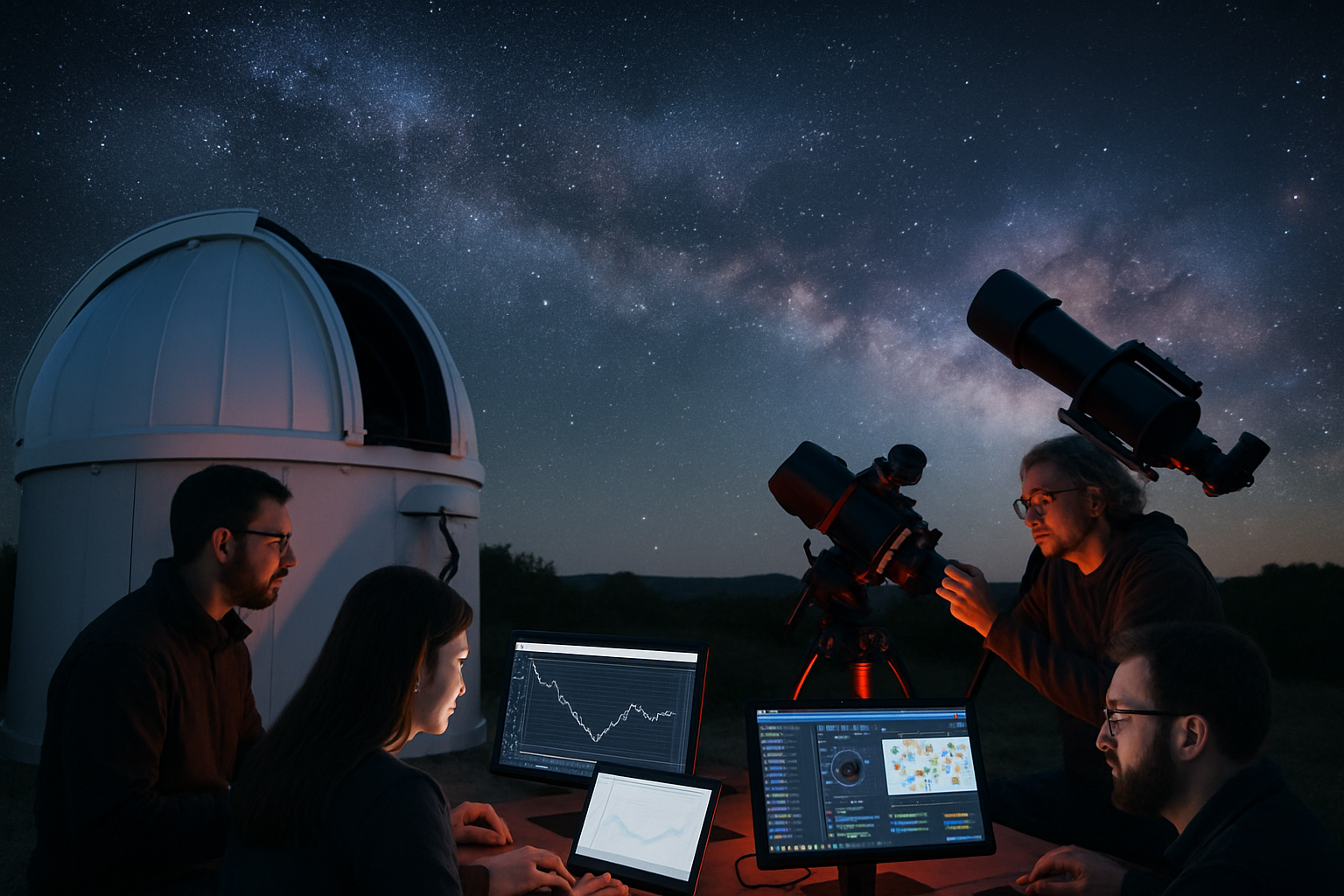
Amid a surge of do-it-yourself observatories and digital stargazing communities, a new kind of scientific renaissance is unfolding. Ordinary enthusiasts, armed with affordable equipment and boundless curiosity, are teaming up with research institutions to track asteroids, map exoplanet atmospheres, and decode cosmic signals once reserved for national agencies.
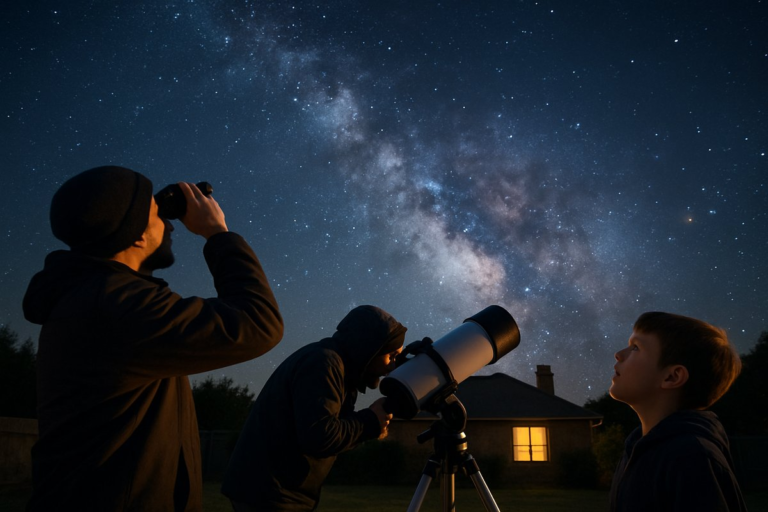
A quiet revolution is taking place under backyard skies and in online forums where the faint flicker of starlight draws people into a shared pursuit of cosmic insight. In recent months, grassroots astronomy clubs have orchestrated synchronized observations of near-Earth objects, while open-source software platforms have democratized the analysis of deep-space telescope data. What once seemed like the exclusive domain of government agencies and elite graduate students has become accessible to anyone with an internet connection and a modest telescope.
At the heart of this transformation lies a shift in how science is conducted. The Vera C. Rubin Observatory’s public data streams now feed citizen science portals, enabling volunteers to comb through millions of images in search of transient phenomena-supernovae, comets, and fast radio bursts. One volunteer discovered a previously uncharted near-Earth asteroid by comparing nightly captures, then alerted professionals who confirmed its orbit. This blend of public enthusiasm and institutional rigor is reshaping the pace and scope of space research.
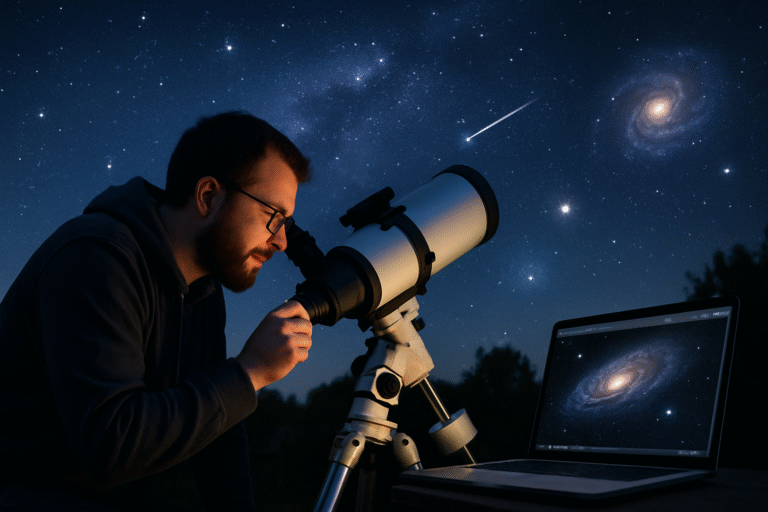
Social platforms dedicated to stargazing have soared in popularity. In virtual watch parties, participants coordinate their viewing schedules, swapping tips on camera calibration and signal processing. Code repositories host scripts that clean up noisy data captured by amateur radio dishes scanning for extraterrestrial broadcasts. Such collaborative frameworks offer fresh eyes-and fresh algorithms-on mountains of raw data that might otherwise go unexplored. The result is a flourishing of small-scale projects that contribute to larger missions.
Consider the community effort to study an enigmatic signal pulsating from a distant neutron star. A university lab reached out to online enthusiasts, sending raw observations that volunteers processed with custom filters. Within weeks, the signal’s periodicity was refined, helping experts pinpoint its rotation rate more precisely than ever before. This distributed model of discovery speaks to a core human instinct: the urge to peek beyond our own world and make sense of its vast complexity.
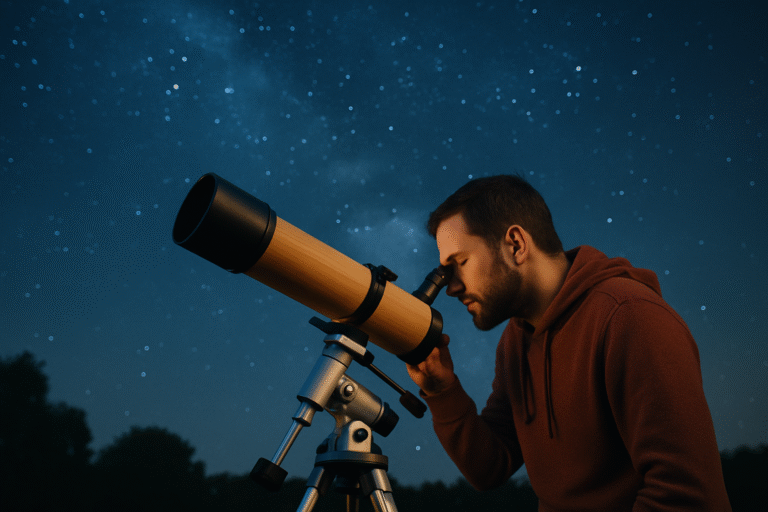
Technological advances have lowered the barrier to entry. High-sensitivity CMOS sensors, once prohibitively expensive, are now standard in entry-level telescopes. Paired with affordable motorized mounts and smartphone-controlled pointing systems, these rigs can track celestial targets with surprising accuracy. Meanwhile, cloud computing credits-offered by tech companies to educational and nonprofit projects-allow volunteers to run computationally intensive simulations on exoplanet light curves or to model dust particle distributions in protoplanetary disks.
Even the language of curiosity has become more inclusive. Educational nonprofits are translating astronomy tools and tutorials into multiple languages, ensuring that someone in a remote village can join a global observation campaign. Workshops in underserved regions guide participants in constructing simple spectrographs from recycled materials, turning discarded CD fragments into cosmic prisms that split starlight into colorful fingerprints. By widening the pipeline of discovery, these initiatives foster a sustainable model of community-driven science.
The scientific impact is tangible. Contributions from amateurs have aided in cataloging thousands of variable stars and mapping the trajectory of hazardous asteroids. In one high-profile case, a pair of backyard astronomers working in tandem tracked an object that turned out to be an interstellar visitor-only the second known to pass through our solar system. Their observations supplemented data from professional telescopes, filling critical gaps in brightness measurements during the object’s closest approach.
Industry players are taking note. Space agencies now issue public challenge grants inviting citizen scientists to tackle questions ranging from identifying Saturn’s ring dynamics to flagging anomalous radio signals. The winners receive equipment upgrades or observing time on large-aperture telescopes. By forging partnerships with public projects, research institutions can tap into a global workforce of motivated volunteers who bring fresh perspectives to thorny problems.
This grassroots movement also carries broader social benefits. Shared curiosity sparks conversations across generations, linking schoolchildren, retirees, and working professionals in a common endeavor. Astronomy clubs hold star-gazing picnics and remote-controlled radio-telescope demo nights, fostering empathy and cross-cultural exchange. In a world often divided by geography or ideology, the night sky offers a unifying canvas.
There are challenges: quality control of crowdsourced data demands robust verification protocols, and digital divides still leave some communities on the wrong side of the opportunity gap. But continuous feedback loops help refine methodologies, and organizations are devising low-cost solutions-open-hardware radio dishes, community-built data centers-that promise greater inclusivity.
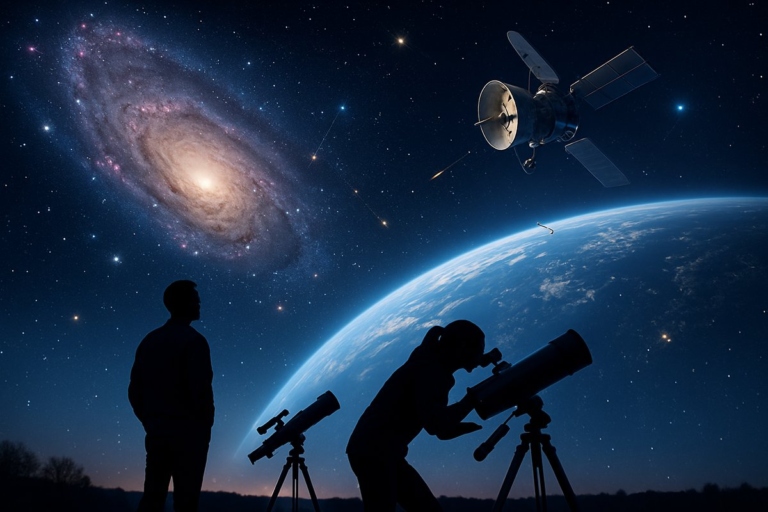
Looking ahead, the fusion of sensor networks, machine learning, and citizen engagement could accelerate breakthrough discoveries. Imagine a constellation of backyard detectors sharing real-time alerts on gravitational wave echoes or on the early flash of a supernova. In such a scenario, every rooftop observatory becomes a node in a global sensor grid, scanning the heavens for clues about dark matter or the first moments of cosmic inflation.
The broader implications extend beyond astronomy. The same collaborative frameworks are adaptable to climate monitoring, biodiversity tracking, and public health surveillance. By harnessing collective curiosity, communities can generate high-resolution data on local environmental changes or emerging disease patterns. The DIY ethos cultivated in the astronomy sphere demonstrates that scientific literacy and agency can flourish at the grassroots level.
In the end, the story of cosmic curiosity is one of reconciling the grandeur of the universe with the intimate act of looking up at the night sky. Each amateur astronomer who aligns a telescope mount, each coder who tweaks a data-cleaning script, and each volunteer who scours an image for anomalies contributes to a tapestry of discovery that transcends professional boundaries. Their efforts remind us that exploration is not restricted to giant observatories or distant space probes: it begins with a spark of wonder and a willingness to collaborate.
Whether you’re scanning the heavens for the next near-Earth passage or simply marveling at the Milky Way’s shimmer, you’re part of a movement that proves: curiosity, when shared, can propel humanity toward horizons we’ve yet to imagine.