Location
Mount Vernon, WA 98274
Location
Mount Vernon, WA 98274

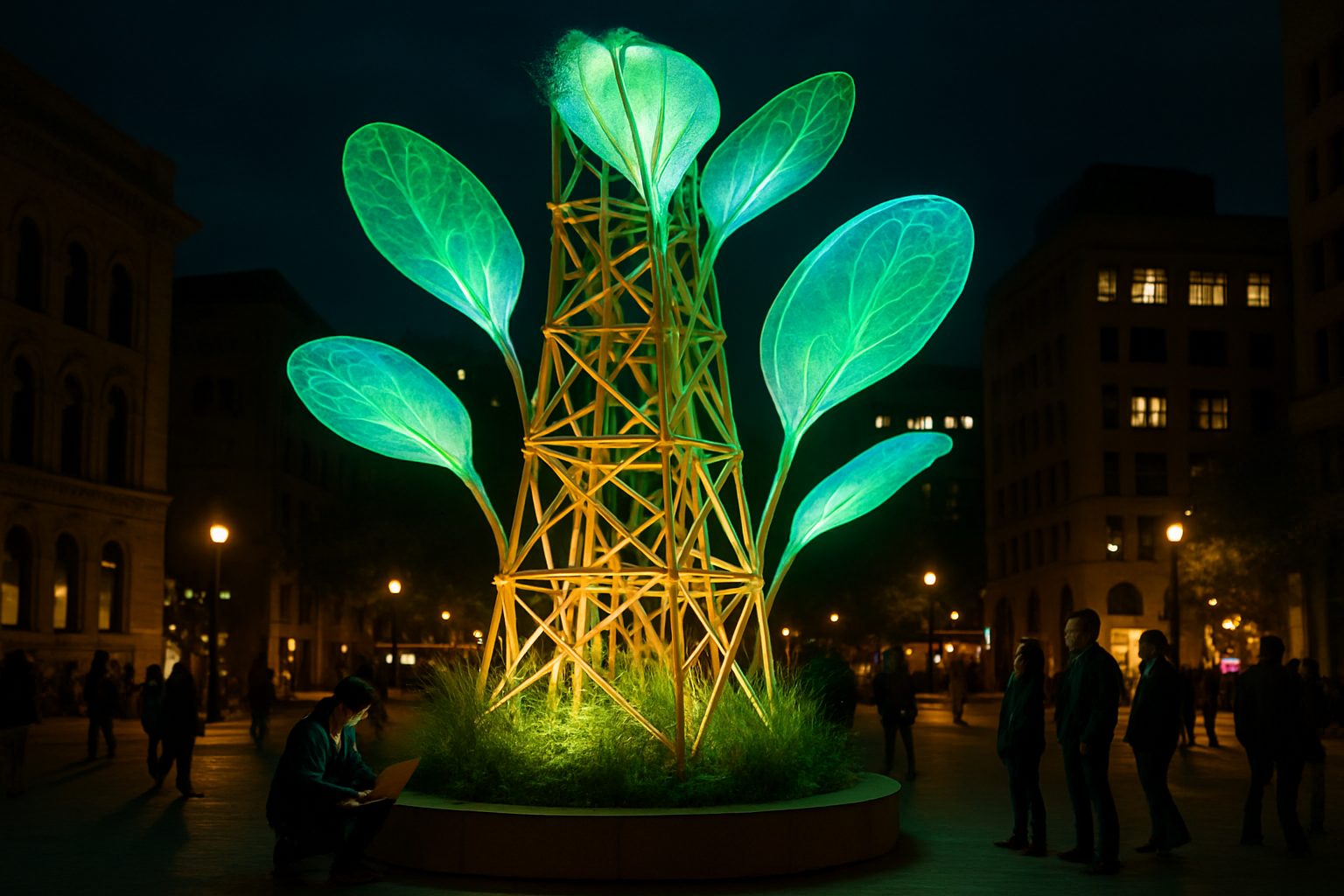
Across bustling city streets and shadowed plazas, artists and engineers are forging a luminous alliance with biology, data and renewable materials to craft dynamic installations. These living light sculptures reshape public spaces, respond to environmental cues and spark new conversations about sustainability, creativity and the future of shared experience.
As twilight settles over concrete canyons, a soft, otherworldly glow emerges from once-dormant corners. Far from neon billboards and commercial facades, these lights pulse organically, powered by living organisms or powered sustainably by solar grids. A new generation of creators is blending synthetic biology, programmable electronics and eco-friendly materials to reimagine how cities can come alive after dark. This isn’t merely art for Instagram feeds-it’s a radical experiment in environmental storytelling, communal engagement and the poetic fusion of nature and technology.
At the heart of this movement lies bioluminescence, the natural ability of organisms such as certain algae, fungi or bacteria to generate light through chemical reactions. Traditionally relegated to aquarium curiosities or documentary marvels, bioluminescent species are now being cultivated in transparent bioreactors and integrated into public sculptures. Imagine strolling past a bench that emits a gentle blue-green glow, shifting in intensity as air quality fluctuates, or pausing beneath a canopy of living lights that brighten when humidity rises. These installations turn invisible data-pollutant levels, foot traffic, weather patterns-into tactile, emotional experiences.
Collaboration between artists, biologists and designers has unlocked new ways to harness and direct bioluminescent emissions. Custom growth substrates derived from agricultural waste foster robust colonies of glowing algae, while 3D-printed channels guide nutrient flow and shape the emerging light patterns. In parallel, advances in low-power LED arrays and photovoltaic surfaces ensure that hybrid installations maintain a seamless dialogue between biological and electronic components. Solar-charged nodes collect daylight, powering sensors that regulate nutrient pumps or dim LEDs to conserve energy, creating a self-sustaining ecosystem of light.
Sustainability also extends to the choice of materials. Biodegradable plastics, mycelium composites and reclaimed metals form the physical framework. Mycelium blocks, grown from local sawdust and agricultural by-products, provide both structural support and natural insulation. As these organic scaffolds break down over months or years, they leave minimal environmental footprint. For metal reinforcements, many creators salvage steel girders from decommissioned buildings, repurposing them into curved arches or cantilevered arms that cradle the glowing cores.
In one pioneering project in a midsize city plaza, visitors encounter “The Tide of Light,” a circular installation spanning thirty feet in diameter. Within a clear resin ring, bioluminescent algae ebb and flow, gently illuminated by embedded lasers that scan across the water. Motion detectors trigger localized pulses whenever people approach the edge, prompting rippling waves of soft green light. Citizens report lingering at the perimeter, drawn by its meditative rhythm and the sense of biophilic connection it offers in an otherwise gray urban environment.
Beyond solitary installations, sensor-driven systems invite deeper audience participation. Wearable tags transmit biometric data-heart rate, skin temperature or galvanic response-to networked nodes hidden in wall panels or street trees. The resulting light choreography mirrors collective emotional states, forming a living portrait of urban sentiment. These responsive artworks foster empathy among strangers, aligning rhythms of breath and pulse so that passersby become unwitting collaborators in a shifting nocturnal tapestry.
Community involvement is central to this emerging field. Workshops led by artists and environmental scientists teach participants how to culture glowing microorganisms using simple kits and kitchen-grade illumination chambers. Neighborhood groups install desktop-scale prototypes in schools and libraries, collecting feedback on color palettes, brightness levels and interaction modes. This bottom-up approach ensures that each artwork reflects local climate concerns, cultural narratives and communal aspirations, rather than imposing a one-size-fits-all vision.
Designers emphasize modularity to accommodate evolving site requirements and seasonal changes. Interchangeable panels host different bioreactor cartridges, enabling swift swaps between fungal-based blue lights and algal greens. Electronic modules can be reprogrammed via open-source firmware, letting citizen developers adjust sensitivity to wind speed or ambient sound. Such flexibility extends the lifespan of installations and prevents early obsolescence, aligning with circular-economy principles.
Yet technical and regulatory challenges remain. Balancing nutrient flows to sustain living cultures in outdoor conditions demands constant calibration. Biosecurity protocols govern how bioluminescent organisms are contained to prevent accidental release into local ecosystems. Municipal codes often lack clear guidelines on integrating living organisms into public art, leading to protracted approval processes. Designers are working with urban planners and environmental agencies to codify best practices for safe, long-term operation.
Looking ahead, advances in synthetic biology promise even richer palettes. Researchers are engineering new bioluminescent proteins that emit hues beyond green and blue-violet, amber or soft white-emboldening artists to craft polychromatic compositions. Coupled with machine learning algorithms that predict weather shifts or air-pollution events, future installations could adapt dynamically, glowing brighter when particulate matter rises or dimming to conserve charge during calm atmospheric conditions.
In a recent collaboration, an interdisciplinary team transformed a decommissioned subway station into an immersive tunnel of living artwork. Here, thousands of modular panels house genetically optimized algae that respond to passing trains. As each train arrives, embedded photoreceptors detect vibration patterns, triggering an undulating cascade of violet and emerald light. Riders describe the experience as surreal-a synesthetic dance of sound, motion and living luminescence that momentarily blurs the boundary between infrastructure and ecosystem.
Technical aficionados are also exploring distributed sensor networks that map citywide environmental data in real time. Imagine rooftops covered in bioluminescent gardens that flicker when local temperatures exceed thresholds, alerting residents to heat waves. Streetlights, retrofitted with bio-integrated pods, could flash when noise pollution spikes, encouraging quieter nights. These interlinked installations form a living nervous system, heightening public awareness of hidden ecological rhythms and empowering communities to respond with collective action.
Their cultural impact is palpable. Urban dwellers report growing curiosity about microbiology and environmental science after encountering these luminous artworks. Schools incorporate bioluminescent modules into STEM curricula, and local maker spaces co-host hackathons to refine open-source control systems. Even traditional galleries and museums are commissioning living light exhibits, signaling mainstream recognition of this medium’s potential to reshape how we perceive cities at night.
As cities around the world grapple with climate stress, social fragmentation and sensory overload, bioluminescent art offers an antidote: a form of creative expression that is as informational as it is poetic, as data-driven as it is reverent of natural wonder. By illuminating the invisible forces that shape urban life-air quality, weather patterns, collective mood-these living light installations invite a deeper, more empathetic relationship with our surroundings.
In the end, the glow itself becomes a mirror. It reflects not only chemical reactions in cells or electrons in circuits, but our aspirations for greener, more connected public spaces. When darkness falls, a new dawn of creative possibility arises, shimmering gently in bioluminescent hues that remind us of the fragile yet radiant interdependence between art, technology and the living world.