Location
Mount Vernon, WA 98274
Location
Mount Vernon, WA 98274

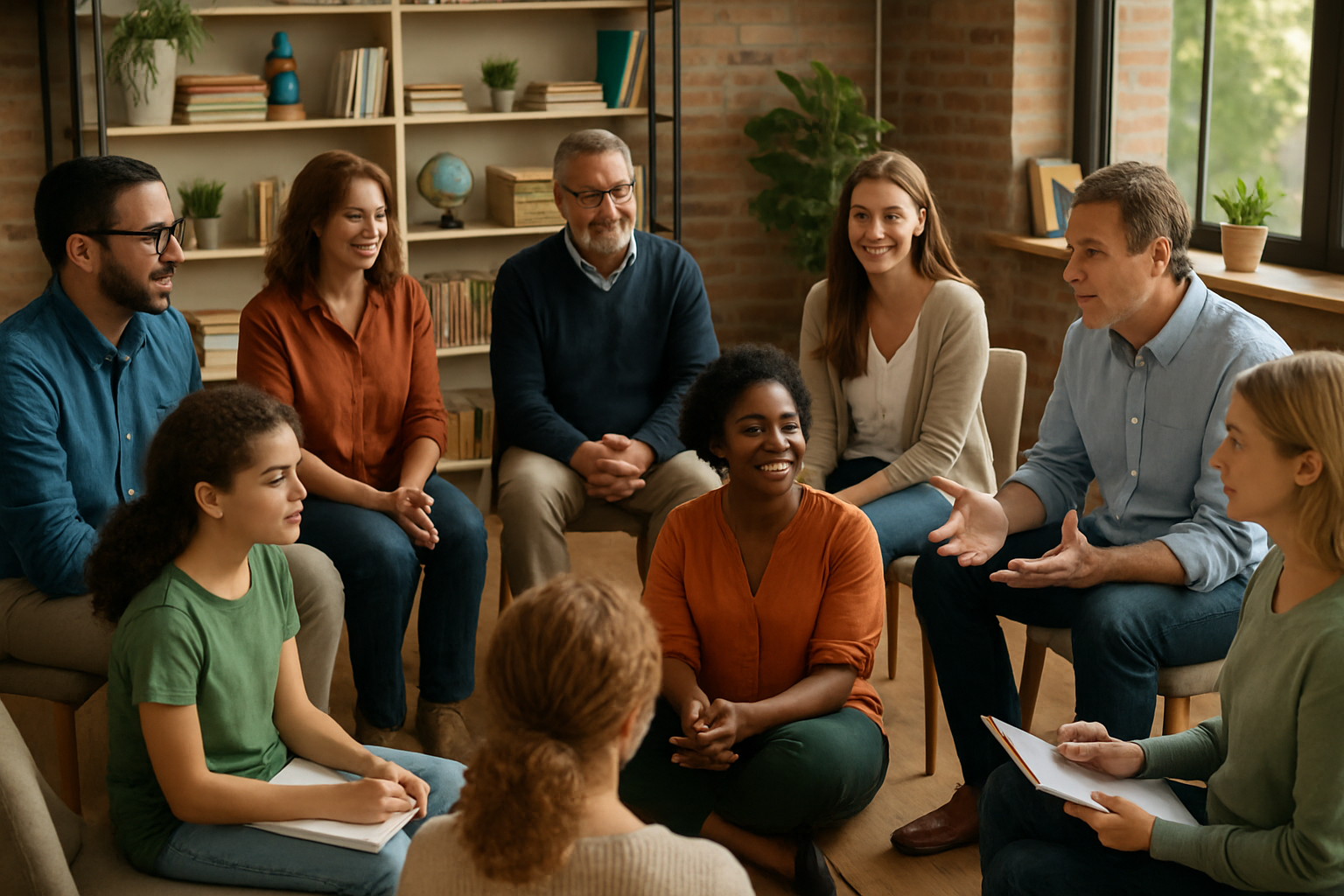
Across neighborhoods, groups of parents, educators, and specialists are joining forces to build community learning circles that blend academics, social-emotional growth, and hands-on discovery. These grassroots networks are redefining both parenting and schooling by drawing on local resources, peer expertise, and flexible formats that adapt to each child's pace and interests.
On a crisp Saturday morning in a city park, a dozen families gather around picnic blankets strewn with art supplies, science experiments and laptops powered by solar chargers. Children aged five to twelve alternate between constructing model volcanoes and collaborating on a digital storytelling project. Nearby, parents facilitate a circle discussion on mindful breathing exercises and how to handle stress before transitioning into a quick lesson on coding with block-based platforms. This isn’t an after-school program or a traditional homeschool co-op-it’s one of the growing number of community learning circles redefining what it means to educate in the 21st century.
In recent years, many parents have grown restless with one-size-fits-all classrooms. Standardized testing, rigid schedules and overcrowded schools often leave children unstimulated or overwhelmed. At the same time, the pandemic revealed the limits of remote schooling and the importance of social connection, sparking a renewed appetite for approaches that balance academic rigor, emotional intelligence and real-world exploration. Community learning circles have emerged as a response: small, parent-led cohorts that meet regularly in parks, living rooms, libraries or co-working spaces to deliver a multifaceted learning experience.
“We wanted something more adaptable than what either public school or full-time homeschooling could offer,” says one participant, a mother of two who helped launch a circle in her neighborhood. “Our goal was to create a space where kids learn from each other, from local professionals, and from the broader community-while parents trade tips on everything from discipline strategies to social-emotional coaching.”
Across the country, hundreds of similar groups have formed organically, each with its own flavor and priorities. Some focus on outdoor education, taking advantage of nearby trails, streams and gardens to teach ecology, geology and physiology through hands-on discovery. Others emphasize STEM challenges, rotating guest presenters who introduce robotics, climate science or digital media production. A growing subset prioritizes neurodiversity-friendly practices, offering sensory-rich activities and flexible schedules to support children with ADHD, autism or learning differences.
Research underscores the potential benefits of these collaborative models. A recent report from a prominent education think tank found that learners in small peer-driven clusters demonstrated a 20 percent increase in intrinsic motivation and a 15 percent improvement in problem-solving skills compared with peers in more conventional after-school settings. The report also highlighted gains in emotional regulation and sense of belonging-two factors closely tied to long-term academic engagement.
Logistics can be challenging. Coordination requires a shared calendar, a parent-led curriculum committee and rotating hosts who furnish spaces and supplies. Many circles use open-source platforms to crowdsource lesson plans, book swaps and volunteer credentials-especially when inviting local experts like librarians, yoga instructors or environmental educators to lead workshops. To cover material costs, participants typically chip in a modest monthly fee, often less than the cost of a single private tutoring session.
“One of our early hurdles was making sure every family felt included,” recalls an organizer who manages a circle of twenty children. “We agreed on core values-privacy protection, sustainability, curiosity and kindness-and wrote them on a cloth banner that we hang at every meeting. Those values guide decisions: from wristband scanning at sign-in to using washable paint and biodegradable glitter.”
Parents also cite emotional intelligence as a driving priority. In many circles, before diving into math problems or history timelines, participants sit in a circle and share how they’re feeling. A simple “mood meter” chart helps children identify emotions ranging from excited to frustrated. Facilitators introduce coping tools-like deep-breathing techniques, visualization prompts or peer-to-peer listening pairs-to equip young learners with strategies for handling disappointment, test anxiety or interpersonal conflicts.
Local schools are taking notice. In at least two districts, administrators have partnered with circle coordinators to host pilot programs on weekends, transforming school auditoriums into DIY science labs or pop-up reading lounges. One school librarian reports a 30 percent jump in weeknight library attendance when families know they can tap into circle-sourced book clubs and creative writing workshops.
While some critics worry that community circles could exacerbate educational inequality-favoring families with flexible schedules or extra resources-organizers stress their inclusivity efforts. “We built a sliding-scale fee structure and offer work-exchange options-someone who bakes snacks or leads yoga can offset membership costs,” explains a parent volunteer who oversees outreach. They also partner with social services groups to supply free supplies, second-hand laptops and translation support for non-English-speaking families.
For novice parents or administrators curious about starting their own circle, experts recommend beginning with a small, committed core group of families-ideally no more than eight children at first. Establish clear values and boundaries from day one, then test a simple curriculum: a mindfulness check-in, a 20-minute learning station (like basic coding or plant science), another rotation for art or journaling, and a closing reflection. Use existing online templates for sign-up forms, liability waivers and calendar syncing, then adapt them to your community’s needs.
Some circles prioritize sustainability by using digital projectors to display interactive simulations instead of printed worksheets, harnessing solar-powered chargers for outdoor sessions, or creating community gardens where children learn botany and nutrition by planting, watering and harvesting produce. These efforts reinforce environmental stewardship-another core value that resonates with families eager to cultivate eco-conscious citizens.
Technology integration varies widely. In one circle, older students build and program low-cost microcontrollers to monitor air quality in local green spaces. In another, parents host a monthly “Media Lab” where kids learn video editing using free, open-source software and share finished short films at a local theater. The common thread is a hands-on approach that treats technology as a tool for creative expression rather than a passive entertainment device.
Financial literacy is also on many agendas. Working with volunteer financial advisors, circles introduce concepts like budgeting, saving, and the basics of investing. Children role-play managing a small storefront or pitch sustainable product ideas and calculate projected costs. Early exposure to money management helps demystify adult responsibilities and sparks discussions on entrepreneurship and community impact.
Community learning circles aren’t a panacea-they demand significant coordination, open communication and a willingness to iterate. Parents juggling full-time jobs may still struggle to attend, leading some circles to experiment with hybrid formats that pair in-person meetups with asynchronous online modules. Others form “microcircles” of just three to five families that gather more casually at rotating host homes.
Yet the momentum is unmistakable. In urban, suburban and rural settings alike, these grassroots initiatives are filling gaps left by conventional schooling models and fostering deeper partnerships between families and educators. They celebrate children’s innate curiosity, equip them with practical tools for resilience, and strengthen neighborhood bonds in the process.
As one circle participant puts it: “We’re not just teaching algebra or grammar-we’re co-creating a living laboratory for life skills: how to collaborate, how to bounce back from failure, how to design solutions for real problems. And that’s a lesson every child deserves.”
With growing endorsement from educators, community leaders and local officials, the future of parenting and education may well lie in these adaptive, values-driven networks. They remind us that learning isn’t confined to standardized classrooms or rigid curricula-it flourishes when families come together, share expertise, and trust in every child’s capacity to explore, imagine and grow.