Location
Mount Vernon, WA 98274
Location
Mount Vernon, WA 98274

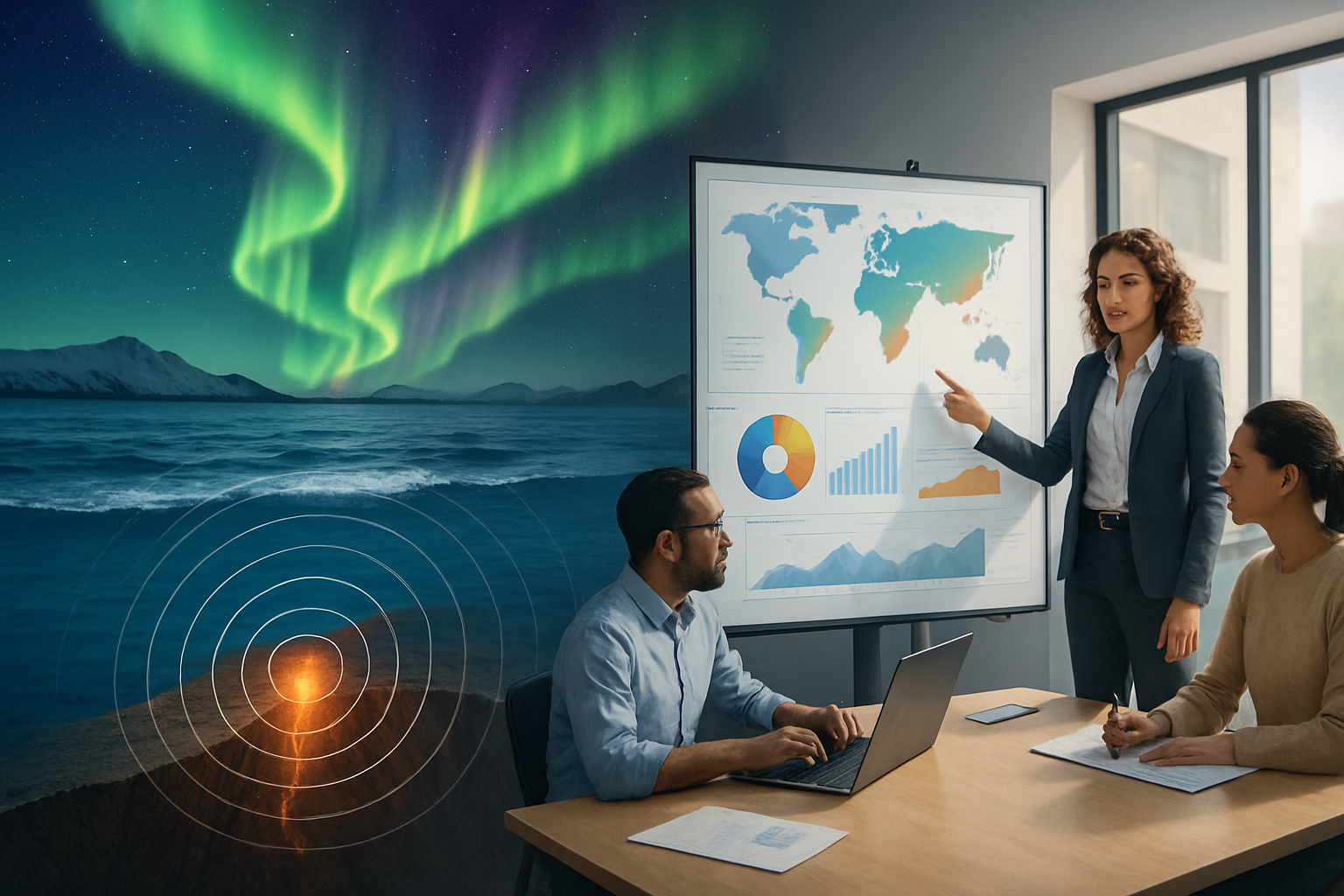
From the roar of underwater earthquakes to the shimmering auroras dancing over Arctic skies, unseen forces on Earth shape daily life and long-term planning. Cutting-edge research and community resilience projects are now decoding these phenomena to help societies adapt and thrive.
Beneath our feet, behind shifting weather patterns, and beyond the glow of the night sky, a web of natural forces hums with immense power. Recent scientific expeditions and monitoring campaigns have pulled aside a few curtains, revealing how subtle interactions between tectonic plates, ocean currents, atmospheric waves, and solar particles can suddenly tip into dramatic events. As governments and communities grapple with an age of heightened climate variability and seismic risk, understanding these invisible engines is no longer an academic pursuit-it is critical to safeguarding livelihoods and preparing for tomorrow’s surprises.
Late last year, a fleet of autonomous glider drones deployed around Greenland detected an unprecedented pulse within the North Atlantic Drift. This underwater current, a branch of the Gulf Stream, carries heat northward and helps regulate weather across Europe and North America. Sensors recorded sharp temperature differentials and velocity spikes that appear linked to rapid melting of coastal glaciers. When large icebergs calved into the sea, frictional changes disrupted the local flow and generated internal waves thousands of feet beneath the surface. Although invisible to satellites, these waves can disturb marine ecosystems, alter fish migration corridors, and undercut offshore infrastructure.
Meanwhile, on the other side of the planet, communities in Southeast Asia face the ripple effects of a shifting monsoon pattern. When sea surface temperatures in the western Pacific climb just a fraction of a degree higher than normal, the atmospheric pressure gradient reconfigures jet streams and stalls rainfall over key agricultural zones. Researchers using high-resolution climate models have mapped these teleconnections in greater detail than ever before, linking specific patches of warming water to multi-month droughts thousands of miles away. Farmers now note a new rhythm of planting seasons and increasingly turn to early-warning rainfall forecasting systems.
Deep within Earth’s crust, tectonic tremors continue to catch scientists by surprise. Advanced fiber-optic cables laid on fault lines can detect the smallest ground deformations in real time by measuring changes in laser signal patterns. During a recent swarm beneath a volcanic arc in the Pacific Northwest, these cables captured a subtle prelude-microscopic fractures that rippled outward over several days. When the main earthquake struck, shaking was unexpectedly moderate given the accumulated stress. Seismologists believe that slow-slip events may be acting like pressure valves, releasing energy in manageable increments. This insight is already reshaping hazard maps and emergency response drills in high-risk regions.
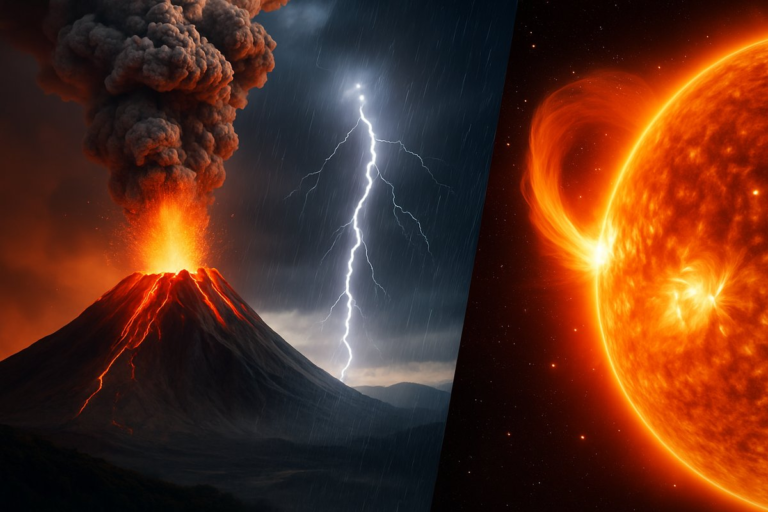
Above us, the sun occasionally flings billions of charged particles toward Earth in what we call solar storms. Last spring, a moderate flare triggered vibrant auroras seen as far south as New Mexico, delighting skywatchers. But it also induced surges in long-distance power lines, causing minor outages on isolated grids. Utility operators have begun adopting geomagnetic disturbance forecasts to temporarily ramp down vulnerable transformers. Space-weather forecasts, once confined to research institutes, are now woven into national resilience plans, reflecting the growing awareness that our high-tech society remains tethered to cosmic whims.
In Arctic communities, permafrost thaw presents another invisible hazard. When ground that has remained frozen for millennia softens, it releases not only methane-a potent greenhouse gas-but also destabilizes roads, pipelines, and runways. Engineers are experimenting with passive cooling techniques, such as thermosyphons, which draw heat out of the soil without electricity. Local governments are commissioning real-time thermal imaging surveys to pinpoint hotspots before pavement cracks open like fissures in a loaf of bread. The goal is to shift from reactive repairs to preemptive adaptation.
Even wildlife has a story to tell about shifting natural forces. Satellite-tagged whales off the coast of South America suddenly altered their migration routes last season, diving deeper and traveling farther south in search of cooler feeding grounds. Concurrently, marine biologists observed more intense internal wave breaking events under those same waters, likely as downward currents sought equilibrium after large storms surged across the Pacific. By connecting animal behavior, ocean physics, and climate drivers, these multidisciplinary teams are forging new pathways to understand how entire ecosystems respond when the invisible gears of nature shift.
In many places, citizen scientists provide the eyes and ears to complement high-tech instruments. From smartphone apps that monitor local tremors to networks of amateur radio operators tracking ionospheric conditions, grassroots observers feed data into open-access platforms. During a recent minor earthquake in Southern Europe, local volunteers recorded ground pitch and roll, sharing their observations within seconds. Seismologists then cross-referenced that data with official stations, improving epicenter pinpointing and shake-map accuracy. That collaborative spirit strengthens community awareness and fosters a culture of preparedness.
But knowledge alone cannot prevent damage-it must drive meaningful action. Coastal planners in West Africa are integrating wave energy projections into harbor design, ensuring quays and breakwaters can accommodate both higher tides and larger storm surges. In California, vineyards are experimenting with shade cloth and dry-fog misting systems to offset extreme heat days linked to atmospheric oscillations. Mountain towns threatened by sudden debris flows are upgrading culvert systems and establishing early evacuation routes informed by real-time slope-stability sensors.
Ethical considerations also emerge when monitoring technologies become ubiquitous. Balancing community privacy with the need for granular data requires open dialogues and clear governance frameworks. In one Arctic village, elders insisted that permafrost sensors be placed only in communal areas, avoiding private family plots. Researchers complied, adjusting their protocols. Such partnerships highlight that resilience is as much a social endeavor as it is a technical one.
At the global level, international collaborations are becoming the norm. The newly formed Earth Forces Alliance brings together geophysicists, oceanographers, atmospheric scientists, and social psychologists from five continents. They share data standards, simulation platforms, and best practices for translating complex science into actionable policies. Early results include improved flood-risk maps for river basins spanning multiple countries and coordinated solar storm drills for regional power grids.
Ultimately, unraveling the secrets of these invisible forces transforms our relationship with the planet. What once felt like capricious acts of nature can now be anticipated, mitigated, and sometimes harnessed. From tapping internal waves for clean energy generation to scheduling harvests around monsoon predictions, societies are learning to work with the Earth’s hidden rhythms rather than against them. The challenge ahead lies in ensuring this knowledge is shared equitably, empowering communities-whether coastal villages, mountain hamlets, or urban neighborhoods-to build resilience on their own terms.
The Earth speaks in currents, tremors, and bursts of solar particles. It is up to us to listen with open minds, to connect remote data points, and to craft strategies that honor both the power of natural forces and the dignity of the people who live under their sway. As the frontiers of monitoring technology and collaborative science continue to expand, so too does our capacity to navigate an era defined by both uncertainty and opportunity.