Location
Mount Vernon, WA 98274
Location
Mount Vernon, WA 98274


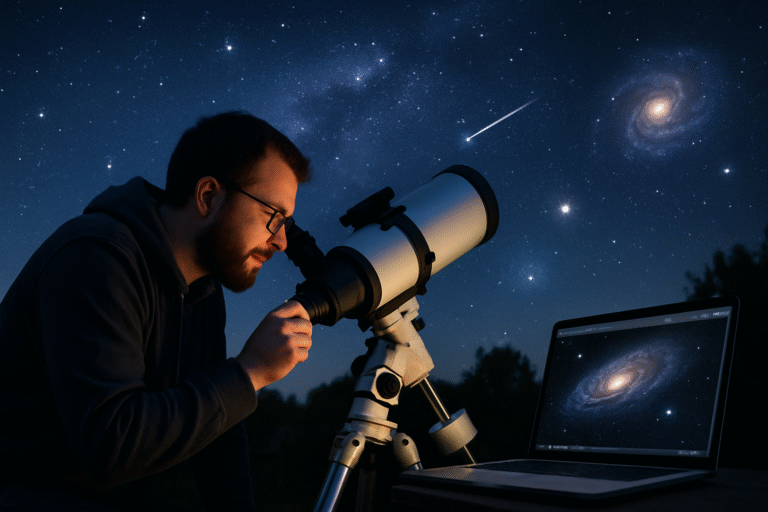
A surge of cosmic curiosity is transforming stargazers into contributors, uniting backyard observers and data scientists in a shared quest to decode the sky. From affordable gadgets to global citizen science projects, a new era of space discovery proves that passion and teamwork can rival institutional power.
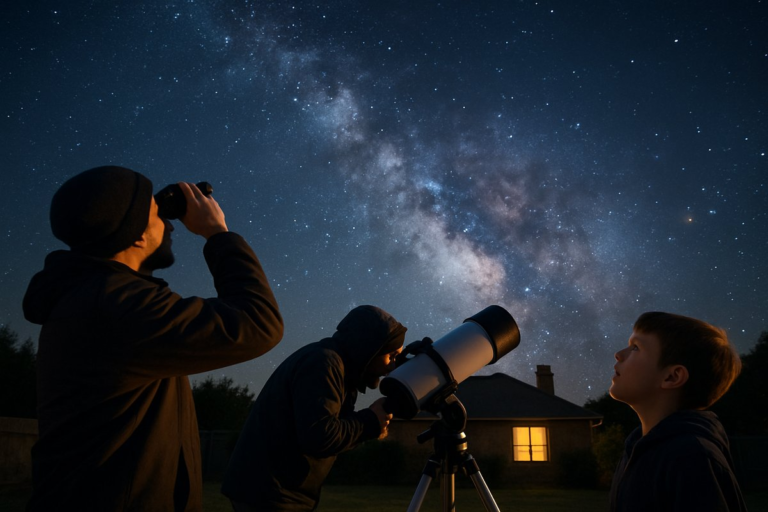
Late one clear evening, a group of neighbors gathered on a suburban rooftop, telescopes and binoculars at the ready. The arrival of a faint green comet fragment, first spotted in public survey data, inspired them to track its subtle glow across the horizon. Conversations sparked about orbital paths, tail chemistry, and the ancient lore of sky gods. What began as simple stargazing became a living classroom-a microcosm of the broader wave of cosmic curiosity sweeping across communities worldwide.
For decades, professional observatories held a near-monopoly on astronomical discoveries. But today, public access to archival data from space telescopes and radio arrays is democratizing the hunt for new phenomena. Enthusiasts sift through terabytes of images, analyzing distant galaxies and nebulae with tools once reserved for research labs. Through collaborative platforms, amateurs have contributed to the validation of exoplanet candidates, identified novel supernova signatures, and even helped unveil previously unseen gravitational lensing events.
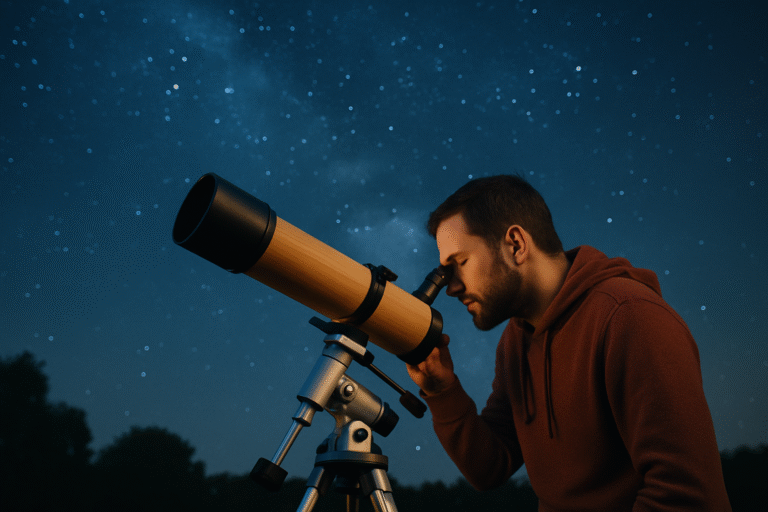
This grassroots revolution has roots in both technology and human nature. Affordable telescopes with computerized mounts now rival the performance of mid-century observatory instruments. High-sensitivity cameras and open-source imaging software allow backyard observers to capture galaxies millions of light-years away. Meanwhile, machine learning algorithms trained on professional datasets help volunteers flag anomalies in real time, turning citizen scientists into cosmic detectives.
At the heart of these efforts lies a growing suite of online platforms. Launch your browser, and you can classify galaxy shapes, spot exploding stars, or decode pulsar timing signals alongside a global network of peers. One recent project enlisted tens of thousands of users to map the dust lanes in a distant spiral galaxy, refining models of star formation. Another crowdsourced initiative tapped volunteers to comb through radio telescope scans, leading to the discovery of a rare fast radio burst.
Yet cosmic curiosity extends beyond data analysis. In small towns and big cities alike, local astronomy clubs are staging sky-watching parties, workshops on telescope assembly, and star-chart seminars. Libraries loan out “star backpacks” filled with binoculars and constellation guides. Schools integrate sky surveys into science fairs, challenging students to track meteor showers and calculate the trajectories of near-Earth objects. These hands-on experiences not only teach celestial mechanics but also foster a sense of stewardship for dark-sky preservation.
Awareness of light pollution has surged in parallel with public interest in the night sky. Communities are advocating for shielded streetlights and dimming policies after 10 p.m., not just to save energy but to protect our window on the cosmos. Conservation groups work with local governments to designate dark-sky reserves, where the Milky Way blazes overhead in stunning detail. For many volunteers, contributing to a nocturnal ecosystem feels like an act of environmental mindfulness as well as scientific exploration.
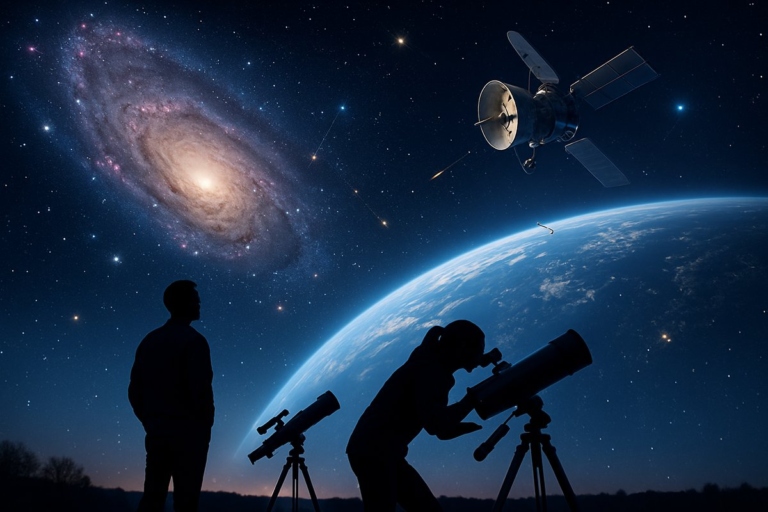
Technology companies are responding to this wave of enthusiasm. Smartphone apps now provide interactive star maps overlaid on real-time sky views. Users point their devices upward to identify planets, constellations, and satellite paths. Some enterprising startups offer compact spectroscope attachments that fit on a phone’s camera lens, letting anyone analyze the chemical signature of starlight and auroras. Cloud-based processing ensures even large, multi-gigapixel images can be shared and studied in minutes.
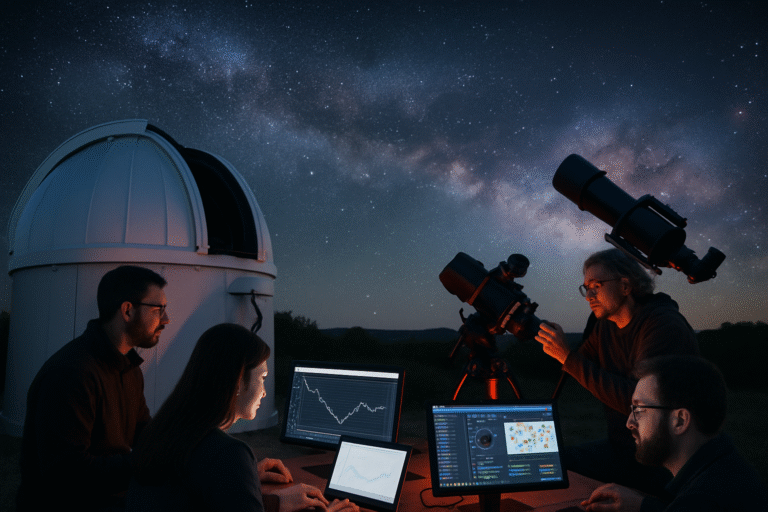
Behind the scenes, collaborations between professional astronomers and citizen groups are accelerating discovery cycles. Universities publish public challenges asking volunteers to model dark-matter distributions or predict solar flare activity. In return, participants gain access to virtual events, Q&A sessions with researchers, and the satisfaction of seeing their names credited in scientific papers. This blurring of boundaries bolsters science literacy, empowering hobbyists to advocate for research funding and space policy.
The emotional impact of cosmic exploration should not be underestimated. A single night under a star-filled sky can transform feelings of isolation into awe-driven connectivity. Studies have shown that stargazing fosters mindfulness, reduces stress, and sparks creative thinking. For many, cosmic curiosity becomes a lifelong passion-a source of purpose and wonder that transcends everyday concerns.
Looking ahead, the next frontier may lie in immersive technologies. Virtual reality planetariums are transporting users to the surfaces of distant exoplanets, allowing them to explore virtual landscapes sculpted from real data. Augmented reality guides overlay historical star myths on the actual sky, blending cultural heritage with scientific fact. These experiences are not just entertainment; they serve as educational springboards, igniting curiosity in younger generations who will one day tackle questions about life beyond Earth.
Despite the excitement, challenges remain. Light pollution continues to encroach on rural skies. Funding for public science platforms can be precarious. And as data volumes swell, ensuring equitable access to analysis tools will require ongoing commitment from institutions and tech developers. Yet the momentum is undeniable: a passionate, decentralized community is forging new pathways to discovery.
For anyone eager to join this journey, the barriers to entry have never been lower. Start with a simple sky map app or attend a local star party. Borrow or rent basic optics to learn constellation shapes. Once you’ve felt the thrill of spotting your first nebula or measuring a meteor’s trajectory, you may find yourself drawn into citizen science projects that expand your skills and connect you with kindred spirits around the globe.
Cosmic curiosity is opening doors not only to distant galaxies but also to profound questions about humanity’s place in the universe. In the face of global challenges on Earth, the night sky offers both perspective and hope. Each new discovery-whether a faint comet or a subtle pulsar pulse-reminds us that curiosity, collaboration, and a shared sense of wonder can overcome even the vastest of distances. As we look upward together, we redefine what it means to explore, learn, and belong.