Location
Mount Vernon, WA 98274
Location
Mount Vernon, WA 98274


As digital and physical worlds intertwine, new social ecosystems are emerging. From fleeting micro-communities to emotionally attuned platforms, today's social phenomena are reshaping how we connect and collaborate.
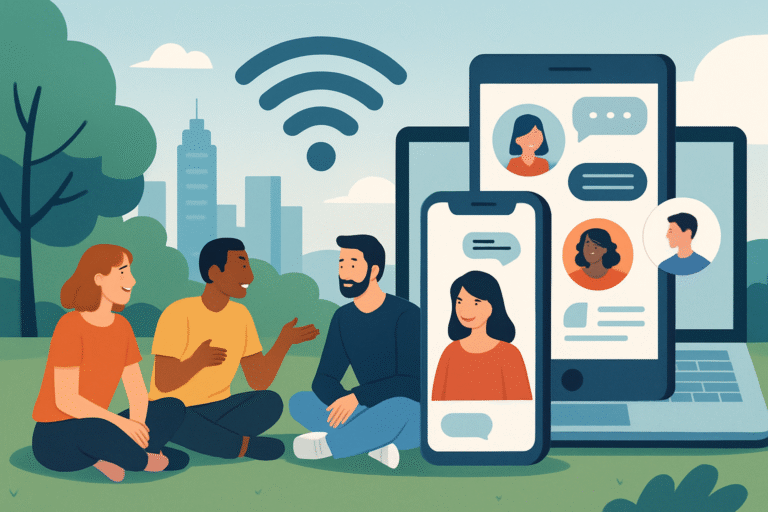
In an era where screens blend seamlessly with sidewalks, the patterns of human connection are undergoing a silent revolution. No longer confined to sprawling global networks, people are gravitating toward purpose-built social ecosystems that accommodate privacy, sustainability and genuine emotional exchange. Across chat apps, hybrid events and civic platforms, fresh currents are moving beneath the surface-transforming the familiar landscape of social media into a mosaic of temporary enclaves, local hubs and sentiment-aware channels. Understanding these shifts not only illuminates where relationships are headed, but also suggests how individuals and communities can navigate this evolving terrain with curiosity and resilience.
In the past, public faces on large platforms reigned supreme. Today, there’s a growing hunger for spaces that vanish as quickly as they form. Ephemeral group chats and audio rooms-where conversation histories disappear after minutes or hours-have become digital commons for candid exchanges. Participants report feeling more open to share opinions, creative ideas and personal anecdotes when they know their words won’t be archived indefinitely. This trend echoes a broader yearning for trust-based, guarded environments where authenticity isn’t penalized by permanence.
These communities also serve immediate needs: a pop-up interest group for urban gardening might convene, swap tips on composting balcony herbs, then disband until next season. In another corner of the digital sphere, a last-minute brainstorming session for a nonprofit campaign can coalesce, draft strategies, and dissolve in time for tomorrow’s action items. By shedding the burden of perpetual content management, users experience diminished social anxiety and a renewed sense of spontaneity in online interaction.
Artificial intelligence is no longer limited to recommending songs or curating news feeds. Newer social platforms are experimenting with real-time sentiment analysis, using natural language processing to detect tone, frustration or enthusiasm within conversations. When conversations trend toward negativity or derail into misinformation, the platform can subtly nudge participants toward more constructive dialogue-prompting a pause, a fact-check, or suggesting a private side chat with a moderator. This technology does not spy on individual emotions but instead aggregates cues to shape healthier group dynamics.
Integrating emotional intelligence into digital spaces addresses one of social media’s most persistent challenges: hostility and burnout. Early adopters of sentiment-aware design report longer session times driven by deeper trust, fewer instances of harassment and a more balanced exchange of viewpoints. As these systems evolve, communities can tailor the emotional calibration-prioritizing candid debate for civic forums or deeper empathy for support groups. The same engine that flags rising tension can also celebrate communal milestones, such as unlocking shared goals or recognizing volunteer contributions.
A counterpoint to global megagroups is the reemergence of neighborhood-scale networks. Drawing inspiration from community notice boards, these digital hubs connect residents around ultra-local topics-tool sharing, block parties, safety alerts or spontaneous clean-up efforts. Unlike sprawling platforms, hyper-local networks limit membership by geography, preserving a clear context for every post and eliminating the noise of irrelevant updates.
The benefits are tangible. A parent seeking a last-minute babysitter can broadcast to 50 nearby households and receive confirmed volunteers within minutes. An unwieldy conversation about citywide politics can be replaced by focused subgroups for each district, streamlining civic engagement. By combining location-anchored relevance with a commitment to privacy-no public search indexes, minimal personal profiling-these networks bridge the gap between digital convenience and face-to-face solidarity.
While new technologies emerge, there’s an equally powerful current pulling in the opposite direction: digital minimalism. A growing movement advocates for intentional social consumption-limiting screen time, focusing on in-person gatherings and shaping tech habits around well-defined values. Communities have formed around regular ‘device-free’ dinners, group hikes without headphones, and shared retreats for analog creativity. These rituals foster deeper human contact and cultivate a collective discipline that counters perpetual scrolling.
Organizers stress that slow social isn’t about rejecting technology outright, but about reclaiming agency over digital life. Participants report improvements in mental clarity, empathy and creative output. Moreover, by treating offline gatherings as events-complete with simple agendas, local sustainable catering and conversation prompts-hosts design experiences that feel as curated and meaningful as any digitally mediated meetup.
Large conferences and sprawling festivals remain staples of professional networking, yet there’s rising interest in micro-events: intimate, task-oriented gatherings limited to a handful of attendees. Whether it’s a four-person design sprint hosted in a coworking lounge or a five-member book discussion held in a neighborhood café, these small-scale formats prioritize depth over breadth. Attendees cite genuine connections, clearer focus and greater accountability as key advantages.
To extend reach without sacrificing intimacy, hosts often layer a virtual component-live-streaming key moments or enabling remote breakout rooms for observers. This hybrid approach democratizes access while ensuring core discussions remain concentrated. As the costs and carbon footprint of large events come under scrutiny, micro-events and hybrid solutions emerge as responsible models that balance reach, impact and environmental considerations.
Beyond private circles, civic technology platforms are redefining participatory governance. Residents can now propose local bylaws, vote on neighborhood budgets and track municipal projects through user-friendly apps. These tools translate complex bureaucratic processes into transparent, interactive experiences. Real-time dashboards display how tax dollars are allocated, while collaborative document editors enable constituents to co-draft policy recommendations.
Such platforms emphasize both accessibility and data privacy. End-to-end encryption shields personal voting records, and community moderators guard against coordinated disinformation campaigns. By opening the channels of civic discourse, authorities and citizens alike report increased trust in local decision-making and a sharper alignment between public needs and policy outcomes. In one example, a coastal town mobilized citizen input on beach restoration projects, leading to a more sustainable and cost-effective plan than initially proposed by planners.
The silent currents reshaping social ecosystems point toward a future where connection is modular, conscientious and attuned to context. Fleeting enclaves invite authenticity without permanence, sentiment-aware platforms foster empathy, and hyper-local forums reestablish neighborhood bonds. Meanwhile, digital minimalism and micro-events offer antidotes to overload, and civic tech elevates collective agency. Taken together, these trends underscore a shift away from indiscriminate amplification toward selective, value-driven engagement.
For individuals and communities alike, the invitation is clear: navigate these currents with curiosity, hold space for genuine human exchange, and prioritize emotional and environmental sustainability. By doing so, we can craft social landscapes that enrich lives, strengthen local ties and honor the balance between screen time and real-world intimacy.