Location
Mount Vernon, WA 98274
Location
Mount Vernon, WA 98274

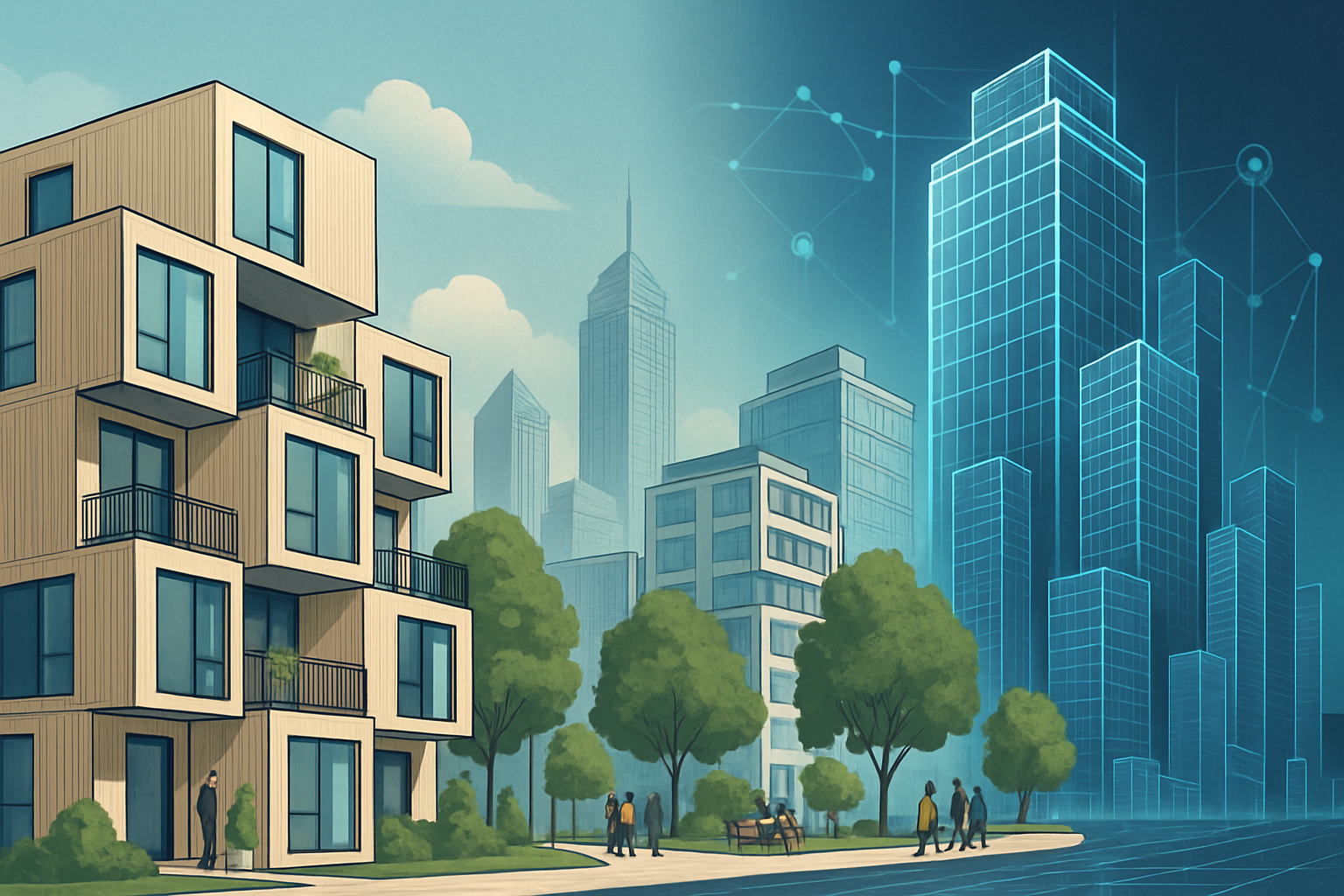
From modular housing to digital twins, cities are undergoing a transformation that blends flexibility, sustainability, and community-driven design. This article explores how adaptive architecture and emerging technologies are reshaping urban landscapes, offering practical strategies for planners and developers seeking resilient, inclusive environments.
Cities around the world are entering a new era of design, one defined by adaptability, modular assemblies, and collaborative planning. As environmental pressures intensify and populations swell, traditional approaches to construction and zoning struggle to keep pace. By harnessing flexible building systems and integrating digital tools, urban developers are pioneering solutions that not only respond to immediate needs but also anticipate future change.
Modular architecture-often associated with prefabricated housing-has transcended its humble beginnings to become a versatile instrument for urban growth. In port cities, shipping containers once destined for scrap yards are now assembled into pop-up markets, creative workspaces, and affordable residential blocks. Beyond simple stacking, advanced systems employ standardized modules crafted offsite under controlled conditions. This process reduces waste, shortens construction schedules by up to 50 percent, and allows for precise quality control. In one coastal community, a modular apartment complex was completed in just three months, demonstrating how speedy deployment can alleviate housing shortages without sacrificing design quality.
But modularity is more than a builder’s hack-it represents a shift in mindset. Rather than permanent edifices, buildings become living frameworks that can be reconfigured, enlarged, or even relocated. In a growing town near a major river, a mixed-use pavilion can be elevated or disassembled seasonally to adapt to flood cycles. Floors slide in and out like drawers, converting exhibition halls to emergency shelters during high water. Such versatility not only maximizes site utility but also extends the lifespan of each component, reducing the need for new materials and lowering overall embodied carbon.
Adaptive reuse emerges as another critical strategy in the contemporary toolkit. Across former industrial districts, abandoned warehouses and factories are reborn as cultural hubs, startup incubators, and indoor agricultural sites. By retaining structural shells and reinforcing key elements, developers preserve historical character while injecting new functions. This approach sidesteps the environmental toll of full demolition and taps into existing neighbourhood identities. In one case, an early 20th-century steel mill was retrofitted with green roofs and photovoltaic canopies, transforming a derelict relic into a vibrant community campus that anchors local economic revival.
Community involvement anchors these interventions. Digital platforms now allow residents to help shape projects from conception to completion. Through interactive mapping tools, anyone can drop pins to suggest bike lane improvements, green pocket parks, or public art installations. Virtual reality walkthroughs enable nontechnical audiences to explore proposed changes before a single beam is installed. Planners sift through feedback in real time, refining designs to meet local needs and cultural preferences. This crowdsourced creativity builds trust, cuts costly revisions, and nurtures a sense of ownership-crucial factors when altering familiar streetscapes.
Material innovation fuels the push toward low-impact cities. Cross-laminated timber, produced by gluing layers of locally sourced wood, offers a renewable alternative to steel and concrete. Its strength-to-weight ratio rivals conventional materials, yet it sequesters carbon throughout its life cycle. In several mid-sized municipalities, mid-rise timber structures have sprung up, showcasing wood façades that age gracefully while supporting interior layouts engineered for future adaptation. At the same time, recycled concrete aggregates-crushed and reconstituted from demolition waste-provide robust foundations with a fraction of the environmental footprint. These recycled mixes are now approved in many regions for load-bearing applications, marking a turning point in sustainable standards.
Public realm design has also undergone a metamorphosis. Instead of singular uses-playgrounds here, plazas there-urban planners craft multifunctional corridors that merge water management, mobility, and leisure. One major redevelopment transformed a once-forgotten canal bank into a floodable promenade. Beneath an open-air timber boardwalk, engineered wetlands absorb stormwater, reducing downstream runoff and supporting urban biodiversity. During dry periods, the space functions as a civic gathering ground, hosting markets, performances, and impromptu sports. By layering functions invisibly, these projects bolster resilience while weaving environmental infrastructure into the social fabric.
Technology underpins many of these advances. Digital twins-high-resolution virtual replicas of city districts-allow stakeholders to simulate outcomes, from traffic flow to air quality under different design scenarios. Planners can tweak street geometries, test solar exposure on facades, and forecast energy consumption with unprecedented accuracy. In one capital city’s innovation lab, a digital twin helped optimize the orientation of a new residential block to cut cooling demands by 20 percent. Thanks to real-time sensor networks, the digital model continually ingests data on noise levels, pedestrian volumes, and microclimate variations, enabling a cycle of ongoing performance tuning.
On-site technologies like 3D printing further accelerate the design-to-build process. In fast-growing suburbs, example prototypes of community facilities-restrooms, childcare rooms, park kiosks-are printed in high-strength concrete blends overnight. These units arrive ready for finishing touches, slashing labor costs and offering designers newfound freedom to experiment with complex geometries that traditional formwork would make prohibitively expensive.
Regulatory frameworks have begun to catch up with these innovations. Dynamic zoning schemes assign flexible land-use allocations rather than rigid categories. A single block can accommodate residential, commercial, and light-industrial activities with minimum interference, provided buildings meet noise and safety criteria. Local authorities incentivize adaptive projects through streamlined permitting, expedited inspections, and density bonuses for developments that incorporate public amenities or green infrastructure. This shift away from one-size-fits-all rules encourages entrepreneurial builders to repurpose odd-shaped infill lots and assemble hybrid complexes that better reflect 21st-century lifestyles.
Yet challenges remain. Financing modular or timber projects can be complex given unfamiliar collateral profiles. Insurers and lenders are still refining risk models for novel materials and delivery methods. Supply chains for CLT and recycled aggregates sometimes strain under surging demand, underscoring the need for local production networks. Moreover, the leap toward participatory planning demands new civic capacities: digital literacy, inclusive outreach strategies, and robust feedback loops. Without careful attention, well-intentioned platforms risk amplifying only the voices of tech-savvy or vocal interest groups.
The trajectory, however, is clear: cities will continue to morph at unprecedented speed, driven by necessity, innovation, and community collaboration. Rather than static monuments, buildings are evolving into living ecosystems-modular, tunable, and integrated with the digital realm. Street corners can host markets one month and emergency clinics the next; façades can harvest rainwater while framing communal gardens above; entire blocks can be reimagined seasonally to reflect shifting demands.
For practitioners and policymakers, the call to action is twofold. First, embrace interoperability-select systems, materials, and software that play well together over time. Standardized connections between modules, open-source design protocols, and shared data platforms will foster an ecosystem that transcends individual projects. Second, cultivate genuine community partnerships. Technical prowess alone cannot build resilient places; lasting success hinges on co-design processes that honor local narratives and ensure benefits flow to all stakeholders.
As urban centers face growing uncertainty-climate shocks, demographic shifts, economic disruptions-the ability to pivot will define prosperity and well-being. Adaptive architecture, underpinned by modular strategies and digital innovation, offers a blueprint for cities that learn from the past, respond to the present, and prepare for an unpredictable future. By weaving together sustainability, flexibility, and collective purpose, we can craft urban landscapes that not only endure but thrive.
In this unfolding story, every citizen, architect, and planner holds a piece of the puzzle. The challenge now is to bring these pieces together, assembling a dynamic mosaic that adapts gracefully to whatever lies ahead.