Location
Mount Vernon, WA 98274
Location
Mount Vernon, WA 98274

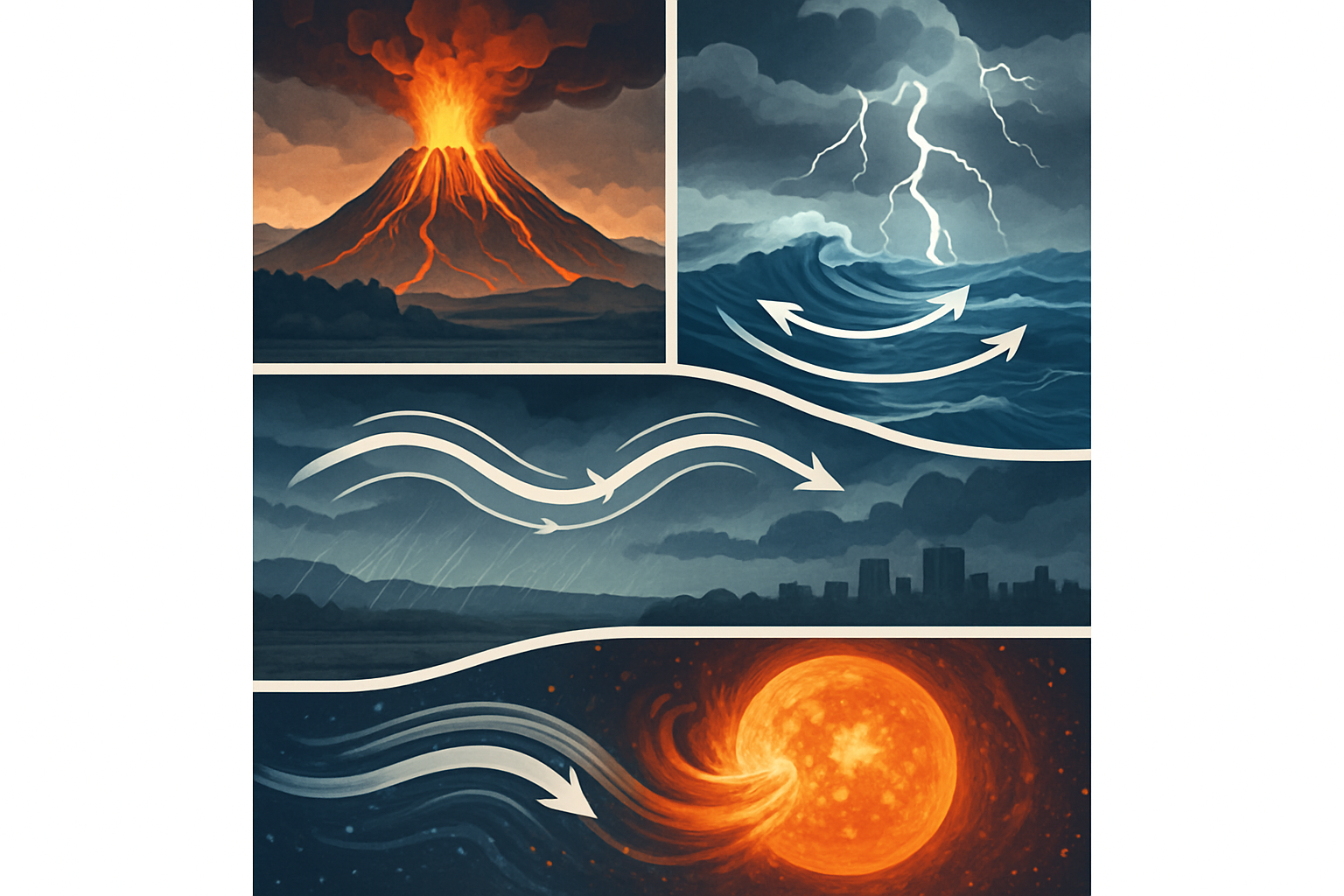
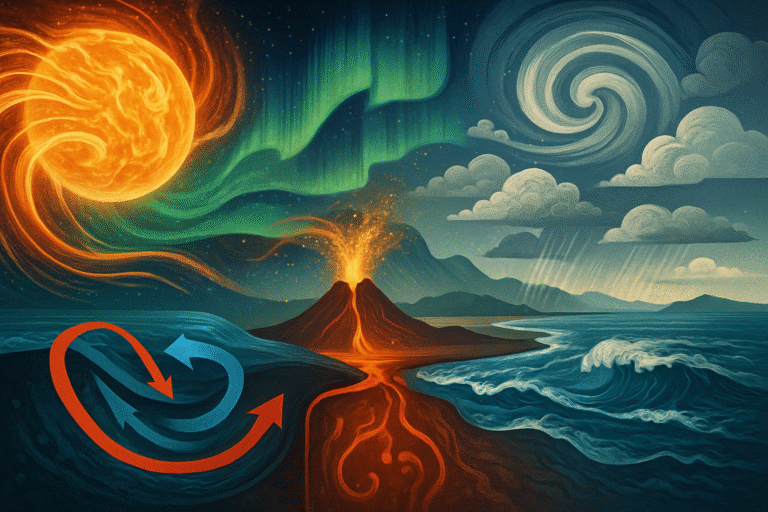
From deep beneath the crust to miles above in space, natural forces are colliding to drive extreme weather events and disruptions in our interconnected world. Scientists warn that shifting ocean currents, jittery jet streams and solar storms are rewriting the rules for communities, infrastructure and ecosystems.
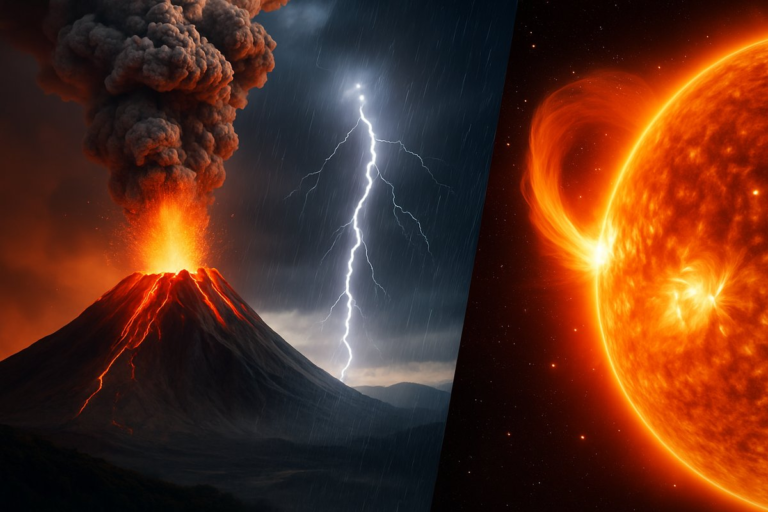
A few weeks ago, a fierce heat dome settled over a swath of Southern Europe, pushing temperatures well past 45°C by mid-afternoon. At the same moment, solar observatories recorded one of the most intense solar flares in recent memory, unleashing a surge of charged particles toward our planet. Simultaneously, an international marine research expedition reported an alarming slowdown in a key branch of the Atlantic Meridional Overturning Circulation. These events might seem unrelated at first glance, but they form a mosaic of natural phenomena that, taken together, are reshaping environments and the lives of millions.
Beneath our feet, the restless movements of tectonic plates generate more than occasional earthquakes. Deep in the mantle, convection currents stir molten rock, releasing heat and gases that influence long-term climate patterns. A growing body of research suggests that large volcanic eruptions can inject aerosols into the stratosphere, temporarily cooling the planet by reflecting sunlight back into space. While a major eruption is statistically rare, minor hydrothermal vent activity and persistent low-magnitude seismic swarms-such as those observed beneath volcanic regions in Iceland and New Zealand-slowly release greenhouse gases like carbon dioxide and methane. Monitoring these undersea and underground emissions has become a critical piece of the climate puzzle, with sensor arrays and infrasound detectors mapping even minuscule tremors and gas plumes.
On the surface of our blue planet, the oceans act as a giant thermal battery. They store and redistribute heat, driving atmospheric circulation through evaporation and precipitation cycles. Scientists at multiple institutions have now confirmed that the Atlantic Meridional Overturning Circulation-the powerful conveyor belt that carries warm surface water northward and returns cold deep water southward-has weakened by nearly 15 percent compared to preindustrial estimates. This slowdown alters weather patterns across Europe and North America, intensifying winter storms in some regions and exacerbating drought in others. Concurrently, marine heatwaves have become more frequent and severe, stressing coral reefs and disrupting fisheries from the Pacific Northwest to the Coral Triangle.
The Pacific Ocean is not immune. El Niño and La Niña events, which arise from coupled ocean-atmosphere interactions in the equatorial Pacific, have grown in both intensity and unpredictability. This volatility fuels floods in South America and droughts in Southeast Asia. As each El Niño peaks, global temperature records tumble for a few months before retreating. These swings challenge water management systems, agriculture and disaster preparedness programs that rely on long-term climate forecasts.
High above, in the thin air of the stratosphere, the jet stream-the fast-flowing current of air that circles the northern and southern hemispheres-has started to wobble. Researchers link this wobbling to Arctic amplification, a phenomenon where the polar regions warm at roughly twice the global average rate. Weaker temperature gradients between the equator and the pole reduce the jet stream’s speed, allowing it to meander wildly. These meanders can trap weather patterns over the same region for days or weeks, producing prolonged heat waves or cold snaps. In March, a stalled jet stream loop brought unseasonal snowstorms to parts of North America even as other areas baked under record heat.
Meanwhile, beyond Earth’s atmosphere, our star is more active than in decades. Solar cycle monitoring indicates a surge in sunspots and associated solar flares, accompanied by coronal mass ejections (CMEs) that hurl billions of tons of solar plasma into space. When these CMEs collide with the Earth’s magnetic field, they trigger geomagnetic storms that can disrupt satellite communications, GPS navigation and even power grids. The same charged particles spark spectacular auroras, dazzling viewers in latitudes far lower than usual. In recent months, power utilities in Scandinavia and Canada have reported voltage fluctuations linked to heightened solar activity, and airlines rerouted polar flights to avoid increased radiation exposure.
These natural forces do not act in isolation. A heavier ocean heat content can amplify atmospheric moisture, enabling stronger storms. A wobbling jet stream can trap pollutants and trigger sudden stratospheric warming events, which in turn influence sea ice cover and surface temperatures. A strong solar storm can fry critical electronics in weather satellites, undermining early warning systems for hurricanes and typhoons. The result is a growing tangle of feedback loops, where small triggers lead to outsized impacts across sectors.
Communities on the front lines of these changes are adapting in diverse ways. Coastal cities are redesigning storm drains to handle heavier rainfall, installing green roofs to cool urban heat islands and reinforcing sea walls to guard against storm surge. Agricultural regions facing shifted rainfall patterns are diversifying crop varieties, experimenting with heat- and drought-tolerant strains, and adopting precision irrigation guided by real-time soil moisture sensors. In some seismic hotspots, earthquake-resistant buildings and community drills help save lives when the ground finally shakes.
At the same time, national meteorological agencies and space weather centers are ramping up joint forecasting efforts. Combining data from ocean buoys, Doppler radars, infrasound sensors and satellites, they can model the potential cascade of events weeks in advance. Emergency management platforms now incorporate solar storm warnings, alerting power grid operators to take protective measures, and enabling airlines to adjust flight paths. Citizens are turning to personal weather station networks and smartphone apps that deliver hyperlocal forecasts and air-quality indices.
On a deeper level, these events inspire a blend of awe and urgency. They remind us that Earth is a single intricate system-pressed at once by inner heat, rolling oceans, restless air and a dynamic sun. For lifelong learners, the unfolding story of these forces is an invitation to explore geophysics, oceanography, atmospheric science and space weather in parallel. Novice administrators in government and industry must foster cross-disciplinary teams to anticipate and mitigate compound risks. And all of us, as curious readers, can support sustainable choices that reduce human-amplified pressures on these natural processes.
What comes next? As research projects track every subtle shift from magma flow to magnetic fluctuations, our predictive capabilities will improve-but so will the complexity of the data. Artificial intelligence tools are poised to integrate these streams, spotting patterns invisible to the human eye. Ultimately, the goal is not to conquer nature’s forces-an impossible task-but to build resilient systems that bend without breaking.
In the meantime, take a moment the next time you witness a sudden storm or a brilliant aurora: you are seeing the handiwork of forces that span the inner core of the Earth to the edge of the heliosphere. They operate on timescales from minutes to millennia, yet their effects converge on our shared home. Understanding and respecting these forces is not just an academic exercise-it is the groundwork for a safer, more adaptive civilization.