Location
Mount Vernon, WA 98274
Location
Mount Vernon, WA 98274


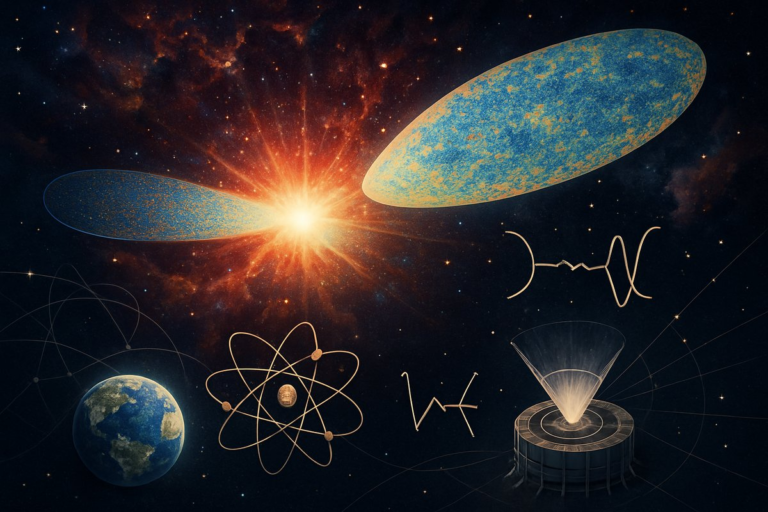
A wave of new observations from space telescopes, ground-based experiments and theoretical advances is reshaping our picture of the universe's earliest instants. From refined cosmic microwave background maps to emerging gravitational wave signals, scientists are piecing together fresh evidence about how everything began.
Scientists have crossed a fresh threshold in exploring the universe’s infancy. In recent months, teams operating giant space observatories and sensitive detectors on Earth have released data that tighten constraints on the conditions prevailing a fraction of a second after the Big Bang. Multiple efforts-from the deepest near-infrared surveys by a premier space telescope to the search for primordial ripples in spacetime-are converging on a more detailed account of how energy fields, particles and geometry conspired to transform a seething cosmic fog into the vast network of galaxies we see today.
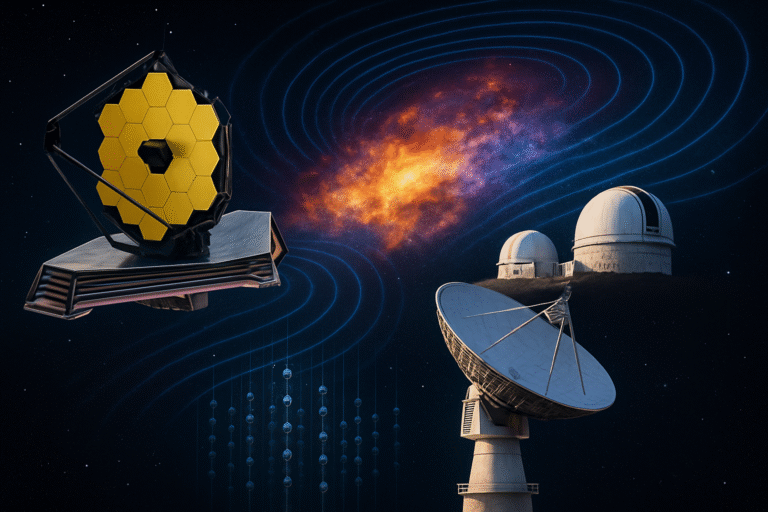
Observers using the most powerful space-based infrared instrument ever flown have pushed their deep field campaigns beyond previous horizons. By recording light that has traveled more than 13.4 billion years, the team has identified several faint galaxy candidates with hints of exotic chemistry and unexpected luminosity. These baby galaxies, forming less than 300 million years after the Big Bang, appear to host clusters of massive stars that may have accelerated the process of cosmic reionization. The observations challenge earlier projections about how quickly the first structures emerged and urge modelers to refine their treatment of star formation under extreme conditions of density and radiation.
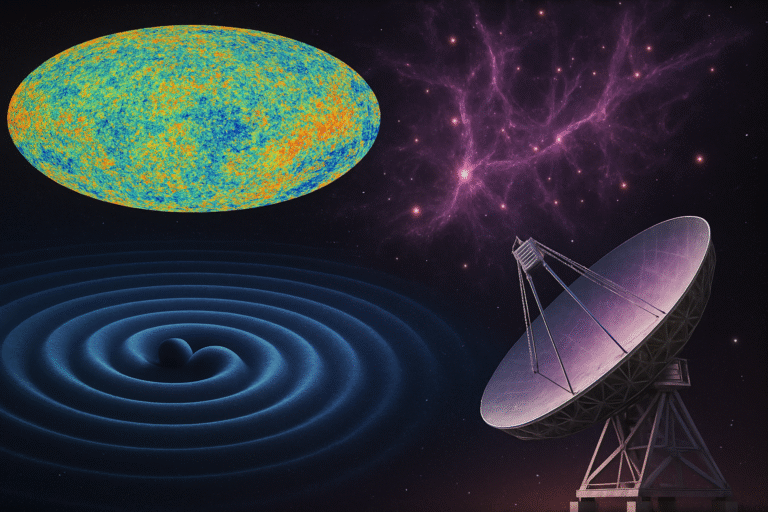
Simultaneously, researchers re-examining the cosmic microwave background (CMB)-the faint glow left over from the universe’s hot, dense origin-have produced updated sky maps with unprecedented precision. By combining data from a landmark European satellite survey with complementary ground-based measurements, they have narrowed anomalies in the large-scale temperature fluctuations. One intriguing feature, a slight asymmetry along a particular axis, persists in these refined maps. If it holds up under further scrutiny, it could hint at new physics beyond the simplest inflationary scenarios, potentially pointing to subtle departures from perfect uniformity in the inflaton field driving the earliest expansion.
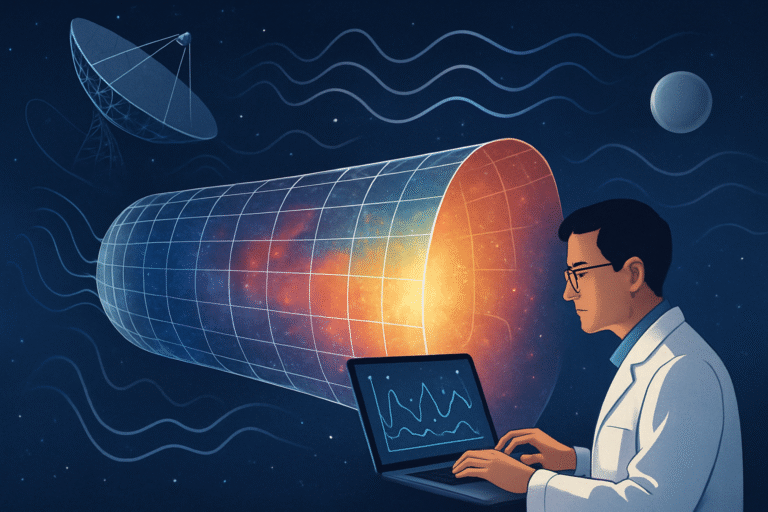
On the gravitational wave frontier, collaborations running kilometer-scale interferometers are edging closer to the holy grail of a stochastic background signal. While the landmark detections of merging black holes and neutron stars have captured headlines, teams are now tuning their instruments in search of the much fainter hum left by quantum jitters during inflation. Recent noise-reduction upgrades have improved sensitivity across key frequency bands. Meanwhile, radio astronomers harnessing millisecond pulsars report a low-level correlated signal that could be the first indirect hint of gravitational waves generated in the primordial era. If confirmed, this would open a direct observational window into energy scales trillions of times higher than those probed by particle colliders.
On the theoretical side, novel computer simulations are exploring alternative models to the classic inflationary picture. Inspired by string theory and loop quantum gravity, these frameworks propose scenarios where the universe’s birth emerges from a prior contracting phase or from quantum fluctuations of spacetime itself. Recent publications in leading physics journals describe how such “bounce” or “emergent” cosmologies might leave distinctive imprints on the CMB polarization or on the distribution of primordial black holes. While most models remain speculative, the quantitative tools now exist to compare their predictions against data, marking a turning point in testing the fabric of cosmic origin stories.
Dark matter-still invisible and elusive-may also play a starring role in the tale of creation. One promising hypothesis suggests that exotic particles or primordial black holes seeded the formation of the first galaxies and could have influenced early acoustic oscillations in the photon-baryon plasma. Observations of high-redshift quasars and spectral features in distant galaxies are providing new constraints on how and when dark matter began to clump. By combining these measures with refined CMB analyses, cosmologists are zeroing in on the possible mass range and interaction properties of dark matter candidates, potentially linking them directly to processes that unfolded within a second of the Big Bang.
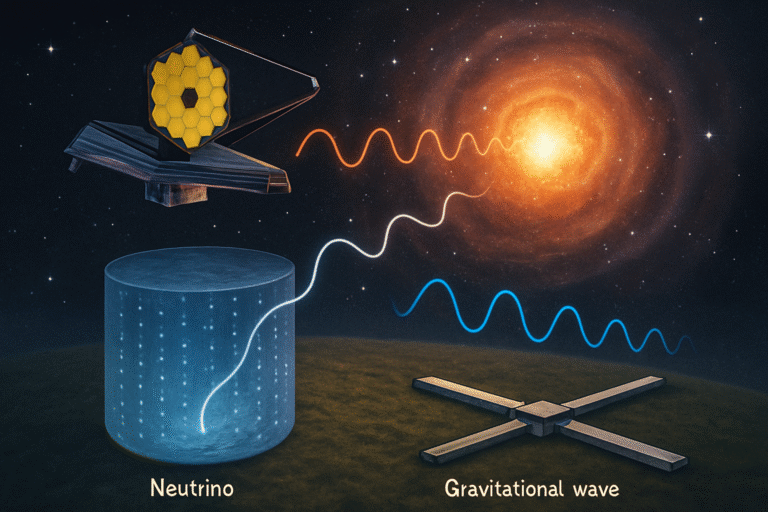
The coming decade promises even deeper insights. Missions under development include a dedicated cosmic microwave background polarization satellite that aims to measure ultra-faint B-mode patterns, as well as a gravitational wave observatory in space designed to probe low-frequency signals from the dawn of time. Ground-based projects such as next-generation radio arrays and ultra-cold atom interferometers are also on the horizon. Together, these instruments will stitch together a multi-messenger narrative of cosmic beginnings, leveraging photons, gravitational waves and high-energy particles to reconstruct the first trillionth of a trillionth of a second.
Public engagement efforts are keeping pace with these technical advances. Citizen science platforms invite enthusiasts to help classify early galaxy candidates, sift through CMB maps for anomalies or even flag potential gravitational wave events in real-time. Open-source analysis tools, interactive simulations and virtual reality experiences are bringing the quest for cosmic origins into homes and classrooms worldwide. This democratization of research not only accelerates discovery but also cultivates a culture of curiosity, collaboration and critical thinking that extends beyond academic circles.
Beyond scientific curiosity, the drive to understand our cosmic genesis carries broader philosophical and societal dimensions. It fosters humility-reminding us how small our planetary orbit is against a backdrop of space and time that stretches far beyond human scales. It prompts questions about purpose, interconnectedness and stewardship of our home planet. Several research consortia have implemented sustainable computing practices to reduce the environmental footprint of large-scale simulations, highlighting an ethic of responsibility that mirrors the values underpinning the scientific endeavor itself.
As the pieces of the cosmic puzzle continue to fall into place, one truth remains: the origin story of the universe is still an open book. Each new observation and theoretical breakthrough writes another sentence in a narrative that spans from quantum foam to galactic walls. The next decade of exploration holds the promise of clarifying whether the universe’s birth was a smooth inflationary swell, a dramatic bounce from a previous cosmos, or an altogether stranger quantum event. Until then, scientists and citizens alike will watch the skies and listen for the faint echoes of creation, driven by a timeless urge to know where we come from and what that knowledge means for our shared future.