Location
Mount Vernon, WA 98274
Location
Mount Vernon, WA 98274

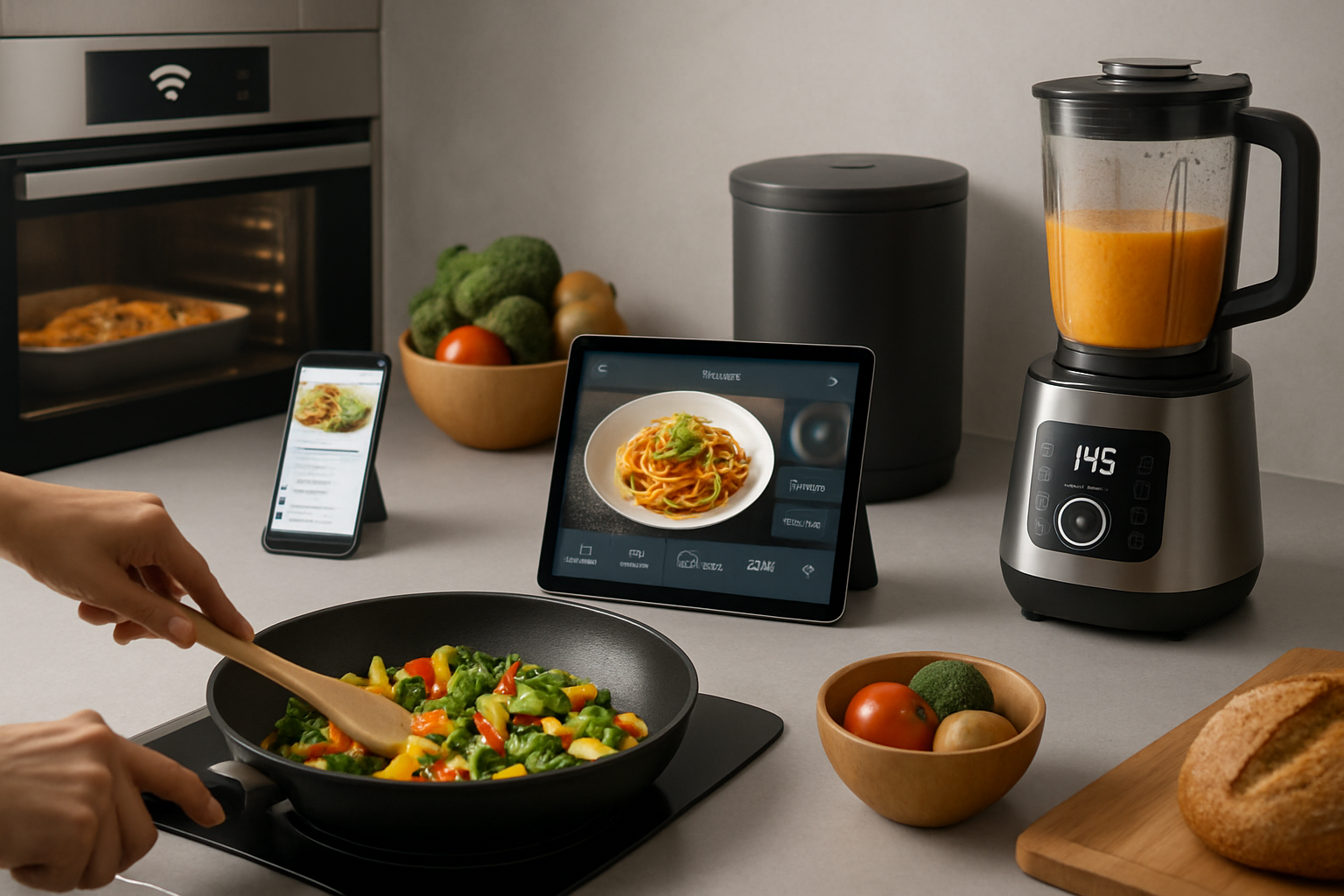
A new wave of connected appliances, AI-driven cooking assistants and precision tools is transforming how people plan, prepare and enjoy meals. From intuitive recipe apps to sustainable waste-reduction systems, today's kitchen technology is delivering unprecedented convenience, creativity and control.
In kitchens around the world, traditional pots and pans are sharing space with sleek, sensor-packed devices that promise to change the way we cook. Once confined to high-end restaurant kitchens and industrial test labs, precision instruments and networked appliances have become surprisingly accessible. Home cooks are experimenting with real-time temperature feedback, app-driven recipe guidance and even small-batch 3D-printed treats, tapping into a suite of tools designed to simplify routines, minimize waste and stimulate culinary curiosity.
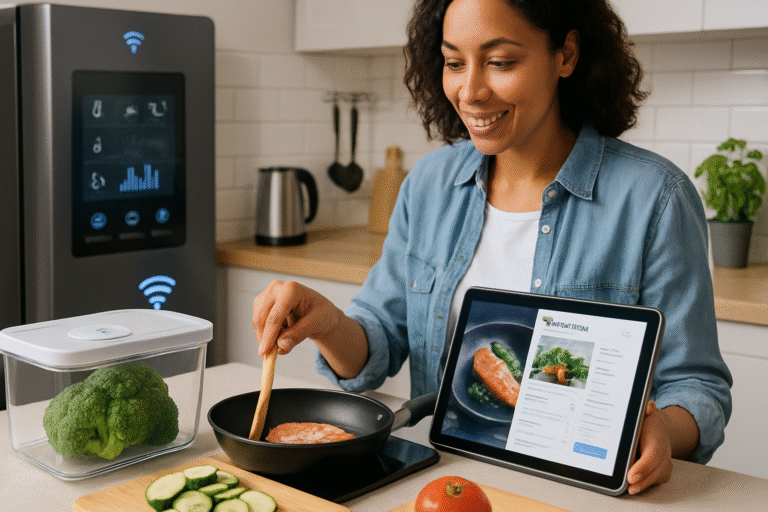
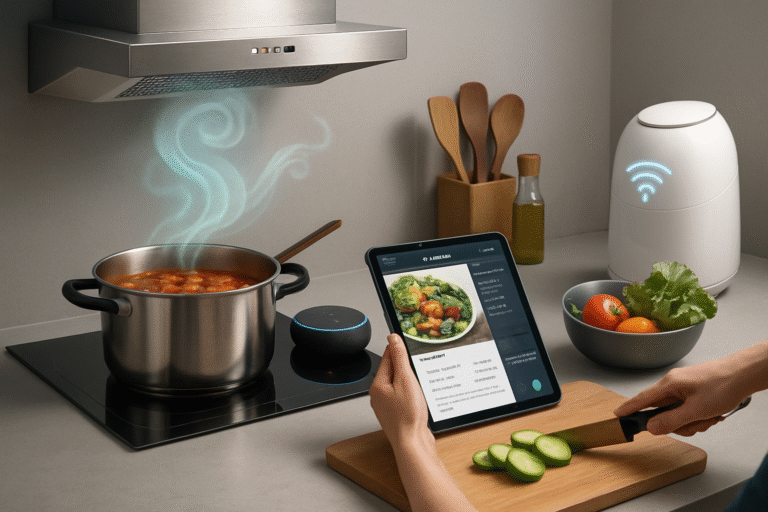
Manufacturers are racing to develop connected stovetops, smart ovens and app-enabled gadgets that speak a common language. Modern ranges can detect when a pan has reached optimal heat and automatically adjust flame levels. Refrigerators send alerts when supplies run low or approach expiration dates. These appliances feed data into centralized hubs or smartphone dashboards, turning cook-time, temperature and ingredient inventories into actionable insights. For busy households, this means fewer meals gone awry, less time spent hovering over a hot stove and more precise control over every step in the cooking process.
Internet of Things (IoT) integration has become the backbone of the smart kitchen, allowing devices from different brands to interoperate. Industry standards are still evolving, but emerging protocols aim to ensure a blender can cooperate with a scale, a dishwasher can communicate with a waste-composter and a nutrition app can pull data from all of them. The result is a holistic ecosystem in which ingredients are scanned, weighed and tracked, recipes adapt dynamically to portion sizes and cooking sequences are choreographed automatically, all while keeping an eye on energy use and kitchen safety.
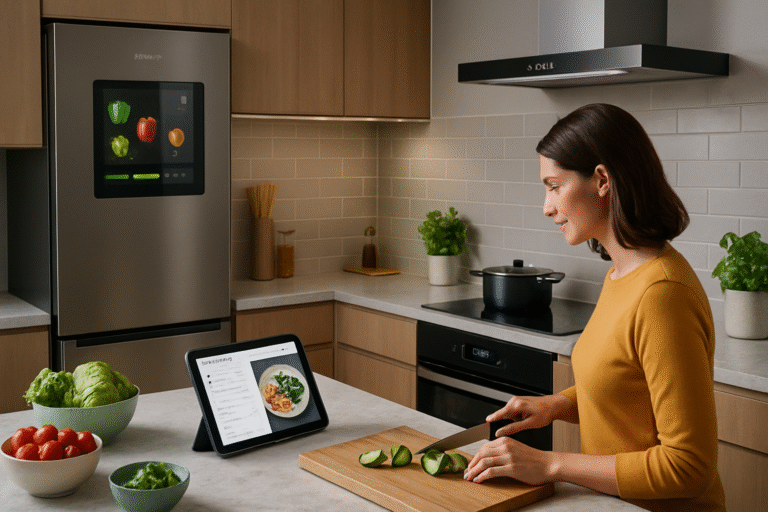
Artificial intelligence is extending beyond voice-activated timers and basic recipe searches. New AI-powered platforms analyze user preferences, pantry inventories and dietary goals to suggest personalized meal plans. These systems learn from ratings, ingredient swaps and cooking habits, refining recommendations over time. Some prototypes even incorporate computer vision to recognize ingredients on camera, guiding users through chopping, seasoning and plating steps in real time. For novice cooks, this level of guidance can demystify complicated techniques. Seasoned chefs, meanwhile, can explore novel flavor pairings discovered by machine learning algorithms trained on thousands of global recipes.
Precision cooking tools once reserved for restaurant kitchens are now finding their way into everyday homes. Immersion circulators, commonly used in sous-vide preparation, maintain water baths at exact temperatures, ensuring meat, fish and vegetables cook evenly edge to edge. Paired with smart lids or app-connected sensors, these devices can send alerts the moment a steak hits the ideal temperature. The result is consistent doneness with minimal supervision. In parallel, induction cooktops that measure pan temperatures digitally allow cooks to switch between simmering sauces and high-heat searing at a literal turn of a dial.
The realm of 3D food printing has also begun to nibble at home kitchens. While still in early stages, consumer-grade printers can extrude layers of puréed vegetables, doughs or chocolate into custom shapes. Enthusiasts envision printing intricate garnishes and personalized snack bars at home. Beyond aesthetics, there’s potential for nutrition customization: printing meals with precise macronutrient ratios for athletes, seniors or individuals with specific dietary needs. Although 3D-printed entrees won’t replace everyday cooking anytime soon, they offer a glimpse into a future where form, flavor and function can be digitally sculpted.
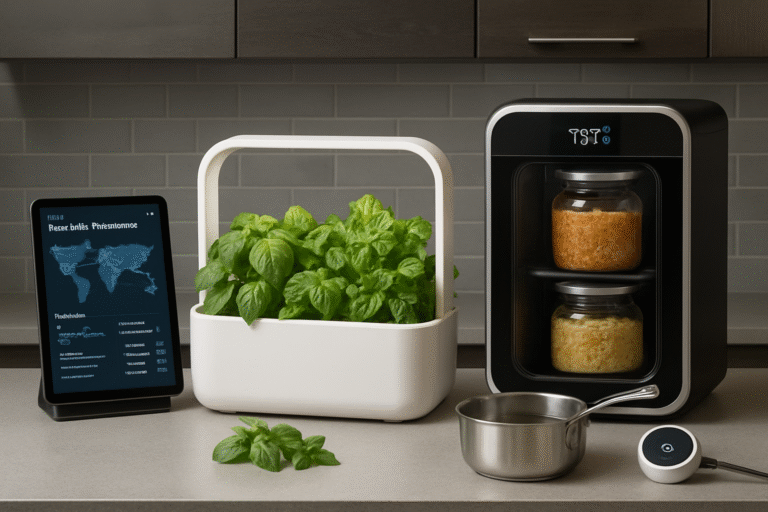
Sustainability is an increasingly common theme behind new food technologies. Smart waste systems use sensors to identify items in a compost bin or trash can, estimating decomposition rates and suggesting ways to repurpose scraps. Apps that track expiration dates send reminders to cook vegetables before they go bad, reducing food waste by up to 30 percent according to early pilot studies. Simultaneously, energy-efficient appliances are designed to optimize cooking cycles, minimizing electricity or gas consumption without compromising performance.
As devices capture ever more data, privacy and security have emerged as critical concerns. Kitchen technology companies are implementing encryption and anonymization features to protect user information, from dietary restrictions to daily routines. Firmware updates are being pushed more frequently to patch vulnerabilities that could expose a network. Consumer advocacy groups are urging clearer disclosures about what data is collected, how long it’s stored and whether it’s shared with third parties. In response, some manufacturers have begun offering on-device data processing options, allowing users to choose local analysis over cloud-based services.
Designers are also prioritizing accessibility and ease of use. Touchscreens on smart appliances now feature simplified modes for basic tasks, while advanced settings remain tucked behind secondary menus. Voice control systems support multiple languages and accents, making them more inclusive. Visual cues, haptic feedback and color-coding help guide people with visual or cognitive impairments. In communal living spaces like co-housing projects and assisted living facilities, shared smart kitchens enable remote monitoring, adaptive cooking interfaces and automatic clean-up reminders, promoting independence among diverse users.
Community and social connection continue to shape how new food tech is adopted. Online platforms allow users to share cooking tutorials, upload photos of finished dishes and collaborate on recipe improvements. Some companies are integrating live-stream features that let amateur cooks host guided virtual dinners, while others facilitate ingredient swaps among neighbors. These networks foster peer-to-peer support, turning solitary cooking into a collaborative experience. As a bonus, aggregated reviews and success metrics help guide product development, signaling to manufacturers which features resonate most with home chefs.
Emerging materials and sustainable design principles are transforming the physical objects themselves. Bamboo-fiber cookware, biodegradable packaging and non-plastic composite components reduce environmental impact across a product’s lifecycle. Modular appliances with replaceable parts are extending device longevity, countering the throwaway culture that often accompanies fast consumer electronics. Repair networks and maker spaces are also popping up, allowing tinkerers to service and upgrade their own kitchen gadgets rather than sending them to e-waste dumps.
Augmented reality (AR) and virtual reality (VR) are carving out experimental niches in culinary education. AR overlays can project cooking instructions directly onto countertops or ingredients, while VR simulations let amateur chefs practice knife skills in a risk-free environment. Some cooking schools are exploring mixed-reality kitchens that blend holograms with real tools, creating immersive training scenarios for professional chefs. These technologies remain on the periphery of mainstream cooking, but they signal how digital and physical worlds might converge in future food experiences.
Automation and robotics are no longer confined to large-scale food production plants. Compact robotic arms can stir sauces, flip pancakes and perform basic prep tasks such as whisking or peeling. While fully autonomous meal preparation robots are still in prototype phases, collaborative robots that work alongside humans are becoming more user friendly. These robots use force sensors and safety protocols to operate in close quarters, offering hands-on assistance rather than total replacement of human cooks. In senior living communities, such assistants could help residents with strength-intensive tasks while preserving the social aspects of cooking.
High-tech kitchens often carry a premium price tag, raising questions about equitable access. Subscription models, rent-to-own plans and community cooking centers are emerging as solutions to lower barriers. Food co-ops and nonprofit programs are piloting shared smart kitchens where participants can learn to operate new gadgets without making personal investments. As technology costs decrease over time, more households are expected to adopt next-generation appliances, leveling the playing field for culinary innovation.
Looking ahead, the smart kitchen evolution will likely accelerate around three intersecting trends: deeper personalization, tighter sustainability loops and richer digital-physical integration. Personalization engines will factor in genetic data, lifestyle metrics and mood sensors to craft hyper-tailored meals. Closed-loop systems will turn kitchen scraps into fertilizer or energy, feeding urban gardens and reducing landfill contributions. And as AR, AI and robotics converge, cooking may become an interactive performance art that blends spectacle with sustenance.
For anyone who has ever burned a sauce or struggled to perfectly time multiple dishes, these advancements promise relief and inspiration. The path toward a fully connected, intelligent kitchen is still winding, but each new device, app and material innovation brings us closer to a world where food preparation is as precise, sustainable and creative as we dare to imagine. By embracing emerging tools and mindful design, home chefs can elevate everyday meals into experiments in flavor, efficiency and environmental stewardship.