Location
Mount Vernon, WA 98274
Location
Mount Vernon, WA 98274


A wave of new devices is shifting the focus from flashy features to genuine day-to-day value, blending convenience, sustainability, and privacy. From solar-powered chargers to discreet health trackers, this article explores the emerging gadgets that prioritize real-world needs over hype.
The recent surge in consumer technology has seen manufacturers pivot away from dazzling spec sheets toward devices that address real lifestyle challenges. As global wearable shipments surpass 400 million units a year and the IoT landscape expands into nearly every corner of home and office, the emphasis has moved to sustainable design, data privacy, and genuine usability. Today’s most compelling gadgets blend seamless integration with actionable insights, elevating everyday routines without demanding a learning curve or sacrificing personal data.
Understanding the evolution of practical innovation involves tracing the shift from singular function tools-like basic step counters or conventional power banks-to ecosystems of interconnected devices focused on adaptability and longevity. Advances in low-power wireless protocols, improvements in battery chemistry, and the incorporation of on-device machine learning mean that gadgets can now deliver smarter results without constant cloud dependency. In the sections that follow, we examine the latest breakthroughs across health monitoring, green energy, workspace optimization, connectivity, and sustainable materials.
###### Monitoring Minds and Bodies
Wellness wearables have evolved far beyond pedometers and heart-rate straps. Recent devices leverage multi-spectral sensors to track metrics such as blood oxygen, skin temperature, and stress-related electrodermal activity, offering insights into sleep quality and recovery without wearing an uncomfortable chest strap. One notable category of lightweight rings and bracelets uses machine-learning algorithms directly on the device, ensuring sensitive health data never leaves your wrist unless you grant permission. For professionals juggling erratic schedules, these gadgets generate gentle vibration reminders to stand, breathe, or rehydrate, reinforcing healthier habits.
Small form factors also enable discreet daytime monitoring: a bracelet might detect fluctuations in heart-rate variability during an important meeting and suggest a short mindfulness exercise on a companion app. Crucially, recent products feature end-to-end encryption and on-device vaults for raw data, keeping personal metrics safe from broad network vulnerabilities. As research in flexible electronics and low-power microcontrollers advances, expect further miniaturization, longer battery life, and more nuanced mental-health support tools embedded into everyday wearables.
###### Powering Up with Sustainability
Carrying an extra battery pack is nothing new, but the latest portable power solutions prioritize regenerative energy and eco-friendly construction. Solar chargers crafted from recycled polymers and monocrystalline cells now deliver up to 20 watts of output under indirect light, charging smartphones, Bluetooth earbuds, or GPS trackers during a hike or commute. Integrated foldout panels and adjustable stands make positioning simpler, while reinforced corner bumpers protect against unexpected drops.
Complementing solar options, next-generation power banks employ high-density lithium-titanate or graphene-enhanced graphite electrodes, boosting cycle life fourfold compared to conventional lithium-ion units. Modular designs let users swap in replacement cells at home, reducing e-waste and eliminating the need to replace an entire brick when performance declines. Some brands even provide transparent windows exposing the internal cells and circuitry, encouraging users to view technology as a repairable asset rather than a sealed commodity. Combined with USB-C Power Delivery and GaN charging circuits, these devices can rapidly recharge laptops, phones, and cameras with a single compact brick.
###### Smart Homes That Respect Privacy
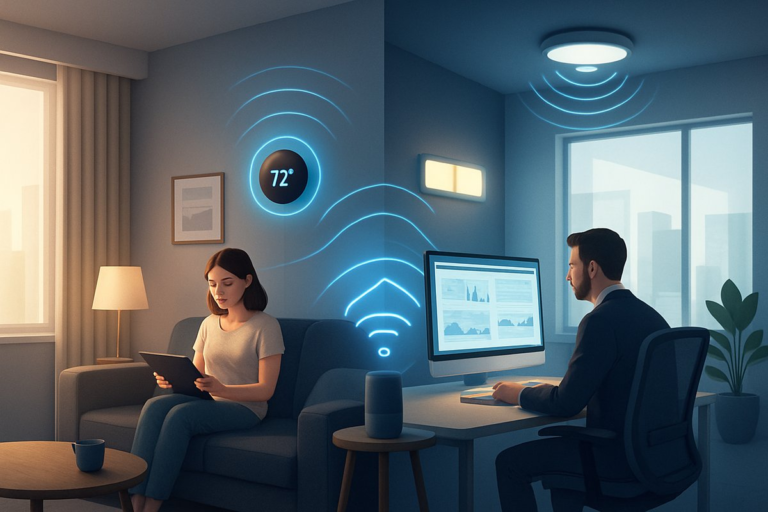
While smart home hubs once relied on distant cloud servers, a new wave of voice assistants and automation controllers now emphasizes local processing and data sovereignty. Standalone devices equipped with edge-AI chips can interpret voice commands, adjust thermostats, or control lights without sending audio recordings to remote servers. Users retain total control over interaction logs, opting to store transcripts locally or purge them automatically after a set period.
Minimalist smart panels double as digital photo frames or calendars, blending into living spaces without advertising “smart home tech.” Motion detectors use onboard object-detection models to avoid false alarms from pets, sending alerts only when a human silhouette is recognized. Open-source firmware options allow curious tinkerers to customize automation rules or integrate third-party sensors, fostering an ecosystem driven by transparency rather than walled gardens.
###### Optimizing the Modern Workspace
Remote and hybrid work have spurred innovation in desk accessories and productivity tools that reduce friction and clutter. Wireless charging pads are now built into desk surfaces or mounted beneath them, enabling a clean setup free from tangled cables. Magnetic alignment features snap phones precisely into place for fast, reliable charging, while integrated RGB lighting offers gentle task illumination adjustable by gesture controls.
Multi-screen setups have also grown more compact: ultra-wide monitors with built-in docking stations support USB-C video and data transfer alongside wired Ethernet, collapsing the need for separate hubs. When a laptop docks, the external display instantly mirrors or extends without additional adapters. Complementary accessories include compact cable organizers with configurable channels and weighted silicone covers, letting you route power and peripheral cables while preserving desk aesthetics.
For those seeking an ergonomic boost, AI-driven posture sensors clipped to chair backs track spinal alignment in real time, issuing gentle desktop notifications to adjust seating position or stand for a stretch. By integrating wearable wellness features into the workspace itself, these gadgets help users break the cycle of sedentary strain without interrupting workflow.
###### Staying Connected Everywhere
Portable routers and network extenders are bridging coverage gaps in unpredictable environments. Compact mesh-compatible devices can form ad hoc networks during group travel or remote conferences, providing shared internet access across multiple devices. Many support dual-band 5G cellular modems, automatically switching between Wi-Fi, LTE, and 5G signals based on strength and latency, ensuring seamless video calls and file transfers.
Bluetooth trackers attached to keys, backpacks, or cameras use crowdsourced location networks to update item positions with LED-guided beacons or smartphone notifications. The newest iterations offer replaceable coin-cell batteries and passive NFC backup modes, letting you tap a lost item against any phone to display ownership details without revealing personal data to passersby.
Bonded cellular hotspots can aggregate multiple SIM cards, dynamically balancing traffic across two or more networks for higher throughput and reliability. A portable device barely larger than a deck of cards can sustain simultaneous VPN-secured VPN tunnels, ideal for journalists on assignment or professionals working in areas with spotty Wi-Fi.
###### Reimagining Materials for Longevity
Environmental awareness is reshaping material choices in gadget manufacturing. Biodegradable bioplastics derived from plant fibers are replacing petroleum-based casings in keyboards and portable speakers. Recycled aluminum alloys harvested from old consumer electronics become the structural frames in new laptop lids, while reclaimed wood accents add tactile warmth to otherwise tech-centric surfaces.
Certain devices now ship with detailed disassembly guides and standardized screws, enabling end users to open components, replace degraded parts, or upgrade modules over time. Brands partnering with independent repair organizations publish comprehensive troubleshooting workflows and parts catalogs, further democratizing durability and reducing landfill contributions. A growing movement toward right-to-repair legislation is encouraging more manufacturers to embrace modular designs that deconstruct easily without specialized tools.
###### What’s Next on the Horizon
Looking ahead, the most promising innovations spring from cross-disciplinary collaboration-think smart fabrics weaving biometric sensors into everyday clothing or transparent photovoltaic windows that generate power while preserving natural daylight. Advances in low-power neural nets will let gadgets anticipate user needs, preloading reminders or context-aware settings based on location, calendar activity, and biometric cues.
In an era where massive tech hype cycles can overshadow substantive progress, these practical gadgets signal a turning point. By prioritizing privacy, sustainability, and genuine problem-solving, today’s emerging devices demonstrate that the next wave of consumer tech isn’t just about faster processors or brighter screens, but smarter, kinder tools that integrate seamlessly into daily life. As these trends mature, expect greater choice and deeper customization, empowering users to assemble ecosystems that reflect their values and routines.