Location
Mount Vernon, WA 98274
Location
Mount Vernon, WA 98274

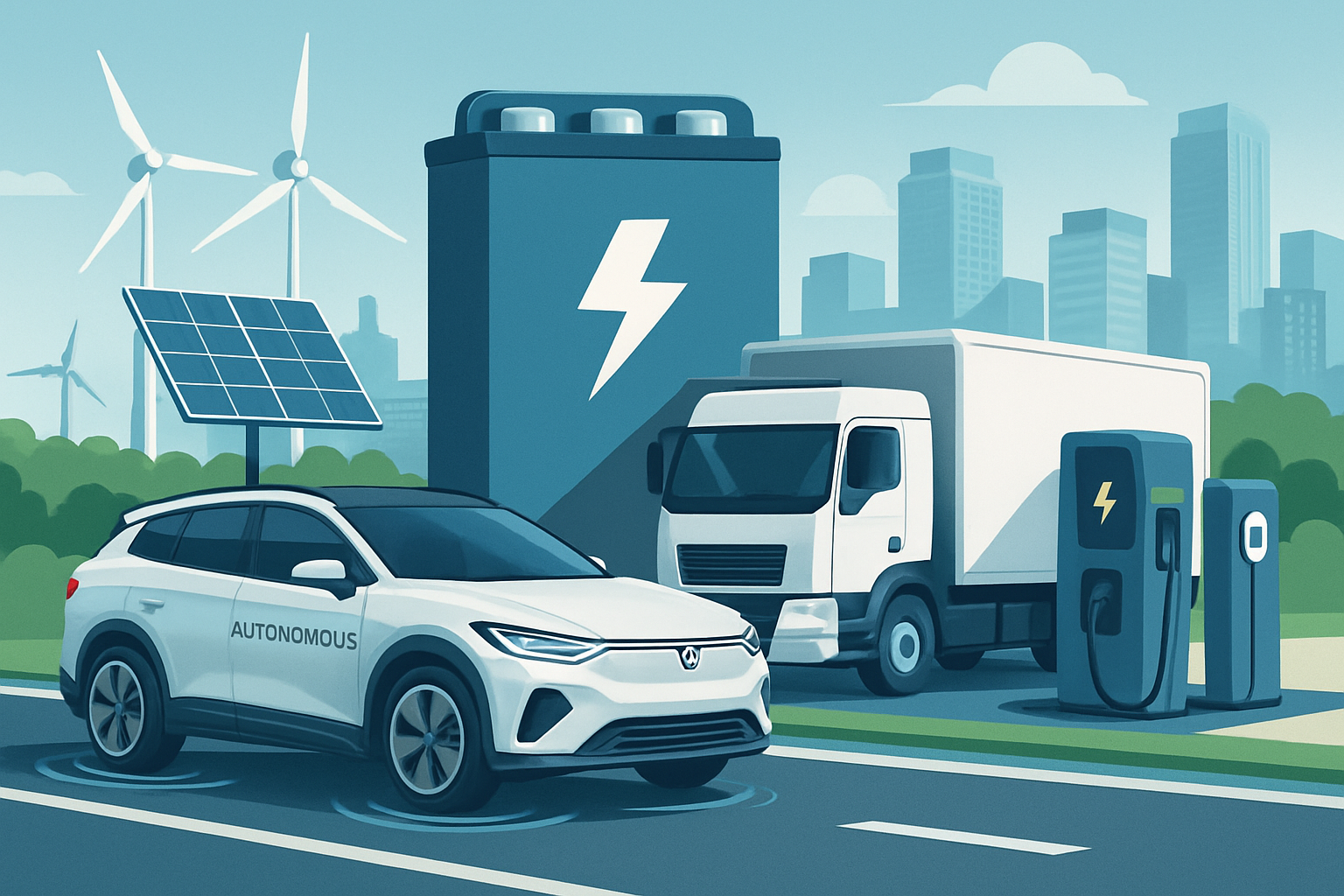
From next-generation batteries to vehicle-to-grid networks, the automotive industry is undergoing a rapid transformation. Advances in autonomy, sustainable materials, and integrated infrastructure are reshaping how we move goods and people across cities and highways.
The automotive sector is in the midst of a paradigm shift. Driven by climate goals, urban demands, and digital connectivity, manufacturers and startups alike are rolling out technologies that promise safer, cleaner, and more efficient transportation. This article explores the most significant innovations-spanning powertrains, autonomy, materials science, charging infrastructure, and urban mobility solutions-that are poised to redefine mobility for the coming decade.
Solid-State and Silicon-Anode Batteries
While lithium-ion batteries have dominated electric vehicles (EVs) for years, their inherent limitations-energy density ceilings, slow charging rates, and thermal concerns-have spurred research into alternatives. Solid-state batteries replace liquid electrolytes with solid ceramics or polymers, offering implicit safety advantages and potentially boosting energy density by 30-50 percent. Several automotive suppliers have announced pilot production lines targeting commercialization within the next two years.
Meanwhile, silicon-anode technologies aim to increase capacity. By integrating silicon into the anode composite, companies report up to a 20 percent improvement in range. This innovation enhances charge acceptance at lower temperatures, reducing winter range loss, a persistent challenge in colder climates.
Hydrogen Fuel Cells for Heavy Transport
Hydrogen fuel-cell electric vehicles (FCEVs) are gaining traction in sectors where battery weight and charging time become critical bottlenecks-most notably heavy-duty trucking and long-haul logistics. Recent deployments in freight corridors of Europe and Asia show commercial fleets achieving 500+ miles between refuels, with fill times under 15 minutes. Advances in membrane catalysts and on-site green hydrogen generation have helped cut both hardware costs and well-to-wheel emissions.
Advanced Lidar and Sensor Fusion
High-resolution lidar units have shrunk in size and cost, making them viable for mass-market vehicles. These sensors, combined with radar and high-definition cameras, feed data into sophisticated sensor-fusion algorithms. New perception stacks can now detect and classify objects-pedestrians, cyclists, animals-with sub-decimeter accuracy, even in low-visibility conditions like fog, dusk, or heavy rain.
Edge AI and Over-the-Air Updates
Onboard compute modules powered by specialized AI chips allow real-time processing of terabytes of sensor data without relying on remote servers. This edge computing approach ensures lower latency for critical decisions. Manufacturers are also adopting over-the-air platforms that deliver regular software updates, fine-tuning driving models and adding new functionalities without a trip to the dealership.
Ultra-Fast Charging Corridors
As range anxiety remains a primary barrier to EV adoption, governments and private consortia are racing to install ultra-fast charging hubs along major highways. Stations offering 350 kW output can add up to 200 miles of range in 15 minutes, making long-distance travel more practical. Integrated payment systems and roaming agreements now allow drivers to use a single account across different networks, simplifying the experience.
Vehicle-to-Grid and Vehicle-to-Home Integration
Bi-directional charging systems enable EVs to not only draw power from the grid but also feed energy back. Pilot programs have demonstrated how parked vehicles can serve as distributed storage during peak demand, reducing stress on local utilities and stabilizing renewable energy supply. In residential settings, V2H systems allow homeowners to power appliances during outages, turning their vehicle into an emergency backup generator.
Recycled and Bio-Based Composites
Lightweighting remains crucial for performance and efficiency. Automakers are increasingly adopting carbon-fiber-reinforced polymers made from recycled plastic waste. Bio-based resins derived from plant oils or agricultural by-products are also replacing petroleum-derived counterparts. These materials reduce the vehicle’s carbon footprint while maintaining structural integrity.
Closed-Loop Battery Recycling
To address end-of-life concerns, several battery manufacturers have established closed-loop recycling programs. Spent battery packs are broken down into constituent metals-lithium, cobalt, nickel-and reintegrated into new cell chemistries. Advances in hydrometallurgical processes have improved recovery rates to over 90 percent, significantly cutting the need for virgin raw materials.
On-Demand Autonomous Shuttles
Cities worldwide are trialing shared autonomous shuttles on pre-defined routes. These 6-to-10-passenger vehicles use geofenced corridors and high-precision maps to offer point-to-point service triggered via a mobile app. Early deployments in suburban districts and airport campuses indicate a 30 percent reduction in last-mile transit times and a dramatic improvement in accessibility for seniors and people with disabilities.
Seamless Multi-Modal Platforms
Digital transportation platforms now integrate ride-hailing, public transit schedules, bike-share, and e-scooter availability into a single interface. Real-time traffic data, dynamic pricing, and trip-planning algorithms recommend the optimal combination of modes, balancing cost, time, and environmental impact. These platforms encourage users to choose shared or micro-mobility options over private car trips.
Driver Monitoring and Health Sensors
Inside the cabin, infrared cameras and wearable-integrated sensors track driver alertness, heart rate, and breathing patterns. If drowsiness or elevated stress levels are detected, the system issues visual, auditory, or haptic warnings. Some prototypes can even initiate a safe pull-over maneuver if the driver becomes unresponsive.
Over-the-Air Cybersecurity Updates
As vehicles become mobile data centers, the threat landscape expands. Automakers collaborate with cybersecurity firms to deploy tamper-proof hardware modules and end-to-end encrypted communication channels. Over-the-air firmware patches address newly discovered vulnerabilities without requiring physical recalls.
Despite these breakthroughs, hurdles remain. Scaling solid-state battery manufacturing will require significant investment in novel materials and production tooling. Autonomous systems must navigate complex regulatory landscapes and earn public trust through transparent safety validation. Infrastructure build-out for ultra-fast charging and hydrogen fueling stations demands coordination across industries and municipalities.
However, the convergence of these technologies offers a compelling vision: a transportation ecosystem where vehicles are zero-emission, intelligent, and seamlessly connected to the grid and each other. Whether in bustling metros or cross-country highways, tomorrow’s mobility landscape promises to be cleaner, safer, and more inclusive.
The automotive industry is no longer confined to incremental upgrades. Rapid advances in energy storage, autonomy, sustainable materials, and networked infrastructure are unlocking new possibilities. As manufacturers, policymakers, and consumers align around shared objectives-emission reductions, improved safety, and equitable access-mobility will transform into a dynamic service rather than a static ownership model. This transition will demand collaboration, innovation, and a relentless focus on human-centric design, but the potential rewards-a dramatic cut in carbon emissions, fewer traffic fatalities, and more efficient cities-are well worth the effort.