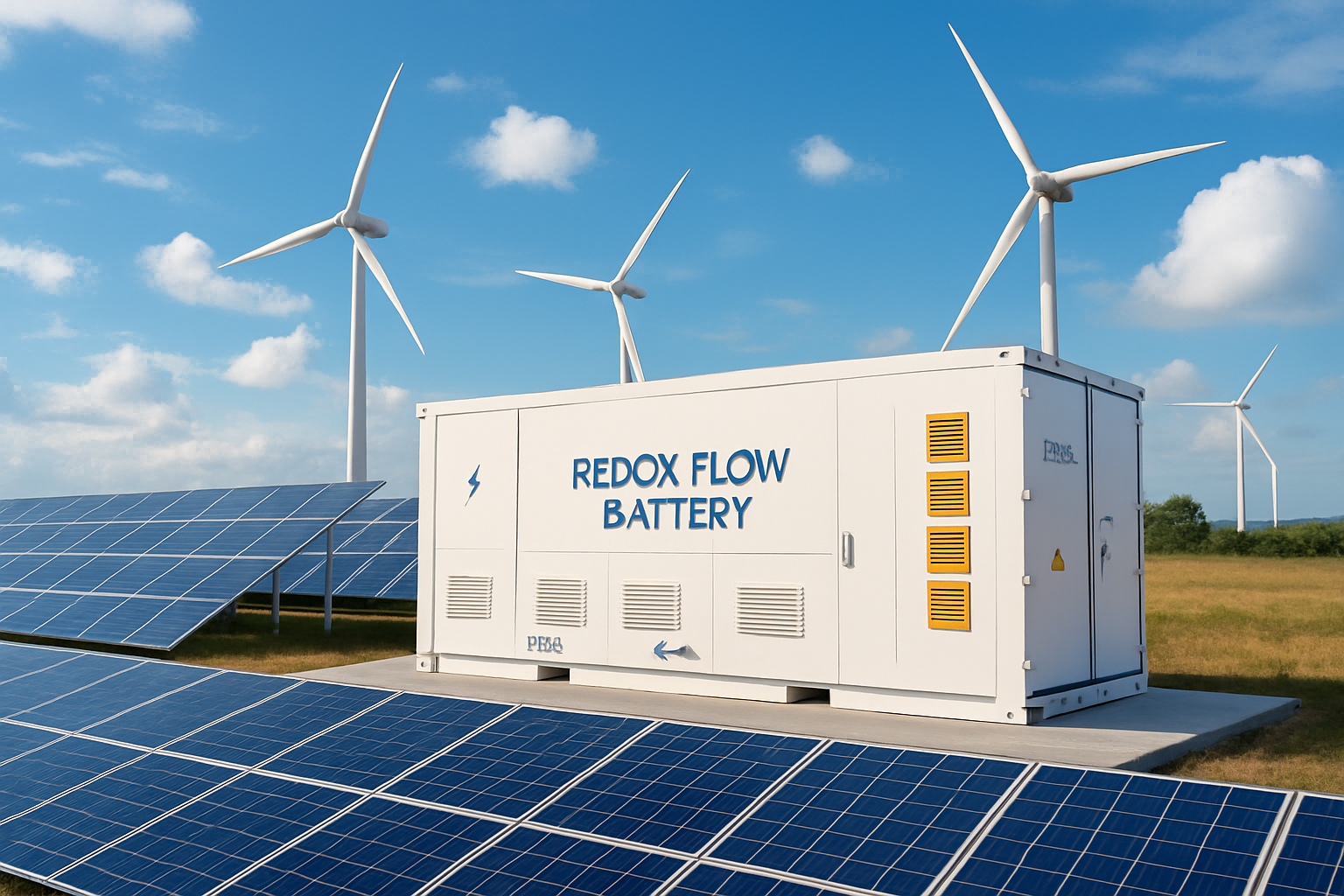
As nations worldwide race to decarbonize their power sectors, the challenge of storing intermittent renewables has never been more urgent. Solar and wind can generate vast amounts of clean electricity, but only when the sun is shining or the wind is blowing. To balance supply and demand, utilities have traditionally relied on pumped hydro or lithium-ion batteries. Now, a resurgence of interest in redox flow batteries (RFBs) promises to deliver a scalable, long-duration storage solution that could fundamentally change how grids operate.
Understanding Redox Flow Batteries
Unlike conventional batteries-where active materials are packed into solid electrodes-RFBs store energy in liquid electrolytes held in external tanks. When electricity is needed, the electrolytes flow through a cell stack separated by a membrane, and electrochemical reactions release stored energy. Once discharged, the liquid can be recharged and returned to its tanks. This architecture offers two key advantages:
- Scalability: Energy capacity is simply a function of tank size. Need more storage? Add bigger tanks or more electrolyte.
- Long Duration: Flow batteries can discharge over several hours-or even days-without degradation issues common in high-cycle lithium systems.
While early RFB designs date back to the 1970s, modern breakthroughs in materials science and flow cell engineering have dramatically improved performance and slashed costs.
Recent Cost and Performance Milestones
In the past two years, several technology providers have announced significant gains:
- Cost Reduction: Reported system costs have fallen from over $500 per kilowatt-hour (kWh) to under $200 per kWh, driven by lower-priced electrolytes and standardized system components.
- Energy Efficiency: Round-trip efficiencies of up to 80% have been demonstrated in field trials, closing the gap with lithium-ion performance.
- Cycle Life: Electrolyte chemistries based on vanadium, iron-chromium, and zinc-bromine now sustain tens of thousands of cycles with minimal capacity fade.
These improvements have not gone unnoticed. Governments and utilities are issuing tenders specifically for RFB-based storage, and private investors are pouring capital into scaling manufacturing capacity.
Flagship Pilot Projects Around the World
A series of high-profile installations has showcased the real-world viability of flow systems:
- European Demonstration Site: A 10-megawatt/80-megawatt-hour vanadium flow plant in southern Europe is now operating alongside a solar farm. Over six months of continuous operation, the system has provided daily peak-shaving services and stabilized voltage fluctuations, earning high praise from grid operators.
- Australian Farmland Deployment: In a remote agricultural region, an iron-chromium flow battery delivers 24/7 backup power to irrigation pumps. Farmers report smoother operations during grid outages and reduced diesel generator use, cutting both emissions and fuel costs.
- North American Renewable Hub: At a wind farm in the Midwest, a prototype zinc-bromine flow battery has completed over 15,000 cycles with energy retention exceeding 90% after extended storage periods. Its developer notes that the low toxicity of zinc and bromine electrolytes simplifies permitting compared with vanadium-based systems.
Environmental and Sustainability Considerations
While flow batteries solve many technical challenges, their environmental footprint depends largely on the chosen chemistry and manufacturing processes. Key factors include:
- Resource Availability: Vanadium is relatively abundant, but geographic concentration of mining operations can lead to supply bottlenecks. Iron-based and organic flow chemistries offer more plentiful alternatives.
- Recycling and Reuse: Unlike solid-state batteries, flow electrolytes can be repurposed or rebalanced indefinitely in many designs. End-of-life decommissioning typically generates liquid waste streams that are easier to treat than spent lithium cells.
- Manufacturing Emissions: Recent life-cycle assessments show that flow battery production emits 20-30% less CO₂ per kWh of capacity than comparable lithium systems, primarily due to lower energy intensity of raw materials processing.
These environmental benefits align with corporate sustainability goals and regulatory frameworks that favor cleaner storage options.
Integration with Renewable Energy Systems
Grid operators face a complex puzzle when integrating variable sources. Redox flow batteries offer flexible deployment models to address multiple pain points:
- Peak Shaving: By discharging during high-demand periods, RFBs can reduce reliance on inefficient peaker plants, cutting operational costs and emissions.
- Frequency Regulation: Fast response times-often under one second-allow flow systems to participate in ancillary services markets, generating revenue streams while supporting grid stability.
- Renewable Firming: RFBs can smooth out the output of solar and wind farms, making power delivery more predictable and reducing curtailment risks.
- Microgrid Support: In off-grid or islanded applications, flow batteries can manage energy flows seamlessly between renewables, generators, and loads, ensuring uninterrupted power for communities and critical facilities.
Challenges and Ongoing Innovation
Despite rapid progress, flow batteries still face hurdles:
- Upfront Capital: Large-scale deployments require significant initial investment, and financial returns accrue over multiple years. Innovative financing models-such as battery-as-a-service-are emerging to lower barriers.
- System Footprint: Tank-based architecture demands more physical space than solid-state batteries. Urban installations may be constrained by land costs.
- Electrolyte Management: Maintaining chemical balance over thousands of cycles requires precise monitoring. AI-driven control systems are being developed to automate this process and prolong system health.
Researchers continue to explore next-generation materials-organic molecules, multi-valent metals, and hybrid architectures-that could further cut costs and boost energy density.
Policy and Market Signals
Governments are beginning to recognize the strategic value of long-duration storage. Recent policy moves include:
- Subsidies and tax credits target storage systems with four-hour or greater discharge capabilities, directly benefiting flow installations.
- Procurement mandates in several regions now require utilities to include long-duration resources in capacity auctions.
- Standardization efforts are underway to streamline permitting and interconnection for tank-based systems.
Such signals reduce market uncertainty and encourage private investment, speeding the path from pilot to commercial scale.
What Comes Next?
As flow battery costs continue to fall, they’re increasingly viewed not merely as a niche solution but as a central component of decarbonized power systems. Industry forecasts suggest:
- Global flow battery deployment could exceed 100 gigawatt-hours by the end of the decade, up from just a few gigawatt-hours today.
- Local manufacturing hubs are likely to emerge in regions with strong mineral resources or established chemical industries, supporting supply chain resilience.
- Hybrid systems-combining flow batteries with photovoltaics, wind turbines, and on-site generation-will demonstrate new business models, including virtual power plants and community energy sharing.
For grid operators, municipalities, and commercial energy users, now is the time to evaluate whether flow battery technology aligns with their resilience, sustainability, and financial goals.
Key Takeaways for Energy Planners
- Assess your load profile and duration needs: flow batteries excel at multi-hour to multi-day storage.
- Engage with emerging financing and service models to reduce upfront costs.
- Plan for space and safety: allocate adequate footprint and design for electrolyte containment.
- Stay informed on policy trends that can unlock incentives for long-duration projects.
- Collaborate with technology providers to pilot small-scale systems before scaling up.
By integrating redox flow batteries into energy strategies today, stakeholders can unlock a cleaner, more resilient power landscape for tomorrow.