Location
Mount Vernon, WA 98274
Location
Mount Vernon, WA 98274

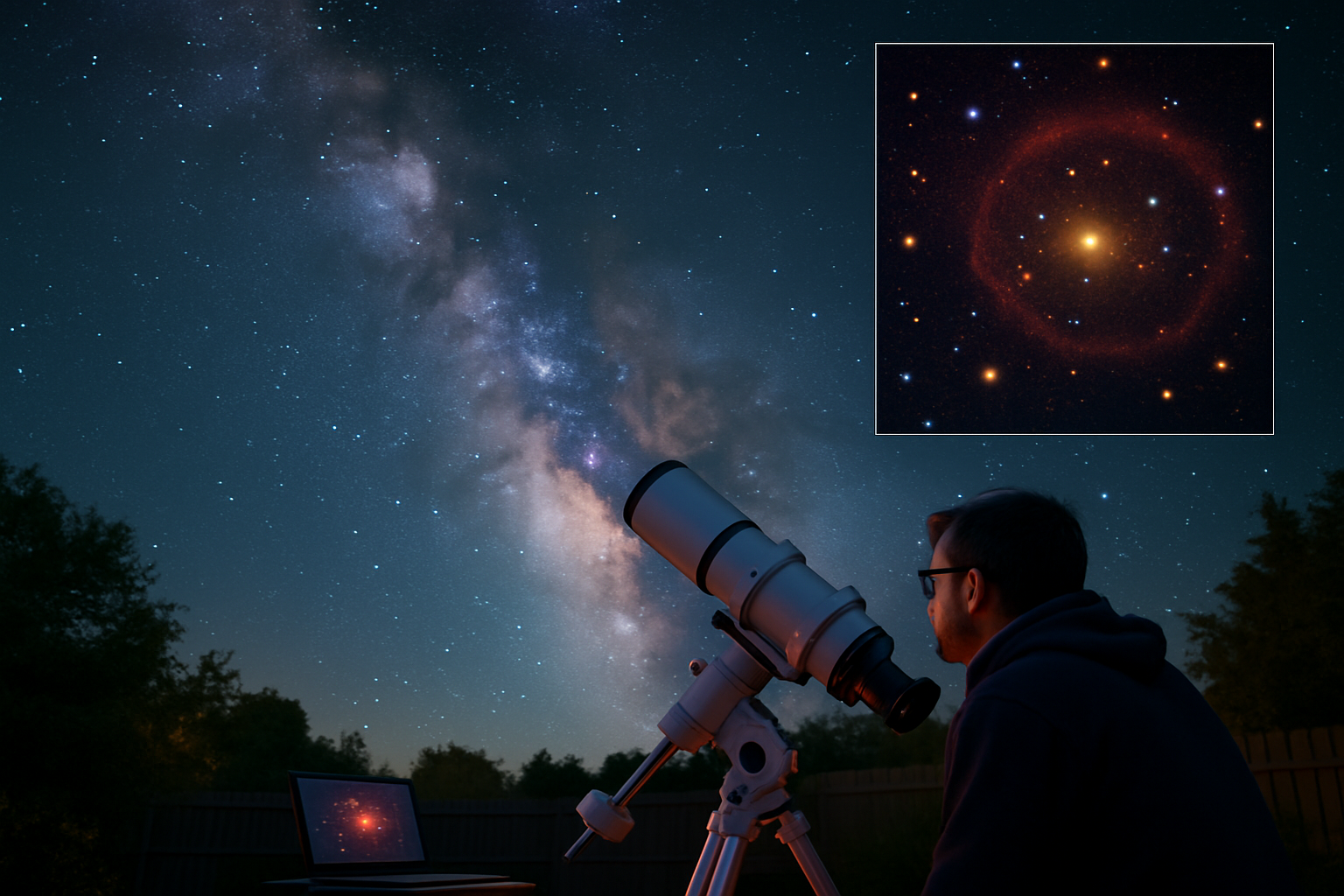
From gravitational ripples to infrared snapshots of distant galaxies, cosmic curiosity is surging among professionals and hobbyists alike. Advancements in telescopes, citizen-science platforms, and open data are empowering anyone to explore the universe from their backyard.
There’s a renaissance underway in space exploration-one driven not just by government agencies or large observatories, but by a global network of curious minds armed with telescopes, cameras, and code. Recent reports from leading space agencies reveal a string of surprises: newly detected gravitational wave events, glimpses of potential exoplanet atmospheres, and intricate dust structures in nebulae once thought to be well understood. These breakthroughs are fueling a cross-generational movement where professional astronomers and dedicated amateurs collaborate to unlock the universe’s secrets.
In the past few months, gravitational wave detectors around the world have cataloged more ripples in space-time than ever before, signaling collisions of black holes and neutron stars at unprecedented distances. Meanwhile, infrared telescopes have captured jaw-dropping imagery of star-forming regions, revealing filamentary patterns woven by magnetic fields and charged particles. Complementing these space-based observations, ground observatories are fine-tuning measurements of exoplanet atmospheres by tracking minute dips in starlight as worlds pass in front of their suns.
One highlight: a distant planet twice the size of Earth showed hints of high-altitude hazes-an indicator of complex chemistry that might someday resemble the early atmospheres of terrestrial worlds. Another involved mapping cosmic dust lanes that wind through galaxy clusters, providing clues about how galaxies evolve over billions of years. Each finding underscores the fact that the universe is far from static; it’s an evolving tapestry of matter, energy, and forces in constant interplay.
Platforms for citizen science have exploded in popularity, transforming thousands of backyard astronomers into de facto research partners. Projects like classifying galaxy shapes, hunting for new supernova candidates, and logging meteors during annual showers have collectively generated datasets rivaling those gathered by established institutions. Dedicated volunteers sift through terabytes of images each night, flagging anomalies that might otherwise slip under the radar.
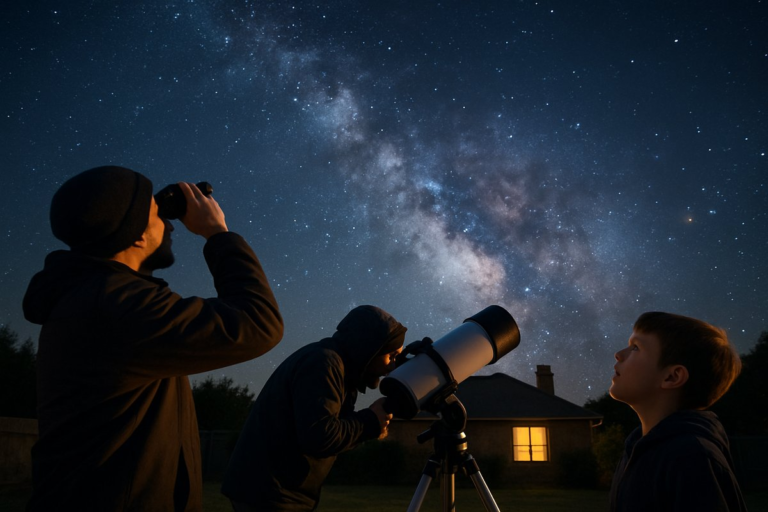
Mobile apps now allow stargazers to record meteor sightings or transient events and submit time-stamped reports to a central archive. This democratization of data collection helps professional teams verify rare phenomena-such as asteroid flybys or unexpected solar flares-in near real time. In one case, a cluster of homeschooled students using a modest backyard telescope identified an unusual flash near Jupiter, prompting follow-up observations that confirmed a minor impact on the planet’s Upper Atmosphere.
As the barrier to entry lowers, educators are weaving these citizen-science tools into curricula, fostering a sense of stewardship and wonder in younger generations. Online communities offer mentorship, troubleshooting tips, and even coding workshops to help novices learn how to process raw images, detect faint signals, and contribute meaningfully to ongoing investigations.
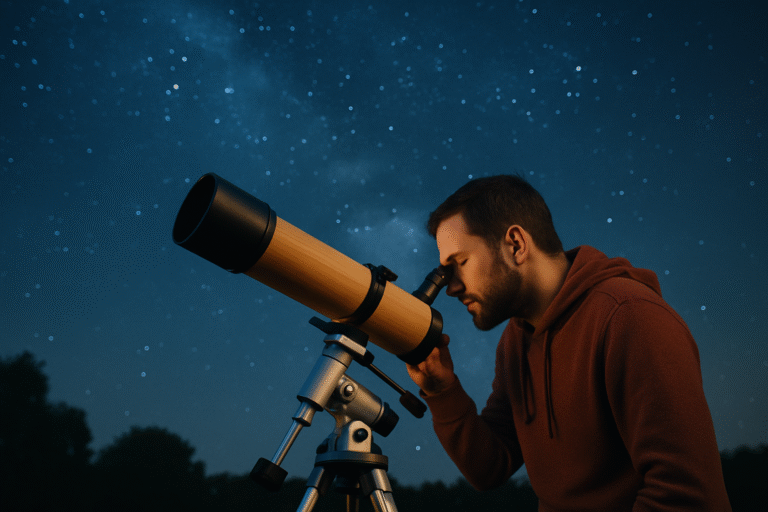
Not long ago, quality stargazing tools were confined to research facilities. Today, affordable refractor and reflector telescopes come with computerized mounts, automated star-alignment routines, and built-in cameras that link to smartphones. Binoculars with specialized optics let you trace the Milky Way’s dusty lanes, observe Jupiter’s cloud belts, or spot the Andromeda galaxy in a dark sky.
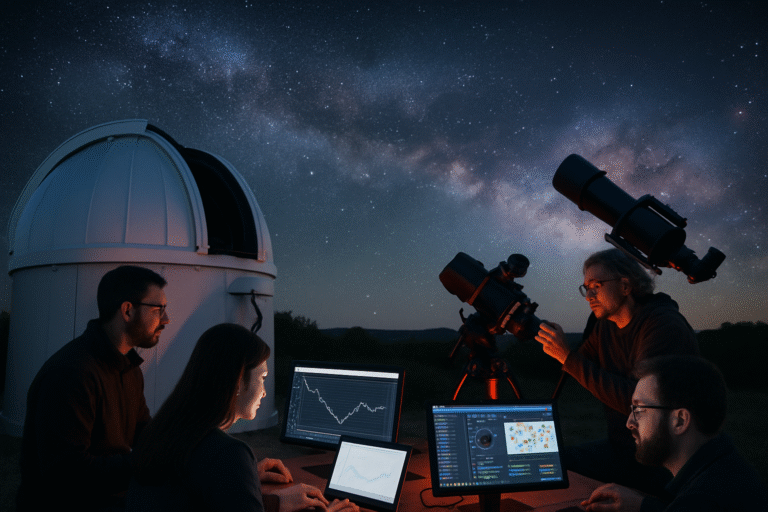
Open-source software for planning observing sessions and controlling mounts has matured quickly. Observers can now script a night’s worth of targets-planets, nebulae, star clusters-in a matter of minutes. Adaptive optics modules once reserved for professional observatories are trickling into the maker community, enabling amateurs to compensate for atmospheric turbulence and capture sharper images than ever before.
Even protective gear, like anti-dew heaters and custom lens filters, can be found in DIY kits. These accessories extend the viewing season by preventing moisture buildup and isolating narrow spectral lines-crucial for highlighting the red glow of hydrogen in emission nebulae or the blue sheen of scattered starlight in reflection nebulae. The result is a richer, more vivid celestial palette visible through your eyepiece or on your monitor.
Astrophotography has evolved from grainy film exposures to high-definition digital mosaics. Enthusiasts now stitch together long-exposure images to reveal the faint outlines of interstellar gas clouds and star-forming regions. With stacking algorithms, even a standard entry-level camera can tease out details that were once accessible only to large observatories.
More ambitious hobbyists attach cooled CMOS sensors and motorized filter wheels to their telescopes, enabling narrowband imaging that isolates specific emission lines-such as those from ionized oxygen or sulfur. These chemical fingerprints help map the physical conditions within nebulae, contributing valuable data to professional research archives.
Workshops and online tutorials guide newcomers through every step of the workflow: from polar alignment and guiding calibration to image preprocessing, calibration frame subtraction, and final color balancing. Processing toolchains are increasingly automated, but the art of composition-choosing the right exposure, field of view, and color mapping-remains a deeply human endeavor intertwined with creativity and scientific curiosity.
The next decade promises a cascade of new observatories, both on the ground and in orbit. A powerful infrared space telescope is scheduled to peer deeper into dusty star-forming regions, while a wide-field mission will survey millions of galaxies to chart the universe’s expansion history. Ground arrays tuned to detect high-energy cosmic rays and neutrinos are upgrading their sensors, aiming to pinpoint the most violent events in the cosmos.
For amateur astronomers, this means ever more data will flow into public archives-and new opportunities to join probing campaigns. Collaborative programs are already lining up citizen-science observing runs to complement the big telescopes, ensuring event alerts and follow-up observations cover the entire sky. Emerging fields like radio astronomy and near-UV monitoring are also opening doors for enthusiasts with specialized receivers and filters.
The era of cosmic curiosity invites everyone to play a part in discovery. Whether you’re logging a cluster of meteors, capturing the swirl of a distant galaxy, or analyzing open data from a space mission, each observation adds a tile to the grand mosaic of knowledge. The tools, the data, and the community are all within reach-no degree in astrophysics required. All it takes is a spark of curiosity, a clear night sky, and the passion to explore planets, stars, and galaxies that stretch beyond our imagination.