Location
Mount Vernon, WA 98274
Location
Mount Vernon, WA 98274

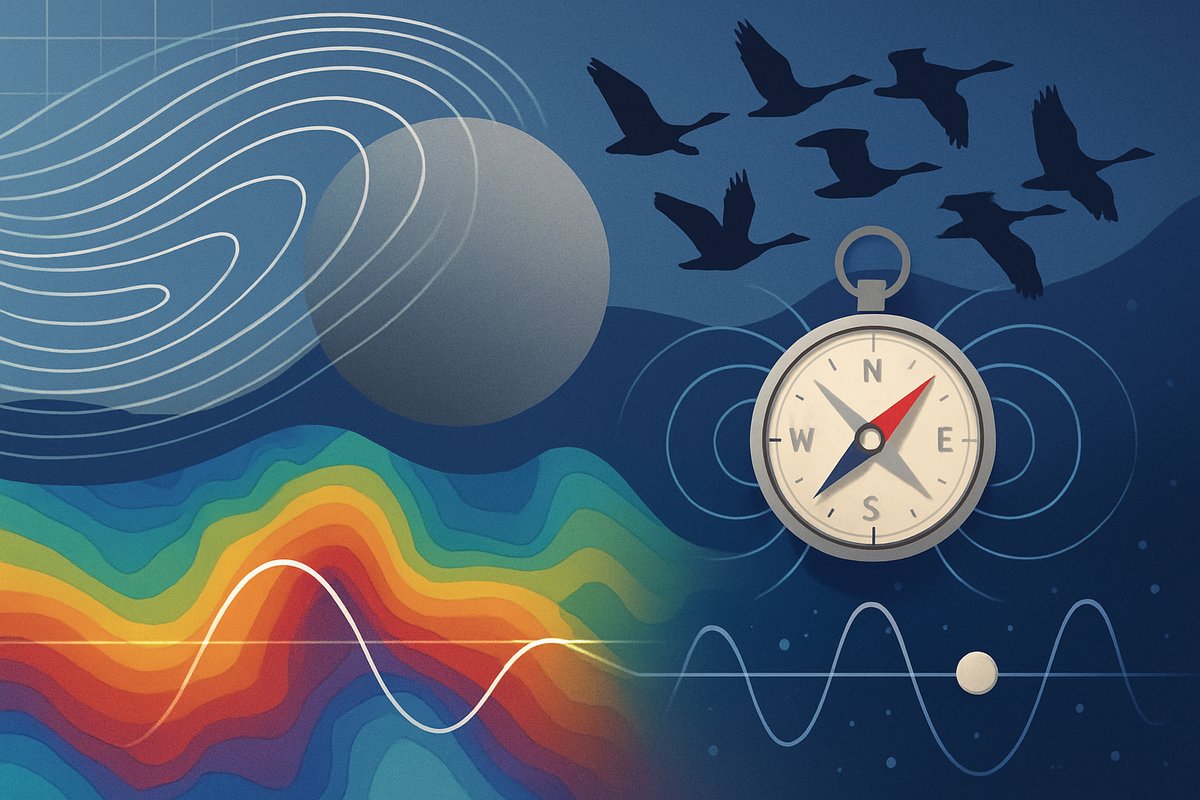
Invisible forces swirl around us, shaping landscapes, guiding animal flocks, and even tugging at quantum fluctuations. From subterranean gravity maps to living magnetic compasses, researchers are decoding nature's secret choreography to reveal new pathways for exploration and discovery.
Walk through any city street or stand by the ocean’s edge, and you inhabit a world sculpted by invisible patterns of force. Gravity anchors your every step, magnetism bends compass needles, and emergent systems-like murmuring starling flocks or shifting sand dunes-arise from countless simple interactions. In labs and in the field, scientists are now deploying novel sensors, high-resolution satellites, and AI-driven models to capture phenomena once relegated to theory or rough sketches. This is not a distant story of academic curiosity; it is a timely tale of how understanding hidden currents can transform resource exploration, environmental monitoring, and even our sense of wonder.
Long celebrated since Newton’s time, gravity still holds surprises. Traditional surveys rely on measuring free-fall accelerations at known points, but a new generation of portable quantum gravimeters is shrinking high-precision measurements into suitcase-sized instruments. Using ultra-cold atoms suspended in vacuum, these devices record minute changes in local gravitational pull as the atoms fall and interfere. Field teams in Iceland have already mapped density anomalies beneath volcanic ridges, revealing cavernous chambers of magma that could signal future eruptions. In Switzerland, researchers combined these gravimeters with drones to scan Alpine glaciers for hidden crevasses-data that could reshape predictions of meltwater release and downstream flood risk.
Gravity mapping is no longer confined to solid ground. Oceanographers have begun integrating quantum gravimeters into submersibles, measuring the gravitational signature of underwater ridges, ravines, and resource deposits. Early expeditions in the Pacific have charted seabed features with unprecedented clarity, exposing mineral-rich zones and extinct hydrothermal vents. These surveys not only guide sustainable deep-sea mining proposals but also illuminate the dynamic interplay between tectonic uplift and ocean currents that influence marine ecosystems.
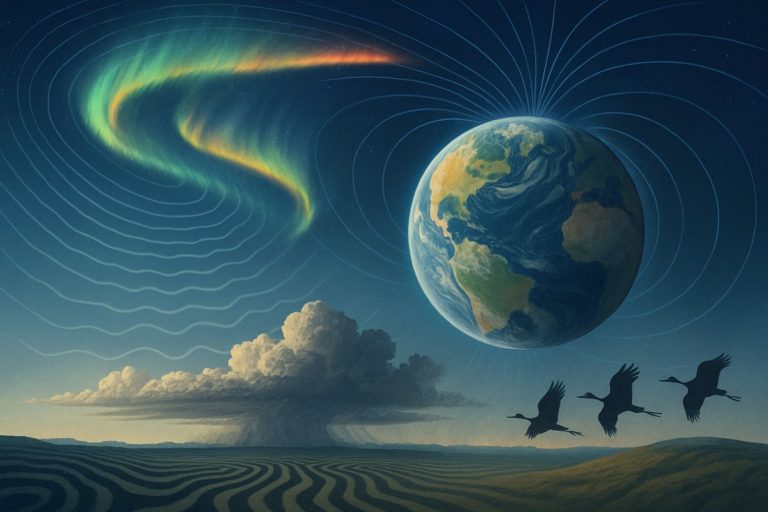
Magnetism, too, is undergoing a renaissance of discovery. Earth’s magnetosphere, a shifting shield of charged particles, reacts to solar storms in ways that can disrupt satellites and power grids. A fleet of small satellites launched recently has captured fine-scale plasma flows at the magnetopause-the boundary where solar wind pressure meets Earth’s field. The data reveals transient magnetic reconnection events twice as frequent as models predicted, suggesting our planet’s defenses flicker momentarily under intense solar winds. Armed with this knowledge, grid operators are beginning to refine fail-safe procedures to protect vulnerable infrastructures.
Closer to home, biologists are uncovering magnetic secrets in living systems. Magnetotactic bacteria-microbes that build chains of magnetic crystals within their cells-use Earth’s field to navigate sediment layers in search of oxygen. Advanced electron microscopes now track how these bacteria alter crystal shape and orientation in response to fluctuating fields. Such insights may inspire new bio-inspired materials capable of sensing or remediating polluted water. And in high schools around the world, amateur naturalists are using handheld magnetometers to map local gradients and even infer stories of ancient lava flows or iron-rich soils.
Beyond gravity and magnetism lies the realm of emergent phenomena, where collective behavior spawns structure without central control. Bird murmurations have long entranced observers, but recent high-speed camera arrays and machine-learning algorithms can now reconstruct three-dimensional flight paths in real time. A recent field study showed that flocks adjust individual neighbor-spacing based on group density and predator proximity-an adaptive rule set that robotic swarms may soon mimic for search-and-rescue operations in disaster zones.
Emergence also appears in non-biological systems. In materials labs, researchers heat shallow layers of liquid metal to study Bénard convection cells-hexagonal patterns that rise and sink as heat flows from below. These cells closely resemble patterns in atmospheric convection, helping meteorologists refine storm-formation models. On the desert floor, granular physicists watch sand grains self-organize into ripples and dunes under wind shear. By tuning wind speed and grain size in wind-tunnel experiments, they recreate desert patterns on scaled prototypes-an approach that informs erosion control and land-use planning in arid regions.
Quantum mechanics adds another layer of intrigue. The vacuum is not empty but teems with fleeting energy fluctuations. Casimir forces-tiny attractions between uncharged plates in a vacuum-were once measured only with delicate torsion pendulums. Now, microfabricated sensors can detect Casimir-like forces at micrometer scales, paving the way for ultra-sensitive accelerometers and gyroscopes. In parallel, superconducting circuits cooled near absolute zero have demonstrated entanglement between macroscopic islands of electrons, hinting at future quantum networks that leverage emergent quantum correlations for communication and sensing.
The convergence of these fields is already giving birth to interdisciplinary tools. In volcanic hazard zones, teams combine quantum gravimeters, magnetometers, and seismic arrays to develop composite hazard indices. By fusing data streams in real time, they can discern magma movement beneath the Earth’s crust with finer temporal resolution than before. These composite sensor networks are being piloted in Indonesia’s most active volcanoes and promise to offer earlier warnings that could save thousands of lives.
As these technologies diffuse into commercial and citizen-science arenas, everyday explorers are gaining access to portals into nature’s deepest patterns. Apps now allow hikers to log incidental gravity readings or magnetic anomalies with their smartphones, contributed to open-data platforms for collective mapping. Virtual-reality experiences built on these datasets let urban planners-and curious children-wander through underground landscapes or float through simulated magnetospheres.
The real story is not just the technology, but the sense of wonder it rekindles. Observing a shimmering pattern of convection cells under a heat lamp or detecting a subtle dip in gravity beneath a city park reminds us that the world around us is a dynamic tapestry of interacting forces. Each measurement is a whisper from nature, urging us to look closer, question assumptions, and collaborate across disciplines.
Tomorrow’s frontiers beckon. Can we harness emergent swarm intelligence to optimize renewable-energy microgrids? Will quantum sensors one day image geological faults days before they slip? How might living materials-engineered to respond to local magnetic or gravitational cues-reshape architecture and infrastructure design? The answers will emerge where curiosity meets rigorous inquiry, where simple patterns scale into grand phenomena, and where invisible currents become the canvas for human ingenuity.