Location
Mount Vernon, WA 98274
Location
Mount Vernon, WA 98274

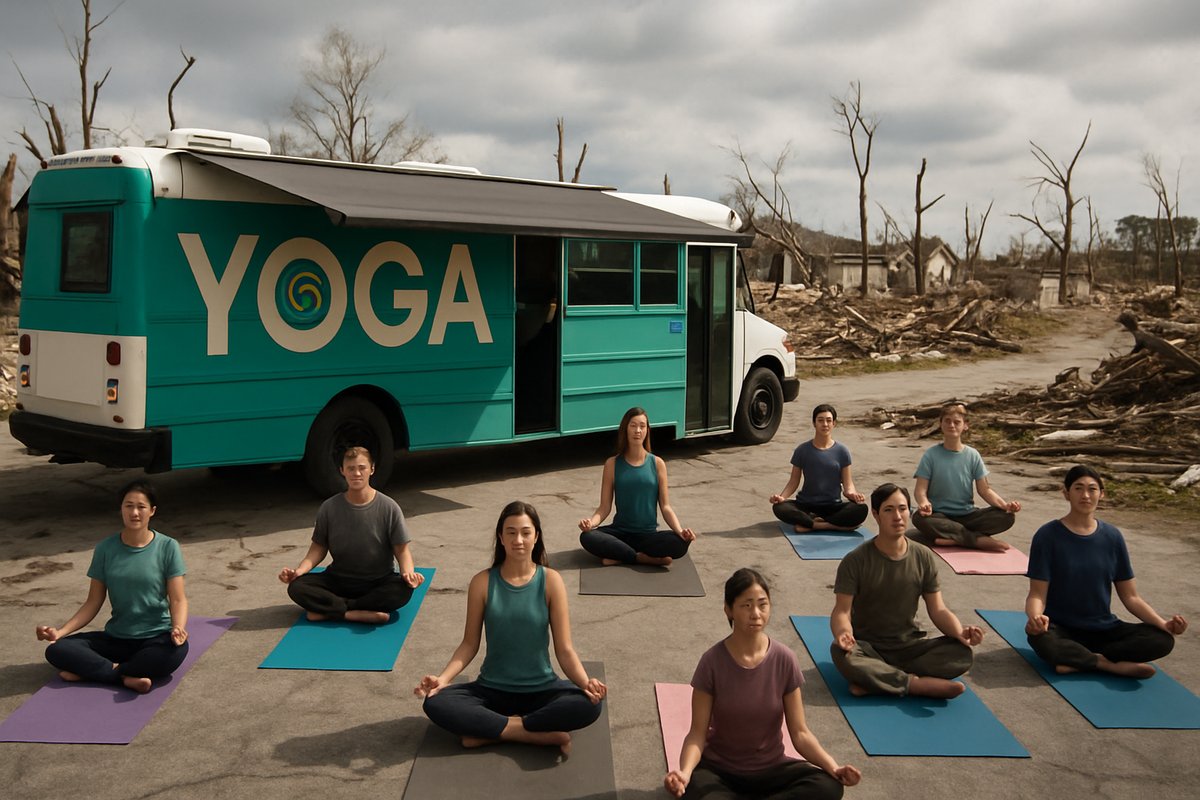
When disaster upends lives, rebuilding the spirit can be as urgent as restoring infrastructure. A converted coach now roams through storm-ravaged towns, offering free yoga classes as a balm for trauma. In each practice, people from all walks of life find a moment of peace-and a reminder of their own resilience.
The battered highway wound through broken trees and flooded fields, leading to the heart of a community still reeling from last season’s floods. Amid the wreckage and half-collapsed storefronts, a painted bus rolled into view. Its side panel bore a simple emblem-a lotus carried on wheels.
Inside, volunteers unrolled yoga mats and tuned crystal singing bowls. The engine idled as instructors helped villagers soak in filtered daylight through privacy curtains. In this makeshift studio on wheels, strangers would become allies in the search for calm.
This is the story of the “Wheels of Renewal” project: a mobile yoga studio that travels to neighborhoods hit hardest by natural disasters, offering free classes, grief circles, and guided breathing sessions. The initiative grew out of one instructor’s own battle with anxiety-an inner storm as fierce as any weather event. Today she drives the bus, handing out mats and hope in equal measure.
Across three states, more than 2,000 participants have stepped onto those mats. Some arrive clutching bottled water and questions; others slip in quietly after a day shoring up homes and hauling debris. In every class there’s a hush that falls when the first downward dog meets the floor-an unspoken recognition that, at least for seventy minutes, trauma must wait at the door.
For 34-year-old instructor Maya, this is the culmination of a personal journey. She grew up in a coastal town that lost half its homes to a hurricane when she was in high school. “We rebuilt the houses,” she remembers, “but inside we were all broken.” Anxiety and sleepless nights followed her through college and into the nonprofit sector, where she first discovered yoga as a survival tool.
“It gave me a space where I didn’t have to answer questions, or prove I was okay,” she explains, pressing her palms together at heart center. “No one cared if I couldn’t touch my toes. What mattered was that I showed up.”
Five years ago, Maya started teaching in community centers near where she grew up. She noticed how many people still carried that hurricane’s shock like a hidden scar. Then a colleague gave her the idea: “Why don’t you take the class to them, instead of waiting for them to come?”
With a small grant, she bought a used bus, installed recycled-rubber flooring, and fitted each seat with storage for mats and blankets. Solar panels on the roof power a small sound system. The result is a low-carbon, privacy-friendly studio that can park on any flat piece of asphalt.
Among the first riders was Tom, a 45-year-old teacher who lost much of his school to flooding. He still wakes at night with the sound of drenched lockers rattling in his mind. “I thought I’d go once just to see what yoga was,” he says. “By the end of that class, I hadn’t thought about the flood for a moment. It reminded me that peace can be more than an idea.”
Then there’s Rosa, an elderly grandmother who spent weeks pulling soggy couch cushions from her ruined living room. Her knees ache from lifting and shifting, but she says the slow, flowing postures make her feel younger. “These stretches,” she laughs, “are tougher than carrying wheelbarrows of mud.”
Single parent Angela brings her ten-year-old after school. “My daughter saw me crying one evening and asked why,” Angela admits. “I told her I was sad about losing our home. The next day she helped me pack a box of clothes. Then we both came here. Now she asks for yoga instead of screen time.”
Participants attend small classes grouped by age or ability. Instruction emphasizes breathing and gentle movement-sequences that won’t jar healing bodies or rattle frayed nerves. Each session ends with a circle of sharing, where people can name what they’ve felt. That simple act of speaking pain out loud often becomes a turning point.
Mental-health experts praise the model. Studies show that group yoga can help reduce symptoms of post-traumatic stress, depression, and chronic pain. It fosters community bonds while teaching tools for self-regulation. “In the aftermath of trauma, both social connection and physical rhythm can restore a sense of safety,” says one therapist who partners with Maya’s team.
But running the bus isn’t without challenges. Road conditions in flood zones can be treacherous. Unpredictable weather sometimes forces rescheduling at the last minute. Funding is another constant concern. Grants cover basic fuel and maintenance, but supplies and instructor stipends often rely on small donations.
Maya emphasizes sustainability-both environmental and financial. The studio uses glass water bottles rather than disposables. Partner yoga outfits donate gently used mats rather than shipping new ones. Volunteers handle day-to-day operations so the project can stay lean.
Local farmers’ markets have chipped in with surplus produce, turning community classes into mini potlucks. At one stop, a family-run bakery sent dozens of whole-grain muffins for after-class nourishment. “We’re weaving a web of care,” Maya says. “Every contribution-whether it’s a loaf of bread or a morning of your time-helps people stand back up.”
The bus makes its rounds according to a seasonal calendar. In spring and summer it stays in flood-prone basins; in autumn it heads to mountain towns recovering from landslides; in winter it serves shelter residents in cold-snap regions. Each new route brings fresh volunteers, new stories, and new lessons.
Last month, the bus rolled into a town still brown from wildfire scorch. Volunteer instructors adjusted lighting to reduce glare, and offered an optional guided meditation for smoke-related anxiety. One participant, a former firefighter, admitted in the closing circle that his trembling hands had never been steady since he lost colleagues in a blaze. His classmates placed blankets around him and spoke words of compassion. He later told the team it was the first time he’d cried in public-and the first time he’d felt understood.
Looking ahead, Maya hopes to replicate the model in other regions. She’s fielded calls from community organizers across three continents. Each potential partner must adapt the bus to local needs-whether that means wheelchair lifts, multilingual signage, or shaded patios for outdoor ceremonies. But the core remains the same: moving yoga, moving hearts.
In the end, Wheels of Renewal isn’t about yoga as an end in itself, but as a bridge back to trust-trust in the body’s ability to heal, trust in neighbors who share scars, and trust in tomorrow’s possibilities.
As the bus idles by yet another makeshift studio, participants file out with folded mats and quieter minds. Some snapshots of triumph linger: a pair of hands finding heart center, a community circle holding space for sorrow, a sense that brokenness can become a new beginning.
When dusk falls, the volunteers roll up the last mat and close the curtains. The bus’s lamps glow softly, beaconing a promise for the next day’s journey. In every town scarred by crisis, a simple question echoes: Can we rebuild more than roofs? With each class, the answer grows louder: Yes, we can.
Under the muffled hum of the engine, Wheels of Renewal steers onward-one mile at a time, one breath at a time, towards a horizon defined not by loss but by the quiet courage to rise again.