Location
Mount Vernon, WA 98274
Location
Mount Vernon, WA 98274

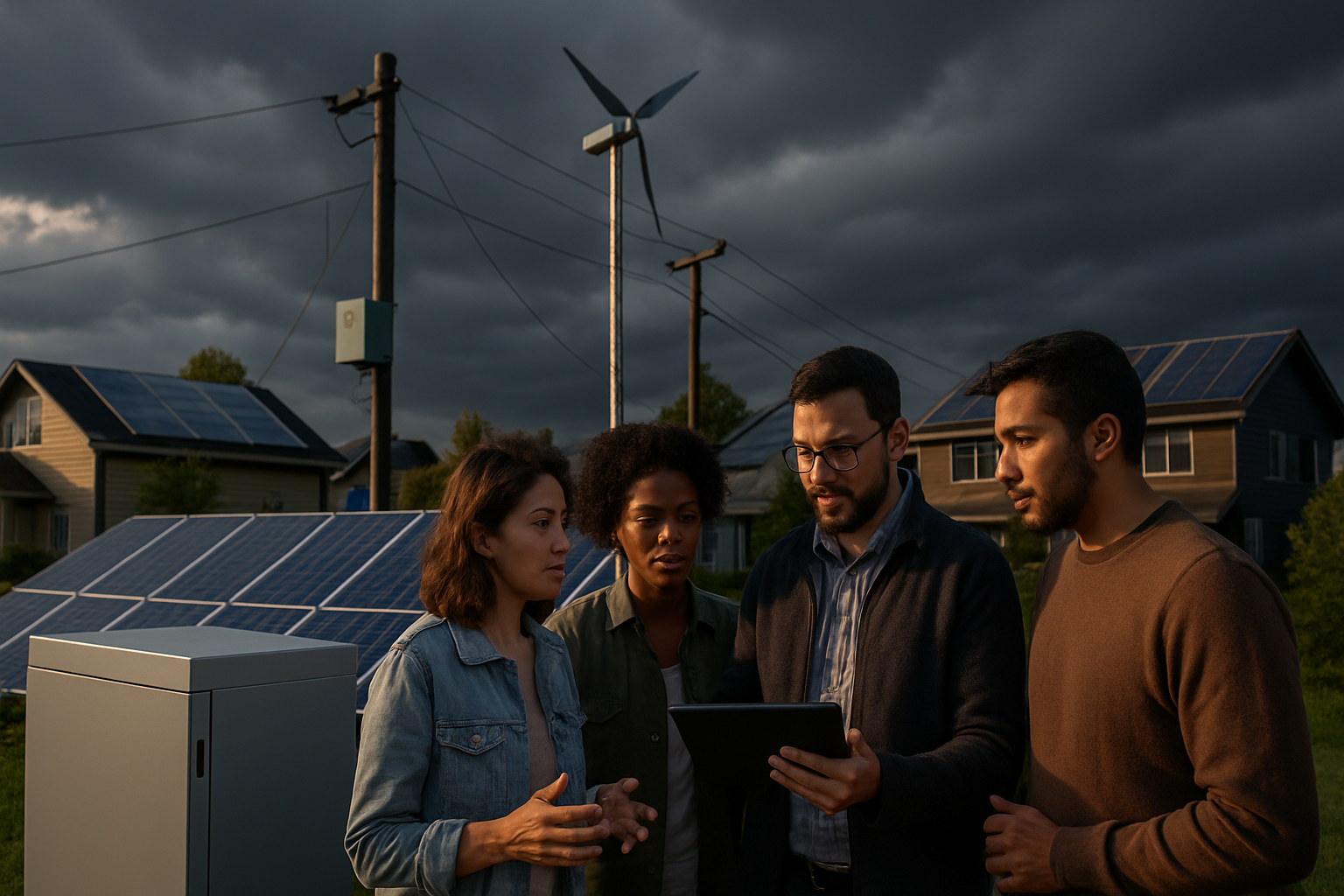
In the face of increasingly frequent weather extremes, residents in cities and suburbs are banding together to build localized microgrids that keep lights on when the main grid falters. These small-scale energy networks-combining solar arrays, battery storage and smart controls-are emerging as community-driven lifelines for resilience and sustainability.
When a sudden summer storm knocked out power for thousands in a suburban neighborhood just outside Phoenix, a small cluster of homes and a community center kept humming. Inside the cooled common room, residents charged phones, stored refrigerated medicines and shared meals, all thanks to a microgrid that had been quietly humming in the background.
Across the region, thousands have experienced similar first-hand rescues from sweltering heat and freezing cold. Once the domain of research labs and niche industrial facilities, community-led microgrids are now popping up from desert suburbs to coastal towns. They stitch together rooftop solar panels, battery packs and smart energy controllers to form independent islands of power that can ride through outages or operate indefinitely alongside the main grid.
Advocates say these projects aren’t just backup generators. They represent a democratisation of energy, where local stakeholders-homeowners, small businesses, faith groups and nonprofits-have real ownership over their electricity. The result is often lower bills, reduced carbon footprints and, above all, the peace of mind that comes with reliable power during extreme weather.
In Tucson, a pilot project spearheaded by a nonprofit collective transformed a dozen homes in an older neighborhood once prone to rolling blackouts. Each house boasts rooftop solar arrays sized to its needs, and all feed into a shared battery bank housed in a retrofitted shipping container behind the community hall. From there, a microgrid controller dispatches stored energy to keep a critical cluster of lights, appliances and medical devices running whenever the utility grid hiccups.
“During our heatwave last year, we were down for nearly eight hours,” recalls community organizer Elena Vargas. “But the hall stayed cool, the lights stayed on. We set up cots for neighbors who needed air conditioning and let families charge phones. That small shift in control changed everything.”
National data backs up these local triumphs. A report from the Department of Energy estimates that microgrids-when designed with community engagement-can reduce outage times by up to 70 percent in selected areas. Meanwhile, the Federal Emergency Management Agency has begun offering grants specifically for neighborhood energy resilience projects, citing their value in disaster response plans.
A key advantage lies in modularity. Rather than investing in a single, large utility-scale plant, towns and districts can break projects into smaller phases. First comes the solar arrays on municipal buildings or parking canopies. Next, battery modules are added to capture midday surplus. Finally, smart controls and software orchestrate when to draw from the utility vs. the microgrid, often saving money by avoiding peak-hour rates.
In Hammonton, New Jersey, a farming community has taken this step-by-step approach. The local agricultural co-op installed solar panels above strawberry fields, powering irrigation pumps during the day. Excess energy now charges a bank of lithium-ion batteries installed in two shipping trailers at the edge of town. On stormy nights, the microgrid shifts on and sustains critical equipment at the local hospital and water treatment plant.
Mayor Leo Chen sees the microgrid as more than a technical upgrade. “This project brought people together. Farmers, engineers, elected officials and residents all had a say. It’s helped us build trust and learn real skills-like wiring inverters and reading consumption charts-that we wouldn’t have gained otherwise.”
Still, challenges remain. Grid operators and regulators have long been structured around large, centralized power plants. Tying dozens of small generators into a standard grid requires new rules and oversight. Some states are still ironing out policies on who can sell surplus power back to utilities and how community groups can finance upfront costs.
Financing is often the greatest hurdle. A full microgrid can cost anywhere from $500,000 to several million dollars, depending on scale. To overcome this, many communities stitch together public grants, low-interest clean energy loans and community fundraising drives. In Salt Lake County, Utah, a nonprofit tapped a local bond measure to raise $2 million, then matched that with state solar incentives and a small local option sales tax approved by voters.
“People worry about the price tag,” says project manager Anita Morales. “But once they see how it stabilizes bills and spares them from costly outages, the return on investment becomes clear. Plus, community ownership means any revenues from selling excess solar power feed right back into local priorities-schools, youth programs, senior services.”
Innovations in technology are also driving costs down. Battery pack prices have dropped nearly 90 percent over the past decade, while open-source software now lets smaller engineering firms offer microgrid control systems at a fraction of previous licensing fees. Some pioneering startups are experimenting with solid-state batteries and second-life electric vehicle modules, further trimming budgets.
Public-private partnerships are emerging too. In Detroit’s East Side, a collaboration between a municipal utility and a private developer turned an old warehouse into an energy hub. Solar canopies in the parking lot power an all-electric kitchen incubator-where local food entrepreneurs bake bread and roast coffee-while battery storage keeps the building running during commercial-grid blackouts. The facility also hosts community workshops on energy literacy, sustainability and emergency preparedness.
The human element is often the most rewarding. In Portland, Oregon, an immigrant community center installed a microgrid partly to safeguard elders who rely on refrigerated medicines. When an autumn windstorm last year cut power across several neighborhoods, volunteers used the center’s lights and outlets as a staging area to coordinate home visits and deliveries of hot meals.
“People don’t just see devices,” says center director Malika Khan. “They see windows of opportunity. We now host cooking classes powered by the microgrid, teach kids how to code energy dashboards and help seniors understand why it’s okay to be curious about wires and gadgets.”
With climate projections forecasting more extreme weather-ranging from heatwaves to ice storms-local microgrids are gaining attention as a critical layer of resilience. Some states are updating building codes to require or incentivize on-site generation and storage for new housing developments. Others are mapping “resilience zones” where microgrids could be clustered to support each other.
Yet the movement is more than policy and technology. It’s a story of neighbors sharing expertise, co-investing in their own futures and redefining what it means to live sustainably in an uncertain era. As a group of volunteers in southeastern Louisiana put it after installing a microgrid at a flood-prone civic center: “We learned that water and power can retreat-but not our community spirit.”
What’s next? Some communities are exploring microgrid-to-microgrid connections, allowing energy trading between neighborhoods. Others are weaving in demand-response subscriptions, where residents earn credits for reducing consumption during peak grid stress. Emerging blockchain platforms promise automated peer-to-peer energy exchanges, though those will require updated regulations.
For now, success hinges on curiosity, collaboration and a willingness to pilot new ideas. Back in Phoenix, neighbor Elena Vargas has already fielded calls from city planners and regional utilities eager to replicate her community’s blueprint. She offers a simple piece of advice: “Start small. Bring people together. Let everyone have a role-big or small. When you share the risks and the rewards, you unlock something far more powerful than any solar panel or battery ever could.”