Location
Mount Vernon, WA 98274
Location
Mount Vernon, WA 98274

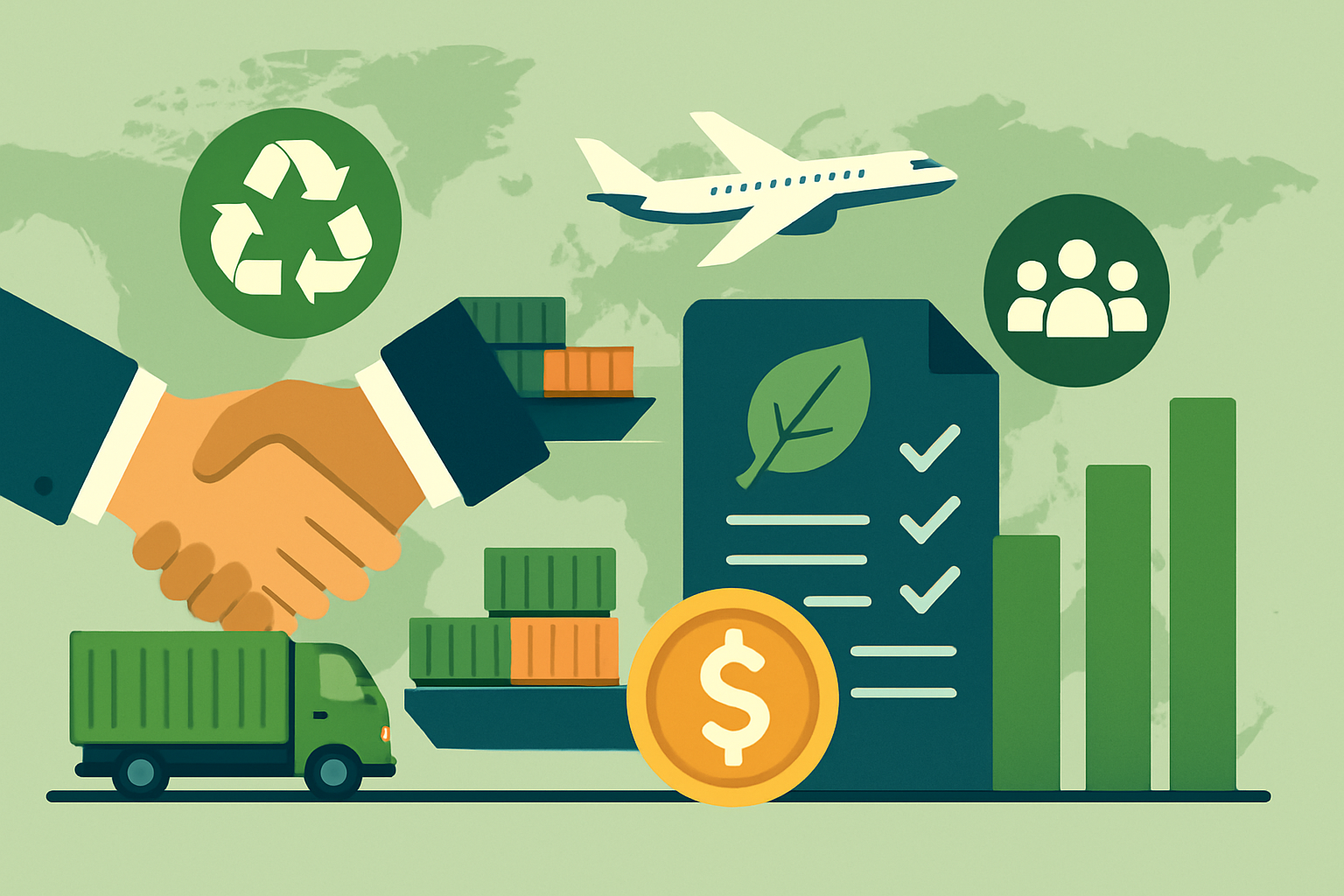
An emerging wave of sustainable supply chain finance is transforming the way goods move around the world, aligning lending incentives with carbon reduction and social responsibility. Corporations, lenders, and regulators are collaborating to link financing terms directly to environmental, social, and governance benchmarks, reshaping trade in ways that benefit communities and the planet.
Global trade has long been driven by cost, speed, and scale. But a growing chorus of stakeholders-from institutional investors to conscientious consumers-is demanding that environmental and social impacts move to the top of the priority list. The result is a new breed of financing solutions that tie lending rates, credit lines, and bond yields to sustainability performance across entire supply chains. As the pressure to decarbonize industries mounts, companies and banks are racing to develop standards, data platforms, and incentive structures that ensure goods are produced and shipped in ways that shrink carbon footprints and uphold labor rights.
The concept isn’t entirely new; green bonds and sustainability-linked loans have existed for several years. What is remarkable is how these tools are now being woven into the fabric of trade finance itself. Instead of treating sustainability as an afterthought, lenders are embedding environmental and social governance (ESG) metrics directly into letters of credit, receivables financing, and import/export loans. Borrowers who meet or exceed climate targets can access better pricing, longer tenors, and deeper pools of capital. Those that fall short face penalties or must purchase offsets.
Major banks have begun offering “green trade corridors” tailored to specific industries such as agribusiness, textiles, and electronics. A European lender might provide an exporter of organic coffee beans in Central America with a rebate on interest rates if satellite data confirms adherence to reforestation goals. In Asia, a consortium of banks could require textile producers to track cotton sourcing through blockchain, ensuring fair labor practices as a condition for working capital lines. These pilot programs signal a shift from generic credit assessments toward dynamic, data-driven underwriting that rewards transparency and accountability.
Small and medium-sized enterprises (SMEs) stand to gain significantly, provided they can demonstrate compliance with evolving standards. For years, smaller suppliers have faced punitive financing costs compared to multinationals with in-house sustainability teams. Now, fintech platforms are emerging to bridge that gap. By aggregating data from multiple SMEs, these platforms present a consolidated ESG profile to lenders, unlocking access to green funds that were once out of reach. Early tests in Southeast Asia show that SMEs using traceability technologies can reduce financing spreads by up to 50 basis points, translating into real savings for reinvestment.
Technology lies at the heart of this transformation. Internet of Things (IoT) sensors monitor shipping containers for temperature, humidity, and idle time, while verifiable credentials record each transaction on decentralized ledgers. Artificial intelligence analyzes weather patterns and fuel consumption to forecast emissions and recommend route optimizations. Parametric insurance products automatically reimburse shippers based on predefined triggers-such as delays caused by extreme weather-mitigating climate-related risks without lengthy claims processes.
Regulatory momentum around the world is accelerating these innovations. The European Union’s taxonomy for sustainable activities, for example, provides a classification system that financial institutions can reference when designing green trade products. Meanwhile, mandatory climate disclosures under new securities regulations in multiple jurisdictions are forcing corporations to map their Scope 3 emissions, which include those from supply chains. As transparency requirements tighten, companies lacking robust tracking mechanisms face higher compliance costs and reputational risks.
Investors are watching closely. A recent analysis by a global asset manager found that portfolios tilted toward companies engaged in sustainable trade finance delivered lower volatility and comparable returns over the past three years. These findings have prompted pension funds and sovereign wealth funds to allocate capital specifically to green trade instruments. At the same time, philanthropic organizations are providing guarantees and technical assistance to de-risk early-stage projects in frontier markets, where adoption of sustainable standards can drive social uplift and environmental restoration.
Despite the progress, challenges remain. Standardizing data formats across jurisdictions and sectors is a formidable task. Many smaller suppliers lack reliable digital infrastructure, making on-chain traceability difficult. Concerns around greenwashing are real: without rigorous third-party verification, sustainability claims can be misleading. And in a world still coping with supply chain disruptions-from port congestion to geopolitical tensions-maintaining consistent performance benchmarks can be elusive.
To address these risks, industry groups are coalescing around unified frameworks. Cross-border working groups are developing minimum criteria for green trade products, covering everything from emissions accounting to labor standards. Certification bodies are expanding their scope to include digital audits and remote inspections. And technology providers are embedding cryptographic proofs into every data point, ensuring immutability.
One illustrative case involves a multinational beverage company and its network of glass suppliers. By installing smart meters and water-use monitors at key facilities, the company can verify compliance with usage thresholds tied to loan pricing. Suppliers that exceed water-efficiency targets receive rebate credits, which can be rolled into future financing. The program has reduced water usage by double digits in under a year, while creating a template that competitors can replicate across beverage and packaging industries.
Another example comes from the electronics sector, where cobalt mining in parts of Africa has historically raised ethical concerns. A consortium of lenders and end-user brands collaborated on a sustainable cobalt financing scheme, linking credit terms to mining cooperatives’ progress on worker safety and community development. Blockchain records track each batch of cobalt from mine to battery manufacturer, assuring downstream buyers that their components meet rigorous social and environmental benchmarks. By aligning incentives, the initiative channels capital to responsible operators and pushes the entire supply chain toward higher standards.
Emerging markets are at a tipping point. Governments are leveraging concessional loans and development finance to catalyze green trade corridors, often partnering with export credit agencies to offer blended financing. In Southeast Asia, public-private partnerships are setting up hubs where SMEs can access training, technology, and financing under a single umbrella. These hubs serve as demonstration sites, showcasing how circular-economy practices-such as waste-to-energy and material recycling-can be financed at scale.
The growing availability of sustainability-linked trade finance also presents an opportunity to integrate other social goals. Gender-lens investing can be woven into agricultural supply chains, providing preferential terms to cooperatives led by women farmers. Social bonds can support upskilling programs for warehouse workers, tying repayments to job placement metrics. This holistic approach recognizes that environmental stewardship and social equity often go hand in hand.
As the market matures, a new ecosystem of service providers is emerging. Data aggregators curate ESG metrics from diverse sources, analytics firms develop risk-scoring algorithms, and consulting groups help companies align their operations with lender requirements. Technology vendors are offering modular platforms that plug into existing enterprise systems, reducing integration friction. And professional associations are building communities of practice to share lessons learned and accelerate innovation.
For procurement and finance teams, the imperative is clear: start mapping sustainability risks across tier-two and tier-three suppliers, invest in data infrastructure, and engage lenders in dialogue about customized green trade solutions. Early movers stand to gain competitive advantages, including lower financing costs, stronger brand reputation, and preferential access to emerging pools of capital dedicated to sustainable development.
While the challenges are significant, the potential rewards are too. By reimagining trade finance through an ESG lens, the global economy can foster resilience, promote inclusivity, and curb carbon emissions at critical nodes in supply chains. The stakes are high: trillions of dollars in trade flow through these networks each year, and every dollar mobilized toward sustainability has ripple effects for communities and ecosystems.
Finance is often described as the oil that greases economic activity. Now it has the power to be the engine of a green revolution in trade. Whether through smarter risk-sharing mechanisms, data-driven underwriting, or alignment with social objectives, sustainable supply chain finance represents a powerful lever for change. As more companies and institutions embrace these innovations, global commerce will not only grow-it can also leave a lighter footprint on the planet and a fairer legacy for future generations.