Location
Mount Vernon, WA 98274
Location
Mount Vernon, WA 98274

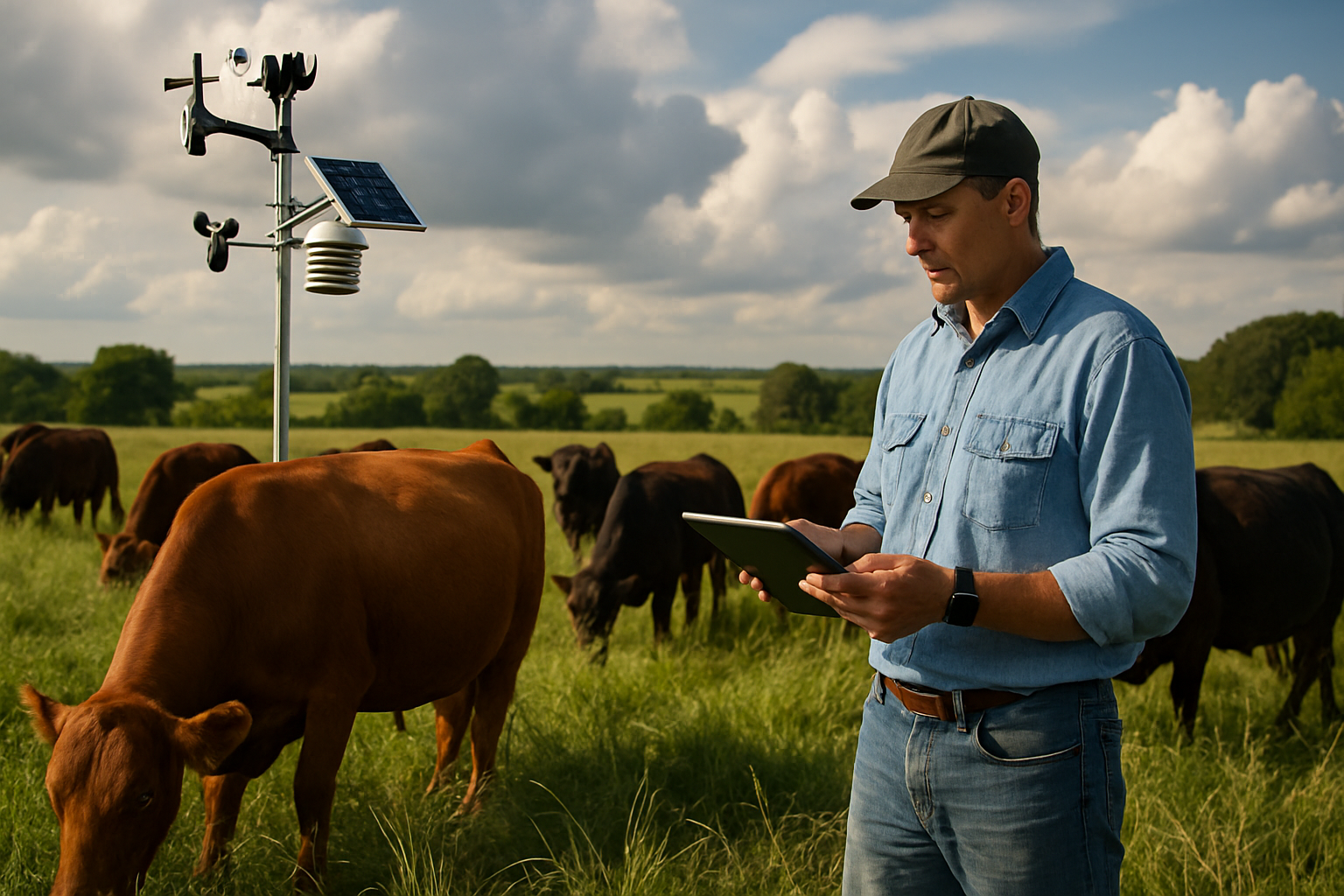
Faced with shifting weather patterns and tightening margins, livestock producers are turning to advanced monitoring tools, regenerative grazing models, and new revenue streams such as carbon credit programs. This article examines how farms are blending tradition and cutting-edge strategies to thrive in a rapidly changing agricultural landscape.
A sweeping wave of challenges-from erratic weather to spiraling input costs-has thrust livestock farmers into the spotlight of agricultural innovation. Across grasslands and ranches, producers are deploying precision monitoring, adapting grazing systems, and tapping emerging markets to not only weather uncertainty but also boost profitability and environmental resilience.
In the Pacific Northwest, a network of cattle ranches recently completed a year-long pilot of satellite-enabled tracking collars. Each collar transmits real-time GPS coordinates along with activity levels, allowing managers to detect early signs of illness or labor stress. The result: a 12 percent drop in veterinary costs and a 5 percent uptick in weight gain, according to preliminary data shared by the project’s coordinator, a regional extension specialist. “When you know exactly where each animal is and how it’s behaving, you can intervene before small problems become big ones,” she explains.
Meanwhile, in the high plains, a cooperative of sheep producers partnered with a local university to test rotational grazing techniques originally developed for grass restoration. By dividing pastures into smaller paddocks and rotating flocks every few days, they gave grasses time to recover, improving forage quality and increasing stocking rates by 15 percent. More vigorous grass stands also sequester greater amounts of carbon in the soil-opening the door to new income through voluntary carbon credit markets.
Federal agencies have taken note. Late last year, the Department of Agriculture expanded incentives for livestock operations that adopt verified soil-carbon enhancement practices. Eligible producers can receive payments per ton of carbon sequestered, bridging the gap until new carbon markets mature. “We’re at an inflection point,” says a policy advisor at the USDA’s Natural Resources Conservation Service. “Farmers are becoming key players in climate solutions-and policy is beginning to recognize that value.”
At the same time, local meat processors and direct-marketing platforms are offering higher returns than ever before. Small herds processed through regional slaughterhouses can fetch premium prices when sold as pasture-raised and grass-fed products, certified by third-party auditors. One grassroots marketing cooperative reported a 20 percent price premium for its members’ beef, alongside direct consumer engagement that deepens trust and brand loyalty.
Of course, technology and new markets alone don’t equate to success. Producers emphasize that the human dimension remains critical. In Vermont, a small-scale dairy goat farm credits regular check-ins by a field veterinarian with keeping the herd healthy and productive. The veterinarian uses a mobile app to log milk yields, body condition scores, and treatment notes, all visible to the farmer in real time. “It’s like having another pair of eyes on the farm,” the owner says. “We catch mastitis earlier, adjust feed rations faster, and avoid costly breakdowns.”
Innovation isn’t limited to large outfits. Mid-Atlantic hog farmers who once struggled with waste-management regulations now integrate a compact anaerobic digester that transforms manure into biogas and organic fertilizer. The biogas powers on-farm machinery, while the fertilizer returns nutrients to pastures. After grants and rebates, the system paid for itself within three years. “It’s a circular economy in action,” says the operation manager, noting reduced hauling fees and energy bills.
Such stories underscore a broader shift in livestock farming: diversification. Ranchers are no longer dependent on commodity markets alone. By blending meat production with ecosystem services-carbon credits, renewable energy, nutrient recycling-they build multi-layered revenue streams that insulate against price volatility.
Consumer expectations are also driving change. Heightened awareness around animal welfare has led to a surge in demand for low-stress handling protocols. Several ranches now use curved alleyways, fiberglass panels, and non-slip flooring to soothe livestock during movement. The investment yields calmer herds, safer workers, and-anecdotally-improved meat quality. A recent survey of buyers at regional livestock auctions found that 78 percent would pay a modest premium for animals moved under certified low-stress conditions.
Yet integrating new tools and practices can be daunting. Technology providers note that less than half of livestock operations have reliable internet access, a basic necessity for remote monitoring. To bridge the digital divide, some extension offices are loaning portable cellular hotspots and training producers on data management. State grants are also funding mesh-network installations across rural counties.
One aspiring rancher in Montana credits such an initiative with turning around her family’s legacy spread. After installing on-farm sensors that track soil moisture and pasture health, she can remotely adjust water flow and grazing schedules via a smartphone dashboard. “I feel empowered-I’m not just reacting to droughts or storms but planning ahead,” she says. According to her records, pasture health scores have climbed by 18 percent in two seasons.
Another emerging theme is grassroots collaboration. Producer networks are hosting skill-swap events where a livestock specialist shows group members how to build low-cost water troughs or set up regenerative grazing plots. Trade associations are creating open-source templates for pasture planning, herd-health logs, and carbon verification protocols. By pooling resources, small and mid-size farms can access knowledge that previously favored large corporate operations.
Looking to the horizon, experts anticipate continued convergence between precision agriculture, regenerative practices, and market innovation. Next-generation sensors will integrate soil, forage, and animal data streams into unified dashboards. Blockchain-based supply-chain platforms promise irrefutable traceability from pasture to plate, earning consumer confidence and price premiums. And as carbon accounting frameworks mature, livestock farms could become among the most diversified contributors to rural economies, selling both protein and ecosystem services.
For many producers, the message is clear: success in tomorrow’s livestock sector hinges not on choosing between tradition or technology but on forging a hybrid path. By blending time-tested husbandry with dynamic tools and creative markets, ranchers are recasting pastures not just as grazing land but as multi-functional ecosystems that support financial health, environmental goals, and community resilience. With this renewed vision, livestock farming is charting a course that’s ambitious, adaptive, and primed for the challenges ahead.
In an era where every rainfall, every forage blade, and every hoofprint can translate into profit or loss, livestock farmers are proving that innovation and stewardship can go hand in hand. As they continue to reinvent their operations-one collar, one paddock, one carbon offset at a time-the future of the field looks more connected, sustainable, and prosperous than ever before.