Location
Mount Vernon, WA 98274
Location
Mount Vernon, WA 98274

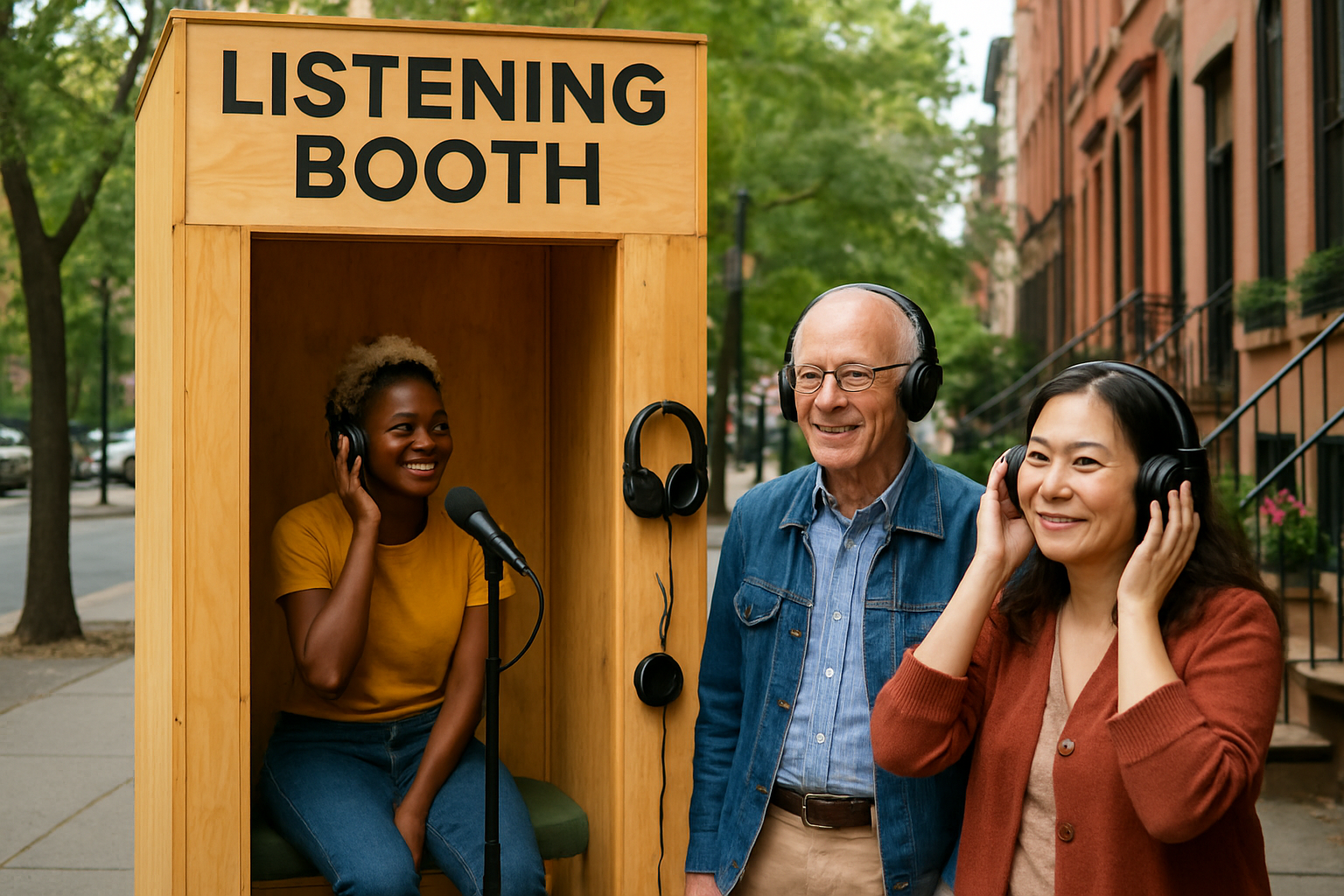
In neighborhoods across the globe, pop-up listening booths are transforming sidewalks into storytelling stages. By inviting residents to record and hear each other's memories, these small installations nurture empathy, spark intergenerational exchanges, and stitch together fractured urban fabrics.
At a busy intersection in a mid-sized city, a humble wooden structure stands beneath the glow of a streetlamp. It looks like a weathered phone booth, but instead of a telephone handset, a simple microphone waits inside, along with a small speaker on the roof. Residents are invited to step in, share a slice of personal history, or simply press play and listen to someone else’s story. Over the past two years, neighborhood organizations and local artists have rolled out dozens of these pop-up listening booths, each one serving as a micro-theater for everyday voices.
The idea has its roots in oral-history traditions and community radio, but this latest iteration moves the conversation outdoors, into public space. Where murals bring vibrant color and performance art draws a crowd, listening booths invite passersby to pause and lean in. In so doing, they address a modern dilemma: a growing sense of isolation in dense urban settings. Steel and glass may tower overhead, yet meaningful connection can feel out of reach when everyone’s glued to a screen. Listening booths offer an antidote by orchestrating moments of undistracted attention and mutual curiosity.
Early prototypes emerged from a collaboration between a social-practice art collective and a local heritage foundation. They tested a single booth in a historic district, equipping it with a hand-crank generator, a handful of recorded interviews with longtime residents, and a commitment to solar-powered lighting after dusk. The pilot week drew seniors revisiting childhood memories of the same street, college students exploring their adopted hometown, and commuters lingering after work to hear stories they never knew existed.
Buoyed by that response, city neighborhoods from Berlin to Mumbai have since hosted similar installations. In one district of São Paulo, volunteers set up a booth outside a community center every weekend. They invite elders who fled rural villages decades ago, second-generation families born into the city, and recent migrants chasing urban opportunity. These contrasting narratives converge, often sparking new friendships and cross-cultural potluck dinners. A listener might enter expecting ten minutes of nostalgia but leave with a recipe recommendation, a ride share invitation or an offer to teach Portuguese to a neighbor from Nepal.
Participants describe the experience as unexpectedly intimate. Stepping inside the booth means becoming the audience and the performer in quick succession. When the tape rolls, you speak your truth, however simple: a childhood game of hopscotch, a wedding dance under paper lanterns, the day your first bicycle was stolen. Then you open a door and press play, ready to be transported into someone else’s urban chapter. The act of sharing in public-on one’s own terms-helps break down barriers of age, language and socioeconomic standing.
City planners have taken note of these benefits. In one North American city’s housing-justice initiative, booths were included in placemaking budgets alongside pocket parks and community gardens. Planners appreciate that these installations require minimal space, few resources, and virtually no maintenance once set up. They’re also highly adaptable. A booth can be as simple as a refurbished kiosk fitted with basic recording gear, or as elaborate as a climate-controlled pod with seating cushions and ambient lighting.
Privacy is paramount. Recording devices are configured to delete personal data after a set period, and voices are anonymized upon request. Some communities route recordings through a local public-access radio station or archive them at municipal libraries for posterity. Others host seasonal compilations-an audio montage of springtime reminiscences, winter reflections or festival anecdotes-that they share at block parties or on neighborhood websites.
Behind the scenes, volunteers coordinate a rotating schedule of storytellers and listeners. They recruit seniors through local advocacy groups, invite teenagers via school clubs, and partner with language-exchange programs to reach newcomers. Volunteers also manage a minimal tech stack: portable batteries, a weatherproof enclosure, and a simple interface that even those with no audio-engineering background can operate. A small budget covers routine tasks like battery replacement, sanitizing headphones, and restocking fresh paper notebooks for those who prefer to write rather than speak.
One striking outcome has been the incubation of micro-initiatives that sprout from booth interactions. In a southern European neighborhood, two listeners met over shared accounts of fruit-picking in childhood orchards. They went on to start a weekend urban-agriculture club, planting espaliered apple trees on alley fences. In a Southeast Asian city, capturing oral histories of street-vendor families inspired a pop-up zine that raises funds for local education programs. These ripple effects remind us that ideas born in a listening booth can quickly turn into concrete community action.
Yet implementing listening booths isn’t without challenges. Securing public-space permits can be slow and bureaucratic. Weatherproofing costs add up in regions prone to heavy rain or extreme heat. Volunteers often juggle these projects alongside full-time jobs, leading to inconsistent upkeep if coordination isn’t managed efficiently. Some culturally conservative areas worry that unmediated storytelling could surface divisive or sensitive topics. Workshops on respectful listening and community-based moderation help mitigate these concerns, teaching volunteers how to gently intervene if a contribution veers into hateful language or personal attacks.
Despite these hurdles, interest continues to grow. Digital-nomad enclaves have set up temporary listening pods near co-working spaces, curious to hear from local artisans and longtime residents. University campuses have experimented with indoor booths where students record thoughts on mental health, civic engagement or study-abroad experiences. Suburban main streets deploy them as interactive kiosks at farmers’ markets and street fairs. In each context, the basic premise holds true: by granting people a platform and an attentive ear, communities create threads of solidarity that can tighten even the most frayed social fabric.
Looking ahead, some innovators are exploring hybrid models: booths that live stream conversations to online audiences, or itinerant setups that travel between neighborhoods on a converted cargo tricycle. Mobile apps can notify curious listeners when the next booth will appear nearby, while augmented-reality overlays might cast digital portraits around the structure, revealing contextual images and historical maps. Even without high technology, however, the core magic remains a simple switch: power on the mic, invite someone to speak, and hand them an audience.
In an era where algorithms determine what we see and hear, listening booths offer an analog intervention: a choice to engage with raw, uncurated human stories. They encourage us to step off our curated feeds and step into someone else’s narrative. The result is a renewed sense of belonging, proof that community connection can thrive in small installments. And when these moments accumulate-one voice at a time-they can help redefine what it means to live in proximity, transforming strangers into storytellers and sidewalks into stages of shared humanity.
Perhaps the greatest lesson of the listening-booth movement is also the simplest: when we take the time to truly listen, we often discover that we have more in common than we ever imagined.