Location
Mount Vernon, WA 98274
Location
Mount Vernon, WA 98274

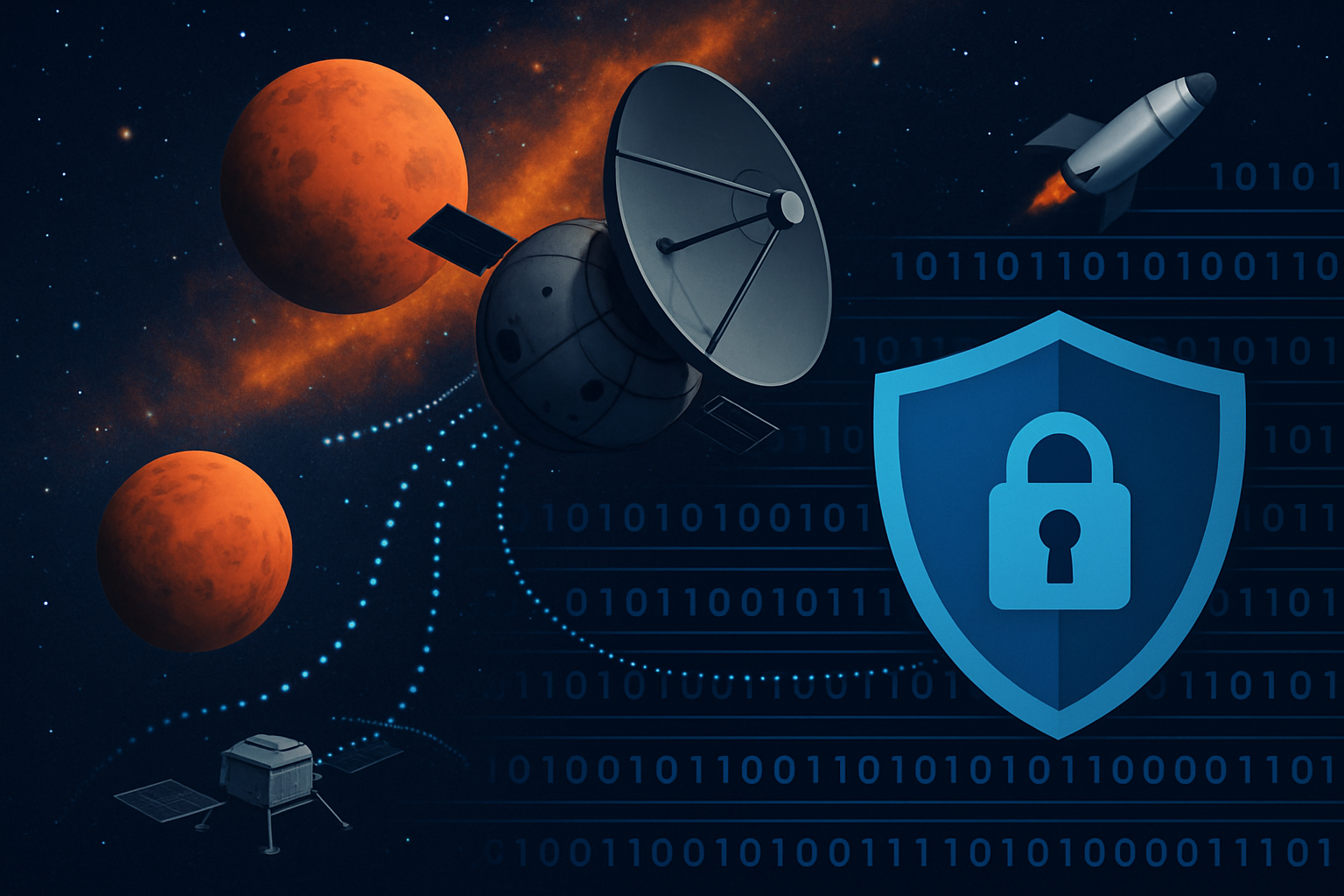
As space agencies and private firms usher in a new era of interplanetary exploration, a fresh battleground is emerging: the protection of data streaming across vast cosmic networks. Scientists, policymakers, and digital rights advocates are racing to establish frameworks that guard against surveillance, spyware threats, and ethical blind spots in our quest to map the stars.
Humanity stands on the threshold of unprecedented exploration, sending probes and astronauts farther than ever into the void. Yet this bold leap brings a startling paradox: as we peer deeper into the cosmos, the pathways transmitting our discoveries become ripe for intrusion. From quantum channels beaming lunar telemetry to interplanetary internet relays streaming Martian panoramas, the flow of scientific data now demands robust safeguards.
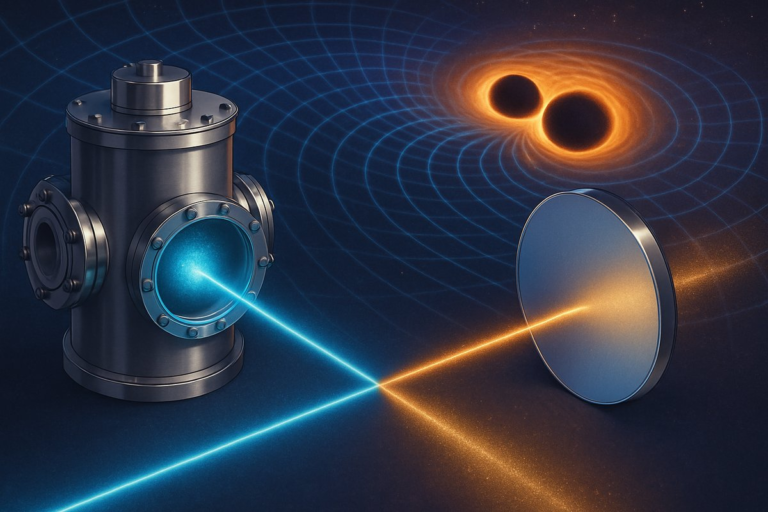
Recent lunar missions under the Artemis banner have showcased next-generation communication arrays capable of relaying hundreds of gigabytes of sensor readings, geological scans, and life-support metrics every hour. These high-bandwidth links employ laser and quantum key distribution systems to reduce latency and boost encryption strength. But their complexity also exposes subtle vulnerabilities-malicious actors could exploit firmware gaps in photon detectors or hijack classical control channels, siphoning insights or injecting false readings.
At the same time, burgeoning satellite fleets crisscross Earth’s orbit. Beyond mapping climate trends and tracking space debris, many of these constellations now relay deep-space probes or serve as testbeds for autonomous navigation. With each new transceiver and software update, the attack surface grows. Governments and commercial entities alike recognize that tapping into these data flows would yield strategic advantages: early warning of natural phenomena, competitive edge in resource prospecting, or clandestine monitoring of rival space programs.
These concerns moved to center stage at the latest session of the United Nations Committee on the Peaceful Uses of Outer Space. Delegates convened under the banner of preserving not only celestial commonwealth but also the rights of data subjects-astronauts, engineers, and even hypothetical extraterrestrial ecosystems. Calls rang out for a “Space Data Privacy Protocol” to sit alongside the Outer Space Treaty, enshrining principles that govern storage, access, and anonymization of cosmic imagery and telemetry.
Existing terrestrial frameworks offer a starting point. Regional regulations such as the European Union’s General Data Protection Regulation and the Data Governance Act establish rights around personal data processing and reuse. But their mandates stop at our atmosphere. Spacefaring nations have yet to clarify whether samples returned from Mars or biosignature readings captured on orbit qualify as sensitive under terrestrial laws. Should lunar rover logs or interplanetary video feeds receive the same treatment as a citizen’s medical record?
Digital rights coalitions have stepped in to fill the gap. Independent groups advocate for extending privacy-by-design principles to scientific instrumentation and orbital networks. They propose default encryption on all data channels, transparent audit trails for every command uplink and downlink, and limitations on retention periods for high-resolution surface scans that might inadvertently reveal brand-new launch sites or classified hardware.
Experts warn that spyware threats lurk beneath the sleek exteriors of many space hardware systems. Microcontrollers sourced from global supply chains can carry pre-installed backdoors. Observers point to recent disclosures of compromised processors in ground station routers where covert firmware modules silently siphoned traffic logs. Such revelations underscore the need for rigorous validation at every stage, from chip design to final assembly.
One reported incident involved a prototype radio transceiver assembly codenamed Helios. During routine penetration testing, researchers discovered that a diagnostic port concealed in the backplane accepted unauthorized commands, granting shell access to stored cryptographic keys. Although the device never flew, the episode sparked widespread alarm. Helios highlighted how even research-grade equipment can harbor risks if security reviews omit nonstandard debugging interfaces.
In response, cybersecurity specialists at a leading West Coast university unveiled RadioGuard, an AI-driven framework tailored to deep-space signal integrity. By continuously learning the statistical fingerprint of legitimate link traffic, RadioGuard flags anomalies indicative of spoofing or side-channel taps. Early trials revealed the system could detect sub-0.1 percent deviations in timing or modulation-precision crucial for spotting nefarious injections before they compromise mission data.
RadioGuard’s core technique hinges on spectral anomaly detection. The tool breaks incoming signals into fine-grained frequency bins and tracks temporal patterns in amplitude, phase shifts, and error-correction behavior. When certain combinations drift outside historical baselines-perhaps suggesting inserted code or a stealthy repeater relay-operators receive automated alerts. The setup requires minimal overhead, allowing integration into existing ground stations without extensive hardware retrofits.
Meanwhile, quantum key distribution offers a promising avenue for privacy preservation. By leveraging the laws of quantum mechanics, two endpoints can detect eavesdropping attempts: any measurement of a quantum bit collapses its superposition, alerting legitimate parties to interference. Pioneering tests onboard low-Earth orbit platforms have demonstrated stable link rates sufficient for encrypting sensitive telemetry.
Yet even quantum systems face challenges. A study presented at last year’s IEEE International Conference on Communications detailed how subtle temperature fluctuations in photon-emitting modules could leak metadata, revealing patterns of key generation. Attackers could exploit these side channels without ever measuring the quantum bits directly, underscoring that physical shielding and environmental monitoring are as vital as theoretical inviolability.
To mitigate such risks, space agencies are exploring privacy-by-design architectures. Proposals include hardware partitions that segregate encryption modules from command-and-control subsystems, ephemeral identifier schemes that assign one-time network addresses to each probe, and homomorphic encryption for on-board data processing, enabling analytics without exposing raw values.
Beyond technical defenses, a profound ethical question looms: if we discover microbial life or novel biosignals on other worlds, what obligations do we owe those entities? Scholars argue that planetary protection should extend to digital privacy. Tracked movements of hypothetical organisms or genetic sequencing data might warrant anonymization or restricted sharing to avoid unintended harm, akin to concerns over genomic privacy on Earth.
A nascent field of cosmic digital rights explores whether sentient or semi-sentient life forms-even microbial mats-merit a form of informational autonomy. If a self-replicating probe harvests environmental data from Europa’s ocean, do those recorded variables become the property of humanity, or do they exist in a domain of shared stewardship? The debate continues, but it already informs discussions about data retention policies and open-access mandates for publicly funded missions.
The stakes reached a turning point at a recent symposium on Ethical Technology in Space hosted by a prominent research institute. Attendees-from ethicists and astronomers to software engineers-drafted a “Declaration of Cosmic Data Rights.” Key tenets include the right to decentralized control over information pathways, transparency in algorithmic decision-making on board autonomous craft, and community oversight of private and public space endeavors.
High-level stakeholders have taken notice. Representatives from NASA and the European Space Agency convened a joint working group to translate these principles into technical standards. Their draft guidelines recommend end-to-end cryptographic chains, mandatory vulnerability disclosure from third-party component vendors, and periodic red-team exercises simulating infiltration scenarios.
International collaboration also extends to the United Nations framework. Delegates at COPUOS are reviewing a draft Space Data Governance Framework designed to sit alongside existing treaties. Its provisions would obligate signatories to register data-handling practices, permit audits by neutral observers, and impose sanctions for deliberate breaches that compromise the collective knowledge of humankind.
Private industry is responding in parallel. Emerging satellite startups now emphasize privacy as a competitive advantage. One firm unveiled an orbital router featuring on-chip intrusion detection and self-healing firmware. Another rolled out a ground station appliance with built-in homomorphic encryption modules, enabling scientists to run analytics on encrypted datasets before ever accessing the cleartext.
As nations and companies chart unknown realms, they must balance two imperatives: the open sharing that fuels discovery, and the strict controls needed to guard sensitive channels. The cosmic frontier will not yield its secrets to those who neglect either side of this equation.
Our journey among the stars demands not only rockets and telescopes, but also an unwavering commitment to data ethics. Only by weaving privacy, surveillance resistance, and spyware detection into the fabric of space exploration can we ensure that our cosmic quest remains both transformative and responsible.