Location
Mount Vernon, WA 98274
Location
Mount Vernon, WA 98274

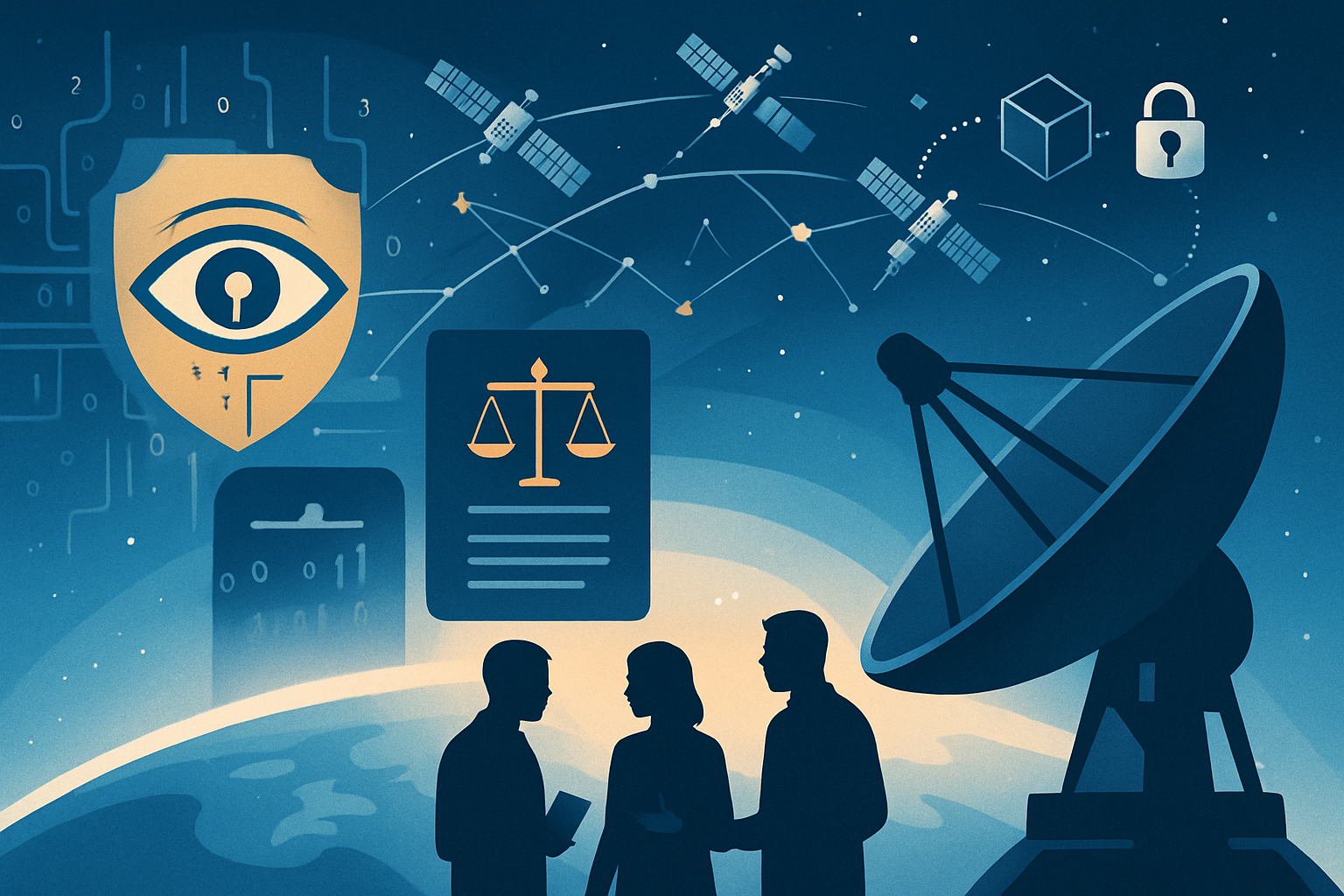
As humanity pushes the boundaries of space-time research with advanced satellite constellations and quantum communication networks, a new realm of privacy and surveillance challenges emerges. From detecting malicious code in interplanetary links to drafting a Space Data Bill of Rights, scientists, policymakers, and technologists are collaborating to protect digital freedoms and ethical standards in the cosmic age.
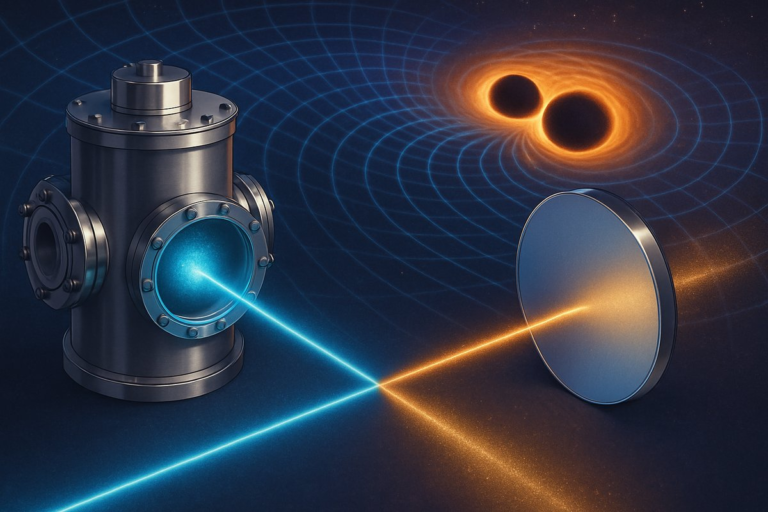
Humanity’s gaze has turned outward, scanning the heavens with ever more sensitive instruments and launching fleets of satellites that promise unprecedented insights into the cosmos. Yet as we chart gravitational waves, quantum entanglement, and the fabric of space-time itself, we confront a paradox: the same networks that unlock cosmic secrets can also become vectors for surveillance, digital intrusion, and privacy erosion. Beyond Earth’s protective atmosphere, new challenges demand fresh thinking-not only about scientific discovery, but about the rights and responsibilities that accompany our expanding technological footprint.
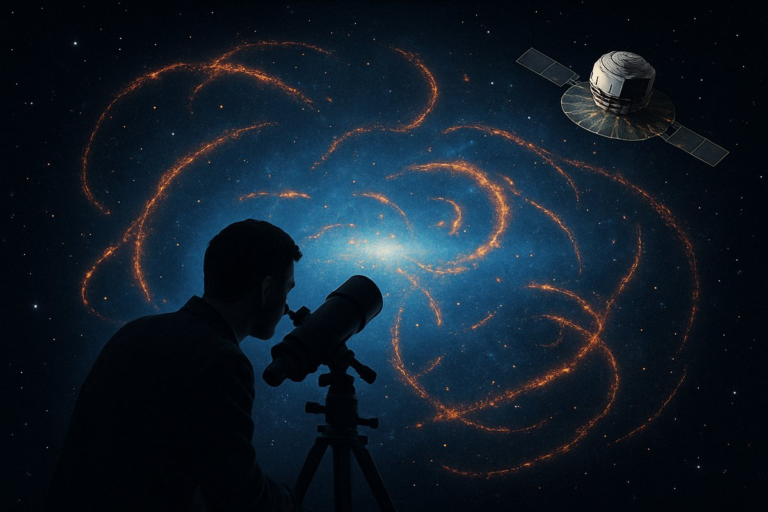
Consider the latest generation of low Earth orbit (LEO) constellations. With over 4,000 small satellites already in service and thousands more planned, these networks monitor weather patterns, relay broadband Internet, and support scientific payloads measuring everything from cosmic radiation to atmospheric composition. Their cameras and sensors can resolve objects just centimeters across, and their radio links crisscross the globe in milliseconds. Researchers at the European Space Agency’s Space Data Privacy Lab estimate that each satellite beam can collect tens of terabytes of telemetry daily. While this flood of data accelerates our understanding of solar storms and gravitational anomalies, it also raises urgent questions: Who controls the raw imagery? How is sensitive information about agricultural fields, maritime traffic, or even private structures stored, shared, and protected?
Meanwhile, quantum communication satellites are ushering in a new era of near-unbreakable encryption by transmitting entangled photons between Earth stations. Projects like the Quantum Link Initiative and emerging commercial ventures are testing protocols for secure key distribution over hundreds of kilometers. But quantum channels aren’t impervious to exploitation. Attackers could inject malicious code into satellite firmware, compromise entanglement sources, or manipulate timing signals to undermine trust in the key-exchange process. If a single node in a quantum mesh network is infiltrated, adversaries might eavesdrop on or spoof communications, casting a shadow over applications from encrypted video calls to interplanetary probe commands.
Spyware detection in space is an emerging frontier of cybersecurity. Traditional intrusion detection systems must be reimagined for the constraints of vacuum, radiation, and limited bandwidth. Engineers at the Cosmic Security Consortium have developed anomaly-based scanners that run on radiation-hardened microcontrollers, flagging unusual changes in power consumption or signal timing as potential tampering attempts. Machine learning algorithms analyze packet metadata across mesh links, spotting subtle deviations that suggest the presence of Trojan code or backdoors. Onboard forensics tools capture forensic snapshots of system memory, storing tamper-proof logs for post-mission analysis. These innovations, poised to debut on the next generation of commercial observatories, could become as routine as antivirus software on personal devices.
Yet technology alone cannot resolve the deeper questions around transparency, accountability, and individual rights. Lawmakers and international bodies are debating a Space Data Bill of Rights-a framework that would guarantee the privacy of data collected beyond Earth’s confines. Elements under discussion include the right to know when a satellite is imaging private property, limits on retention and sharing of high-resolution data, and obligations for data controllers to implement end-to-end encryption. Advocates argue that such protections will foster public trust and avoid a post hoc scramble to regulate once invasive capabilities are in place.
In parallel, open-data initiatives promote responsible access, allowing scientists and citizen researchers alike to explore cosmic datasets while preserving anonymity and limiting sensitive disclosures. The Cosmic Commons platform, for example, uses differential privacy techniques to share aggregated measurements of space weather without exposing precise orbital parameters or proprietary encryption keys. By injecting carefully calibrated noise into published results, differential privacy ensures that no single data point can be traced back to an individual payload or ground station operator. This approach balances scientific collaboration with the imperative to guard against covert surveillance by commercial rivals or state actors.
Digital rights advocates emphasize that Earth-bound precedents like the General Data Protection Regulation (GDPR) must be adapted for the orbital and deep-space environment. Core principles-consent, data minimization, purpose limitation-remain vital, but implementation demands novel mechanisms. For instance, instead of cookie consent banners, satellites might broadcast data-use notifications via public telemetry channels, letting ground terminals subscribe or opt out. Networks could automatically purge transient imagery after a predefined window, reducing long-term exposure of sensitive sites. And interoperable audit trails, secured through blockchain-like ledgers, could trace every data access event, providing transparency for regulators and the public.
Underlying these technical and legal efforts is a broader conversation about ethical technology. Should we deploy hyper-resolution Earth observation systems capable of spotting individual faces from orbit? What are the moral implications of autonomous satellites that identify and track targets without human oversight? Scholars in the Ethical Tech Forum argue that science-driven ambitions must be tempered by a precautionary principle-designing systems with privacy-by-design and by-default settings. They advocate for open standards that require vendors to publish the data formats, processing algorithms, and security protocols they implement on spacecraft, enabling independent audits and fostering a culture of trust.
Some ventures are already embracing these ideals. The Frontier Ethics Coalition, a collaboration between universities and industry labs, is developing privacy-preserving quantum key management software. Their open-source library allows satellite operators to rotate encryption keys dynamically, preventing persistent backdoors and ensuring that no single party holds unilateral access. In parallel, the Alliance for Responsible Space talks with policymakers about “digital zones of restraint,” designated orbital corridors where only preapproved scientific instruments can operate, free from nonconsensual imaging or signal interception.
As private companies build megaconstellations for global Internet coverage and governments deploy sensor webs for climate monitoring, the lines between exploration and exploitation grow porous. Without robust safeguards, the same networks that reveal the secrets of black holes and dark matter could be turned toward intrusive surveillance or cyber warfare. It is a dual-use dilemma writ large across the sky.
Efforts to navigate this frontier will shape not only the future of space-time science, but the very nature of digital rights on a planetary-and interplanetary-scale. By integrating advanced spyware-detection tools, crafting adaptive legal frameworks, and nurturing ethical-tech cultures, stakeholders can prevent a cosmic Wild West and instead foster an environment where scientific discovery and individual freedoms travel hand in hand. In doing so, we honor both our curiosity about the universe and our commitment to protecting privacy and human dignity, whether we’re standing on Earth or peering through a telescope at distant galaxies.