Location
Mount Vernon, WA 98274
Location
Mount Vernon, WA 98274

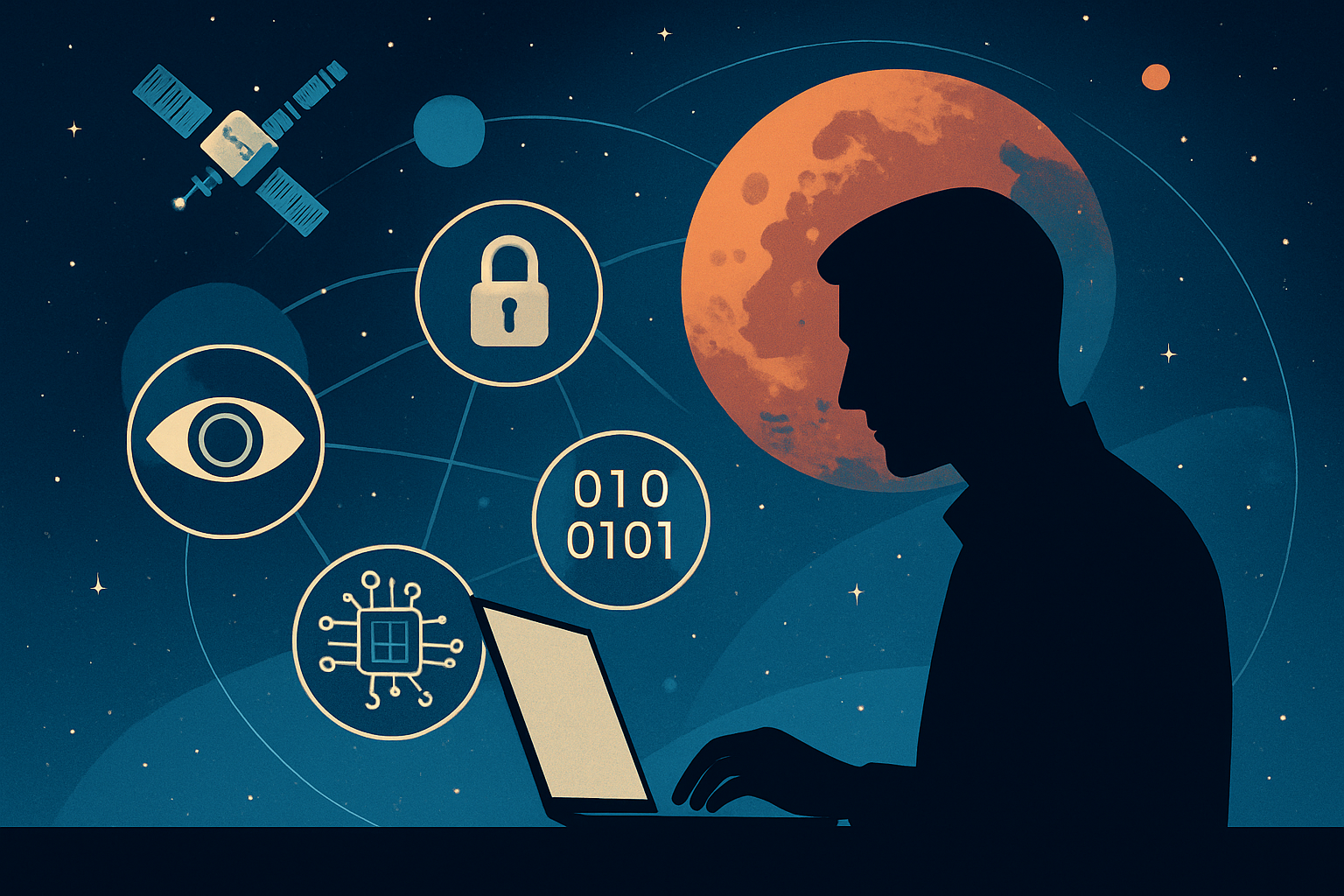
As humanity extends its reach into the cosmos, the sensors, networks, and algorithms we deploy carry implications that ripple from quantum communication channels to our most intimate data streams. This article explores how the frontier of space-time science intersects with privacy concerns, spyware detection, digital rights, and the pressing need for ethical frameworks in an age of interplanetary connectivity.
When a probe drifts past the Martian horizon or a quantum link is established between Earth and a lunar relay station, we often celebrate the engineering triumphs, the exotic physics, and the tantalizing promises of a future written among the stars. Yet behind every burst of telemetry and every gravitational wave measurement lies a deeper story: a narrative about who controls the sensors, who owns the data, and what rights individuals or nations retain when observation saturates every layer of space-time.
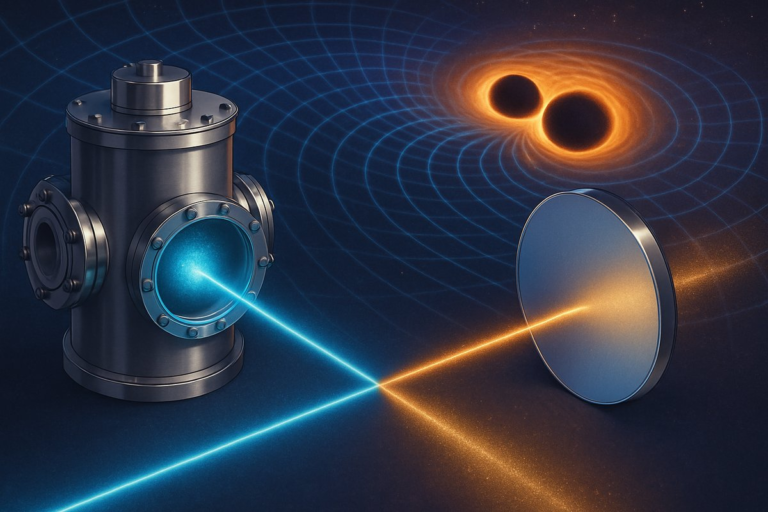
In recent years, researchers have proposed networks of microsatellites and orbital reflectors capable of transmitting and receiving information with picosecond precision. These systems promise breakthroughs in weather forecasting, seismic early warning, and even experiments in fundamental physics. But their same precision also creates an all-seeing grid: one that could monitor radio chatter on the ground, track individual devices, or peer into private communications disguised as cosmic noise.
At the heart of this technological push is a convergence of quantum communication and advanced signal processing. Quantum channels offer theoretically unhackable encryption, using entangled photons to detect any eavesdropping attempt. Yet the control stations, the uplink hardware, and the management software remain vulnerable to conventional hacking. Malicious actors could inject spyware into probe firmware or intercept key distribution protocols, subverting the promise of perfect secrecy.
Already, cybersecurity teams have uncovered instances of firmware tampering in aerospace control modules. In one documented case, a ground station’s diagnostic interface plugged into vendor-supplied maintenance software, which contained a hidden backdoor that transmitted hardware status reports-alongside aggregated network credentials-to an external server. This breach went unnoticed for months, highlighting the precarious balance between routine monitoring and covert surveillance.
But the challenge runs deeper than detecting code-level vulnerabilities. When sensors orbiting Earth collect terabytes of radar imagery each hour, how do we differentiate between benign scientific research and intrusive surveillance? Without clear international guidelines, agencies can argue that any high-resolution, time-stamped image counts as climate science or urban planning intelligence. The same data that helps forecast floods can also track the construction of secret facilities or monitor the movements of private individuals below.
Efforts to institute “data sovereignty” for orbital information have gained traction in policy circles. Under these proposals, any entity capturing imagery or signals over a particular region must secure explicit consent from that region’s government-and potentially the private landowners within. Critics object that such rules could stifle scientific collaboration or be exploited by repressive regimes to silence dissent. Supporters counter that unregulated space-time observation is a recipe for geopolitical distrust and digital rights erosion.
Parallel to these debates, a new breed of spyware-detection tools is emerging, blending machine learning with anomaly detection to scan satellite telemetry for suspicious command sequences or data exfiltration patterns. These tools analyze communication logs, firmware updates, and even power consumption signatures to flag outliers. At research centers outfitted with open-source hardware, teams can cross-verify vendor-supplied binaries against community-maintained hashes, ensuring that no hidden code modules slipped through secure boot procedures.
These technical safeguards, however, confront ethical questions: Who decides what constitutes “suspicious” behavior? If an algorithm flags a minor calibration tweak as anomalous, does the agency disconnect the entire satellite network, risking loss of scientific data? Conversely, if the system misses a subtle pattern of credential leakage, a foreign spy could roam orbital corridors unnoticed, siphoning encrypted keys back to its handlers.
Beyond the hardware and software, the public dimension of cosmic surveillance demands consideration. Amateur astronomers, citizen scientists, and even backyard satellite trackers play a valuable role in verifying official data streams and highlighting discrepancies. Their right to participate hinges on digital rights protections that guarantee open access to certain frequencies and telemetry protocols. When governments or corporations attempt to lock down these channels, they effectively exclude independent observers from the conversation, concentrating power in the hands of a few.
In one illustrative project, volunteers used inexpensive software-defined radios to map the emissions of research satellites. Their crowdsourced database quickly revealed mismatches between declared experiment schedules and actual overflight patterns, prompting a review by an international space watchdog. This case exemplifies how grassroots surveillance can become a check on top-down opacity-provided it isn’t outlawed by overbroad regulations that brand any unauthorized reception as a criminal act.
At the policy level, the emerging field of space ethics calls for a set of principles to guide both public and private actors. These include transparency in data collection practices, audit trails for every command issued to remote hardware, and clearly defined consent mechanisms for any surveillance that impacts terrestrial populations. Such frameworks draw inspiration from digital rights charters on Earth-like the principle of data minimization and the right to be forgotten-while adapting them to the peculiarities of space-time research.
Perhaps the most profound ethical question concerns dual-use technologies: instruments designed for astrophysics that can also function as potent surveillance platforms. Reflectometry experiments intended to study interstellar dust could double as air-traffic radars. Deep-space communication arrays, geared to capture signals from distant probes, might intercept encrypted broadcasts from cities below. Should these tools be licensed like weapons, or regulated through a scientific commons model that emphasizes peer review and shared governance?
Some experts advocate for an international registry of sensitive payloads, similar to medical device databases. Before launching any sensor with resolution beyond a certain threshold, operators would publish technical schematics and analysis plans for public scrutiny. Civil society groups could petition for additional oversight or propose ethical testing protocols. If implemented globally, this system could reduce the risk of covert surveillance emerging under the cover of legitimate research.
Yet the registry approach faces resistance from commercial space ventures, which argue that revealing proprietary designs undermines competitiveness. Here, privacy-preserving techniques like secure multi-party computation or zero-knowledge proofs offer a potential compromise. Companies could demonstrate compliance with resolution limits or emission standards without exposing their full blueprints, handing regulators cryptographic proof rather than raw schematics.
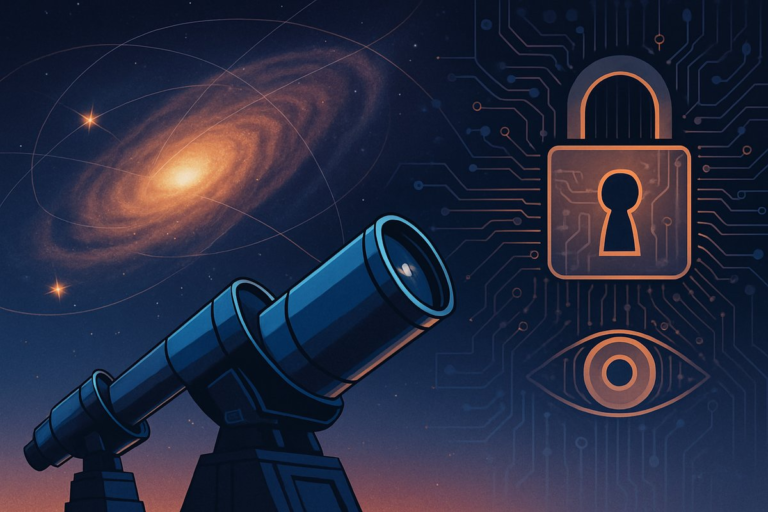
As space-time research advances, the boundary between explorer and observer, between scientist and surveillant, will blur. Every new instrument launched beyond Earth’s gravity well carries the weight of these moral considerations. Are we building knowledge to lift civilization, or are we erecting a panopticon that reaches from the lunar surface to the outer planets?
Ultimately, forging a responsible path requires collaboration across disciplines: physicists attuned to cosmic mysteries, cybersecurity experts versed in spyware detection, legal scholars versed in digital rights, and ethicists guiding the development of next-generation tech. By weaving these perspectives together, we can ensure that our pursuit of space-time understanding does not outpace our commitment to privacy, transparency, and human dignity. Only then will the echoes across the void become a chorus of shared discovery rather than a silent watchtower.